What are cemetery regulations for headstones? Wording, materials and care
A practical AU, UK and US guide to cemetery regulations for headstones, including wording approval, materials, plaques, QR codes, costs and care.
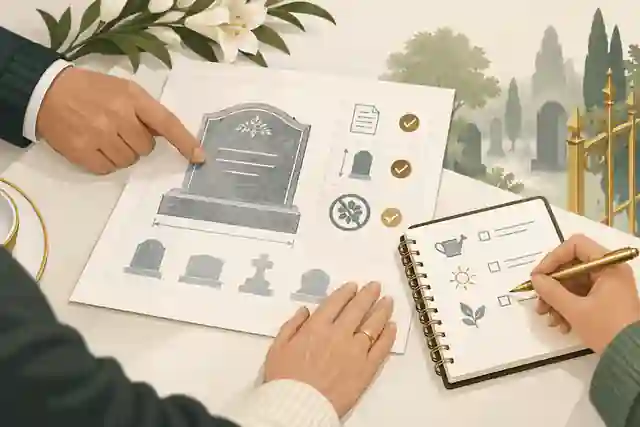
Cemetery regulations for headstones are the local rules that decide who may authorise a memorial, what wording, materials, size, fixing method, symbols, plaques and care practices are allowed, and whether later alterations need written approval. They vary by cemetery, grave type and jurisdiction, so the safest approach is to confirm the cemetery’s written rules before approving wording, ordering stone, adding a plaque or planning long-term care.
For Australian, United Kingdom and United States families, the practical pattern is similar even though the legal systems differ: the grave-right holder or authorised applicant usually applies, the cemetery or churchyard checks the design, a qualified mason or approved installer may be required, and the finished memorial must remain safe, respectful, durable and maintainable. This article uses UK English because the topic is broad and international rather than US-specific, while noting the major Australian, UK and US differences that affect decisions.
Why cemetery regulations for headstones matter before wording is chosen
Headstone decisions often begin with words: a name, dates, a relationship line, perhaps a verse, emblem or short epitaph. In practice, the wording is only one part of a regulated physical object. A cemetery may assess the whole proposal: the grave location, the type of plot, whether the burial right holder has signed, the stone dimensions, the foundation, the fixing standard, the material, the finish, the inscription, the emblem, the photograph or ceramic portrait, the vase, the kerb, the plaque and any later additions.
That is why the best first question is not “What should we write?” but “What does this cemetery allow on this grave?” A lawn section may allow a headstone on a concrete beam but prohibit kerbs, chippings, fences, glass vases and loose objects. A traditional section may allow a larger monument but require a permit, drawing and approved mason. A churchyard may allow a simple natural stone memorial but reject polished granite, informal graphics or wording that does not suit the setting. A veterans’ cemetery may have a standard marker with tightly controlled inscription fields.
UK local-authority examples show how specific the rules can be. The Royal Borough of Kingston’s cemetery and crematorium regulations set limits on grave objects, planting, memorial responsibility and authorised works, while Reading Borough Council’s cemetery regulations require details such as measurements, proposed inscription and material specification before a memorial is fixed. In Australia, Victoria’s health department explains that cemetery trusts must approve applications to establish or alter memorials, and its stonemason guidance points to Australian Standards for headstones and cemetery monuments. In the United States, the federal picture is different: private cemeteries are often governed by their own rules and state law, but national veterans’ memorials follow federal inscription rules, including the VA’s headstone and marker inscription guidance.
Families can avoid most costly mistakes by asking for three documents before any stone is cut: the cemetery’s memorial rules, the application form, and the stonemason’s layout proof. If the grave is in an older cemetery or heritage place, also ask whether heritage restrictions apply. NSW heritage exemptions, for example, allow some additions such as inscriptions or plaques only where they are in keeping with the existing size, materials, form, colour and lettering of the original monument, as set out in the state’s standard exemptions for heritage items.
Who has authority to approve a headstone?
Authority usually sits with the owner or holder of burial rights, sometimes called the registered grave owner, grantee, right-of-interment holder, exclusive-right holder or authorised applicant. The terminology changes by country and cemetery, but the practical question is constant: who has the legal or contractual right to request a memorial, authorise an inscription and approve later changes?
In Australia, rights of interment are commonly managed under state or territory law and cemetery trust rules. The person holding that right is usually central to memorial approval. In Victoria, for example, cemetery trusts must approve applications to establish or alter a memorial. In Queensland, Toowoomba Regional Council states in its cemetery conditions that prior written approval is needed before affixing a plaque or memorial in a council-controlled cemetery.
In the UK, local-authority cemeteries commonly require the registered grave owner’s written authority before a memorial or added inscription is approved. Churchyards add another layer because consecrated ground may sit under diocesan churchyard regulations rather than only council rules. Even when the minister can approve a memorial within the regulations, something outside those rules may need a faculty or special permission.
In the US, cemetery contracts, state cemetery law, veterans’ rules and military cemetery policies all matter. For eligible veterans in private cemeteries, the VA explains who can apply for government-furnished markers in its headstone, marker and medallion application instructions. The VA also notes that it does not authorise another entity to add inscriptions or emblems after the VA has inscribed a government headstone or marker. For Army National Military Cemeteries, Arlington’s private-marker rules are even more formal, requiring approval for private headstones or added inscriptions under its private marker fact sheet.
Where relatives disagree, do not ask the mason to decide. Ask the cemetery who is legally authorised and whether probate, transfer forms, statutory declarations or written family consent are needed. It may feel slow, but it is much better than ordering wording that cannot be installed or later becomes disputed.
What wording is usually allowed?
Most cemeteries allow factual identity details, dates, relationships, short epitaphs, religious or cultural wording, and modest personal phrases. Restrictions usually arise when wording is offensive, defamatory, too long for the available space, factually unsupported, commercially branded, politically provocative, inconsistent with a faith setting, or visually out of keeping with the cemetery section.
A practical headstone wording order is: name, dates, relationship or identity line, and one short sentence or phrase. Some families include “In loving memory of”, while others prefer a cleaner layout with the name carrying the focus. Dates may appear as full dates, years only, or culturally meaningful terms such as “sunrise” and “sunset”, but the cemetery and family should confirm what is acceptable and accurate.
Competitor articles on this topic often provide long lists of inscription ideas, and those examples can help families begin. The deeper issue is approval and permanence. Stone is not like a funeral programme that can be reprinted. Before approving the final proof, check spelling, dates, punctuation, accents, diacritics, maiden names, nicknames, titles, military service, scripture references and cultural wording. If wording is in another language, ask whether the cemetery requires a translation. If the wording quotes a poem, song, book or scripture, check both accuracy and copyright or licensing where relevant; very short public-domain or scripture quotations are usually simpler than modern copyrighted lyrics.
For families writing from grief rather than from a template, memorial tribute writing can help turn broad feelings into specific, truthful language. A headstone should not try to hold the whole life. It should carry the few words that still feel right after several careful rereads.
Symbols, emblems, photographs and QR plaques
Symbols are often permitted, but not automatically. Crosses, Stars of David, crescents, cultural motifs, military badges, service emblems, floral carvings and small etched images may all be possible depending on the cemetery, faith tradition, grave type and jurisdiction. Veterans’ markers are a special case. The VA’s emblems of belief list explains that government-furnished headstones and markers may include authorised emblems, but not ordinary logos, commercial graphics or unauthorised symbols.
Photographs and ceramic portraits also depend on local rules. Some cemeteries allow porcelain portraits if they are recessed or fixed securely; others prohibit them in lawn sections or heritage settings. If a photo is allowed, choose one that will remain dignified at a small size and ask how it will weather, whether it can be replaced, and whether the adhesive or mount is approved.
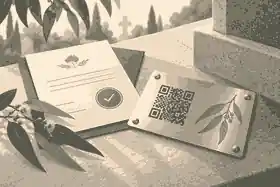
QR memorial plaques add a modern layer to the same approval problem. They can be meaningful because the physical stone stays simple while a linked page holds stories, photos and tributes. But the QR code is still a physical addition to a regulated memorial. Before ordering, read the cemetery’s policy and ask whether a QR plaque counts as an alteration, whether the material is approved, whether the code may be mounted on stone, whether a mason must install it, and whether the linked content raises any privacy or faith-setting concerns. Evaheld’s cemetery rules for QR codes explains why approval often turns on size, finish, mounting method and visual impact rather than the technology alone.
If a QR plaque is approved, keep the design restrained. The code should be scannable, but it should not dominate the inscription. Evaheld’s guidance on where a QR code can sit on a headstone is useful because placement affects both cemetery approval and visitor comfort. A lower corner, side plaque or separate authorised medallion may be more respectful than placing a large code in the centre of the headstone.
The linked memorial should also be planned carefully. A physical grave is public, but the digital destination can contain private material if families are not thoughtful. Decide whether the page will show only a life story and photos or also allow guest contributions. Evaheld’s explanation of what a QR memorial can actually link to helps families keep the digital side useful rather than overwhelming.
Materials, size, finish and installation rules
Cemetery regulations for headstones often control materials more tightly than families expect. Natural stone such as granite, marble, slate, limestone or sandstone may be allowed in some places and rejected in others. Polished black granite may be common in a municipal cemetery but unsuitable in a rural churchyard. Soft stone may be refused where it cannot withstand exposure. Artificial stone, plastic, glass, ceramic accessories, loose chippings, metal fencing or highly reflective additions may be prohibited for safety, maintenance or visual reasons.
For QR plaques and small added plates, durability matters as much as appearance. Stainless steel, bronze, ceramic and anodised aluminium all behave differently outdoors. Evaheld’s which plaque materials cope best outdoors is especially relevant where rain, UV, salt air, irrigation, lawn equipment or repeated cleaning may affect scan readability.
Installation rules are not paperwork for its own sake. Memorials are heavy, outdoor structures visited by the public and maintained by staff. Poor fixing can make a headstone unstable, damage adjacent graves or create liability. Many cemeteries require approved masons, ground anchors, specified foundations, insurance, permit display and post-installation inspection. Some also require a settling period after burial before the permanent memorial can be installed, especially in lawn or full-burial sections.
Ask the mason whether the proposed memorial complies with the cemetery’s current rules, not only with what was common years ago. Existing older memorials in the same cemetery are not proof that a new one will be allowed. Cemeteries often preserve older non-compliant stones while requiring new work to meet current safety, access and visual standards.
Costs, quotes and consumer protection
Headstone costs depend on material, size, stone shape, finish, carving method, lettering, number of characters, symbols, portraits, plaques, installation, foundation, permit fees, cemetery charges and later additions. Some stonemasons include a basic number of letters; others charge per letter, per line, per design element or per site visit. Adding an inscription to an existing stone can cost more than lettering a new stone because the mason may need to work on site, match old lettering, remove and refix the memorial or return after cemetery approval.
In the United States, the FTC Funeral Rule is useful but often misunderstood. The FTC’s Funeral Rule consumer guidance applies to funeral providers and price disclosures; it does not automatically govern every cemetery or monument dealer. Still, its wider principle is helpful: ask for written prices, written cemetery requirements and a clear itemised explanation of what is mandatory versus optional.
In Australia and the UK, consumer protections and cemetery rules differ by jurisdiction, but the practical advice is similar. Do not rely on verbal assurances. Ask for the cemetery approval condition, the monument drawing, the inscription proof, the installation method, the total quote and the warranty or care limitations in writing. If the headstone will be paid by several relatives, agree in advance who has final approval so grief does not turn design decisions into conflict.
Care, cleaning and repairs
Headstone care should be gentle, infrequent and matched to the material. The National Park Service’s headstone cleaning recommendations warn against bleach, harsh acids, aggressive scrubbing, wire brushes, grinders and high-pressure washing because they can damage stone and accelerate decay. Its broader Preservation Brief on grave markers explains that material, condition, environment and maintenance history all affect treatment choices.
Historic and heritage settings need extra restraint. Historic England’s cemeteries and burial grounds guidance treats cemetery monuments as heritage assets as well as private memorials, and the National Trust of Australia’s cemetery conservation guidelines recommend simple water and soft brushes for the limited cleaning amateurs can safely do on hard stone.
Before cleaning any stone, ask the cemetery whether permission is required. If the memorial is cracked, leaning, flaking, sugaring, delaminating, historically significant or made from soft stone, do not clean it yourself. Photograph the condition, report safety issues and seek a conservator or qualified mason. Care is not about making the stone look new. It is about preserving legibility, stability and dignity without removing historic surface.
Australia, United Kingdom and United States differences
In Australia, cemetery rules are usually administered by state or territory legislation, cemetery trusts, councils, crematoria or private cemetery operators. The right-of-interment holder is central, and approval is commonly required for new memorials and alterations. Official military commemoration also follows distinct principles: the Australian Department of Veterans’ Affairs states in its official commemoration principles that eligible war dead and post-war dead are commemorated individually and once only, by name, on a grave headstone, plaque or memorial inscription.
In the United Kingdom, the split between local-authority cemeteries and churchyards is especially important. A council cemetery may work through a deed of grant, memorial permit and approved mason process. A Church of England churchyard may also require the wording, material and design to sit within diocesan rules, with special permission for anything outside the ordinary regulations. Heritage protection may apply in older burial grounds, and local authorities often inspect memorial safety.
In the United States, the rules are highly local unless a national, state, tribal or military veterans’ cemetery is involved. Private cemeteries may have their own design rules and installation requirements. VA markers follow federal eligibility, inscription and emblem rules. Families should be especially careful not to assume that a rule from one cemetery, one state or one online seller applies elsewhere.
The shared principle across all three countries is simple: get the local rule in writing before you buy. If the cemetery rule, family authorisation and mason’s proof all align, the memorial process becomes calmer and less expensive.
How to choose wording that will still feel right later
A good inscription is usually short, accurate and specific enough to feel personal. It does not need to explain every achievement, resolve every grief or speak for every relative. The physical stone marks the place; other formats can hold the fuller story. Families who want both restraint and depth can use a short headstone inscription while placing richer memories in a private or shared digital memorial.
When considering examples, divide wording into categories: identity, relationship, faith or belief, character, gratitude, service, cultural language and a closing phrase. Then remove anything that feels generic, performative or disputed. If there is family disagreement, choose factual wording first and save fuller reflections for a memorial page where more than one voice can appear. Evaheld’s meaningful online memorial inclusions can help families decide what belongs online rather than on stone.
It can be useful to look at public memorial profiles not for wording to copy, but to understand how a life can be represented through selected details. The Evaheld Memorials profile for Maya Angelou shows how language and life story can sit together without reducing a person to dates alone. The memorial for Alan Rickman demonstrates how craft, relationships and public memory can be organised into a fuller tribute. The profile for Leonard Cohen is another reminder that one short line on a marker can sit beside a much broader remembered life.
If several people should contribute memories before wording is finalised, how to invite relatives to help build the page can make the writing process less lonely. If you expect visitors to add memories later, how tributes and condolences can be left on a memorial explains how families can receive contributions without giving up control of tone and privacy.
A practical approval checklist
Before approving the headstone, confirm the grave details, the authorised applicant, the cemetery section, the memorial type, maximum size, material, colour, finish, foundation, fixing method, permitted objects, symbol rules, photograph rules, QR plaque rules, inscription wording, translation needs, permit fee, installation timing and who maintains the memorial later. Keep copies of the approval, proof and receipt with other family records.
Before approving the inscription, read it aloud, read it backwards for spelling, check dates against certificates, confirm name order, confirm accents and punctuation, ask one careful person outside the immediate drafting process to proofread, and make sure the cemetery has accepted the exact wording. Do not approve a layout if the longest line feels cramped or if the font sacrifices legibility for decoration.
Before adding digital features, decide what the QR code should open, who controls the linked page, whether it should be public or private, who can contribute, and what happens if the plaque is damaged. Evaheld’s how a memorial can stay private until you are ready to share it is useful when families want time to prepare the page before visitors see it. If the family is still gathering details, keep the first draft manageable and avoid publishing before the key facts have been checked.
Cost decisions should also be recorded. If a QR plaque, private memorial, collaborative tribute or printed booklet is being considered alongside a physical headstone, check whether Evaheld Memorials plans are one-time payments before comparing the total memorial budget.
What to do if the cemetery refuses a wording or design
A refusal does not always mean the idea is impossible. Ask for the reason in writing. Is the problem the wording, the material, the size, the finish, the fixing method, the image, the plot type, the section rules or the person who applied? Once you know the reason, you may be able to revise the proposal without losing the heart of it.
If wording is considered unsuitable, try a quieter version that keeps the same meaning. If a polished finish is refused, ask about a honed or natural finish. If a photo is not allowed, consider a small carved motif. If a QR plaque is not allowed on the front of the stone, ask whether a separate approved plaque, side placement or digital link shared through family materials would be acceptable. If the cemetery is bound by heritage or faith rules, pushing harder may not help; a better design often comes from respecting the setting and finding a more subtle form.
Where the refusal appears inconsistent or unclear, ask whether there is an appeal process. In some jurisdictions there may be a trust review, council process, diocesan faculty process, tribunal route or cemetery management decision. Keep the tone factual. Cemeteries are more likely to help when the family shows that safety, care and visual respect are being taken seriously.

How a digital memorial can sit beside a regulated headstone
The best headstone is often deliberately limited: name, dates, a few words, durable material and a design the cemetery can maintain safely. That restraint is not a failure. It leaves room for other forms of remembrance. A digital memorial can hold the details that do not belong on stone: stories, photographs, voice recordings, service information, tributes, family history, cultural context and updates over time.
This is where brand separation matters. Evaheld Memorials is for online memorials and memorial pages, while digital-legacy-vault planning belongs to Evaheld. For this article’s purpose, the relevant service is Evaheld Memorials: a place to shape a remembrance page that can complement a cemetery memorial without trying to override cemetery rules.
If your family wants to settle the digital side while cemetery approval is still pending, begin with a private draft. That lets you gather names, dates, wording ideas, photographs and contributions without publishing before everyone is ready. Later, if a QR plaque is approved, the page can become the destination visitors reach from the cemetery. If a QR plaque is refused, the memorial still has value as a family-controlled remembrance space.
For families who want a calm place to gather the story before the stone is final, Evaheld Memorials can help you plan cemetery regulations for headstones alongside wording, photographs and shared memories.
FAQs
What are cemetery regulations for headstones? Wording, materials and care
Cemetery regulations for headstones are the local approval rules for memorial wording, materials, dimensions, symbols, fixing methods, plaques and maintenance. They vary by cemetery and grave type, so families should confirm the written rule before ordering stone, choosing an inscription or adding a QR plaque; Evaheld’s cemetery rules for QR codes is a useful companion where digital plaques are being considered, and the Royal Borough of Kingston’s cemetery and crematorium regulations show how detailed local rules can be.
Who usually has the right to approve a headstone inscription?
The authorised grave owner, right-of-interment holder, grantee, next of kin or approved applicant usually has to approve the inscription, depending on the cemetery and jurisdiction. When several relatives are involved, collect memories through how to invite relatives to help build the page before the final decision is made, and compare that with Victoria’s stonemason guidance, which explains cemetery-trust approval for memorial work.
Can a cemetery reject headstone wording?
Yes. A cemetery, council, churchyard or veterans’ authority may reject wording that breaches its rules, is too long, defamatory, offensive, inaccurate, visually unsuitable or outside a faith or heritage setting. If the wording is too personal for stone, memorial tribute writing can help move fuller memories into a digital tribute, while the VA’s headstone and marker inscription guidance shows how formal some inscription systems can be.
What materials are usually allowed for cemetery headstones?
Many cemeteries allow durable stone such as granite, marble or other approved natural materials, but the exact list depends on the cemetery section, local rules and heritage setting. For added QR plaques, which plaque materials cope best outdoors explains why weather, corrosion and readability matter, while the National Park Service’s Preservation Brief on grave markers gives broader conservation context for cemetery materials.
Are QR codes allowed on headstones?
Sometimes, but not everywhere. A cemetery may allow QR codes only if the plaque size, finish, material, content destination and installation method comply with its memorial rules. Start with where a QR code can sit on a headstone before buying anything, and remember that Reading Borough Council’s cemetery regulations show why cemeteries often ask for measurements, designs and inscription details in advance.
How should families clean a headstone safely?
Use the gentlest method allowed by the cemetery, usually clean water, soft brushes and restraint, and avoid bleach, wire brushes, abrasive tools and high-pressure washing unless a qualified conservator advises otherwise. If care notes will sit beside a family tribute, meaningful online memorial inclusions can keep practical details separate from the inscription, while the National Park Service’s headstone cleaning recommendations provide detailed preservation guidance.
What is different about veterans’ headstones?
Veterans’ headstones may follow national or military rules about eligibility, inscription fields, emblems, marker types and later alterations. If your family wants a fuller life story beside an official marker, what a QR memorial can actually link to can help plan a respectful digital companion, while the VA’s emblems of belief list explains what symbols may appear on US government-furnished markers.
Can headstone wording be changed later?
Sometimes, but changes can be expensive, restricted or impossible without replacing, removing, resurfacing or reworking the stone. Families who want the memorial story to keep growing can use how tributes and condolences can be left on a memorial for later memories, while the NSW standard exemptions for heritage items show how added inscriptions on heritage monuments may need to match existing materials and lettering.
How do costs and cemetery requirements affect headstone choices?
Costs are shaped by the stone, inscription length, carving method, artwork, foundation, permit, installation, cemetery fees and any later additions. Before comparing quotes, check whether Evaheld Memorials plans are one-time payments for the digital side, and use the FTC’s Funeral Rule consumer guidance as a reminder to ask for written price and requirement information in the US.
Should a headstone include everything about a person’s life?
No. A headstone usually works best when it carries the person’s name, dates and a small number of durable words, while fuller stories, photographs and memories sit elsewhere. If the family needs time before sharing, how a memorial can stay private until you are ready to share it supports a staged approach, and the Australian Department of Veterans’ Affairs official commemoration principles are a useful reminder that formal commemoration often depends on disciplined restraint.