How do I clean a headstone safely? Wording, materials and care
A practical, conservation-led guide to cleaning a headstone safely, protecting inscriptions, understanding materials, checking cemetery rules and pairing plaques with lasting digital remembrance.

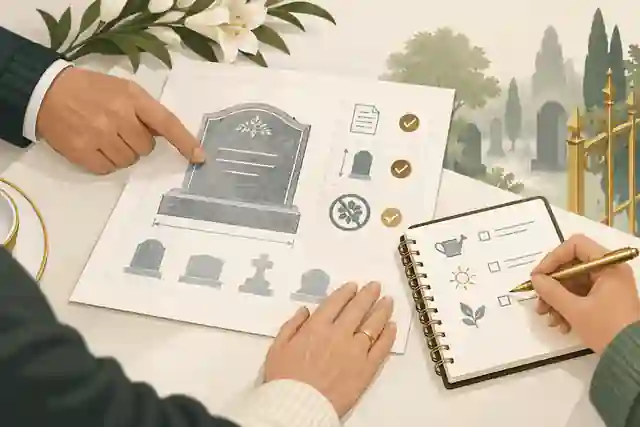
How do I clean a headstone safely? Wording, materials and care should be handled as one decision: clean only with permission, use the gentlest method the material can tolerate, protect the inscription, and stop if the stone is unstable, flaking, sugaring, cracked or historically significant. A safe clean usually means plenty of water, a soft natural or nylon brush, patient rinsing and no bleach, acids, metal brushes, pressure washers, household sprays, shaving foam, chalking, wax or power tools.
Families often arrive at a grave with two needs at once. They want the headstone to look cared for, and they want the words to remain readable and dignified. Those needs can conflict if cleaning is treated as a cosmetic task. A headstone is not outdoor furniture; it is a memorial object, often a legal responsibility, sometimes a heritage item, and always part of a cemetery or churchyard setting with its own rules.
This article covers how to clean a headstone safely across common materials, how cleaning affects headstone wording and inscriptions, when to leave a stone alone, and how plaques, QR memorial plaques and online remembrance can reduce pressure on the physical marker. It is written for families in Australia, the United Kingdom and the United States, with differences clearly noted where cemetery rules, war-grave practice or churchyard permissions vary.
Start with permission, not products
Before you touch the stone, identify who has authority. In a council cemetery, private cemetery, crematorium, churchyard, veterans cemetery or war-grave setting, the right to clean may sit with the grave-right holder, next of kin, cemetery operator, church authority, government agency or a specialist contractor. Permission matters because even well-meant cleaning can damage stone, disturb protected features, breach cemetery rules or interfere with scheduled maintenance.
For historic graves, the safest rule is that cleaning should be necessary, minimal and reversible in spirit: do only what helps the stone survive or remain legible, and avoid chasing a new-looking finish. The National Park Service preservation brief on historic grave markers explains that cemeteries are cultural landscapes and that marker materials, condition and setting should be assessed before treatment. That framing is useful in any country because the same stone behaviours appear in Australian, British and American cemeteries.
In England, churchyards and burial grounds can involve ecclesiastical rules as well as cemetery management rules. Historic England advises that monument cleaning should be considered carefully and is usually justified only when soiling is damaging the fabric or when cleaning is needed for conservation work. Its advice on historic cemetery and graveyard monuments is especially relevant where a headstone is old, listed, fragile, in a conservation area or part of a significant burial ground.
In Australia, the same caution applies. The National Trust of Australia’s cemetery conservation guide warns that amateurs should generally limit themselves to simple dirt removal on hard stone with clean water and soft bristle brushes. That is a deliberately modest standard, and it is the right standard for most family visits.
Check the headstone material and condition
Material determines risk. Granite is generally harder and less porous than marble, limestone and sandstone, but it can still be scratched, stained or damaged by aggressive tools. Marble and limestone are calcium carbonate stones; acidic cleaners can etch them, and weathered surfaces may become powdery. Sandstone can delaminate and lose grains. Slate can split along layers. Concrete, bronze, ceramic plaques, enamel photographs, lead lettering, gilding and painted inscriptions each need separate care.
Walk around the memorial before cleaning. Look for movement at the base, open cracks, loose joints, leaning sections, flaking surfaces, crumbling edges, rusting pins, biological growth rooted into soft stone, missing mortar, unstable kerbs, damaged plaques and recently repaired areas. If the stone moves, sounds hollow, sheds grains when touched, or has lettering that is already failing, do not clean it. Photograph it, report safety concerns to the cemetery office, and ask a conservator or qualified monumental mason for advice.
The National Park Service’s warning on abrasive cleaning of grave markers is direct: power tools and harsh abrasion alter the surface, and roughened stone can trap more pollutants, moisture and microbes later. A cleaner-looking stone today can become a more vulnerable stone tomorrow.
If a QR plaque is already fitted, treat the plaque and the headstone as different materials. Stainless steel, ceramic, anodised aluminium and acrylic have different tolerances, and the code must remain crisp enough to scan. Families comparing options before installation should consider which plaque materials are likely to last longer outdoors because durability, contrast and cleanability matter long after the first visit.
How to clean a headstone safely by hand
The safest basic method is slow and plain. Choose a mild day, ideally when the temperature is comfortably above freezing and the stone is not hot in direct sun. Bring clean water, a pump sprayer or bucket, a soft natural-bristle or soft nylon brush, a soft toothbrush for recessed letters, wooden or plastic tools for loose soil around the base, clean cloths, gloves and a camera. Avoid wire brushes, kitchen scourers, metal scrapers, pressure washers, drills, sandpaper and anything sold as a quick brightener.
First, remove loose grass, leaves and soil from around the stone without digging into the grave or levering against the base. Wet the whole surface before brushing. Keeping the stone wet reduces abrasion and helps dirt lift without grinding dry particles across the face. Work from the bottom upwards when soiling is heavy, because dirty water running over a dry lower area can create streaks. Rinse often. Use gentle circular brushing only where the surface is sound. Let water and time do most of the work.
If plain water is enough, stop there. Families sometimes feel disappointed when a clean does not restore bright white marble or perfectly dark lettering, but a headstone does not need to look new to be respected. Patina, softened edges and partial biological staining may be part of the stone’s age. The goal is legibility and care, not erasure of time.
For biological growth on sound marble or similar stone, specialist products may be appropriate, but only after permission and product checks. The NPS comparative study of cleaners for federally issued headstones found that certain biocidal cleaners performed better than bleach-like products, and it specifically warns against sodium hypochlorite and related oxidising ingredients on marble headstones. The practical family lesson is simple: do not substitute household bleach, toilet cleaner, vinegar, patio cleaner, mould spray or laundry products.
After cleaning, rinse thoroughly and leave the stone to dry naturally. Do not seal it, wax it, oil it or apply household protectants unless a conservator has specified a treatment for that exact material. Stone needs to breathe. A shiny coating can trap moisture, darken the surface, accelerate decay or make future conservation harder.
What not to do when cleaning inscriptions
The inscription is often the reason a family wants to clean a marker, but lettering is also where damage is most visible. Do not chalk, flour, charcoal, pencil, paint, shaving foam or talcum powder into carved letters to make them stand out for a photograph. Do not scrape inside grooves with a knife. Do not repaint letters unless you have cemetery permission and the work is being done by someone who understands the original finish.
Instead, use raking light. Visit early or late in the day when low sunlight catches the carving, or hold a torch at a shallow angle across the face. Wetting the surface with clean water can temporarily improve contrast without adding foreign material. Take several photographs from different angles and keep a record of the wording before and after any cleaning.
If the inscription is worn, the answer may be documentation rather than stronger cleaning. Write down the exact name, dates, epitaph, symbols and layout while they can still be read. A digital memorial can preserve the full life story beside the fixed inscription; families often use memorial tribute writing support when the stone has room for only a few words but the person’s story deserves more space.
When a headstone has a QR memorial, visitors can reach stories, photographs, service details and tributes without overcrowding the stone. If your family is deciding how physical wording and digital remembrance fit together, it helps to understand what a QR memorial includes before asking a mason to finalise engraving, plaque size or placement.
Cleaning by material: granite, marble, limestone, sandstone, bronze and plaques
Granite is usually the most forgiving common headstone material, but polished granite can scratch and dark granite can show water spotting or chemical damage. Use water and soft brushes. Avoid acidic cleaners and abrasive pads. Do not assume a commercial “granite cleaner” is suitable for a cemetery marker, especially if it leaves residue or contains solvents not intended for outdoor memorials.
Marble can be beautiful and readable for generations when treated gently, but it is vulnerable to acid, salts and abrasion. Many older marble stones weather into a sugary surface. If your glove picks up white grains, stop. The surface is already losing material. Limestone behaves similarly and may contain fossils, bedding planes or soft areas. Sandstone can be even more fragile; many old sandstone markers should be recorded, not scrubbed.
Bronze markers and plaques need separate care because patina can be intentional and protective. Do not polish bronze aggressively or use acidic metal cleaners that may run onto stone. If a bronze plaque is government issued or part of a cemetery’s standard system, ask the cemetery or relevant agency before cleaning. For US veterans markers, the Department of Veterans Affairs explains eligibility and application pathways for veterans headstones and markers, and family changes should not be improvised on the marker itself.
Ceramic portraits, enamel inserts, porcelain photographs and QR plaques should be cleaned even more cautiously. A soft damp cloth may be enough. Do not rub the edge of a ceramic portrait, pick at adhesive, polish an etched QR code, or use solvent on printed acrylic. For placement decisions, where a QR code can be placed on a headstone matters because a shaded, reachable, low-glare location can reduce cleaning pressure and scanning frustration.
Australia, United Kingdom and United States differences
The basic conservation principles are similar in Australia, the United Kingdom and the United States, but permissions and official memorial rules differ. In Australia, public cemeteries, private cemetery operators, religious authorities, local councils and the Office of Australian War Graves may all be relevant depending on the grave. The Department of Veterans’ Affairs explains the principles of official commemoration, including uniform headstones, plaques and inscriptions for eligible war and post-war dead.
Visitors to Australian war cemeteries should also respect tribute rules. The DVA guidance on visiting a War Cemetery or Garden of Remembrance asks visitors not to place candles, flags, plastic flowers or other items that can stain, damage or compromise official commemorations. Those rules are not about discouraging remembrance; they protect the dignity and physical condition of the site.
In the United Kingdom, local authority cemeteries, private cemeteries and churchyards may each have different rules. In Church of England churchyards, inscriptions, materials and memorial changes are usually governed by diocesan churchyard regulations and, where outside the rules, faculty permission. Historic England’s technical note on cleaning war memorials is also valuable for families because it treats cleaning as a decision-making process, not a default maintenance chore.
UK burial grounds also have ecological value. Lichens can be part of that value, especially in old churchyards. Caring for God’s Acre says in its burial-ground conservation FAQs that churchyards and burial grounds are important for lichen conservation and that removal is not generally recommended. If lichen is not damaging the inscription and the site has ecological significance, leave it alone and document the stone instead.
In the United States, cemetery rules vary by state, cemetery ownership and whether the marker is government furnished. The VA’s headstone and marker inscription guidance sets out required and optional elements for government-furnished markers. Families should not add, repaint or alter official inscriptions without following the proper process.
Wording, dates and plaques: decisions to make before or after cleaning
Cleaning often reveals problems with wording: a misspelt name, a date that looks uncertain, a partner’s future inscription space, a religious symbol that needs approval, or lettering too worn to read comfortably. Before ordering additional engraving, photograph the whole memorial, measure available space and ask the cemetery or mason what can legally and physically be added.
Most headstones include a full name, birth and death dates or years, and a short epitaph. Some include roles, relationships, emblems, military service, cultural phrases, scripture, poetry or a private family line. The best wording is usually specific, brief and honest. A fixed stone should not be asked to carry every memory. It can name the person and hold one clear truth, while a linked memorial or tribute page carries richer stories, photographs and messages.
If a family is still shaping the wider remembrance, what to include in a memorial page can help separate what belongs on stone from what belongs in a living digital tribute. A plaque might show a name, dates and QR code; the memorial page can hold the obituary, service details, photo albums, voice recordings, condolences and updates.
Public memorial examples show the difference between a fixed marker and a fuller life record. A memorial for Winston Churchill can place a burial location and public legacy beside a wider story of service and writing. A tribute to Queen Elizabeth II shows how formal commemoration and family history can sit together. A remembrance for Ruth Bader Ginsburg demonstrates how law, family, public service and burial at Arlington can be remembered without asking a grave marker to say everything.
QR plaques, privacy and keeping the memorial useful
A QR plaque should not be treated as a decorative afterthought. It needs readable contrast, a stable destination, a respectful location and a maintenance plan. If it is added to an existing stone, check cemetery rules first, especially around adhesives, drilling, size, materials and visual standards. Families planning a code on a marker can use cemetery rules for QR codes as a practical permission checklist before approaching the cemetery office or stonemason.
The digital side matters as much as the physical plaque. A code should open a page the family controls, with privacy settings that match the family’s wishes. Public pages can help distant relatives and friends find the memorial. Private or limited-sharing pages may be better for recent deaths, children, sensitive circumstances or families who want time before wider sharing.
For visitors at the grave, the scanning experience should be simple. The code should sit where a person can scan it without stepping onto another grave, bending awkwardly, blocking a path or catching harsh glare. Evaheld’s explanation of how QR codes on headstones are usually set up is useful because it separates the physical code from the online memorial destination.
Think also about what the code opens. A memorial QR code can link to a concise biography, photo gallery, service details, tributes, music, videos, donation information or family-approved updates. The article on the kinds of content a memorial QR code can open helps families decide what feels appropriate at a graveside and what should remain private.
Maintenance schedule and when to stop
Many headstones do not need annual cleaning. A light rinse and gentle brush every few years may be more than enough for a sound granite marker. Soft historic stone may need no cleaning at all. If biological growth returns quickly because a grave is shaded, damp or under trees, repeated scrubbing may do more harm than acceptance. In that case, record the inscription, keep vegetation from physically pushing against the stone, and ask the cemetery about drainage or overhanging branches rather than repeatedly attacking the surface.
Stop cleaning immediately if you see fresh grains, flakes, cracks widening, water entering open joints, lettering softening, paint lifting, bronze patina stripping, ceramic edges loosening or the stone shifting. Stop if the water turns unexpectedly coloured after touching metal, paint or previous repair material. Stop if a cemetery staff member asks you to stop. A half-cleaned but unharmed headstone is better than a bright, damaged one.
When a QR plaque is damaged, the goal is to preserve the destination link, not simply replace the metal. Families thinking ahead can read about how long QR memorials last in practice and how QR memorial content can be updated over time. A good memorial plan lets the story continue even if a physical plaque needs replacing later.
The NPS also describes cleaning after resetting a government-issued veteran headstone with water, a soft brush and appropriate biological cleaner in its guidance on resetting upright veteran headstones. That is a useful reminder that even professional maintenance uses restraint: stabilise first, clean gently second.
A practical safe-cleaning checklist
- Confirm permission from the cemetery, churchyard, grave-right holder or relevant authority.
- Identify the material: granite, marble, limestone, sandstone, slate, bronze, ceramic, concrete or mixed materials.
- Check stability, cracks, sugaring, flaking, loose plaques, failing paint and biological growth before cleaning.
- Photograph the stone and inscription before touching it.
- Use clean water, soft brushes and patient rinsing as the default method.
- Use specialist biocidal cleaners only when the material, cemetery rules and instructions support it.
- Avoid bleach, vinegar, acid, ammonia, household sprays, pressure washers, wire brushes, drills and abrasive pads.
- Do not chalk, paint, foam or powder lettering to make it readable.
- Stop if the stone sheds material, moves, stains unexpectedly or seems fragile.
- Record the wording and consider a digital memorial when the stone cannot safely carry more information.
How physical care and digital remembrance work together
A clean headstone can make a visit feel tended and respectful, but physical care has limits. Stone weathers. Inscriptions fade. Cemetery rules change. Families move. A digital memorial does not replace the grave, but it can protect what the grave cannot hold: stories, photographs, voices, tributes, funeral details and updates from people who cannot visit in person.
That is why the best approach is not “stone or digital”. It is stone and digital, each doing the work it does best. The headstone gives a fixed place of remembrance. The online tribute gives context, warmth and continuity. When the family is ready, Evaheld Memorials can help you clean a headstone safely while preserving the person’s fuller story in a shareable memorial space.



FAQs
How do I clean a headstone safely? Wording, materials and care
Clean only after checking permission, material and condition; use clean water, soft brushes and patient rinsing, and stop if the stone is unstable, flaking or powdery. If the inscription needs more context than the stone can hold, what to include in a memorial page helps families preserve the wording and story safely, while the National Park Service preservation brief on historic grave markers explains why condition assessment comes first.
Can I use bleach to clean a marble headstone?
No, bleach and bleach-like products should not be used on marble headstones because they can leave damaging salts and contribute to surface loss over time. Families comparing physical and digital preservation can also consider how long QR memorials last in practice, and the NPS comparative study of cleaners for federally issued headstones gives the conservation basis for avoiding bleach.
What brush should I use on a gravestone?
Use a soft natural-bristle or soft nylon brush, and keep the stone wet while brushing so grit is not dragged across the surface. For families planning a plaque that needs gentle care too, which plaque materials are likely to last longer outdoors is relevant, and the NPS warning on abrasive cleaning of grave markers explains why power tools and hard abrasion are unsafe.
Should I remove lichen from an old headstone?
Not automatically; lichen may be part of a burial ground’s ecology, and removal can damage soft stone if roots or growth are embedded in the weathered surface. If the stone should not be scrubbed, memorial tribute writing support can preserve the person’s story elsewhere, while Caring for God’s Acre’s burial-ground conservation FAQs explain why lichen removal is often discouraged in UK churchyards.
Can I clean a war grave or veteran marker myself?
Ask the responsible authority first because official commemorations often have specific maintenance rules, tribute rules and inscription standards. Families considering a linked tribute should also understand what a QR memorial includes, while Australia’s DVA visiting guidance for War Cemeteries and Gardens of Remembrance shows how official sites protect headstones from staining and damage.
How often should a headstone be cleaned?
Only as often as necessary for legibility and care; repeated scrubbing can be worse than accepting some patina, especially on old or porous stone. If the physical marker is stable but limited, how QR memorial content can be updated over time shows another way to keep remembrance current, and Historic England’s cemetery monument advice explains why cleaning should be justified rather than routine.
Can cleaning make an inscription easier to read?
Sometimes, but safer methods include water, soft brushing and angled light rather than chalk, paint, foam or scraping inside the letters. Where a grave marker has little room for explanation, the kinds of content a memorial QR code can open may help, while the VA headstone and marker inscription guidance shows how official inscriptions are structured and controlled.
What should I do if the headstone is cracked or loose?
Do not clean it; photograph the issue, avoid leaning on it and contact the cemetery, churchyard authority, monumental mason or conservator. If a linked plaque is part of the memorial plan, where a QR code can be placed on a headstone can help avoid stress on weak areas, and the NPS guidance on resetting upright veteran headstones shows why stability comes before cleaning.
Do cemetery rules affect QR plaques and cleaning?
Yes, cemetery rules may control cleaning products, attachment methods, plaque materials, inscription changes, grave decorations and who can do the work. Families can prepare with cemetery rules for QR codes, while the DVA principles of official commemoration show how formal grave markers can be governed by uniformity and permanence.
What if I want the headstone to carry more wording than it can fit?
Keep the stone wording short and durable, then place longer memories, photographs, service details and tributes in a linked memorial where they can be edited carefully. Families can start with how QR codes on headstones are usually set up, and Historic England’s technical note on cleaning war memorials reinforces the broader principle that physical memorial care should be restrained and planned.