How do I clean a QR memorial plaque? Cemetery checks, materials and setup
A practical guide to cleaning a QR memorial plaque gently, checking cemetery approval, choosing durable materials and keeping the linked memorial page secure.
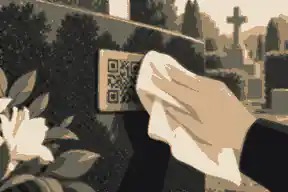
How do I clean a QR memorial plaque? Cemetery checks, materials and setup should start with permission, gentle cleaning, a scan test and a clear plan for the page behind the code. Use clean water, a soft cloth or soft brush, no bleach, no wire brush and no pressure washer; then check that the cemetery allows the plaque, the material still has enough contrast, and the QR destination is stable, private enough and ready for family visitors.
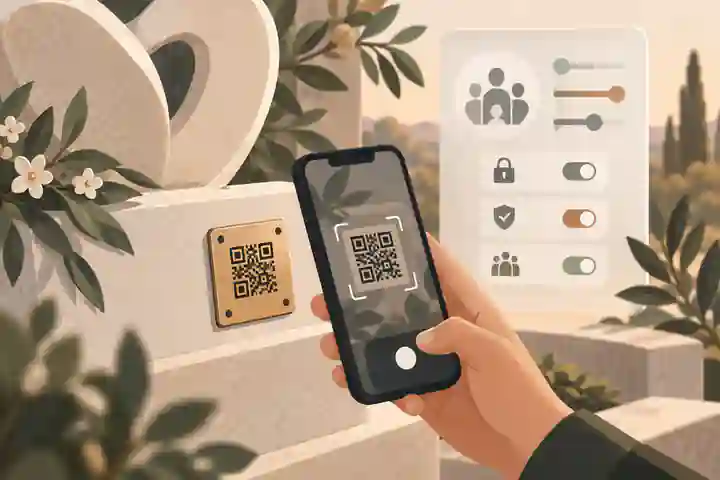
A QR memorial plaque has two parts that need care: the physical marker exposed to rain, UV, dust, biological growth and mower debris, and the digital memorial page that opens when someone scans it. The QR format was originally developed by DENSO WAVE, whose QR Code history explains why the pattern became useful for fast scanning, but a cemetery setting adds practical responsibilities that a shop counter or event poster does not have.
The safest routine is simple. Ask the cemetery before attaching, moving or cleaning anything that could be considered a memorial alteration. Photograph the plaque before you touch it. Rinse loose grit with water. Wipe the QR face lightly with a damp microfibre cloth. If grime remains, use a soft natural or nylon bristle brush around the plaque edges rather than scrubbing hard across the code. Dry with a lint-free cloth, then scan from the angle a visitor would normally use. If the code opens slowly, check mobile reception as well as the plaque itself.
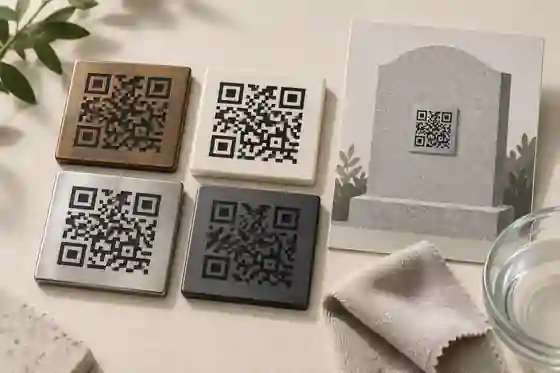
Before you clean a QR memorial plaque, confirm whether it sits on granite, marble, bronze, stainless steel, anodised aluminium, ceramic, acrylic or a coated printed surface. Families comparing plaque materials for QR memorials will find that the best cleaning method depends on the surface. A stainless steel plaque may tolerate careful wiping better than a printed laminate. Bronze may develop a patina that should not be polished away aggressively. Anodised aluminium can be durable, but the Aluminum Anodizers Council explains that anodizing is a surface conversion process, so harsh abrasion can still damage the finish that gives the plaque its weather resistance.
Clean a QR memorial plaque without damaging the code
Start with the least invasive method. A QR code needs contrast more than shine, so the aim is not to make the plaque look new. The National Park Service’s grave marker cleaning guidance recommends gentle methods, soft brushes and avoiding wire brushes, power washers and harsh cleaners. The same principle applies to a small QR plaque, especially if it is attached to an older monument or placed near fragile lettering.
For a routine clean, bring clean water, a soft cloth, a soft brush, a towel, your phone and any cemetery approval note you have. Avoid household bleach, acidic cleaners, abrasive pads, metal tools, solvent wipes, polishing compounds and pressure washing. If the plaque is dusty, rinse or dab first; rubbing dry grit across the code can scratch the surface. If there is mud around the plaque edge, loosen it with water rather than levering it out with a blade. If there is lichen or moss on the surrounding stone, do not scrape it away just to expose the plaque unless the cemetery permits that work and the stone is sound.
The United States Department of Veterans Affairs gives similar warnings in its cleaning government-furnished headstones and markers advice: use soft brushes, clean water, no power washers, and get permission from the property owner. Although that page is written for government-furnished markers, its preservation logic is useful for families everywhere. A QR plaque is small, but the headstone or memorial surface around it may be historically, culturally or financially significant.
If the QR code still will not scan after gentle cleaning, do not keep scrubbing harder. Check the basics first: open the phone camera, hold the phone steady, reduce glare by shading the plaque with your body, and try from several distances. Apple’s iPhone QR code scanning instructions show how ordinary camera scanning works, so an app is usually unnecessary. If several modern phones fail from normal visitor distance, the problem may be glare, low contrast, physical damage, a broken link or a poor internet signal rather than dirt.
Cemetery checks before cleaning, attaching or replacing a plaque
Cemetery checks matter because a QR plaque is not only a technology item. It is part of a grave, niche, bench, garden marker or cremation memorial. Australian guidance from Victoria’s Department of Health says families must apply to the cemetery trust before establishing or altering a memorial. In practice, similar permission principles appear across many Australian cemeteries, UK burial authorities, US cemeteries and faith-based sites, even when QR codes are not named specifically.
That is why cemetery rules for QR codes should be checked before ordering a plaque and again before any replacement. Ask whether the cemetery allows QR plaques on that grave type, whether the right-of-interment holder must approve the work, whether a stonemason must apply, whether adhesive is allowed, and whether the cemetery has rules on size, finish, colour, thickness, placement or drilling. Ask for the answer in writing or keep a dated note of the conversation.
United States readers should be especially careful with veterans’ markers. The VA’s headstones, markers and medallions information explains that cemetery officials and private cemetery rules affect marker placement, and its separate government headstones and markers FAQs tell families to check with the specific private cemetery about the style allowed. A QR plaque should not be added to a government-furnished marker without confirming the rules that apply to that marker and that cemetery.
For UK readers, the governing authority may be a council burial authority, private cemetery, churchyard, diocese or crematorium. Some churchyards and heritage settings take a stricter view of modern additions, glossy plaques or external attachments. For Australian readers, cemetery trusts and councils usually control memorial applications and may require registered stonemason work. For US readers, private cemeteries, municipal cemeteries, veterans’ cemeteries and religious cemeteries can each have different rules. The shared rule is practical: local permission comes first.
Placement is part of that approval. A discreet corner may work better than the centre of a headstone, and a plaque should not cover inscription lines, damage carved lettering or interfere with flower holders, cleaning, mowing or adjacent graves. Families considering where to place a QR code on a headstone should think about visitor posture as well as aesthetics: the code should be reachable, not hidden behind flowers, not pointed into constant glare, and not so low that older visitors cannot scan it comfortably.
Materials, weatherproofing and installation setup
Weatherproofing begins before installation. A durable QR memorial plaque should have high contrast, outdoor-rated material, a finish that resists UV and corrosion, and enough quiet space around the QR pattern for phones to read it. Engraved or laser-marked metal and ceramic tend to be more resilient than printed stickers, but the right choice still depends on the cemetery, the headstone material and the local climate.
Australia’s heat, coastal salt, heavy rain and UV exposure can punish adhesives and coatings. UK conditions often add damp, biological growth and freeze-thaw cycles. US conditions vary from snow and ice to desert heat, hurricanes, salt air and intense sun. In all markets, weatherproofing is not a single product claim. It is the combination of material, finish, mounting method, placement, cleaning routine and replacement plan.
Adhesive mounting can be appropriate on smooth polished stone when the cemetery allows it, but it depends on clean surfaces and correct temperature. 3M’s VHB tape application guidance stresses surface preparation and pressure for bonding. That does not mean every tape is suitable for a cemetery plaque, but it shows why families should not attach a plaque to wet, dusty, cold or uneven stone and expect a permanent bond.
Screw-fixing or recessed inlay can be stronger, but drilling or cutting into a monument is normally a stonemason task and often requires formal approval. It may also be unsuitable for heritage stones, thin plaques, kerbs, niches or stones with existing cracks. If the memorial is a bench, urn, columbarium niche or garden marker, ask the cemetery or site manager whether the plaque is treated as a memorial item, a decoration or an alteration.
A good setup has four checks before the plaque is fixed. First, test the QR code on paper and on the final plaque before installation. Second, check the page opens on more than one phone. Third, confirm the memorial page is ready enough for visitors, even if it will grow over time. Fourth, photograph the final placement and keep the approval details with family records.
If you later find a crack, deep scratch, peeling laminate, lifting corner or unreadable code, pause before removing it. The practical question is whether the same destination link can be preserved on a replacement. Families planning for replacing a damaged QR memorial plaque should document the problem, check the warranty or provider process, and confirm cemetery permission before installing a new marker.
The digital memorial behind the plaque
A clean plaque is only useful if the linked memorial page is meaningful, stable and respectful. A QR memorial can open a life story, photographs, videos, voice recordings, service information, tributes, donation links, grave location details or a simpler private remembrance page. The safest approach is to decide what visitors should see at the graveside, then build the page around that experience rather than uploading everything at once.
Evaheld Memorials guidance on what a QR memorial can actually link to is useful because the best destination is not always the fullest destination. A public cemetery visitor may need a calm life story and a few photographs, while close family may prefer private access to videos, detailed memories or guest contributions. A QR plaque is physically public even when the page behind it has privacy controls.
Privacy should be planned before installation. In Australia, the OAIC explains what counts as personal information, and family memorial pages can include living people in photos, stories, addresses, school names or contact details. In the United Kingdom, the ICO notes that information about a deceased person is not personal data under UK GDPR, but information about living relatives may still be personal data. In the United States, privacy law is more fragmented, so families should use consent, restraint and common sense when naming living people.
Families can also reduce QR safety risks. The FTC warns that scammers can hide harmful links in QR codes, and its QR code scam advice is a reminder to keep the destination recognisable, avoid suspicious redirects and tell family what domain should open. Evaheld Memorials’ related guidance on QR memorial safety covers the memorial-specific side: trusted providers, privacy controls, moderation and avoiding sensitive details.
The page should also be maintainable. Families often add better photographs later, correct dates, include new tributes or update funeral details after the first week has passed. A plaque should ideally point to a stable page whose content can change without replacing the QR code. That is why updating QR memorial content over time is a separate planning question from cleaning or installing the plaque.
Longevity has two sides: the physical plaque and the digital page. A bronze, ceramic or steel plaque can outlast a poorly planned web page; a well-managed memorial page can outlast a cheap printed sticker. Families weighing how long QR memorials usually last should ask about replacement plaques, export options, backups, hosting terms and who in the family will have admin access if the original organiser is unavailable.
Practical QR memorial plaque care checklist
Use this sequence when you visit the cemetery. First, check the plaque from a standing distance. Is it level, intact, readable and free from obvious lifting at the edge? Second, photograph it before cleaning, especially if there is damage. Third, remove loose leaves or grit by hand without scraping the stone. Fourth, dampen a soft cloth with clean water and wipe gently across the code. Fifth, clean around edges with a soft brush if needed. Sixth, dry the plaque. Seventh, scan with two phones if possible. Eighth, open the page and check that the first screen is appropriate for public or family visitors.
If the code fails, diagnose in order. Is the phone scanning other QR codes? Is there enough light without glare? Is the plaque dirty, scratched, faded or cracked? Is there mobile signal? Does the same memorial link open when typed or sent by message? Has the page been moved, unpublished or set to private? Is the domain unfamiliar? This sequence avoids replacing a plaque when the issue is simply reception, privacy or a broken destination.
Keep a small care record if several relatives visit the same grave. Note the date cleaned, what was used, whether the plaque scanned, and whether any lifting, corrosion, fading or damage was seen. This avoids repeated scrubbing by different people and helps the family notice gradual change before the code becomes unreadable. It also gives a stonemason, plaque supplier or cemetery office clearer evidence if a replacement is needed. For shared graves, blended families or interment rights held by one person, the record should also say who approved the work, because good documentation prevents a practical maintenance visit from becoming a family disagreement.
If the plaque is on a notable public grave, a shared family memorial, a veterans’ marker or a historic stone, be more conservative. The examples of Steve Irwin, Queen Elizabeth II and Ruth Bader Ginsburg show how a memorial profile can preserve story, images and public significance without physically crowding the resting place. Their public lives are also independently documented by sources such as Australia Zoo’s Steve Irwin biography, the Royal Household’s Queen Elizabeth II life and reign archive and the Supreme Court’s Ruth Bader Ginsburg biography.
For Evaheld Memorials families, the physical QR plaque decision should sit beside plan, privacy and contribution decisions. The FAQ on which plan includes QR memorial plaques explains the plan side, while keeping the memorial private until you are ready helps families decide whether the QR destination should be public, private or shared in stages.
In practical terms, the best answer is calm and disciplined: get cemetery approval, choose a durable material, install only on a clean and suitable surface, keep the QR destination stable, clean gently, scan-test after each clean, and keep a replacement plan. If your family is ready to connect a respectful memorial page to a plaque or shared link, Evaheld Memorials can help you clean a qr memorial plaque as part of a wider, family-controlled remembrance setup.
FAQs
How do I clean a QR memorial plaque? Cemetery checks, materials and setup
Clean it with clean water, a soft cloth and, if needed, a soft natural or nylon brush; avoid bleach, wire brushes, abrasive pads, solvents and pressure washing. Before touching the plaque, confirm the cemetery allows cleaning or alteration, then scan-test the code and check the linked page; Evaheld Memorials’ cemetery rules for QR codes and the National Park Service’s grave marker cleaning guidance both support a permission-first, gentle-care approach.
Can I use household cleaner on a QR memorial plaque?
Usually no; household cleaner can harm coatings, stone, metal finishes or adhesive, so start with water and use specialist products only if the cemetery and manufacturer allow them. If you are unsure what the plaque is made from, Evaheld Memorials’ plaque materials for QR memorials is a safer starting point, and VA cleaning government-furnished headstones and markers guidance explains why harsh cleaning is risky.
Why will my QR memorial plaque not scan after cleaning?
The cause may be glare, poor light, low contrast, a scratched code, weak mobile signal, a broken link or a privacy setting rather than dirt. After checking the plaque surface, compare the result with Evaheld Memorials’ updating QR memorial content over time and Apple’s iPhone QR code scanning instructions so you know whether the phone, code or destination is causing the problem.
Do I need cemetery permission to clean or replace a QR plaque?
You should assume permission is needed for replacement, movement, drilling, adhesive changes or any work that alters the memorial; routine light wiping may still be subject to cemetery rules. Evaheld Memorials’ replacing a damaged QR memorial plaque explains the memorial-specific process, and Victoria’s official establishing or altering a memorial guidance shows why formal approval can matter.
What material is easiest to maintain outdoors?
Engraved or laser-marked stainless steel, ceramic and well-specified anodised aluminium are generally easier to maintain than printed stickers or laminates, but cemetery rules and the headstone surface still decide what is suitable. Evaheld Memorials’ plaque materials for QR memorials gives the memorial comparison, while the Aluminum Anodizers Council’s anodizing information explains why finish quality affects outdoor durability.
Where should the QR plaque sit so it stays readable?
Place it where it is discreet, reachable, unlikely to be covered by flowers, and not exposed to constant glare or mower contact; the cemetery may also have exact placement rules. Evaheld Memorials’ where to place a QR code on a headstone covers the design side, and 3M’s VHB tape application guidance shows why surface condition matters when adhesive is used.
How often should I clean a QR memorial plaque?
Clean only when dirt, pollen, bird droppings or biological growth affects dignity or scanning; over-cleaning can damage finishes and nearby stone. Evaheld Memorials’ how long QR memorials usually last explains the physical and digital lifespan, and the VA’s headstones, markers and medallions page cautions that cleaning should not aim to make markers look new.
Can a QR memorial plaque stay private?
The plaque itself is visible, but the linked content can often be controlled through privacy settings, family sharing and staged publication. Evaheld Memorials’ keeping the memorial private until you are ready explains the family side, while the OAIC’s personal information guidance is a useful reminder to protect living people mentioned in the memorial.
What should the QR memorial link to?
It should link to a stable memorial page that feels appropriate for a cemetery visitor: a life story, selected photos, tributes and carefully chosen media rather than every private file the family owns. Evaheld Memorials’ what a QR memorial can actually link to helps families choose content, and the ICO’s UK GDPR personal data guidance is relevant when stories or photographs identify living people.
How do I protect visitors from QR code scams?
Use a trusted memorial provider, keep the destination URL stable, avoid unnecessary redirects, and tell family which domain should open when they scan. Evaheld Memorials’ QR memorial safety explains memorial-specific protections, while the FTC’s QR code scam advice explains why people should inspect unexpected QR links before opening them.