What are the best pet memorial stones in Australia? Pet tribute ideas, wording and memories
A practical Australian guide to pet memorial stones, garden tributes, wording, materials, QR-linked memories and AU/UK/US rule differences.
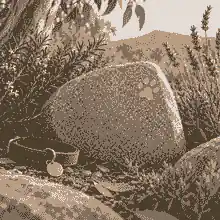
What are the best pet memorial stones in Australia? Pet tribute ideas, wording and memories begin with a durable stone or plaque that suits your garden, balcony, cemetery or pet resting place, then add concise wording and a way to preserve the fuller memories that cannot fit on the marker. The best choice is usually granite, slate, ceramic, bronze or stainless steel for outdoor use, paired with a simple inscription, a small symbol, and, where appropriate, a QR-linked digital tribute.
For Australian families, pet memorial stones in Australia need to handle sun, rain, coastal air, garden movement and local rules. They also need to feel right emotionally: a marker should not pressure you into a grand gesture when what you really need is a quiet place to pause. This article focuses on Australia first, while also explaining the practical differences for readers in the United Kingdom and United States.
How to choose the right pet memorial stone
Start with the setting, not the product. A flat stone in a garden bed, a small engraved plaque beside an urn, a standing marker in a pet cemetery and a discreet balcony planter memorial all solve different problems. A family with children may want a safe, touchable marker near a plant. Someone renting may need a movable plaque rather than a fixed stone. A family using a cemetery or crematorium memorial area may need approval before choosing dimensions, material or wording.
The most reliable pet memorial stones in Australia tend to have four qualities: the material is suited to the weather, the wording is brief enough to remain readable, the design is restrained, and the memorial can carry more than one kind of memory. A physical marker can hold a name, dates and a short line; a pet memorial page with photos and stories can hold the daily routines, nicknames, pictures, videos and messages that explain why the loss matters.
If the pet has died recently, you do not need to finalise every detail immediately. The Australian Veterinary Association describes euthanasia as a humane death with minimum pain, fear or distress when suffering cannot be adequately managed, and many families make memorial choices while still carrying the weight of that decision. A temporary marker, framed photo or simple plant can be enough until you are ready to order something permanent.
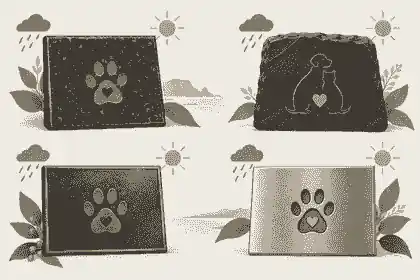
Best materials for pet memorial stones in Australia
Granite is usually the safest long-term stone choice for outdoor memorials. It is dense, hard, widely used for monuments and stands up well to weather when properly finished. The Natural Stone Institute notes granite’s strength, abrasion resistance and weathering durability, which is why it has such a long history in exterior stonework. For a garden pet memorial, polished granite can look formal; honed or lightly textured granite often feels softer and less cemetery-like.
Slate can be beautiful for smaller garden markers, especially when a natural edge suits a cottage or native garden. It is not always as impact-resistant as granite, so it works best where it will not be knocked by mowers, foot traffic or shifting soil. River stones are personal and understated, but not every stone engraves clearly; if you want legibility, ask the engraver to show a proof at the actual size before approving the work.
Bronze and brass plaques age differently from stone. The Copper Information Center explains that copper alloys develop a patina outdoors, with bronze gradually moving through warmer and darker surface changes. That ageing can be beautiful, but it is not a fault-free glossy finish. If the family expects the plaque to look new forever, bronze may disappoint unless it is maintained carefully.
Stainless steel is useful for slim modern plaques, QR plates and coastal settings, but it should not be treated as invincible. The British Stainless Steel Association explains that stainless steel is more corrosion-resistant than ordinary steel, but can still corrode in some circumstances. For Australian coastal homes, ask whether the grade is suitable for salt exposure and how often it should be washed down.
Ceramic photo plaques and porcelain portraits can add warmth when a family wants the pet’s face on the memorial. They work best when supplied by a maker experienced in outdoor memorial use. Resin, timber and painted products can be meaningful indoors, but outdoors they should be chosen carefully because UV exposure, water and movement in soil can shorten their life. If you are weighing a physical marker against ashes keepsakes, choose between pet urns stones and plaques for a pet tribute decision before spending on several overlapping items.
Pet memorial stones in Australia: garden, cemetery and home options
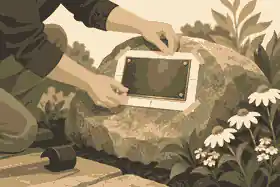
For a private garden, the most common choices are flat engraved stones, small upright markers, stepping stones with paw prints, plaques fixed to a rock, and memorial planting beds. A garden can make grief tangible without making it public. Some families plant rosemary for remembrance, lavender for scent, a native shrub for birds, or a small tree if they own the property and have room. If the garden is exposed to harsh summer sun, choose a material and planting plan that can handle heat as well as rain.
For a balcony or rental home, a movable memorial is usually wiser than anything fixed. A planter with a small plaque, a ceramic marker beside a pot, or an indoor remembrance shelf can move with you. This matters because families sometimes create a marker in the first weeks of pet loss, then realise later that they want the memorial close rather than buried in a garden they may leave.
For pet cemeteries, crematorium gardens or shared memorial parks, ask for written rules before ordering. Even where pet grave markers are welcome, there may be restrictions on size, installation, photographs, QR codes, loose objects, plantings, colours or maintenance. If the marker is going into a human cemetery alongside a person’s grave, the rules become even more specific. Victoria’s Parliament reported in 2025 that Victoria legalised pet burials in human cemeteries under particular conditions, reflecting how jurisdiction-specific this area can be. Do not assume rules are the same across Australian states, councils, cemetery trusts or private memorial parks.
For backyard burial, Australian families should check local council, strata, rental and environmental requirements. National emergency guidance is not written for ordinary companion pet burial, but the Australian Government’s public guidance on disposing of dead wildlife by burial is a useful reminder that burial depth, ownership of land, scavenging animals and environmental safety matter. If a pet died from a notifiable disease, chemical exposure or unknown cause, speak with a veterinarian or council before burial.
In the United Kingdom, the GOV.UK animal burial guidance says small domestic pets such as cats and dogs can generally be buried on your own land, while larger pets and pet cemeteries involve additional considerations. In the United States, rules vary by state, county, city and cemetery. The USDA APHIS carcass management guidance is primarily for animal-health emergencies, but its emphasis on disease control, environmental protection and proper disposal is relevant when local authorities set rules. New York, for example, has separate rules for pet cremated remains in certain cemetery settings, so US families should check local law rather than relying on general advice.
Wording for pet memorial stones
The best wording is short, specific and readable from a normal standing distance. A pet stone is not the place to write the whole story. It is the doorway into the story. Start with the pet’s name, add dates if they matter to you, and choose one line that sounds like your household rather than a catalogue phrase. If you want a separate wording framework, what to write on a pet headstone with tribute wording examples can help you test tone before engraving.
Good inscriptions often use one of these shapes: “Milo, our beach-walk shadow”, “Luna, keeper of the sunny chair”, “Rosie, gentle friend and garden supervisor”, “Max, always first to the gate”, or “Tilly, loved in every ordinary day”. For a cat, a spatial memory often works: the windowsill, the bed corner, the warm laptop, the hallway patrol. For a dog, a routine often works: the walk, the lead, the car ride, the morning greeting. For a horse, bird, rabbit or reptile, choose a detail that reflects the relationship rather than forcing dog or cat language onto another species.
Keep dates simple. If you do not know a birth date, use “Loved 2014-2026”, “Adopted 2017”, “With us 2019-2026” or no dates at all. If the pet’s formal name was rarely used, engrave the name people actually said. If children are contributing, let them suggest words, but have an adult simplify the final inscription so the marker remains clear and durable.
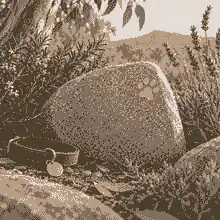
Symbols can help when words feel too exposed. Paw prints, a small leaf, a star, a heart, a bird, a fish outline, a collar tag shape or a simple line drawing can make the stone personal without clutter. Avoid cramming several symbols, long quotes and a photograph onto a small surface. The physical memorial should be calm enough to age well.
If the stone will include a QR code, do not make the inscription compete with it. A short line such as “Scan for memories” or “Stories and photos” is enough, provided the linked page is safe, moderated and meaningful. The US Federal Trade Commission warns that QR codes can be misused to hide harmful links, so families should use a trusted provider, test the code and avoid placing sensitive personal details behind a public marker.
Combining a stone with digital memories
A stone solves the problem of place. A digital tribute solves the problem of space. Many families want both, because a pet’s life is rarely captured by a name and date alone. Photos, voice notes, short videos, adoption stories, vet-team messages, walking-route memories, child drawings and anniversary notes all belong somewhere more flexible than an engraving. That is where pet memorial stone with QR-linked online tribute planning becomes useful.
The linked tribute should be edited with the same care as the stone. Keep public details gentle. Do not include your home address, private family contact details, children’s school names or financial information. If the memorial is public, choose a small selection of photos and stories. If it is private, you can invite a smaller circle and allow more personal memories. Families who want messages from others can use letting loved ones leave tributes and condolences to gather memories without turning the stone itself into a crowded record.
Digital memories are especially helpful after the first month, when friends may stop asking but grief still arrives in small daily moments. A new photo found on an old phone, a message from the dog walker, a note from the neighbour who gave treats, or a child’s later drawing can be added without replacing the stone. Cornell University’s veterinary college explains that pet loss grief has no prescribed timeline, and a memorial that can grow gently over time respects that reality.
For public figures, memorialisation shows how a single life can be remembered through many small signals rather than one complete inscription. The public memorial profile for Steve Irwin is relevant here because his legacy is strongly associated with animal care and conservation. Bob Barker is often remembered for encouraging pet desexing as part of animal welfare, while Paul O'Grady became closely associated with public affection for rescue dogs. A family pet memorial is more private, but the principle is similar: the marker is only one part of the wider memory.
How to compare pet memorial stone options
Before ordering, ask seven practical questions. Where will the marker sit? Who owns that land or space? Will it be exposed to sprinklers, salt air, mowers or heavy rain? How large can the lettering be? Will the material still suit the garden in five years? Can the maker provide a proof before engraving? What happens if the plaque fades, cracks, stains or needs to be moved?
Australian families comparing stones and plaques should ask whether the supplier understands local conditions. If a plaque is going near the coast, ask about salt exposure and cleaning. If it is going in a cemetery, ask whether the cemetery or memorial park must approve materials first. If it is going in a garden, ask whether it needs a base, adhesive, pins or a drainage layer. The same practical care applies when choosing pet memorial plaque wording materials and digital tribute planning, because wording and materials should be decided together.
For a larger or more formal installation, cemetery rules matter more than personal taste. Evaheld’s guidance on cemetery rules for QR codes is written for grave settings, but the same principle applies to pet memorial areas: approval should come before purchase, not after delivery. If the marker will include a QR plaque, also compare which materials tend to suit QR memorial plaques best so the code remains readable.
Pet tribute ideas beyond the stone
A stone can be the centre of a tribute, but it does not have to carry everything. Some families create a small remembrance routine: placing flowers on adoption day, lighting a candle on the anniversary, walking the old route, donating to a rescue, or adding one new memory to the online tribute each year. The RSPCA UK pet bereavement guidance recognises how intense pet grief can be, and practical rituals can give that grief a place without requiring constant public explanation.
Australian pet tribute ideas often work best when they are grounded in place. A dog who loved the coast may be remembered with a smooth stone near a coastal rosemary plant. A cat who owned the back step may be marked with a small slate beside a pot. A horse may be honoured with a plaque near a gate, a framed photo and a braided tail keepsake if that feels appropriate. A bird may be remembered with a native flowering plant that invites other birds into the garden. A rabbit may be remembered with a low planter and a small ceramic marker near the area children associate with them.
Children often need concrete involvement. They can choose a flower colour, draw a picture, help pick a photo, write one sentence, or place a safe object near the marker. The RSPCA Australia knowledgebase also notes that surviving animals may show behaviour changes after the loss of a close companion, so maintaining household routine can matter for both people and remaining pets.
A donation, volunteer day or shelter sponsorship can be meaningful if it fits the pet’s story. Keep it modest and specific: “In Daisy’s memory, we donated towels to the shelter where she was adopted” usually feels more grounded than a broad statement. The RSPCA Australia euthanasia policy also reminds families that animal welfare decisions should centre the animal’s quality of life, which can help when grief is tangled with guilt.
For families wanting an Australian-specific plaque path, Australian pet grave plaque wording and QR memorial planning can sit alongside the stone decision. For families building an outdoor tribute, garden pet memorial ideas with wording and QR tribute planning can help the physical space feel personal without becoming crowded.
Common mistakes to avoid
The first mistake is ordering too quickly. In early pet loss, many people either want to buy everything or avoid every decision. Give yourself a small temporary ritual first, then make the permanent choice when the shock has softened. The second mistake is choosing wording that sounds expensive but not true. A plain line about the daily bond will usually outlast a polished phrase.
The third mistake is ignoring maintenance. Outdoor memorials sit in real weather. Soil moves, metal changes colour, ceramic can chip, stone can collect lichen, and QR plaques need occasional cleaning. Choose a marker that someone in the household can realistically look after. The fourth mistake is forgetting privacy. A public QR code can be beautiful, but only if the linked page contains information the family is comfortable sharing with unknown visitors.
The fifth mistake is treating Australia, the United Kingdom and the United States as if the same burial and cemetery rules apply everywhere. They do not. Check local council, cemetery, crematorium, strata, rental and environmental rules before burial or installation. If you are unsure, ask your veterinarian, council or memorial park for written guidance.
Finally, do not let a supplier’s catalogue decide what love should look like. Pet memorials, garden stones and pet loss are personal subjects. The best tribute is the one your family can live with: durable enough to last, simple enough to read, and honest enough to feel like the companion you are remembering.
When you are ready to gather photos, wording and family memories in one place, Evaheld Memorials can help you begin pet memorial stones in australia with a calm digital tribute that can sit beside the physical marker.
FAQs
What are the best pet memorial stones in Australia? Pet tribute ideas, wording and memories
The best pet memorial stones in Australia are usually durable granite, slate, ceramic, bronze or stainless steel markers with short personal wording and, where helpful, a linked digital tribute. A pet memorial page with photos and stories can hold the fuller memories, while the Natural Stone Institute explains why granite is valued for exterior durability.
What should I write on a pet memorial stone?
Use the pet’s name, simple dates if known, and one line that reflects their real place in your life, such as a routine, favourite spot or family nickname. what to write on a pet headstone with tribute wording examples can help you keep the line natural, and Cornell’s pet loss resources recognise that writing, art and memorialisation can help some families express grief.
Can I bury a pet in my backyard in Australia?
Sometimes, but it depends on land ownership, local council rules, strata or rental conditions, environmental safety and the circumstances of the pet’s death. Australian pet grave plaque wording and QR memorial planning can help you plan the marker, while Australian Government guidance on burial safety for dead wildlife shows why depth, land permission and scavenging risk matter.
Are pet memorial stones allowed in cemeteries?
Pet cemetery and human cemetery rules vary, so approval should be checked before ordering any stone, plaque, photograph or QR marker. cemetery rules for QR codes explains the approval mindset, and the Parliament of Victoria shows how even pet burial with human remains can depend on specific state law.
Which material lasts longest outdoors?
Granite is usually the safest stone option for long-term outdoor use, while bronze and stainless steel can work well when the grade, finish and maintenance match the setting. which materials tend to suit QR memorial plaques best helps compare plaque choices, and the British Stainless Steel Association explains why stainless steel can still corrode in harsher environments.
Can a QR code be added to a pet memorial stone?
Yes, a QR code can be added as an engraved code or separate plaque if the material, contrast, size and placement allow easy scanning. pet memorial stone with QR-linked online tribute planning explains the family side, and the US Federal Trade Commission shows why trusted links and URL checking are important.
What is the difference between a pet stone, plaque and urn?
A stone usually marks a place, a plaque usually carries wording on a surface, and an urn holds cremated remains; many families use one or combine two carefully. choose between pet urns stones and plaques for a pet tribute decision can help you avoid doubling up, while New York State’s pet cremated remains FAQ shows how rules can differ when ashes enter cemetery settings.
How do I make a pet memorial feel personal without overdoing it?
Choose one clear visual element, one true line of wording and one place for longer memories, rather than filling the marker with every feeling at once. pet memorial plaque wording materials and digital tribute planning supports that balance, and RSPCA UK guidance on pet loss recognises that the depth of grief can be very real.
Can family and friends add memories after the stone is made?
Yes, if the stone links to an editable online tribute or the family keeps a shared memory space alongside the physical marker. letting loved ones leave tributes and condolences is useful for that shared approach, and the RSPCA Australia knowledgebase also notes that other animals in the household can respond to loss and changed routines.
What garden pet memorial ideas work in small spaces?
A pot with a small plaque, a balcony herb planter, a ceramic marker, a framed photo shelf or a QR-linked card can work when you do not own a garden. garden pet memorial ideas with wording and QR tribute planning can be adapted for small spaces, and RSPCA Australia’s euthanasia policy is a useful reminder to keep decisions grounded in care rather than pressure.