How do I clean engraved sandstone? Wording, materials and care
A practical, compassionate guide to cleaning engraved sandstone, choosing durable wording, understanding sandstone materials and protecting memorial care across AU, UK and US settings.
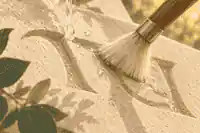
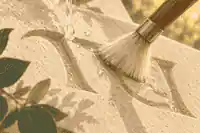
How do I clean engraved sandstone? Wording, materials and care begin with restraint: use clean water, a soft natural-bristle or very soft nylon brush, patient rinsing and a stop-before-it-looks-new approach, because sandstone is porous and engraved lettering can lose sharpness if it is scrubbed, pressure washed or treated with harsh chemicals. Before you clean engraved sandstone, check cemetery rules, assess whether the surface is powdery, flaking, cracked or unstable, and call a qualified monumental mason or stone conservator if the inscription is fragile, historically significant or already shedding grains.
Sandstone memorials ask for gentler care than polished granite. The stone is made from grains held together by natural cement, and the spaces between those grains can take in water, salts, pollutants and biological growth. The British Geological Survey sandstone note explains how sandstone varies by grain, cement and porosity, which is why one old headstone may tolerate careful washing while another sheds grains under a fingertip. That is the practical reason the safest cleaning plan is slow, wet, soft and conservative.
The aim is not to make an old grave marker look new. The US National Park Service grave-marker cleaning guidance warns that cleaning can remove small amounts of original material even when it is done carefully, and that families should avoid wire brushes, power washers, bleach and harsh cleaners. For sandstone, that warning matters even more because an engraved letter may depend on a thin raised edge or a shadow line that cannot be restored once it has been rounded away.
clean engraved sandstone: practical guidance
Begin by asking three questions: are you allowed to clean it, is the stone sound enough to clean, and what are you trying to achieve? Cemetery and churchyard rules differ across Australia, the United Kingdom and the United States. Some cemeteries allow families to wash a private memorial with water; others require permission, prohibit chemical products or restrict work on older sections. Evaheld families planning a physical plaque alongside a digital tribute often find that cemetery rules for QR codes are a useful reminder that memorial changes are governed locally, not by one universal rule.
If the sandstone is leaning, cracked, loose at the base, delaminating, flaking, powdery or dropping grains when touched, do not clean it. Historic England cemetery monument guidance treats condition, safety and significance as part of responsible graveyard care, because stone decay, structural movement and previous repairs change what is safe. A soft brush can still damage a friable surface. In those cases, photograph the inscription, note the location and seek a stone conservator or monumental mason who understands heritage memorials.
Purpose matters because cleaning is an intervention. A careful family clean may be justified when soil, bird deposits or algae obscure a recent inscription. A heritage gravestone may be better left partly weathered if cleaning would erase tool marks, old paint traces or fragile letter edges. The War Memorials Trust stone-cleaning guidance is useful beyond war memorials because it distinguishes dirt that hides inscriptions from natural ageing that may be better monitored than removed.
Why sandstone needs a different hand
Sandstone varies widely. Some memorial sandstone is dense and well cemented; some older sandstone is soft, bedded, salty or weathered by decades of damp. The Australian Museum explanation of sediment characteristics helps families understand why grain size, sorting and pore spaces affect how water and deposits move through sedimentary materials. The British Geological Survey weathering overview also explains physical, chemical and biological weathering, all of which can be present in a cemetery.
Look for biological growth, soil splash, rust from nearby ironwork, leaf staining, salt crusts, failed mortar, open joints and earlier coatings. Do not pick out lichen with a knife, scrape moss with metal or chase every stain. Many stains are deep in the pores. Some biological growth is unsightly, but some removal methods are worse than the growth. Your goal is legibility and respectful presentation, not a showroom finish.
This is also where wording, materials and care belong together. If a family is still choosing a new memorial, a deep, well-spaced inscription in a readable font will usually age better than a crowded message in fine lettering. Evaheld covers the best materials for QR memorial plaques because readability outdoors depends on surface, contrast and maintenance; the same principle applies to sandstone lettering.
A safe step-by-step cleaning method
Choose a mild day. Do not clean in frost, intense heat, strong sun or when freezing weather is expected. Bring clean water, a bucket, a pump sprayer if allowed, a soft natural-bristle or very soft nylon brush, a soft toothbrush for lettering, wooden skewers only for loose debris where there is no resistance, nitrile gloves and clean cloths. Leave bleach, vinegar, household cleaners, pressure washers, wire brushes, stiff plastic brushes, power tools and abrasive pads at home.
First, photograph the whole memorial and close details of the inscription. This gives the family a record if anything changes, and it helps preserve wording that may continue to weather. Gently remove loose leaves by hand. Wet the stone thoroughly with clean water so the pores are filled before any light agitation. Work from the bottom upwards so dirty water does not streak into dry, absorbent stone. Use the soft brush in small sections, applying only light pressure, then rinse repeatedly.
For engraved sandstone lettering, do not dig into the cuts. Let water soften the soil, then brush across the letter forms gently rather than gouging along each groove. A soft toothbrush may help where dirt sits in a deep letter, but stop if grains begin to loosen. If the inscription relies on paint, lead, gilding or an infill, avoid rubbing the infill unless a specialist has confirmed the method is safe.
After washing, rinse until runoff is clear. Let the memorial dry naturally. Some biological staining will fade over days or weeks, and some will remain. That is normal. Do not repeat the process aggressively on the same visit. The Historic England war memorial cleaning note supports staged assessment before cleaning, rather than treating cleaning as a routine domestic job.
Where a QR plaque, ceramic tile or metal element sits near sandstone, clean the stone and the plaque as separate materials. Evaheld guidance on where to place a QR code on a headstone explains why scanning access, glare and visual balance matter before installation; after installation, those choices also affect how safely people can clean around it.
What not to use on engraved sandstone
Never pressure wash sandstone. Water under pressure can drive moisture into the stone, cut away softened grains and force dirt deeper into pores. Do not sandblast, grind, polish, acid wash or use rotating brushes. These methods can erase the very surface that carries the inscription. If a memorial needs specialist cleaning, the Government of Canada heritage conservation discussion of laser cleaning is a reminder that advanced methods belong with trained conservation teams, not routine family visits.
Do not use bleach. It can leave salts, alter colour, harm nearby planting and encourage damaging cycles of wetting and drying. Avoid vinegar and acidic cleaners because sandstone may contain vulnerable minerals and adjacent mortar or marble details can be etched. Avoid oil-based products, sealers and waterproof coatings unless specified by a conservator, because coatings can trap moisture and accelerate decay.
If a product is sold as a gravestone cleaner, that does not automatically make it right for sandstone. Read the label, check whether it is non-ionic and neutral, test a small inconspicuous area, and confirm cemetery permission. Where a biocide is being considered for heavy algae, moss or lichen, families should usually ask a professional, especially on older sandstone.
Cleaning around names, dates and epitaphs
Competitor articles about inscriptions often focus on what to write, but cleaning engraved sandstone raises a more specific issue: every cleaning decision affects future readability. Keep names, dates and short wording crisp by doing less, not more. If a letter remains dark after washing, that darkness may be what makes it readable. Do not scrape it out for colour uniformity.
When wording is being chosen for a new sandstone memorial, use fewer words than you would on paper. A name, dates and one short line often age better than a crowded paragraph. Families comparing wording choices can use Evaheld support on how to write a memorial tribute to gather the fuller life story elsewhere, then reserve the stone for the words that truly need to be permanent.
For fonts, choose legibility over novelty. Serif lettering can be dignified, but very fine serifs may soften over time. Script fonts can be hard to read once weathered. Deep, well-spaced carving with enough contrast is usually more practical than intricate lettering. Cultural and religious wording should be checked carefully with family or faith leaders, including spelling, diacritics and script direction, before a mason cuts the stone.
For United States veterans, the National Cemetery Administration inscription rules explain mandatory, optional and additional inscription items for government-furnished markers. Families in Australia and the United Kingdom should instead check local cemetery authority, council, churchyard or war-grave rules, because the responsible body and allowed wording will differ.
Australia, United Kingdom and United States differences
In Australia, sandstone is common in older cemeteries, especially in places with local sandstone building traditions. Coastal salt, irrigation, tree cover and intense sun can all affect the stone. The Australia ICOMOS Burra Charter and practice notes describe a best-practice standard for managing culturally significant places, and the same principle helps a private family: understand significance before altering the memorial.
In the United Kingdom, churchyards, listed cemeteries and war memorials may carry heritage controls as well as cemetery rules. The UK Ministry of Justice guidance on unstable gravestones is aimed at burial-ground managers, but it reinforces the point that safety, inspection, records and communication matter before anyone handles a memorial. Do not try to straighten or lift an unstable headstone as part of cleaning.
In the United States, cemetery ownership and rules vary by state, municipality, faith body, private cemetery and veterans cemetery. Federal veterans markers have particular rules, but private cemeteries may impose their own limits on added inscriptions, QR plaques, cleaning agents and installation. The National Cemetery Administration notes that the chosen government marker style must be permitted by the cemetery officials where it will be placed.
Across all three countries, the family should not assume that ownership of the grave automatically permits every cleaning or alteration. Written permission is especially important before removing biological growth from an old memorial, adding a plaque, repainting letters or working on shared family monuments.
When a professional should handle it
Call a professional if the sandstone is soft, scaling, sugaring, heavily lichen-covered, fractured, leaning, historically significant, listed, war-related, lead-lettered, painted, gilded, previously sealed or attached to metalwork. A mason or conservator can assess whether the inscription can be cleaned, whether a fallen piece can be reset, whether drainage is causing rising damp and whether the family should preserve the wording by photography rather than surface treatment.
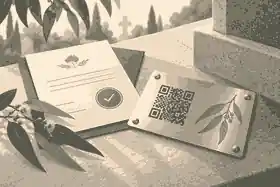
Professional help is also sensible when a family wants to combine a fixed stone inscription with a QR-linked memorial. Evaheld guidance on engraving QR codes on headstones explains that scan reliability, contrast, placement and future maintenance matter more than the novelty of carving the code directly into stone. On sandstone, a separate durable plaque may often be safer than engraving a code into the stone itself.
A digital layer can reduce pressure on the stone. The headstone can carry the name, dates and one line of wording, while the digital memorial holds photographs, stories, longer tributes, voice notes and updates. Evaheld explains what a QR memorial is for families who want the physical memorial to stay simple while still giving visitors a fuller story.
If lettering itself is failing, cleaning is not the same as re-cutting. The War Memorials Trust advice on incised and relief lettering explains that re-cutting should be considered carefully because it can reduce the total lifetime of an inscription. That is directly relevant to sandstone, where the face may already be thin, weathered or historically important.
What to do after cleaning
Once the memorial is dry, take new photographs in even light. Record the date, weather, method, products used and any areas of concern. This maintenance note helps the next family member avoid repeated cleaning. If the inscription is still hard to read, use raking light from the side for photographs rather than deeper scrubbing.
Do not seal sandstone to keep it clean. Trapped moisture can be more harmful than ordinary weathering. Instead, reduce causes where possible: ask cemetery staff about overhanging branches, avoid leaving objects that hold damp against the stone, keep soil from building up at the base, and avoid metal decorations that may rust down the face. If a QR plaque or linked content is part of the memorial, updating QR memorial content lets the story change without recutting or overworking the stone.
Families sometimes feel that a clean stone is the only way to show care. It is not. Care can mean preserving the inscription photographically, sharing stories, correcting dates in a family record, inviting relatives to contribute memories, or choosing not to clean because the stone is too fragile. Evaheld guidance on meaningful online memorial inclusions helps families keep the fuller remembrance active while the physical sandstone is treated with restraint.
The same thinking appears in notable memorial lives. The Evaheld Memorials profiles for Angela Lansbury, Stephen Sondheim and Marie Curie show how a life can be remembered through dates, places, relationships and story, not only through a short inscription. A sandstone headstone can mark the place; a wider memorial can carry the voice, photographs and context that stone should not be asked to hold.
Choosing wording for sandstone
For sandstone, short wording is usually kinder to the material and easier for future visitors to read. Consider a structure such as full name, years or full dates, relationship line, and one personal phrase. Examples include: loved parent, teacher and friend; remembered with gratitude; a life of service and quiet humour; or always part of our family story. Avoid very long poems, dense punctuation, tiny lettering and words that only make sense to one generation.
Religious wording should reflect the person, not simply convention. Cultural wording should be checked by someone fluent in the language. Humorous wording can be right for some people, but test whether it will still feel respectful to grandchildren, future cemetery visitors and relatives who grieve differently. If the family cannot agree, place the simplest shared wording on the stone and use the digital tribute for varied stories.
Before approving engraving, ask the mason for a proof at real scale. Check spelling, dates, accents, line breaks, symbols, title order and relationship words. Ask how the lettering will be cut, whether any paint or infill will be used, and how that finish should be maintained. This is where what information you need to start creating a memorial can help families gather the facts before emotions and deadlines make proofing harder.
Family sharing, privacy and updates
A cleaned inscription may make a memorial readable at the grave, but many relatives will never visit in person. Families spread across Australia, the United Kingdom and the United States often need a way to share the wording, photographs and memories with people who cannot travel. Evaheld explains how family and friends can be invited to contribute, which is useful when one person has the grave photographs and another has stories, recordings or missing details.
Privacy should be decided before sharing a QR link or public memorial. Some families are comfortable with broad access; others want a private space until the wording, photographs and tribute tone are settled. If sensitive details appear on the stone, avoid adding sensitive personal information online. Names and dates may be public at a cemetery, but addresses, family disputes, medical details and private contact information do not belong on an open memorial.
Clean engraved sandstone by doing only what the stone can safely bear: permission first, condition check second, water and soft brushing third, and professional help whenever the surface is weak or the inscription is precious. If you want the stone to stay simple while the family story remains shareable, Evaheld Memorials can help you clean engraved sandstone in the broader sense: organise the wording, photographs and memories around a respectful memorial that does not ask fragile stone to carry everything.

FAQs
How do I clean engraved sandstone? Wording, materials and care
Clean engraved sandstone with water, a very soft brush and repeated rinsing, then stop before the surface looks new. If the inscription is fragile, use the best materials for QR memorial plaques to think about future readable additions, and follow the US National Park Service grave-marker cleaning guidance by avoiding bleach, wire brushes and pressure washing.
Can I use bleach on a sandstone headstone?
No. Bleach can leave harmful residues, alter colour and damage porous stone over time. Families comparing safer memorial choices can also review engraving QR codes on headstones, while Historic England cemetery monument guidance warns against inappropriate cleaning and coatings.
How often should engraved sandstone be cleaned?
Clean only when there is a clear reason, such as obscured lettering or harmful deposits, and avoid routine overcleaning. Planning a lower-maintenance physical and digital memorial can include where to place a QR code on a headstone, and the Historic England war memorial cleaning note supports a careful decision before cleaning begins.
What brush is safe for sandstone lettering?
Use a soft natural-bristle brush, a soft nylon brush or a soft toothbrush with light pressure; never use wire, stiff plastic, abrasive pads or power tools. If the stone will also include digital access, cemetery rules for QR codes can help frame approval questions, and the British Geological Survey sandstone note explains why sandstone porosity affects decay.
What if the engraved letters are still dark after cleaning?
Leave them. Darkened grooves often help legibility, and scraping them out can permanently soften the inscription. A fuller story can sit beside the stone through what a QR memorial is, while the British Geological Survey weathering overview explains why exposed rock changes naturally over time.
Can I repaint or re-gild sandstone inscriptions myself?
Do not repaint, re-gild or refill lettering without cemetery permission and specialist advice, especially on older sandstone. Families can preserve wording digitally through updating QR memorial content, and the War Memorials Trust stone-cleaning guidance cautions that over-cleaning and inappropriate methods can damage inscriptions.
What wording works best on sandstone?
Short, well-spaced wording works best: full name, dates and one clear personal line usually outlast a crowded inscription. Families shaping the longer tribute can use how to write a memorial tribute, while the National Cemetery Administration inscription rules show why official markers require careful wording and approval.
Can a QR code be added to engraved sandstone?
Sometimes, but a separate durable plaque is often safer than carving a code directly into soft or weathered sandstone. Evaheld explains meaningful online memorial inclusions, and the War Memorials Trust advice on incised and relief lettering shows why lettering changes should be carefully assessed.
Who should clean an old sandstone gravestone?
If the gravestone is old, unstable, heritage-listed, war-related, flaking or culturally significant, a conservator or experienced monumental mason should assess it first. Gather the family details through what information you need to start creating a memorial, and check the UK Ministry of Justice guidance on unstable gravestones where safety is a concern.
How can distant family help with memorial wording and care?
Share photographs, inscription proofs and maintenance notes before decisions are final, so relatives can check names, dates and tone. Evaheld explains how family and friends can be invited to contribute, and the Australia ICOMOS Burra Charter and practice notes are a useful model for understanding significance before altering a memorial.