What size should a QR code be on a plaque? Cemetery checks, materials and setup
A practical, authority-backed guide to QR code plaque sizing, cemetery approval, materials, installation, weatherproofing and setup for Australian, UK and US families.
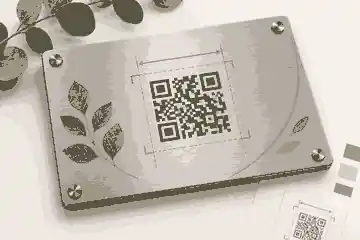
What size should a QR code be on a plaque? Cemetery checks, materials and setup should start with a practical target: for most memorial plaques, make the scannable QR symbol at least 25 mm x 25 mm, and preferably 30-40 mm x 30-40 mm when the plaque will be outdoors, viewed by older visitors, or scanned from a normal standing position. The final plaque may be larger because the QR code needs quiet space around it, a readable caption or short instruction, and enough margin so the code is not crowded by engraved text, screws, bevels, curves or the edge of the material.
That size range is not a cemetery law. It is a sensible design minimum for a grave plaque, headstone plaque, bench plaque, cremation niche plate or memorial garden marker where the code needs to work in rain, glare, shade and changing phone angles. DENSO WAVE, the company that developed QR Code technology, explains that the symbol depends on module size and version, and that a QR Code requires a clear four-module quiet zone on all sides according to its QR Code quiet zone guidance. In plain terms, do not fill every millimetre of a plaque with the square code. Leave breathing room around it.
The best size also depends on the destination link. A short, stable URL usually creates a simpler QR pattern than a long URL full of tracking parameters. A simpler pattern can be easier to engrave cleanly and scan at a smaller size. DENSO WAVE’s module size guidance says larger modules improve stability and readability, while very small modules depend on both print quality and scanner capability. For memorial use, where visitors may be outdoors, emotional, holding flowers, or using an older phone, choose generosity over technical minimums.
If you want the short answer before the details, use a 30 mm square QR symbol for most plaques, a 40 mm square symbol where space allows, and avoid going below 25 mm unless the plaque is sheltered, close-range and professionally tested. Add a quiet zone around the QR symbol, use dark-on-light contrast, keep the surface matte rather than mirror-like, and test the code on the exact proof before the plaque is made. Families comparing the physical choices can use the best materials for QR memorial plaques to decide whether stainless steel, ceramic or another finish suits the cemetery setting.
what size should a qr code be on a plaque: practical guidance
A QR code on a leaflet is usually scanned indoors, held flat and replaced if it prints badly. A QR code on a plaque is different. It may be exposed to sunlight, coastal air, dust, irrigation spray, lichen, cleaning products, frost, heat and scratches. It may be attached to polished granite, ceramic, bronze, stainless steel, aluminium, a memorial bench or a niche door. It also sits in a place where people are not testing technology; they are remembering someone.
This is why “small enough to fit” is the wrong standard. The right standard is “large enough to scan easily after years of ordinary cemetery life”. DENSO WAVE’s QR Code error correction explanation shows why a code may still work despite some dirt or damage, but error correction is not a licence to engrave a tiny, decorative, low-contrast symbol. Higher error correction also increases the size of the QR symbol needed for the same data. In memorial work, error correction should be treated as resilience, not as an excuse to shrink the code.
Phone behaviour also matters. Apple’s current support instructions confirm that people can scan a QR code using the Camera app or Code Scanner and then tap the link that appears, as described in Apple’s QR code scanning guidance. That is good news because families do not normally want visitors to install an app at a graveside. But native phone scanning still depends on light, contrast, distance, focus and whether the camera can distinguish each square module from the background.
For this reason, the safest Evaheld Memorials editorial recommendation is: design the QR symbol first for scanning, and the plaque second for appearance. If the plaque cannot fit a 25-40 mm QR symbol with a quiet zone, the plaque is probably too small for an outdoor cemetery role. If the grave or memorial space is too constrained, place the QR code on a separate approved medallion, a nearby approved plaque, a funeral booklet, a keepsake card, or a sheltered niche plate rather than forcing a barely readable symbol onto the main inscription.
A practical sizing framework for memorial plaques
Use 25 mm x 25 mm as the lower practical limit for a professionally produced memorial QR symbol, not counting the quiet zone. Use 30 mm x 30 mm as the everyday working size for a small headstone plaque or plaque insert. Use 40 mm x 40 mm when the plaque will be outdoors, visited by older relatives, scanned from more than arm’s length, or installed where light conditions vary. For larger public memorials, a bigger code can be appropriate, but it should still feel discreet and proportionate to the memorial.
The complete plaque will usually need more space than the QR symbol itself. A 30 mm code with quiet zone, a short line such as “Scan for memories” and a plain border may need a plaque closer to 60-80 mm wide, depending on layout. A 40 mm code with caption and margins may suit a plaque around 75-100 mm wide. These are design planning numbers, not rules; cemetery approval, monument proportions and the stonemason’s method matter more than a fixed template.
A common mistake is treating the square printed by a QR generator as the whole code area. The quiet zone is part of the scannable design. DENSO WAVE’s QR Code readability warnings show that letters or pictures placed too close to the code can remove the margin the scanner needs. On a memorial plaque, that means no floral engraving pressed against the code, no decorative border touching the quiet zone, no screw head in the quiet area, and no inscription line crowding the top or bottom.
Another mistake is using a long, complicated URL because it is copied from a browser after tracking parameters have been added. The best QR memorial destination should be a stable, clean memorial link. Evaheld families planning the page behind the scan can review the kinds of content a memorial QR code can open before deciding what the plaque should lead to. The symbol should take visitors to a page that is clear in the first few seconds: name, photograph, dates, short context, and a calm path to stories, photos, tributes or service details.
Cemetery approval comes before production
Before ordering any plaque, ask the cemetery, crematorium, churchyard, memorial garden or local authority what is permitted. A QR code may feel like a small addition, but the cemetery may treat it as an alteration to a memorial. In Victoria, the Department of Health says families must apply to the cemetery trust before building or altering a memorial, and that applications should include a plan or design; its Victorian memorial approval guidance is a useful model even outside Victoria because it shows how formal these decisions can be.
Australian readers should assume cemetery rules vary by state, operator and section. A lawn cemetery may restrict attachments because maintenance equipment needs a clear surface. A heritage area may refuse modern additions that alter the visual character of older graves. A cremation wall may have strict size and material rules for niche plates. A private cemetery may allow only approved suppliers or may require written approval before third-party plaques are installed. Families can prepare better by reading cemetery rules for QR codes before buying.
UK readers should separate local authority cemeteries from Church of England churchyards and other faith burial grounds. GOV.UK planning guidance notes that statues, memorials, monuments and plaques can trigger permission issues in some contexts, including older tombstones and consecrated land, as explained in UK permission guidance for memorials and plaques. Churchyards often have their own diocesan regulations and faculty rules, so a QR plaque that is acceptable in a municipal cemetery may still be refused in a parish churchyard.
US readers should check the cemetery office and, for veteran-related markers, the National Cemetery Administration rules. The VA explains who may apply for government headstones, markers and medallions and how medallions are handled for private cemeteries in its National Cemetery Administration marker instructions. Families should not assume they may attach a private QR plaque to a government-furnished marker. Ask first, get the answer in writing where possible, and keep the approval with the memorial records.
The practical approval question is not simply “Do you allow QR codes?” Ask: what maximum plaque size is allowed, whether a QR code is considered an inscription or attachment, whether adhesive mounting is permitted, whether drilling is allowed, whether the work must be done by a licensed or approved mason, whether the plaque colour and finish must match surrounding memorials, and whether the right-holder or grave owner must sign the application. The guide to where a QR code can be placed on a headstone helps families turn those answers into a respectful layout.
Material and finish choices that affect size
The same 30 mm QR symbol will not behave identically on every material. Matte stainless steel with crisp dark marking usually gives better scan reliability than a shiny surface that reflects the sky. Ceramic can be beautiful and readable when the image is fired or sealed properly, but it may chip if struck. Bronze suits traditional plaques, though patina and low contrast can make the code harder to scan if the design is not planned carefully. Anodised aluminium can work in moderate settings, but families should ask about outdoor grade, engraving method and warranty. Printed vinyl or laminate should usually be treated as temporary outdoors.
Weatherproofing is partly material and partly geometry. A small plaque with the QR code close to the edge can trap dirt at its border or be harder to clean without rubbing across the symbol. A slightly larger plaque may age better because it gives the code and caption space away from edges, screws and bevels. For most outdoor memorials, a plain, matte, low-glare finish will serve families better than a highly polished or decorative face.
Cleaning guidance matters because the plaque will share the same environment as the grave marker. The US National Park Service recommends gentle methods and warns against damaging headstones during cleaning in its headstone cleaning recommendations. Apply that same restraint to a QR plaque: use water, a soft cloth or soft brush where suitable, and avoid abrasive pads, harsh chemicals or scraping across the code. The goal is readability, not making old stone look new.
Families deciding between a plaque and an engraved code should be especially careful. Engraving directly into stone can feel permanent, but it is only as useful as the link behind it and the scan contrast on the stone surface. A separate plaque may be easier to replace if it is damaged, if the cemetery later changes rules, or if the family needs a clearer finish. Families considering longevity should read how long QR memorials last in practice, because the physical plaque and the digital page have separate risks.
Installation: adhesive, screws, inlay and timing
Installation should follow the cemetery approval and the material supplier’s instructions, not an improvised graveside guess. Adhesive mounting is common because it avoids drilling into stone, but it still needs a clean, dry, compatible surface and suitable temperature. 3M’s technical data sheet for VHB tape says surface preparation often includes a 70/30 isopropyl alcohol and water mixture, and that the 3M VHB tape application temperature guidance gives 10-15°C as the minimum suggested application range for most VHB tapes, with bond strength building over time.
That matters for cemeteries in winter, coastal areas, damp gardens and shaded churchyards. If the stone is cold, wet, dusty, waxed, lichen-covered, rough-sawn or sealed, the plaque may not bond reliably. Do not attach a QR plaque after rain, in frost, or onto a surface that has only been wiped quickly with a sleeve. Clean, dry, test, place, press and allow curing time. If the cemetery requires a mason, let the mason choose the fixing method.
Screw-fixing may be more secure on some plaques, but it changes the memorial more significantly and usually needs formal permission. Recessed inlay can be the cleanest physical result when a new headstone is being made, but it is harder to change later. For existing stones, a separate approved plaque is often the least disruptive route. Families should ask whether the installation can be reversed without staining or damaging the monument.
Testing is not optional. Before manufacture, scan the proof at actual size from several phones. After manufacture, scan the plaque indoors and outdoors. At the cemetery, hold it where it will be installed and test the code from normal visitor height and angle. Test in bright light and shade if possible. Check mobile coverage if the site is rural or below ground level in a mausoleum. If coverage is poor, still make the memorial link shareable separately so relatives do not depend on standing at the grave to reach the page.
What the QR code should open
The code should open a memorial page, not a raw file, a social profile that may later change permissions, or a long link that is difficult to manage. A good memorial destination confirms the person’s identity, explains the relationship between the plaque and the page, and then gives visitors quiet choices: read the life story, browse photographs, watch a tribute video, hear audio, leave a message, view service details, or share a memory.
This is where QR plaques can be more useful than engraving alone. A headstone may hold a name, dates and inscription. A memorial page can hold the parts of a life that do not fit on stone: voice, stories, recipes, community work, music, migration, family photographs, and tributes from people who could not visit the grave. The article on the way headstone QR codes are usually scanned explains the visitor experience from code to page.
The page should also be manageable over time. Families may begin with a short biography and photographs, then add tributes after the funeral, a service recording, anniversary notes, or captions from relatives who recognise people in old pictures. That is why updating QR memorial content over time is a practical requirement, not a luxury. The plaque should stay stable while the memorial grows carefully behind it.
Privacy must be decided before the plaque is installed. A QR code on a grave can be scanned by anyone who sees it unless the linked page has privacy controls. Public memorial pages can be right for some families, especially when the person was widely known or the family wants open contributions. Private or restricted pages may be better when there are children, sensitive photographs, complex family circumstances, unlisted service details or personal recordings. A QR plaque is physically public; the page behind it does not have to reveal everything.
Jurisdiction differences for Australia, the United Kingdom and the United States
In Australia, the core practical difference is operator approval. Cemetery trusts, councils and private operators can set rules about applications, sizes, materials, fees, right-holder consent and installation. The ACCC also reminds families that funeral products and services are covered by consumer law, and its Australian funeral services guidance says businesses must not mislead consumers about prices or obligations. For QR plaques, ask for written pricing, what is included, who owns the memorial link, what happens if the plaque fails, and whether you may use a third-party plaque supplier.
In the United Kingdom, terminology and permission pathways can differ. Families may deal with a council cemetery, private cemetery, crematorium, churchyard or natural burial ground. Churchyards can be subject to ecclesiastical regulation as well as local expectations. The safest approach is to ask for the current memorial regulations before commissioning anything, including whether QR codes, modern materials, adhesive fixings or non-traditional inscriptions are allowed.
In the United States, private cemeteries, municipal cemeteries, religious cemeteries and national cemeteries operate under different rules. The Federal Trade Commission’s Funeral Rule consumer guidance is not a cemetery approval rule, but it is useful because it reinforces the need for itemised information and consumer choice when buying funeral-related goods and services. Ask the cemetery office whether the plaque is allowed, whether an approved monument dealer must install it, and whether veterans’ markers have special restrictions.
Across all three markets, the family should keep one folder with the cemetery approval, plaque proof, QR destination URL, login details for the memorial organiser, supplier warranty, installation date, and replacement process. That small administration step can prevent confusion years later if the plaque is damaged, the grave right transfers, or another relative takes over the memorial.
How to future-proof the plaque and the page
The physical question, “what size should a qr code be on a plaque”, is inseparable from the digital question, “will the page still be there?” A perfectly engraved code becomes useless if the destination disappears, the account lapses, the domain changes, or nobody in the family can access the page. Future-proofing means thinking about the link, the hosting arrangement, backups and ownership as carefully as the steel or ceramic.
Use a stable memorial URL where possible, and avoid a code that points to a temporary event link, a private cloud file, or a page controlled only by one person’s personal account. Keep a copy of the memorial content offline. Record who can administer the page. Make sure at least one trusted person knows how to update contact details and privacy settings. Families can go deeper with future-proofing a QR memorial, especially where the plaque is intended to last decades.
Replacement planning is also part of respect. A plaque may be scratched by maintenance equipment, damaged by weather, removed for cemetery compliance, or become hard to scan after years outside. The best plan preserves the same memorial destination where possible, so a replacement plaque opens the same page. Evaheld’s guidance on replacing a damaged QR memorial plaque explains why the link behind the replacement is as important as the new physical marker.
Famous public memorials remind us why the destination matters. A visitor scanning a code should reach a living, organised tribute, not a cluttered archive. The Evaheld Memorials profile for Steve Jobs shows how a life can be structured through chapters, milestones and family context. The profile for Princess Diana demonstrates how public memory, place and humanitarian legacy can sit together. The profile for Maya Angelou shows why voice, language and personal story deserve more room than a plaque can hold.
A step-by-step setup for families
First, decide what the QR code should open. If the memorial page is still unfinished, create a private draft before the plaque is produced. Add the essentials first: full name, dates, a clear photograph, a short life story, privacy settings and a plan for future contributions. Confirm whether the page can be edited after the plaque is installed.
Second, ask the cemetery or memorial site for its current rules. Give them a simple description: proposed plaque size, QR symbol size, material, finish, mounting method, exact position and who will install it. Avoid vague wording such as “small digital plaque”. Cemetery staff can respond more clearly when they know whether you are proposing adhesive stainless steel, ceramic inlay, screw-fixing or an engraved stone code.
Third, design the plaque around scan reliability. Keep the QR symbol at least 25 mm square, preferably 30-40 mm. Use a light background and dark modules. Preserve the quiet zone. Avoid decorative frames pressing into the code. Keep any caption short. Put the code where visitors can reach it without stepping onto another grave, crouching awkwardly or touching fragile stone.
Fourth, test before production. Print the proof at actual size and scan it from the expected distance. Test with more than one phone. If the code hesitates, simplify the link, increase the size, improve contrast or reduce decorative complexity. Do not approve manufacture until the actual-size proof scans quickly.
Fifth, install only after approval and under suitable conditions. Follow adhesive temperature and surface preparation requirements if adhesive is permitted. Use an approved mason if the cemetery requires one. After installation, scan again from normal visitor positions. Record the final plaque location, supplier, installation date and memorial URL.
If plaque supply is part of the decision, check which plan comes with QR memorial plaques before the cemetery application is lodged, because the approval form may need the proposed material, size, quantity and installation method. Finally, keep the memorial human. A QR plaque is not there to show that the family used technology. It is there to help someone reach a fuller tribute at the moment they want to remember. If your family is ready to organise the story, privacy choices and QR destination together, Evaheld Memorials can help you begin with what size should a qr code be on a plaque as the practical starting point rather than the whole memorial decision.


FAQs
What size should a QR code be on a plaque? Cemetery checks, materials and setup
For most memorial plaques, the QR symbol itself should be at least 25 mm square and preferably 30-40 mm square, with a clear quiet zone around it. Families comparing the best materials for QR memorial plaques should also follow DENSO WAVE quiet zone guidance so the code is not crowded by borders, text or fittings.
Is 20 mm too small for a plaque QR code?
A 20 mm QR code may scan in controlled conditions, but it is usually too tight for an outdoor cemetery plaque once weather, glare, older phones and quiet-zone needs are considered. The safer approach in where a QR code can be placed on a headstone is to increase the code before approving production, because DENSO WAVE module size guidance favours larger modules for stable reading.
Do cemeteries allow QR code plaques?
Some do, some do not, and many require written approval before anything is attached to a memorial. Families should check cemetery rules for QR codes before ordering, because Victorian memorial approval guidance shows how formal alteration approval can be.
What material is best for a QR plaque outdoors?
Matte stainless steel is often the safest outdoor choice because it resists corrosion and can hold a crisp engraved or marked code, while ceramic can suit sheltered or traditional designs. Families assessing how long QR memorials last in practice should also follow National Park Service headstone cleaning recommendations so maintenance does not damage readability.
Should the QR code be engraved into the stone or added as a plaque?
A separate plaque is often easier to replace, update and approve, while direct stone engraving can be elegant but less forgiving if contrast is poor or the link later needs changing. The decision should sit beside future-proofing a QR memorial, because DENSO WAVE error correction information helps explain why damage tolerance still has limits.
Can I attach a QR plaque myself?
Only attach it yourself if the cemetery permits self-installation and the supplier’s method suits the stone, weather and temperature on the day. Families planning replacing a damaged QR memorial plaque later should keep installation records, and the 3M VHB tape technical data sheet shows why cleaning, pressure and temperature affect adhesive bonding.
What should a memorial QR code link to?
It should usually link to a stable memorial page with the person’s name, photograph, dates, life story, photos, tributes and any privacy-appropriate service details. Evaheld explains the kinds of content a memorial QR code can open, while Apple’s QR scanning guidance confirms that visitors can use the Camera app or Code Scanner without a special memorial app.
Can the linked memorial content be updated after installation?
Yes, if the QR code points to an editable memorial page or managed destination rather than a fixed file that cannot be changed. Families should plan updating QR memorial content over time before engraving, and DENSO WAVE readability warnings are a reminder that the physical code still needs to remain clear.
Are QR plaques different in Australia, the UK and the US?
The scanning principles are similar, but approval pathways differ between Australian cemetery trusts, UK councils or churchyards, and US private, municipal or veterans cemeteries. Families using the way headstone QR codes are usually scanned should also understand UK permission guidance for memorials and plaques if the grave is in England or Wales.
Which Evaheld Memorials plan includes QR memorial plaques?
The most direct plan question is answered in which plan comes with QR memorial plaques, but families should still ask the cemetery about approval before installation. For wider buying decisions, Australian funeral services guidance is useful because it reminds consumers to ask clear questions about prices, inclusions and obligations.