What is an affordable QR headstone in Australia? Australian planning, cemetery checks and options
A practical Australian guide to affordable QR headstones, cemetery approval, plaque materials, privacy, pricing, QR scan reliability and family planning.
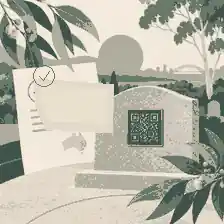
An affordable QR headstone in Australia is usually a standard cemetery-approved headstone or memorial plaque paired with a durable QR plaque that opens a family-controlled digital tribute. The practical planning question is not just the QR code itself: it is how the Australian cemetery checks, plaque material, privacy settings, supplier promises, and long-term update options work together.
For most families, the lowest-risk path is to plan the online memorial first, confirm the destination link, ask the cemetery or crematorium operator for written approval, then order the physical headstone, plaque, medallion or marker. That order matters because a printed or engraved QR code can only be as useful as the page it opens and the rules of the place where it will sit.
What an affordable QR headstone in Australia actually includes
The phrase can mean three different things. First, it may mean a conventional headstone with a small QR plaque attached later. Second, it may mean a new headstone design that includes a QR detail from the beginning. Third, it may mean a lower-cost plaque, niche marker, urn display, bench plaque or garden marker that gives visitors a QR route to the same memorial page without replacing the whole stone.
The affordability question should be split into physical and digital parts. The physical part includes stone, bronze, stainless steel, ceramic, engraving, adhesive or mechanical fixing, mason labour, cemetery application fees and possible inspection costs. The digital part includes the memorial page, privacy settings, hosting model, media storage, contributor access, updates and backups. Families often save money by keeping the QR component small and durable while putting the fuller life story, photographs, voice notes and tributes on the linked page.
If you are beginning from first principles, what a QR memorial is in practical terms explains the basic relationship between the code, the physical marker and the tribute page. Once that is clear, the next step is to understand how QR codes on headstones work in real visitor conditions rather than only on a supplier proof.
Technically, a QR code is not the memorial itself. The current ISO/IEC 18004:2024 QR code standard describes the QR code symbology, data encoding, dimensional characteristics, error correction and production quality requirements. In family terms, that means the code is a machine-readable route to a web address. The memories, photographs and stories live on the destination page.
Start with cemetery permission before buying the plaque
Australian cemeteries are not governed by one national rule about QR plaques. A QR detail that is acceptable in one cemetery may be refused in another because each operator can apply its own rules about monuments, attachments, materials, visual appearance, safety, maintenance and who may request changes to a grave.
In New South Wales, the Cemeteries & Crematoria NSW memorial maintenance and installation fact sheet explains that, in most cases, the interment right holder applies to the cemetery operator to install a memorial and the operator may approve, refuse or attach conditions. It also notes that cleaning should still begin with contact with the operator. That is a useful Australian benchmark even if your cemetery is in another state because it shows how formal memorial work can be.
The most important internal decision is who has authority to act. If the grave has an interment right holder, holder of exclusive right of burial, deed holder or equivalent responsible person, the cemetery will usually want that person involved. Do not assume that the person paying for the QR plaque can approve it. Ask who must sign, whether a mason must submit the application, whether a sketch or proof is required, and whether the cemetery treats the QR plaque as an alteration to an existing memorial.
Evaheld Memorials has a separate planning article on cemetery rules for QR codes, but the short version is simple: get the local rule in writing before a family pays for custom hardware. That protects the budget and helps avoid a painful dispute during an already difficult period.
Choosing an affordable format without creating a cheap-looking memorial
Affordable does not need to mean temporary, flimsy or visually intrusive. The best low-cost approach is often restraint: a modest QR plaque, a stable digital destination and a headstone or memorial design that still feels like a memorial first. Visitors should notice the name, dates and inscription before they notice the technology.
For a new grave, ask whether the QR element can be integrated into the original monument proof. For an existing headstone, ask whether a small stainless steel, bronze, ceramic or enamelled plaque can be attached without drilling or staining the stone. For a cremation niche or memorial garden, ask whether the operator already has a plaque size, font and finish standard that must be followed.
Materials matter because Australia is hard on outdoor memorials. The Bureau of Meteorology’s Australian weather and climate records show the breadth of rainfall, temperature, wind and solar exposure data that can vary across regions. A plaque near the coast, in full sun, in a damp shaded cemetery or in an inland area with strong heat will not weather in exactly the same way.
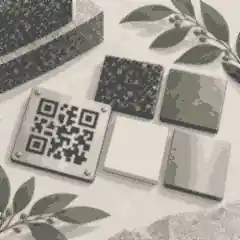
The practical material hierarchy is usually this: engraved or laser-marked metal and well-made ceramic sit above printed labels for long outdoor use. Printed vinyl or laminate can be useful for temporary markers, funeral displays or indoor keepsakes, but they should not be treated as equal to a permanent outdoor plaque unless the supplier gives clear evidence about UV resistance, sealing and replacement.
For a deeper comparison of finishes, which plaque materials cope best outdoors is the relevant Evaheld Memorials planning page. The key test is whether the QR pattern will keep enough contrast to scan after years of sun, rain, cleaning and handling.
Placement, size and scan reliability
Good QR placement balances dignity with usability. A code can be too small, too glossy, too low, too close to an edge, too curved, too shaded or too visually dominant. It should be easy to scan without requiring someone to step on another grave, lean across a kerb, stand in a roadway or handle the memorial surface.
DENSO WAVE’s QR Code guidance on securing the quiet zone around a QR code explains that the clear margin around the symbol is part of reliable scanning. In memorial work, that margin is often lost when a family or supplier tries to make the plaque too decorative. Keep the code square, high contrast and surrounded by clean space.
QR codes also include error correction, but that is not permission to treat damage casually. DENSO WAVE’s explanation of the QR code error correction feature notes that higher correction levels can restore data when a code is dirty or damaged, but they also affect code size. A memorial plaque should still be designed, produced and cleaned so the code remains clearly readable.
If the family is deciding between the front face, side face, base, kerb, niche door or separate plaque, where a QR code can be placed on a headstone gives the practical placement questions. A good rule is to test the final size at the real scanning distance with more than one phone before approving production.
Privacy and content: what the QR code should open
A QR plaque makes access easy, which is both its strength and its risk. Anyone standing at the memorial can scan it. Someone can also photograph it and share the link. That does not mean QR memorials are unsafe, but it does mean the family should decide what belongs on the public-facing page and what should stay private.
Australian privacy thinking should include living people, not only the person who has died. The Office of the Australian Information Commissioner’s guidance on what counts as personal information is a useful reminder that names, contact details, images, locations and combinations of information can identify living individuals. In a memorial setting, this can include surviving relatives, children, addresses, medical details, family conflict or financial information.
The UK takes a different formal approach to the deceased person’s information: the Information Commissioner’s Office states in its guidance on what is personal data under the UK GDPR that information about deceased individuals is not personal data under that regime. That does not remove the ethical need to protect living relatives or handle sensitive facts with care.
For US readers, there is no single national privacy rule for memorial pages equivalent to one simple cemetery law. Families should think in practical safeguards: avoid publishing private addresses, identity documents, account details, unreviewed photographs of minors, donation information that cannot be verified, or intimate family details that could harm living people.
Evaheld Memorials’ planning page on private versus public QR memorials is useful before you order a plaque because privacy should shape the linked destination before the code is printed. A public QR destination might show the name, dates, portrait, life story and selected tributes. A more private approach might keep fuller media, guest contributions or family-only material behind controlled access.
What the memorial page can include
The best QR headstone destination does not try to turn a gravesite into a screen experience. It gives visitors a quiet way to learn more when they choose to. Useful inclusions include a short life story, photographs, service details if still relevant, selected memories, voice recordings, video, a moderated condolence area, donation links if appropriate, and a clear contact or family-managed contribution process.
The linked content should remain editable because remembrance changes. Families often add scanned photographs, better dates, a eulogy, anniversary messages or stories from relatives who were not ready to contribute immediately. A fixed inscription may say only a few words; the QR-linked page can keep growing without changing the stone.
For content planning, what a QR memorial can actually link to helps families decide what belongs on the first screen after scanning. For ongoing care, updating QR memorial content over time explains why the digital side should be manageable after installation.
Public memorial profiles show how a life can be held through biography, photographs, relationships and tributes rather than a single inscription. The Evaheld Memorials profile for Olivia Newton-John is relevant for Australian families because it shows how public memory can combine career, family and compassion. The profile for Princess Diana shows how humanitarian legacy and public remembrance can be organised respectfully. The profile for Steve Jobs illustrates how a life story can connect milestones, work and influence in a format that a QR visitor can browse at their own pace.
How to compare prices without missing hidden costs
The cheapest QR headstone is not always the most affordable over time. A low-cost printed sticker that fades, a plaque that the cemetery refuses, a code that points to a temporary page, or a memorial service that later requires unexpected fees can cost more emotionally and financially than a better-planned option.
Australian consumer law gives families a useful framework for supplier questions. The ACCC’s guidance on consumer rights and guarantees explains that products must meet basic guarantees such as acceptable quality, durability, fitness for purpose and matching description. When speaking with a plaque supplier, ask them to put material, finish, expected outdoor suitability, warranty, replacement process and QR testing requirements in writing.
Families comparing packages should separate five lines in the budget: the digital memorial, the QR code setup, the physical plaque or marker, cemetery or council approval, and installation. If a provider says “lifetime”, ask whose lifetime is meant, what happens if the company changes ownership, whether you can export content, and whether the physical code can keep pointing to the same memorial if the page is updated.
For QR-specific pricing, How Much Does a QR Memorial Cost? explains the usual cost drivers. For Evaheld Memorials product fit, which plan includes QR memorial plaques and what the Memorial Plaque & Tribute plan includes are the direct plan references. Families who want to avoid recurring charges should also check whether Evaheld Memorials plans are one-time payments.
Australian, UK and US jurisdiction differences
Australia is the primary market for this article, so Australian cemetery approval and consumer law should lead the decision. In practice, a family should ask the local cemetery, memorial park, council or crematorium operator what documents are required, who may apply, whether a monumental mason must do the work, what materials are permitted and whether there are section-specific standards.
UK readers should expect stronger local variation through councils, private cemetery operators and churchyard rules. Leicester City Council’s public page on cemetery, crematorium and memorial fees is a clear example of a local authority publishing different fees and memorial categories. GOV.UK’s page on what to do after someone dies is also relevant because funeral and burial steps sit inside a wider administrative process.
US readers should treat cemetery approval as local and contract-based. Rules may come from municipal cemeteries, private cemetery companies, religious cemeteries, veterans’ cemeteries, homeowners’ associations for memorial gardens, or state consumer protection law. Because US cemetery and monument rules vary widely, the family should ask the operator for the written rule rather than relying on general online advice.
Heritage and public land rules can be stricter in every country. NSW National Parks and Wildlife Service policy on memorials in parks shows how proposals can be assessed for cultural connection, visual impact, maintenance and environmental considerations. NSW Heritage guidance on standard exemptions for State Heritage Register items also shows that cemeteries, headstones, grave markers and memorial plaques may be treated differently where heritage significance is involved.
Security checks for QR memorials
A memorial QR code should never ask visitors to download an unknown app, enter payment details unexpectedly, create an account before seeing the person’s name, or pass through a confusing chain of shortened links. The first screen should reassure visitors that they are in the right place.
The Australian Cyber Security Centre’s guidance on quishing and QR code risks advises people to think before scanning and to avoid downloading apps and files through QR codes. For US readers, the FTC’s How To Avoid a Scam advice is relevant because memorial visitors may be grieving, distracted or willing to trust a link connected to a loved one.
Good practice is simple: use one stable memorial URL, avoid unnecessary redirects, place the person’s name and portrait near the top of the page, moderate guest submissions, keep donation links clearly verified, and keep a family backup of the content. If the QR code is ever damaged, the aim should be to replace the plaque while preserving the same memorial destination.
Checklist before you approve an affordable QR headstone in Australia
Use this checklist before paying a supplier or signing a cemetery form. Confirm who has authority over the grave or memorial site. Ask the cemetery whether QR plaques are allowed in that section and whether approval must come before production. Ask whether the plaque is treated as an alteration, new memorial item or decoration. Confirm size, material, finish, colour, mounting method, edge treatment and placement. Ask whether drilling is allowed or whether adhesive is preferred. Ask if the work must be completed by an approved mason.
Then test the digital side. Open the memorial page on a phone. Check that visitors can recognise the person immediately. Decide whether the page is public, link-only or private. Remove living relatives’ private details unless they have consented. Check the QR code proof at real size. Ask for a finished sample if the material or finish is unfamiliar. Scan it with more than one phone, in bright light and shade. Keep a written copy of the direct URL with family records.
Finally, compare long-term support. Ask who replaces a damaged plaque, who controls the page, whether the memorial can be edited, whether family members can contribute, whether content can be moderated, and whether the payment is once-off or ongoing. These checks are what turn an affordable QR headstone in Australia from a clever idea into a respectful, durable memorial.
If your family is ready to begin with the digital destination first, you can an affordable qr headstone in australia by creating the memorial page, choosing privacy settings, and preparing the QR-linked tribute before the cemetery approval is final.

FAQs
What is an affordable QR headstone in Australia? Australian planning, cemetery checks and options
An affordable QR headstone in Australia is a cemetery-approved memorial that uses a modest QR plaque or marker to open a digital tribute, rather than trying to put every story on stone. Start with cemetery rules for QR codes, because the CCNSW memorial maintenance and installation fact sheet shows why written approval and the right applicant matter.
Do Australian cemeteries allow QR codes on graves?
Some do, some do not, and many decide by cemetery section, grave type, material, appearance and installation method. The Evaheld Memorials explanation of how QR codes on headstones work should be paired with local rules, and NSW Heritage guidance on cemetery and grave-marker exemptions shows why heritage settings need extra care.
What is the cheapest respectful way to add a QR code to a headstone?
The cheapest respectful option is usually a small, durable plaque attached only after the cemetery approves the placement and the family has tested the QR destination. Evaheld Memorials’ How Much Does a QR Memorial Cost? helps separate digital and physical costs, while the ACCC consumer guarantees guidance gives families a practical way to question durability and supplier promises.
Which material is best for an outdoor QR memorial plaque?
For long outdoor use, families usually compare laser-marked stainless steel, bronze, ceramic and other weather-resistant finishes before considering printed labels. Evaheld Memorials’ material overview on which plaque materials cope best outdoors fits Australian climate planning, and the Bureau of Meteorology’s weather and climate records show why exposure varies by region.
Where should the QR code sit on a headstone?
The code should be discreet, reachable, scan-friendly and placed where visitors do not need to step into an unsafe or disrespectful position. Evaheld Memorials explains where a QR code can be placed on a headstone, and DENSO WAVE’s guidance on QR code quiet zones explains why clear space around the code matters.
What should the QR memorial link to?
The best destination is a stable memorial page with the person’s name, image, life story, selected photos, moderated tributes and privacy-aware contribution options. Evaheld Memorials outlines what a QR memorial can actually link to, while the ISO QR code specification page confirms that the code itself is the symbology, not the stored memorial content.
Can a QR memorial be private?
Yes, the physical code is visible but the linked content can often be limited, staged or controlled depending on the platform and plan. Evaheld Memorials explains private versus public QR memorials, and the OAIC’s guidance on personal information is especially relevant when living relatives appear in photos or stories.
Can the QR memorial content be updated after installation?
Often yes, if the code points to an editable memorial page rather than a temporary file or fixed document. Evaheld Memorials explains updating QR memorial content over time, and DENSO WAVE’s page on QR code error correction is a reminder that physical scan tolerance is separate from digital page maintenance.
Which Evaheld Memorials plan includes QR memorial plaques?
The dedicated plan information is the safest place to confirm current inclusions before ordering, because plan details can matter more than the plaque alone. Evaheld Memorials answers which plan includes QR memorial plaques, and the Australian Cyber Security Centre’s quishing guidance supports choosing a trusted QR destination rather than a confusing or risky scan path.
Is a QR headstone different in the UK or United States?
The technology is similar, but the approval path differs because cemetery, council, churchyard, heritage and private-operator rules are local. Evaheld Memorials’ detail on what the Memorial Plaque & Tribute plan includes helps compare the product side, while GOV.UK’s what to do after someone dies page shows how UK funeral steps sit within a wider administrative process.