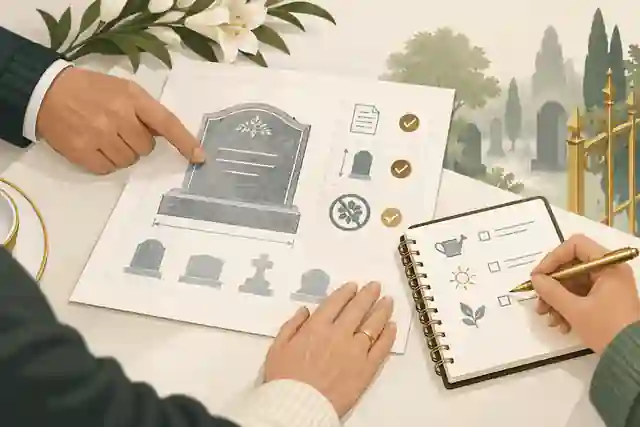
Can a QR Memorial Be Private?
A QR memorial is physically visible, but the linked digital content can often be controlled with privacy settings or passwords.
Last Updated: June 24, 2026
A QR memorial can be both public and private, depending on which part of the experience you mean. The physical code on a headstone, plaque, urn display or memorial garden marker may be visible to anyone nearby. What happens after someone scans it is where families gain more control. The linked page can be openly viewable, kept out of public directories, shared only with selected people, or managed in stages while the family is still deciding what belongs online.
That distinction matters because families are rarely asking one simple technical question. They are usually asking whether anyone walking through the cemetery can see the person's story, whether strangers can browse the memorial later, whether relatives can contribute privately before publication, and whether personal details might spread further than intended. If you are already weighing the basics of what a QR memorial is or how QR codes on headstones work, privacy is the next issue to settle before you order a plaque or engrave a code permanently.
Evaheld Memorials' current product structure is helpful here because it separates public directory memorials from private-capable memorial plans. The Free Online Memorial is described as a public memorial page, while the paid plans add a private memorial option, contributor invites, moderation controls, and optional directory visibility. That means a family can think in layers: what the public physically sees at the gravesite, what the QR code links to, who can contribute, and whether the memorial is discoverable beyond the direct link.
Below is a practical guide to those layers, including when public remembrance is the right fit, when private sharing is gentler, how password protection and link-only access differ, and what information is usually best kept off any QR-linked memorial page.
What stays public, and what can still be private?
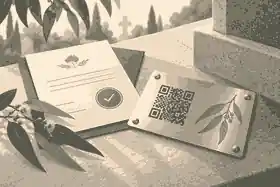
The first privacy fact to accept is that the QR code itself is usually part of a public physical setting. If the code is placed on a headstone, plaque or memorial marker, a passer-by may notice it and scan it. In that sense, the code is visible even when the memorial behind it is controlled. The privacy decision is therefore not whether the square pattern can be seen, but whether the scan opens a page that reveals everything, reveals only limited information, or asks for another layer of permission.
Families often find it useful to separate QR memorial privacy into four practical models. The first is a fully public page, where anyone who scans the code can read the full tribute, view approved media, and possibly leave a message. The second is a private memorial page that stays outside broad browsing and public directory discovery. The third is link-only sharing, where the memorial is not easy to stumble across but can still be opened by anyone who has the direct URL. The fourth is a gated approach, such as password protection or family-only access, where the QR code leads to a page that requires an extra step before fuller content is shown.
Those models are not identical. A memorial can be absent from a public directory and still be shareable by direct link. A memorial can be public enough for cemetery visitors to view a short tribute but still keep guest uploads, comments, or family albums behind closer controls. And where a provider offers password protection, the code can serve almost like a front door rather than an open book. If you are comparing options for what a QR memorial can link to, the most useful question is not only what the link opens, but how much of it opens immediately.
Public memorial pages suit broad remembrance
A public QR memorial is often the right choice when the family wants open remembrance, easier discovery, and a low-friction experience for visitors. Someone attending the cemetery, funeral, or anniversary gathering can scan and immediately read the tribute without needing a password, request, or invite. Public pages can be especially meaningful when the deceased was deeply connected to a wide community, such as neighbours, workmates, sporting clubs, school communities, faith groups, or extended family spread across different places.
On Evaheld Memorials, the current public-facing product signals this model clearly. The free memorial is positioned as a public memorial page, and the public directory experience is visible through the Explore section. The related guides on whether Explore memorials are public and how public memorial browsing works make the distinction between open discovery and controlled sharing much clearer for families who have not used a memorial platform before.
The trade-off is that a public page can be read by anyone who encounters the QR code or the memorial URL. That is sometimes exactly what the family wants. But it should be a deliberate choice, especially if the memorial includes children's names, fresh funeral logistics, detailed family relationships, or emotionally raw tributes written in the first days after the death.
Private memorials create breathing room before wider sharing
A private QR memorial is usually less about secrecy and more about pacing. Families may want to create the page, verify names and dates, upload better photographs, invite siblings to contribute, and moderate tributes before the memorial feels ready for a broader audience. Evaheld's plan data matters here because the paid memorial plans add a private memorial option together with contributor invites, review and approval controls, and optional directory visibility. The guides on keeping a memorial private until you are ready to share and which plan unlocks private memorial access support that family-first workflow.
That matters for QR memorials because the physical code can be installed before the digital experience is fully final. A family may be comfortable with the plaque existing at the gravesite while still wanting the linked memorial to remain private for a period. Another family may choose a limited public landing page that honours the person briefly, then invite close relatives into a more collaborative memorial space behind the scenes. Neither approach is overcautious. Both reflect the reality that remembrance often moves through stages.
Password protection, private links, and limited-content pages are not the same thing
Password protection is one of the clearest ways to keep a QR memorial from being fully public, but it is only one option. If your memorial provider supports passwords, the scan can lead to a screen that asks visitors to enter a shared family password before they see the full memorial. This works best when the family wants strong control but can reliably distribute the password to the right people. It works less well if the audience is broad, older relatives are less comfortable with digital steps, or cemetery visitors may not have a simple way to retrieve the password while standing outdoors.
Private links are lighter than passwords. A family shares the memorial URL intentionally, but the page is not promoted widely and may stay out of public directories. That is often a gentler balance between access and privacy, although it is important to remember that a link can still be forwarded. If your plan includes contributor permissions and moderation, it is also easier to decide who may add content and what should stay pending review. Evaheld's guidance on inviting family and friends to help build the memorial and how tributes and condolences are handled is particularly relevant if you want participation without losing editorial control.
Limited-content pages sit somewhere in between. The QR code opens a respectful public tribute with the person's name, dates, a short remembrance, and perhaps a service note, while more personal stories, family photos, or guest contributions remain restricted. Families often choose this when they want cemetery visitors to feel welcomed, but not to encounter private contact details, unresolved family context, or media that was only intended for a smaller circle.
Privacy decisions are also security decisions. The U.S. Federal Trade Commission warns that scammers can hide malicious links in QR codes, while CISA recommends that people recognise phishing cues instead of trusting every link at face value. For QR memorials, that means families should periodically inspect the plaque, confirm the code still points to the intended domain, and use a provider they trust rather than linking to an unmaintained or obscure destination. It is also wise to keep the memorial content updated over time, especially if you already plan on updating QR memorial content as tributes, photos or event details evolve.
How families choose the right privacy level
The best QR memorial setup usually comes from three decisions made in the right order. First, decide who the memorial is really for in the next few weeks: the immediate family, a wider but known circle, or anyone who visits the site. Second, decide what kind of content belongs in the first version: a simple tribute, a full life story, a collaborative gallery, funeral details, guestbook entries, or recordings. Third, decide who needs the ability to add, edit, approve, or remove content as emotions and circumstances change.
If the answers point to a broad community audience and low-friction access, a public memorial may feel right. If the answers point to a smaller circle, evolving content, and a need to review tributes before they appear, a private memorial or limited-content approach is usually kinder. Families choosing between these paths often benefit from comparing plan differences around privacy, moderation and directory visibility and from thinking beyond the moment of publication to what the memorial should feel like six months from now.
A simple decision framework for QR memorial privacy
If your family wants open remembrance, easy scanning at the cemetery, and minimal barriers for visitors, a public memorial can be appropriate. If you want a family-only drafting period, choose a private memorial option first. If you want visitors to access something meaningful without seeing every personal detail, build a limited public page and keep richer content restricted. If you need stronger access control and your provider offers it, password protection can add another layer. If several relatives will contribute, choose moderation and approval controls before inviting anyone in.
There is also a practical question about permanence. A QR plaque may last far longer than the first version of the page it links to. That is one reason it helps to think ahead about QR memorial safety, cemetery rules for QR codes, and whether the memorial content can be refined over time without changing the code itself. A stable link with adjustable privacy settings is usually more future-proof than a page built around urgent, temporary information.
What not to include on a QR memorial page
Even when the memorial is private or shared by direct link, it is sensible to avoid publishing sensitive information that could be copied, screenshotted, or forwarded. In most cases, families should leave out home addresses, personal phone numbers, private email addresses, identity document numbers, financial details, account logins, sensitive medical records, security question answers, and anything that could expose a surviving family member to fraud or unwanted contact. Be careful too with children's full names, school details, live travel plans, family disputes, or stories that another relative has not consented to share publicly.
That advice aligns with broader privacy guidance from the OAIC, eSafety, and NIST, each of which stresses that online sharing can persist beyond the intended audience and that personally identifying details are harder to control once published. In practical memorial terms, a good rule is to separate honouring detail from identifying detail. A memorial can still be intimate, warm and specific without publishing information that exposes living relatives.
Guest permissions deserve similar care. If visitors can leave tributes, upload media or suggest edits, decide whether contributions go live automatically or wait for approval. Moderation is not unfriendly. It is how a grieving family protects tone, correctness, and consent. That is especially important when many people cared deeply about the person but do not all share the same boundaries, memories, or understanding of what the family wants online.
When public remembrance is still the better choice
Privacy is valuable, but it is not automatically the most respectful option. Some families genuinely want anyone visiting the grave, memorial garden, or tribute site to scan the code and immediately learn who this person was. Public pages can help distant acquaintances reconnect, give community members a place to leave condolences, and make remembrance more inclusive on anniversaries and significant dates. If that openness matches the family's values, then a public QR memorial can be the right answer.
The important point is intention. A QR memorial should not become public by accident simply because the code is visible in a public place. It should become public because the family has chosen an access model, a contribution model, and a level of visibility that feels right for the person being remembered. When families pause long enough to make those three decisions, the memorial usually feels steadier and kinder for everyone involved.
Frequently Asked Questions about Can a QR Memorial Be Private?
Is the QR code itself public even if the memorial is private?
Usually yes. A QR code on a plaque or headstone can still be visible in a public place, but families can pair it with the plan that allows a private memorial and decide whether the memorial appears in public browsing once the page is ready.
Can a QR memorial be password-protected?
Sometimes. If the provider supports passwords, the scan can open a gate before fuller content appears; otherwise families often rely on a memorial that stays private until they are ready to share while they keep updating QR memorial content behind a tighter workflow.
Will a private QR memorial appear in public memorial directories?
Not necessarily. A private memorial can stay out of browse pages when the family turns off wider visibility, and it helps to understand how the Explore page works alongside what a QR memorial can link to before the plaque is shared more broadly.
What information should families avoid putting on a QR memorial?
Families should leave out home addresses, personal phone numbers, financial details, identity information, and anything a living relative would not want copied or forwarded. It is also wise to decide how guest tributes are handled and to follow practical guidance on QR memorial safety before publishing sensitive details.
What is the safest setup for families who want remembrance with some privacy?
A strong middle ground is a QR memorial with private access, optional directory visibility turned off, moderated guest contributions, and a limited public summary for cemetery visitors. Families usually get the most control when they choose collaborative invite and approval settings and compare privacy-ready memorial plans before the code is installed permanently.
If you are ready to build a memorial that can be shared on your family's terms, start creating an Evaheld Memorials page with privacy-aware sharing options and decide first whether the memorial should be public, private, or staged gradually over time.
Authoritative references: Families comparing QR memorial privacy settings may also find these resources helpful: FTC guidance on harmful QR codes, CISA advice on recognising phishing, NIST guidance on protecting digital identity, OAIC advice on social media privacy, and eSafety guidance on photo and video sharing.
Related Evaheld Memorials guidance
Families working through Can a QR Memorial Be Private? often need a few connected decisions in one place: what a QR memorial is, how QR codes on headstones work, what a QR memorial can link to, adding a QR code to an existing headstone, engraving QR codes on headstones. These related guides help the article sit inside a fuller memorial planning path rather than leaving each decision isolated.
For Evaheld Memorials product details, the most useful companion pages are subscription or one-time memorial plans, free vs shared tribute plans, information needed to start a memorial, family and friend memorial collaboration, private memorial sharing choices. They explain setup, privacy, contribution and sharing choices before a family invites others into the memorial.
FAQs about Can a QR Memorial Be Private?
Can a QR memorial be private?
A QR memorial can be both public and private, depending on which part of the experience you mean. The physical code on a headstone, plaque, urn display or memorial garden marker may be visible to anyone nearby. What happens after someone scans it is where families gain more control. The linked page can be openly viewable, kept out of public directories, shared only with selected people, or managed in stages while the family is still deciding what belongs online.
Start with the practical facts, then leave room for memory, emotion and family preferences. subscription or one-time memorial plans can help you organise the Evaheld Memorials side, while Better Health grief information gives families wider context before decisions feel rushed.
How can a QR memorial feel personal and respectful?
A respectful plan usually combines clear information, gentle language and a way for close people to contribute at the right time. free vs shared tribute plans supports that shared approach, and FTC funeral rule information is a useful reminder that grief affects people differently.
When should a QR plaque or engraving be planned?
Begin as soon as the task would reduce pressure rather than add to it. Families often start with a simple memorial draft, then refine details over time using information needed to start a memorial; ACCC funeral services information can also help with the first administrative steps after a death.
Who should approve the memorial and its linked content?
The closest organiser should usually guide the final decisions, but relatives and friends can help with stories, photos and checks. family and friend memorial collaboration explains how collaboration can work, while SAMHSA coping tips outlines broader steps families may need to consider.
What should the linked memorial page include?
Yes. A memorial page can hold service details, photos, tributes, updates and a lasting place to return to after the immediate arrangements are over. private memorial sharing choices shows how quickly that can begin, and Moneysmart funeral costs guidance offers trusted context for bereavement care.
How can access to private memorial details be controlled?
Keep sensitive information out of public copy, review contributions before publishing and choose privacy settings before sharing widely. what a QR memorial is explains private memorial options, while Healthdirect grief support gives practical consumer context around funeral and memorial decisions.
Which plaque, account and memorial details should be recorded?
Keep the memorial URL, service details, donation preferences, key family contacts and any relevant documents in one place. how QR codes on headstones work helps families compare plan needs, and Services Australia guidance after a death can support cost and planning conversations.
How can relatives contribute photos and stories?
Invite people to contribute specific memories, photographs or messages, then review everything before it appears publicly. what a QR memorial can link to explains tribute and condolence controls, while USA.gov steps after someone dies offers supportive guidance for people coping with loss.
What QR memorial mistakes should families avoid?
Avoid rushing public details, copying private messages without permission or turning the page into a list of tasks. adding a QR code to an existing headstone helps families understand free and paid options, and GOV.UK guidance after a death is useful when funeral-related decisions need clear consumer information.
How does Evaheld Memorials keep the linked tribute available?
Evaheld Memorials gives families a guided place to create, edit, share and preserve a tribute as needs change. engraving QR codes on headstones keeps the memorial grounded in practical setup, while National Institute on Aging end-of-life guidance helps families think about comfort and care beyond the page itself.
If you want a calm place to organise memories, tributes, photos and family contributions, create a lasting Evaheld Memorials tribute for your family.
Related Evaheld resources
Continue with these carefully selected Evaheld Memorials guides and answers.