What are Australian made pet memorials? Australian planning, cemetery checks and options
A practical Australian guide to pet memorials, Australian made claims, cemetery approval, QR plaques, privacy, materials and AU/UK/US planning differences.
Australian made pet memorials are locally made or Australia-planned remembrance options for a companion animal, such as engraved plaques, urns, keepsakes, garden markers, QR plaques and digital memorial pages. Good Australian planning means checking the maker's origin claim, the cemetery or crematorium rules, the outdoor durability of the material, the privacy of any QR-linked page and the practical options your family may want in Australia, the United Kingdom or the United States.
The phrase australian made pet memorials can mean several different things, so the first step is to separate the object, the service and the place where it will be used. A plaque may be made in Australia, a QR page may be hosted online, a crematorium may supply ashes or a paw print, and a cemetery may still control whether a marker can be placed. The best result usually comes from treating the memorial as a small project: decide what you want the memorial to do, confirm permission before ordering, choose materials for the setting, and keep the pet's story somewhere your family can update over time.
australian made pet memorials: practical guidance
In Australia, an "Australian made" claim should not be treated as a comforting phrase alone. The ACCC country of origin guidance explains that origin claims need to be true, accurate and based on reasonable grounds, with "made in" generally turning on the last substantial transformation of the goods. For a pet memorial, that may matter if the plaque blank, ceramic tile, urn, engraving, packaging or digital service comes from different places.
A careful buyer can ask simple questions without making the process feel commercial. Was the plaque manufactured in Australia, or only engraved here? Was the timber, stone, ceramic or steel sourced locally or imported? Is the online memorial operated by an Australian business, and where is support based? These questions are not about perfection; they are about clear expectations. A family may still choose an imported material because it is beautiful or durable, but the supplier should not blur that distinction.
Australian Consumer Law also matters after purchase. The ACCC consumer guarantees guidance is relevant when a plaque is not of acceptable quality, a QR marker fails unusually quickly, or a service is not supplied with due care. Keep the order details, proof artwork, material description and installation instructions. If the memorial is intended for outdoor use, the invoice should ideally say so.
For families starting with a pet's life story rather than a plaque, Evaheld Memorials already has practical guidance on an online pet memorial with photos, routines and family messages. That is often the gentlest first step because the words, photographs and family messages can be shaped before anyone commits to a fixed object.
Start with the setting: home, garden, crematorium, cemetery or shared digital space
The right pet memorial depends on where it will live. A framed photograph, urn, collar shadow box or engraved timber piece may suit a home. A stone, ceramic or stainless steel marker may suit a garden. A crematorium plaque may need to follow the operator's design rules. A cemetery or public memorial garden will usually have the strictest requirements, especially where maintenance, safety, visual standards and installation methods are involved.
Before ordering, write down the setting in plain terms: indoor shelf, exposed garden bed, covered patio, cemetery lawn beam, columbarium-style niche, shared family property, or online-only memorial. Then ask what could go wrong in that setting. Indoor memorials mostly need emotional fit and stable storage. Outdoor memorials need weather resistance, legibility, secure fixing and cleaning. Public-site memorials need permission before anything is attached, drilled, glued or placed.
Australian cemetery governance varies by state, territory and cemetery operator. Cemeteries & Crematoria NSW planning information encourages people to understand burial and cremation options before decisions are made, and its NSW interment rights information explains that rights and permissions are part of how cemetery use is managed. A pet memorial placed in or near a human cemetery, memorial garden or family grave may therefore require a direct check with the cemetery operator rather than an assumption based on another family's marker.
If a QR component is being considered, begin with what a QR memorial is in practice. A QR code is not the memorial itself; it is a path from a physical object to a digital destination. That distinction affects privacy, future editing, damaged plaque replacement and whether visitors can still reach the page years later.
Cemetery checks before ordering a plaque or QR marker
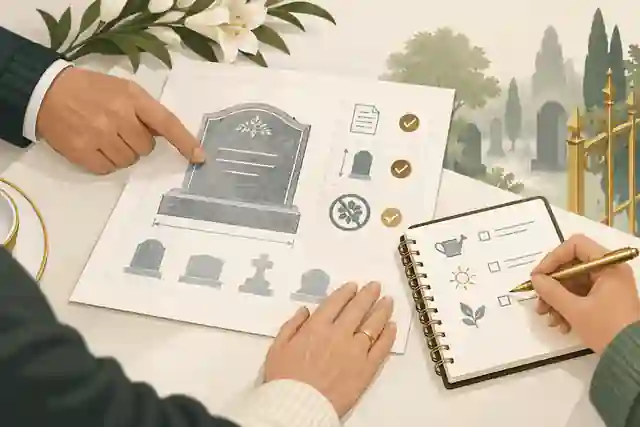
Cemetery checks should happen before payment, not after delivery. Ask the cemetery or crematorium whether pet-related items are allowed, whether the memorial is for a pet alone or alongside a person, whether additional plaques can be fixed to an existing monument, and whether the work must be done by an approved stonemason. In Victoria, the Victorian health guidance for stonemasons shows why memorial work is treated as a regulated, permission-based activity rather than simple decoration.
Rules often differ by grave type. A lawn grave may permit only a plaque of a certain size on a beam. A monumental grave may allow more design freedom but require formal approval. A cremation niche may have a fixed plaque template. A memorial garden may allow only operator-supplied markers. Some sites may reject adhesives, drilling, unapproved metal, loose objects, glass, solar lights, toys, artificial flowers or QR codes that alter the appearance of the memorial. That is why cemetery rules for QR codes should be checked before a family falls in love with a design.
When contacting a cemetery, send a short written request with the pet memorial dimensions, material, finish, placement location, attachment method, inscription and any QR-code artwork. Ask for written approval or the exact rule that applies. If the memorial will sit near a human grave, confirm who holds the interment right or grave authority and whether that person must consent. If a stonemason or plaque supplier says approval is unnecessary, still confirm it with the cemetery operator.
For QR plaques, permission is only one part of the check. The visitor must be able to scan the code without stepping over another memorial, standing in a roadway, touching unstable stone or intruding on neighbouring graves. Families often think first about appearance; cemetery staff often think first about safety, maintenance and fairness across the site.
Material choices for Australian outdoor conditions
Australian made pet memorials are often exposed to strong ultraviolet light, heat, rain, coastal air and dust. The Bureau of Meteorology climate data service is a useful reminder that climate varies sharply across regions, so a plaque suitable for a shaded inland garden may not perform the same way in a coastal cemetery or a full-sun backyard. Material choice should match the specific location.
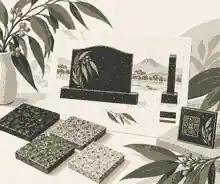
Stainless steel is often a strong choice for QR plaques because laser marking can hold contrast well and the material resists many outdoor conditions. Ask about the grade of steel, especially near the coast, and whether the QR pattern is etched, printed, coated or laser marked. Ceramic can look traditional and may suit headstones or memorial gardens, but it can crack if struck or poorly mounted. Stone is visually restrained and durable, though a carved QR code needs high contrast and careful testing. Timber can be warm and personal indoors or in sheltered areas, but it is less predictable outdoors unless sealed, maintained and accepted by the site. Acrylic, vinyl and laminated products can be useful for temporary markers but should be treated cautiously for exposed long-term use.
The Evaheld Memorials material overview on best materials for QR memorial plaques is especially relevant where the family wants a physical marker to stay readable. The material is not only an aesthetic decision; it affects scanning, cleaning, replacement and whether the memorial still works after years of weathering.
If a supplier says a product is weatherproof, ask what that means. Does it cover ultraviolet fading, water ingress, corrosion, adhesive failure, scratches, cleaning chemicals and temperature movement? Is there a warranty for legibility or only for the base material? Can the same memorial link be used on a replacement plaque if the first one is damaged? A small amount of extra checking can prevent a painful second purchase.
QR plaques: design, privacy and the destination page
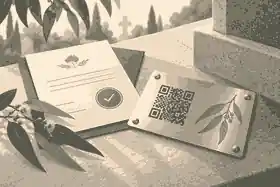
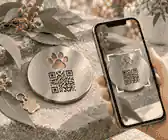
A QR plaque is useful only when both sides work: the physical code must scan, and the destination must be worth visiting. The code should be high contrast, square, uncropped and surrounded by quiet space. It should not be placed under reflective glass, on a curved surface, too close to decorative engraving or in a position where visitors have to bend awkwardly. A proof that scans on a computer screen is not enough; test the final object with more than one phone.
Placement matters. A small QR code can look discreet but fail when scanned from a natural standing distance. A large code can scan easily but dominate the memorial. The best compromise is usually a restrained plaque with the pet's name, a short instruction such as "Scan to view the memorial", and a code positioned where hands, flowers or shadows will not regularly cover it. Families can compare practical examples in where a QR code can be placed on a headstone, even when the pet memorial is a plaque, urn base or garden marker rather than a headstone.
Privacy should be decided before the QR code is printed. A code in a public place can be scanned, photographed and shared. If the linked page is fully public, that may be fine. If it contains children's names, home details, grief messages or location information, it may be too open. The OAIC personal information guidance is a useful Australian reference because memorial pages can contain personal information about living people as well as memories of the pet.
Families who want a QR code but not a fully public memorial can consider a limited page: a photo, name, dates and a carefully chosen story, with more private memories kept for invited relatives. Evaheld Memorials explains private versus public QR memorials in a way that helps families separate the visible plaque from the access settings behind it.
The linked content can be richer than a name and date. It may include a favourite photo, adoption story, routines, nicknames, short video, voice memory, children's drawings, a charity note, cremation or garden details, and messages from people who loved the pet. For ideas, the kinds of content a memorial QR code can open can help families choose a page that feels personal without publishing more than they intended.
Pet burial, cremation and ashes: Australian, UK and US differences
Australia does not have one simple national rule for private pet burial. Local council rules, environmental requirements, property ownership, body size, disease risk and water proximity can all matter. Some councils provide disposal guidance for deceased pets; for example, the ACT dead pets and carcasses guidance points residents towards practical disposal pathways. If burial is being considered at home, check local council advice first, especially for rental properties, flood-prone land, small blocks and larger animals.
In the United Kingdom, pet burial has specific environmental limits. The GOV.UK animal burial groundwater guidance explains how burial must avoid pollution risks, while GOV.UK pet cemetery registration guidance sets out rules for pet cemetery operators. UK readers should not assume that Australian council practice or US funeral practice applies to them.
In the United States, pet memorial choices are shaped by state and local rules, plus veterinary and pet cemetery practice. If a provider uses a "Made in USA" claim for a plaque or urn, the FTC Made in USA standard is the relevant federal advertising reference. If a funeral home is also involved because a pet memorial is being planned alongside a human funeral, the FTC Funeral Rule guidance is relevant to human funeral price disclosures, although it does not turn a pet memorial into a human funeral product.
Cremation is often the simplest practical path for companion animals because ashes can be kept, scattered where lawful, placed in an urn, incorporated into a keepsake, or remembered through a garden marker. Ask whether the cremation is individual or communal, whether ashes are returned, what container is included, how identity is tracked, and whether paw prints, fur clippings or certificates are optional extras. The memorial object should not be ordered until the family knows whether ashes, a nameplate, a date range or a QR link will be included.
Grief, children and the emotional side of pet memorial planning
Pet grief can be intense because companion animals are part of daily routines. The Cornell pet loss support information recognises that grieving a companion animal can affect people physically, emotionally, socially and spiritually, and that there is no single normal timeline. The Tufts pet loss support helpline also reflects the need for dedicated support when people are grieving an animal relationship that others may underestimate.
Children often need concrete ways to participate. They may choose a photograph, draw a picture, write a short thank-you note or help decide where a garden marker should sit. Avoid asking for perfect wording. A sentence such as "I loved when you slept beside me during storms" may be more meaningful than a polished tribute. If the family wants others to contribute, letting loved ones leave tributes and condolences can make the memorial feel shared without requiring everyone to speak publicly at once.
Veterinary end-of-life care can also affect the memorial plan. The ASPCA end-of-life care guidance discusses quality-of-life decisions and the difficulty of saying goodbye, while the AVMA euthanasia information for pet owners gives veterinary context for one of the hardest decisions families may face. A memorial should not pressure a family to decide everything immediately. It can begin with one photo and a few honest words, then grow when the household is ready.
Public remembrance can also teach us that a memorial does not need to hold every part of a life to be meaningful. The Evaheld Memorials profile for Olivia Newton-John shows how a public tribute can hold performance, advocacy and affection in one place; her well-known concern for animals also makes her a relevant example when thinking about care and remembrance. The profile for Princess Diana shows how compassion itself can become part of a lasting public memory. The profile for Steve Jobs is a reminder that design choices can shape how people interact with a memorial, from first impression to deeper story.
How to choose between common pet memorial options
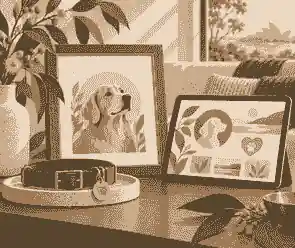
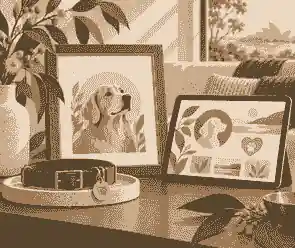
A home display is best when the family wants privacy, daily presence and flexibility. It might include an urn, framed photograph, collar, paw print, toy, candle, plant, handwritten note or small engraved stand. Choose stable materials, avoid crowding the display and keep delicate items away from moisture or direct heat.
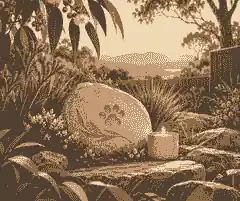
A garden memorial is best when the pet loved the outdoors or the family wants a quiet place to visit. Consider stone, ceramic, stainless steel or a planted area. Check whether the property is owned or rented, whether future moves are likely, and whether the marker can be lifted without damage if the family relocates. If ashes are involved, check local rules before burial or scattering.
A crematorium or pet cemetery plaque is best when the family wants a managed site. The operator may offer set plaque sizes, wording limits and approved motifs. Ask whether the plaque term is perpetual or time-limited, whether renewal fees apply, whether photographs or QR codes are allowed, and what happens if the site changes its memorial rules.
A QR plaque is best when the physical marker should open a fuller story. It can be especially helpful for pets known by many people: school therapy animals, assistance animals, stable companions, community cats, dogs loved by neighbours, or animals whose photographs and stories matter to a wider circle. The practical question is not only whether the code scans today, but how long QR memorials usually last when the plaque, link, hosting, backups and replacement plan are all considered.
A digital-only memorial is best when relatives are spread across places, the family wants privacy controls, or the pet's story is more important than a fixed object. It can also sit beside any physical option. A digital page can hold photographs, short video, written memories, captions, children's drawings and later updates. If a future plaque is likely, create the page first, then make sure the QR code points to the stable final destination.
Common mistakes to avoid
The first mistake is ordering the plaque before checking rules. Cemetery and crematorium rules can override a supplier's design advice. The second is choosing a material only from a product photo. A shiny plaque may look beautiful online but produce glare in full sun. The third is printing a QR code too small, too decorative or too low contrast. The fourth is linking a permanent code to a draft page, temporary file or private login screen.
The fifth mistake is forgetting future access. Who can update the memorial page if the person who created it becomes unavailable? Who has the original photographs? Is there a backup of the written tribute? Can a damaged plaque be replaced using the same destination link? The most meaningful pet memorials often grow after the first week, so choose a setup that can be edited without replacing every physical marker.
The sixth mistake is treating privacy as all-or-nothing. A family may want the pet's name and photograph public while keeping children's messages private. A QR marker in a public place can still lead to a restrained page. Conversely, a fully private page may not be useful for a public QR code because visitors cannot access it. Make the privacy decision before artwork is finalised.
The seventh mistake is assuming damage means the whole memorial is lost. If the online page is stable and the family keeps the artwork and URL, the physical marker can often be replaced. Evaheld Memorials covers replacing a damaged QR memorial plaque, which is a practical topic to understand before choosing a supplier.
A calm planning checklist
Begin with the pet's name, favourite photograph and the type of memorial your family wants: home, garden, crematorium, cemetery, QR plaque or online page. Confirm whether any site rules apply. If the product is sold as Australian made, ask what part is made, engraved, assembled or supported in Australia. Choose the material for the real setting, not only for appearance. Decide privacy before printing a QR code. Test a physical proof with several phones. Keep the final URL, artwork, order details and written approval together.
If you want the memorial to hold more than the object can carry, use an online page for the story and the plaque for quiet access. A small physical marker can say only so much; a digital memorial can include the everyday details that made the animal part of family life. When you are ready, Evaheld Memorials can help you begin with australian made pet memorials that connect planning, privacy and remembrance in one place.
FAQs
What are Australian made pet memorials? Australian planning, cemetery checks and options
Australian made pet memorials are locally made or locally planned remembrance choices for a companion animal, including plaques, urns, garden markers, QR plaques and digital tributes. Start with How to Create an Online Memorial for a Pet, then check origin claims against the ACCC country of origin guidance before relying on an Australian made description.
Do cemeteries in Australia allow pet memorial plaques or QR codes?
Some sites may allow additional plaques or QR markers, but permission depends on the cemetery, grave type, interment-right holder, material, size and installation method. Evaheld Memorials explains cemetery rules for QR codes, and the NSW interment rights information shows why authority and permission should be confirmed before ordering.
What material is best for an outdoor pet memorial plaque?
For exposed outdoor use, stainless steel, ceramic and well-chosen stone are usually stronger choices than vinyl or laminate, but the best material depends on weather, placement and cemetery rules. The Evaheld Memorials article on best materials for QR memorial plaques pairs well with the Bureau of Meteorology climate data service when thinking about local exposure.
Can a pet memorial QR code be private?
A QR code in a public place can be scanned or photographed, so privacy depends on what the linked page reveals and whether access controls are used. Evaheld Memorials explains private versus public QR memorials, while the OAIC personal information guidance is a useful reminder to protect living people's details.
Can I bury a pet at home in Australia?
Home burial rules can depend on local council guidance, land ownership, animal size, disease risk and environmental factors, so check local rules before burying a pet. A digital tribute such as the kinds of content a memorial QR code can open can sit beside lawful burial or cremation choices, and the ACT dead pets and carcasses guidance shows how local advice can be practical and specific.
How is the United Kingdom different for pet burial and pet cemeteries?
UK families should check environmental and pet cemetery rules rather than relying on Australian or United States practice. Evaheld Memorials' guidance on where a QR code can be placed on a headstone can help with marker design, while GOV.UK animal burial groundwater guidance explains key pollution-prevention requirements.
What should a QR pet memorial link to?
A QR pet memorial can link to a restrained digital tribute with the pet's name, photograph, story, routines, favourite places, family messages and later updates. Evaheld Memorials explains the kinds of content a memorial QR code can open, and the ASPCA end-of-life care guidance can help families approach goodbye decisions gently.
How long will a pet QR memorial last?
A pet QR memorial lasts as long as the physical code remains scannable and the linked destination remains available, editable and backed up. Evaheld Memorials covers how long QR memorials usually last, while the ACCC consumer guarantees guidance can help Australian buyers assess product quality claims.
What if a pet memorial plaque is damaged?
If the plaque is damaged, the priority is preserving the same memorial destination and replacing the physical marker without losing the story. Evaheld Memorials explains replacing a damaged QR memorial plaque, and the Victorian health guidance for stonemasons shows why approved repair or installation pathways may matter in regulated cemetery settings.
How can pet memorial planning support grief?
A pet memorial can give families a concrete way to remember routines, photographs, affection and the daily bond that has been lost. Evaheld Memorials supports letting loved ones leave tributes and condolences, while Cornell pet loss support information recognises that companion-animal grief can be significant and deeply personal.