Can rain ruin a QR code tag? Cemetery checks, materials and setup
Rain should not ruin a well-made QR code tag, but material, contrast, adhesive, placement, cemetery approval, and the linked memorial page all matter.
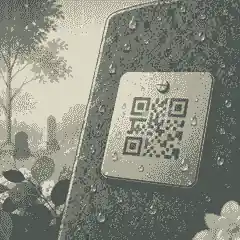
Can rain ruin a QR code tag? Cemetery checks, materials and setup matter more than the rain itself: a properly engraved or sealed QR code tag should keep scanning after ordinary rain, but poor materials, glare, dirt, weak adhesive, bad placement or an unstable digital destination can make it fail.
The practical answer is reassuring but not careless. Rain usually causes a temporary scanning problem, not permanent damage, because the QR Code standard includes error correction, and DENSO WAVE explains that QR codes can restore data when a symbol is dirty or damaged through selectable QR Code error correction levels. Sound installation, sensible weatherproofing, a durable surface, strong contrast, cemetery approval, and a memorial page that remains available all matter when someone scans the tag years later.
Can rain ruin a QR code tag in real cemetery weather?
Rain can sit on the surface of a QR code tag, create reflections, carry grit, encourage biological growth around the plaque, and test the adhesive holding it to stone. It does not normally change the QR pattern unless the material underneath is vulnerable. A laser-etched stainless steel plaque, fired ceramic plaque, or high-quality anodized aluminum tag behaves very differently from a printed paper label, vinyl sticker, or laminated temporary tag.
The code itself is simply a pattern of dark and light modules. DENSO WAVE’s explanation of QR Code versions and module configuration is useful because it shows why clarity, size, and the number of modules matter: the more detailed the code, the more careful the printing or engraving needs to be. In a cemetery, the risk is rarely that one rainy afternoon destroys the tag. The risk is that repeated wet-dry cycles, sunlight, cleaning products, frost, and surface wear slowly reduce the contrast that a phone camera needs.
If the tag is wet and will not scan, dry it gently with a soft cloth, shade it with your hand to reduce glare, and try again from a square-on angle. Apple’s current instructions say visitors can use the Camera app or Code Scanner and tap the link that appears, so the visitor experience should be as simple as the official Apple QR code scanning guidance describes. When scanning repeatedly fails after drying and cleaning, the issue is more likely poor contrast, scratching, surface clouding, a damaged finder pattern, or a broken web link.
For families new to the terminology, what a QR memorial is in practice is the starting point: a physical code is only half of the memorial. The other half is the online tribute it opens, including the story, photographs, messages, and privacy settings the family chooses.
Best materials for wet cemetery conditions
For long-term cemetery use, choose the material before choosing the shape. A QR code tag is small, but it lives in a harsh outdoor environment. Australia can bring intense UV and heavy rain; the United Kingdom brings damp, frost, and frequent cleaning demands; many United States cemeteries face heat, snow, irrigation, coastal salt, or lawn-maintenance impact. The Bureau of Meteorology’s climate records show the scale of Australian rainfall and temperature extremes, which is why outdoor memorial materials should be judged by real exposure, not indoor appearance.
Stainless steel is often the most practical all-round material because it resists corrosion, holds a laser-marked or engraved pattern, and tolerates gentle cleaning. Ceramic can be excellent where a traditional look is important, especially if the QR pattern is fired or permanently bonded rather than printed on a surface layer. Bronze can age beautifully, but patina and color change must be considered because a code needs lasting contrast. Anodized aluminum can work well if the finish quality is high and the site is not especially harsh. Printed vinyl, paper, acrylic, and low-grade laminate are better treated as temporary or sheltered options.
Barcode readability depends on more than being waterproof. GS1’s 2D barcode implementation guidance discusses contrast, reflectance, square modules, quiet zones, verification, and barcode security; reflective surfaces, moisture, and frost can interfere with the reading experience even when the code is technically intact. That makes GS1 2D barcode quality guidance directly relevant to memorial tags, even though a graveside plaque is not retail packaging.
Evaheld’s more detailed comparison of which plaque materials cope best outdoors is useful before ordering because the right answer changes with the grave surface, cemetery rules, exposure, and the family’s tolerance for future maintenance.
As a rule, avoid glossy finishes that turn into mirrors in low sun, avoid decorative QR codes that distort the square grid, avoid low-contrast color combinations, and avoid tiny codes that leave no margin for wear. A discreet tag can still be readable if it has enough size, a quiet border, a matte or brushed surface, and a stable dark-light pattern.
Cemetery checks before buying or installing a tag
Cemetery approval should come before purchase. Some cemeteries allow small plaques; some allow them only on certain grave types; some require the deed holder or exclusive right holder to apply; some require a registered memorial mason; some religious churchyards are stricter than municipal cemeteries. The key point is that a QR code tag is not only a technology choice. It is a physical alteration or addition to a memorial site.
In England, Church of England guidance says QR codes on gravestones need a faculty, reflecting concerns that linked web content may sit outside church control. In the United States, the Department of Veterans Affairs notes that available government headstones, markers, and medallions must still be permitted by the officials in charge of the cemetery where they are placed, which is a useful reminder from its headstones, markers, and medallions guidance. UK council rules also vary locally; Dover District Council, for example, sets detailed requirements around memorial installation, positioning, approved work, and grave-owner responsibility in its cemetery and memorial regulations.
Australian readers should also treat approval as local and specific. Cemetery trusts, councils, religious authorities, and private operators can apply different rules to the same basic idea. In practical terms, ask the cemetery whether the tag is allowed on that grave type, whether adhesive is acceptable, whether drilling is prohibited, whether the plaque must be installed by a mason, whether there are size or color limits, and whether the rule can be confirmed in writing.
Evaheld’s separate article on cemetery rules for QR codes goes deeper into the approval conversation, but the safest order is simple: choose the digital memorial first, check the cemetery rule, then order or fit the physical plaque.
Placement that survives rain and remains easy to scan
Rain exposes poor placement quickly. A tag placed where water pools, soil splashes, mowing debris hits it, or visitors must crouch into mud will be less reliable than one placed on a clean, flat, reachable surface. The best position is usually visible but not visually dominant, close enough for a normal phone camera, away from bevels and decorative edges, and easy to wipe gently without touching fragile inscription work.
On an upright headstone, a lower corner of the face, a side return, or a companion plaque can work well if the visitor can hold the phone squarely. On a flat marker, the tag should not sit where water settles or where grass trimming will strike it. On a columbarium niche, memorial bench, urn display, or garden plaque, choose a surface with good contrast and a comfortable viewing angle. If the stone is polished black granite, glare may matter more than rain; a matte plaque or shaded position can make scanning more reliable.
The guidance on where a QR code can be placed on a headstone is worth reviewing with the cemetery or stonemason because placement affects dignity, accessibility, maintenance, and scan reliability at the same time.
Families sometimes want to hide the code on the back of a headstone. That can be appropriate for a quieter look, but it may reduce use if visitors do not know it is there. A small engraved prompt such as “Scan for memories” can help, provided the cemetery allows it and the wording suits the memorial’s tone. Avoid anything that looks like advertising or a product label.
Rain also changes visitor behavior. Someone scanning after a shower may be holding flowers, helping an older relative, or trying not to step on soft ground. A resilient setup gives them a stable place to stand, a clear line of sight, and a code that can be scanned without touching the memorial repeatedly.
Installation, adhesive, and surface preparation
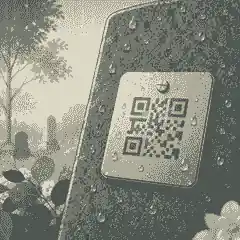
Installation is where many avoidable failures begin. A durable plaque can still loosen if it is fixed to a dirty, wet, icy, crumbling, waxed, or heavily textured surface. If the cemetery requires a stonemason, follow that rule. If adhesive mounting is allowed, treat the preparation as part of the memorial work, not as a last-minute chore.
3M’s VHB tape application guidance stresses surface cleaning, suitable preparation, temperature, and pressure for a proper bond; its instructions note the importance of clean surfaces and final pressure in achieving adhesive contact. That general 3M VHB tape application guidance is relevant because many small memorial plaques use outdoor-rated pressure-sensitive adhesive, even when the plaque supplier uses a different brand or product family.
For a cemetery installation, the practical sequence is: confirm approval, test the QR code before mounting, choose a flat and stable surface, clean the area gently, allow it to dry fully, avoid installation during freezing or very cold conditions, position the tag with the phone camera test in mind, press evenly for the time recommended by the plaque supplier, and avoid disturbing the bond while it cures. If the surface is rough, porous, flaking, or historically significant, do not improvise. Ask the monument mason or cemetery first.
Cleaning the surrounding stone also needs care. The National Park Service warns that grave markers should be cleaned with the gentlest means possible and that harsh methods such as wire brushes, power washing, and bleach can damage stone. Its grave marker cleaning guidance matters for QR tags because aggressive cleaning can damage the plaque, stain the stone, loosen adhesive, or make an older memorial harder to preserve.
For a simple wet tag, wipe with clean water and a soft cloth. Do not scrape with metal, polish the code, use abrasive pads, apply solvents without supplier approval, or pressure-wash around the plaque. If the code has mud or mineral deposits after heavy rain, clean gently and test again in normal light before assuming the tag has failed.
What to do if rain seems to have stopped the tag scanning
Start with the least invasive checks. First, dry the face of the tag and remove obvious droplets. Second, shade the plaque to cut glare. Third, move closer or farther away until the whole square fits inside the camera frame. Fourth, check whether the phone has mobile reception at the plot. Fifth, ask another person to test with a different phone. Sixth, type the printed memorial URL if the plaque includes one. Seventh, check the memorial page from home to confirm the website itself is live.
If the tag works after drying, rain was only a temporary optical issue. If it works on one phone but not another, the issue may be camera focus, phone settings, or older device behavior. If the tag opens the wrong page or no page, the problem is digital rather than physical. If the code has faded, cracked, delaminated, or lost contrast, the physical tag may need replacement.
Evaheld’s article on how to replace a damaged QR memorial plaque explains why preserving the same destination link matters. The best replacement does not force the family to rebuild the memorial or scatter a new link through old messages, funeral booklets, and saved photographs. It simply restores a readable physical code that opens the same tribute.
Families should also keep a small record at home: the memorial URL, the provider account details, the plaque order details, the cemetery approval note, the installation date, the chosen privacy setting, and the person responsible for future updates. That record is not sentimental, but it is kind. It prevents a future relative from standing at the grave with a broken code and no clear way to repair it.
The digital destination matters as much as the tag
A QR code tag can survive rain perfectly and still fail the family if the page behind it disappears. That is the weakness many short buyer guides understate. The physical object is visible, so it gets attention. The linked destination is less visible, but it is the part that holds the story.
A stable QR memorial should point to a page the family can update without replacing the plaque. It should have clear account ownership, sensible privacy options, moderation tools if visitors can contribute, and a way for family members to preserve important text and media. Evaheld’s guidance on how QR memorial content can be updated is relevant because a memorial often grows after installation: new photographs are found, a cousin remembers a story, service details change, or the family decides to make a public page more limited.
Privacy should be settled before a public tag is installed. The Office of the Australian Information Commissioner explains that public online information can be seen by anyone and that privacy settings may not give complete control once information is shared, so its social media and online privacy advice applies strongly to memorial pages. Avoid publishing home addresses, private phone numbers, identity details, account clues, unapproved photographs of living people, unresolved family conflict, or sensitive medical details on a QR-linked page.
Security is part of privacy. The United States Federal Trade Commission has warned that scammers can hide harmful links in QR codes and advises people to inspect the URL before opening it. In a memorial setting, the FTC’s QR code scam warning supports a practical rule: use a recognizable memorial domain, avoid unofficial short links, check the physical plaque has not been covered by another sticker, and teach family members to pause if a scan opens an unexpected payment or login page.
For sensitive family situations, QR memorial safety and private versus public QR memorials should be considered together. The first asks whether the code and destination can be trusted; the second asks who should see, find, and contribute to the page.
How long a rain-ready QR memorial can last
There is no honest universal lifespan because “QR code tag” can mean anything from a temporary sticker to a professionally made plaque. The more reliable way to think about longevity is to separate four layers: the code pattern, the material carrying it, the attachment method, and the online destination. Rain can affect the second and third layers directly, and the first layer indirectly by reducing contrast.
Ask suppliers specific questions instead of accepting broad claims. What material is the tag? Is the code laser-marked, engraved, fired, printed, or laminated? Is the surface matte enough to reduce glare? Is the quiet zone preserved? What adhesive or fixing method is used? What surface is it designed for? What happens if the plaque stops scanning? Can a replacement use the same memorial URL? Can the page be exported or maintained if the account owner changes?
The Evaheld guide to how long QR memorials last in practice treats longevity as both physical and digital, which is the right frame. A rainproof plaque with an abandoned destination is not a lasting memorial. A well-managed page with a damaged sticker is also incomplete. The strongest setup plans for both.
Consumer rules differ by country. In Australia, the ACCC’s funeral services consumer guidance is useful when families are comparing funeral-related goods, prices, and rights. In the United States, the FTC’s Funeral Rule guidance reinforces the importance of clear, itemized price information when funeral goods and services are being discussed. In the United Kingdom, GOV.UK guidance after a death helps families separate official tasks from optional memorial choices so decisions about a plaque are not made under unnecessary pressure.
What the linked memorial should include
A rain-ready QR tag deserves a destination that feels worth preserving. The page does not need to be crowded. A good first version may include the person’s full name, dates, a short life story, a small set of photographs, funeral or memorial service details if still relevant, and a way for close people to leave messages. Later, the family can add fuller stories, voice recordings, video, captions, family history notes, and anniversary reflections.
Public examples of remembrance show why layered storytelling matters. A profile such as Olivia Newton-John can bring together dates, biography, images, and tributes in one place. A science-focused life such as Stephen Hawking shows how a memorial can preserve work, honors, and a public legacy without trying to fit everything onto stone. A music memorial such as Tina Turner reminds families that voice, performance, resilience, and cultural memory often need more space than a marker can hold.
For Evaheld Memorials families, the practical product question is often which plan comes with QR memorial plaques. That answer should sit beside the content decision: what should the code open, who may contribute, and what should stay private until the family is ready?

Country-by-country considerations for Australia, the United Kingdom, and the United States
In Australia, the most important practical concerns are heat, UV, heavy rain, coastal corrosion in some areas, cemetery-trust approval, and consumer guarantees. Families should ask whether the plaque material suits the local climate and whether the installer understands the cemetery’s monument rules. In high-UV or coastal settings, stainless steel or ceramic is usually safer than printed laminate.
In the United Kingdom, the split between council cemeteries and churchyards matters. A municipal cemetery may assess the tag as a memorial addition under its own regulations, while a Church of England churchyard may require faculty approval and may refuse or restrict QR codes for theological, aesthetic, or control reasons. Damp, frost, and biological growth also make gentle cleaning and placement important.
In the United States, rules vary by cemetery, state, private operator, religious authority, and veterans’ cemetery context. Veterans’ cemeteries and military markers can have specific standards, while private cemeteries may control additions through contracts and local regulations. Weather risks range from snow and freeze-thaw in northern states to heat, irrigation, and salt air in coastal sites, so there is no single “US material” that fits every cemetery.
Across all three countries, the family should ask for approval before installation, avoid drilling unless the cemetery and stonemason approve it, choose a durable material, test the scan on site, keep the memorial URL stable, and choose privacy settings before the code becomes publicly visible.
A practical setup checklist
Use this sequence before committing to a permanent QR code tag. First, create or draft the memorial page so the family knows what the code will open. Second, decide whether the first version should be public, private, or limited. Third, check cemetery permission in writing and ask about material, size, finish, color, drilling, adhesive, and installer requirements. Fourth, choose a tag material and surface finish that suit the climate. Fifth, ask the supplier how the code is generated, whether the URL is stable, and what happens if the tag becomes damaged.
Sixth, test the QR code before installation on at least two phones. Seventh, choose a spot with good scanning angle, minimal glare, limited water pooling, and easy cleaning access. Eighth, install only on a clean, dry, stable surface and follow the adhesive or fixing instructions. Ninth, test immediately after installation and again after the first spell of rain. Tenth, keep a home record of the approval, memorial URL, account owner, and replacement process.
Finally, share the memorial link separately with family and friends. A cemetery tag is helpful for visitors at the site, but relatives in another country should not have to wait until they visit the grave to see the tribute. The QR code, direct link, and family-controlled memorial page work best together.

When Evaheld Memorials can help
If your family is asking can rain ruin a QR code tag because you want the physical plaque and digital tribute to last, begin with the page, privacy, and sharing plan before finalizing the object. Evaheld Memorials can help you create the memorial, shape what visitors will see when they scan, invite contributions at the right pace, and plan the QR-linked experience with care. When you are ready, can rain ruin a qr code tag can become a practical setup decision rather than a source of uncertainty.
FAQs
Can rain ruin a QR code tag? Cemetery checks, materials and setup
No, ordinary rain should not ruin a well-made QR code tag, but it can expose poor materials, weak adhesive, glare, dirt, or bad placement. A durable tag should use a weather-ready material, strong contrast, and a stable digital destination; which plaque materials cope best outdoors helps with the physical choice, while DENSO WAVE’s QR Code error correction levels explain why minor dirt or damage does not always stop a scan.
What should I do if a wet QR tag will not scan?
Dry the tag gently, shade it from glare, hold the phone square to the code, check mobile reception, and try another phone before assuming the plaque has failed. If the problem continues, how to replace a damaged QR memorial plaque explains the next step, and Apple’s QR code scanning guidance confirms the basic camera steps visitors should be able to use.
Which QR plaque material is best for rain?
Laser-marked stainless steel and well-made ceramic are usually stronger long-term choices than printed vinyl or laminated labels because the code is less likely to fade, peel, or cloud after wet-dry cycles. Evaheld’s which plaque materials cope best outdoors gives the memorial-specific comparison, and GS1 2D barcode quality guidance explains why contrast and reflectance matter for scanning.
Do I need cemetery approval for a QR code tag?
Usually, yes, because a QR code tag is commonly treated as an addition or alteration to a memorial, even if the cemetery rules do not mention QR codes by name. Evaheld’s cemetery rules for QR codes sets out the questions to ask, and the Church of England’s QR codes on gravestones need a faculty guidance shows why UK churchyards may require a formal approval path.
Where should a QR code tag go on a headstone?
Choose a discreet, reachable, flat position that avoids glare, water pooling, decorative lettering, edges, and places where visitors must kneel or step awkwardly after rain. Evaheld’s where a QR code can be placed on a headstone covers practical positioning, while the National Park Service’s grave marker cleaning guidance supports choosing a spot that can be maintained gently.
Can adhesive fail after rain?
Adhesive can fail if it was applied to a wet, dirty, cold, porous, or unstable surface, so preparation and curing matter more than a single shower after proper installation. Evaheld’s where a QR code can be placed on a headstone helps identify suitable surfaces, and 3M VHB tape application guidance explains why clean surfaces and pressure help adhesive bonds perform.
How long should a rain-ready QR memorial last?
Longevity depends on the plaque material, engraving method, attachment, cleaning conditions, and whether the linked memorial page remains available. Evaheld’s how long QR memorials last in practice explains the physical and digital sides, while the Bureau of Meteorology’s rainfall and temperature extremes show why local exposure should influence material choice.
Can the memorial page be updated without changing the tag?
Often yes, if the QR code points to a stable editable memorial page rather than a temporary file or page that cannot be maintained. Evaheld’s how QR memorial content can be updated explains the family workflow, and the FTC’s QR code scam warning is a useful reminder to keep the destination recognizable and trustworthy.
Should a QR memorial page be public or private?
The physical code may be visible in a public place, but the linked content can often be public, private, limited, or managed with contribution controls depending on the platform and plan. Evaheld’s private versus public QR memorials helps families choose the right level, and the OAIC’s social media and online privacy advice explains why public online sharing should be intentional.
Which Evaheld Memorials option includes QR memorial plaques?
Families comparing the physical plaque with the digital tribute should check the current plan details before ordering, especially if cemetery approval is still pending. Evaheld’s FAQ on which plan comes with QR memorial plaques gives the plan-specific answer, and the ACCC’s funeral services consumer guidance is useful broader context for comparing funeral-related products and costs.