How do I connect a grave to a website? Privacy, setup and family sharing
A practical guide to connecting a grave to a website with a QR plaque or headstone code, covering privacy, cemetery approval and family sharing.

How do I connect a grave to a website? Privacy, setup and family sharing begins with one practical choice: create a controlled memorial website first, then connect the grave to that website with a durable QR plaque, headstone QR detail, printed funeral code or shareable link. To connect a grave to a website well, the family should check cemetery permission, choose what the QR code opens, decide privacy before publication, appoint responsible administrators and keep a backup plan for the digital memorial.
A QR code is not the memorial itself. It is a scannable bridge from a physical grave, plaque, urn, niche, bench or printed order of service to a web page that can hold the fuller story: photographs, dates, voice recordings, written tributes, service details, family messages and later updates. The technology behind QR codes was released by DENSO WAVE in 1994, and the official history of QR Code development explains why the format became useful for storing more information than traditional barcodes while remaining quick to scan.
Most families are not trying to make the grave more technical. They are trying to make remembrance more complete. A headstone can usually hold a name, dates and a short inscription. A linked website can hold context: who the person was, what they loved, the voices of people who knew them and the memories that arrive later. That is why it helps to understand how memorial QR codes work before choosing a plaque, because the best result comes from planning the page and the physical marker together.
The scan itself is simple. Apple’s official iPhone guidance says people can use Camera or Control Centre to scan QR codes, and its iPhone QR code scanning instructions show the basic flow: open the camera, place the code in frame and tap the link that appears. Many Android phones work similarly through the camera or Google Lens. The practical limits are more ordinary: glare, dirt, tiny codes, poor contrast, weak mobile signal and visitors who are uncomfortable scanning any code.
The safest sequence is to build the website first, test it privately, then add the QR code to the grave after the family agrees on privacy, wording, permissions and long-term stewardship. A QR plaque installed too early can lead to a public page that is unfinished, inaccurate or too exposed. A page prepared first gives the family time to decide what a memorial QR code can actually link to, from a simple life story to a richer tribute with photos, video, audio and moderated messages.
connect a grave to a website: practical guidance
Before ordering anything physical, ask who controls the grave and who controls the cemetery rules. In Australia, terminology varies by state and cemetery operator, but the NSW regulator explains that an interment right holder is generally the person able to authorise actions such as memorial erection and maintenance; the official NSW interment rights guidance is a useful example of why families should confirm authority before installing anything. The linked fact sheet on memorial maintenance and installation also shows that the physical memorial side is regulated separately from the online tribute.
In the United Kingdom, local burial authorities, churchyards and private cemeteries can set detailed rules about memorial size, materials, installation, ownership and maintenance. Chesterfield Borough Council’s cemetery regulations, for example, define memorials broadly and describe rules for applications, exclusive rights of burial and memorial restrictions. The exact council or churchyard may differ, so a family in England, Scotland, Wales or Northern Ireland should check the local authority, cemetery office or diocese before assuming that a QR plaque can be attached.
In the United States, rules vary by cemetery, state, religious cemetery, private cemetery and veteran cemetery. For national veteran contexts, the US Department of Veterans Affairs explains the process for headstones, markers and medallions, including the role of cemetery officials and authorised representatives. Private cemeteries may have their own marker rules, so families should request written approval before adhesive mounting, engraving or adding a freestanding QR marker.
The practical request should be specific. Ask whether QR codes are allowed, whether the code may be engraved into stone or must be on a plaque, which materials and sizes are accepted, who may install it, whether a registered stonemason is required, whether adhesive mounting is permitted, and whether the cemetery needs to inspect a proof before installation. Evaheld’s article on cemetery rules for QR codes explains why the answer can differ by grave type, not only by cemetery.
Choose What The Grave Website Should Show
A good QR destination answers three questions in the first few seconds: whose memorial is this, why does this person matter, and what can the visitor do next? Start with the person’s full name, dates, a clear photograph, a short life summary and a calm menu into deeper memories. Then add optional sections such as a photo gallery, voice memories, video, funeral or anniversary details, a written tribute wall and a moderated condolence area.
Do not put everything on the public landing screen. A public grave scan may be used by relatives, old friends, passers-by, genealogists, local historians or people who do not know the family. That does not mean every visitor should see children’s names, living addresses, private family conflict, medical details, identity documents, bank information or unreviewed messages. The page can be warm and generous while still keeping sensitive material out of public view.
That distinction matters because privacy law does not always protect the deceased in the same way it protects living people. In Australia, the OAIC explains that the Privacy Act does not cover personal information of someone who has died, though information about living relatives can still be personal information; its personal information guidance is helpful when deciding whether a photograph, voice note or family detail could identify someone living. In the UK, the ICO says the UK GDPR applies to identifiable living individuals and that deceased-person information is not personal data under UK GDPR; the ICO personal data guidance is still useful because many memorial pages include living relatives.
The ethical standard should be higher than the minimum legal standard. Ask whether a living person is identifiable, whether the deceased would reasonably have wanted a detail shared, whether children appear in a photograph, whether health or family history is sensitive, and whether the content could create conflict or distress. For many families, private versus public QR memorials becomes the central decision because the physical code is visible even when the linked content is controlled.
Set Up Privacy, Access And Family Sharing
There are three common privacy models. A public memorial lets anyone who scans or follows the link view the page. A private memorial restricts access to invited people, password holders or approved viewers. A hybrid memorial shows a public landing page but keeps deeper material, contribution tools or family-only media behind controlled access. For a grave QR code, the hybrid model often works well because visitors can confirm they have reached the right memorial without exposing every family memory.
Decide who manages the memorial before you invite contributors. One organiser should be responsible for accuracy, tone, privacy and final approval, but that does not mean one person should hold all the knowledge or all the access. Families should discuss who controls an online memorial over time before the QR code is installed, because admin rights, backup access and succession matter as much as the plaque itself. NIST’s current digital identity authentication guidance recommends strong account practices such as adequate password length, protected channels and recovery planning; in family terms, that means avoiding shared passwords, using trusted administrators and recording succession instructions somewhere reliable.
Family sharing should be structured, not chaotic. Ask relatives for specific contributions: five photographs from childhood, a short story from work, a voice recording, a favourite saying, a corrected date, or a memory from a particular decade. Evaheld’s FAQ on how to invite family and friends to help build the memorial explains why contributor roles, moderation and review are useful when several people are adding memories.
In grief, people may want different levels of exposure at different times. Some families keep the page private until after the funeral. Others publish a simple page immediately and add deeper media later. Some want public remembrance for a community figure, while others prefer an invited circle only. The key is to decide before sharing the QR widely, because a code on a grave can be scanned by people outside the family. Evaheld’s privacy FAQ on whether your memorial stays private until you are ready to share is particularly relevant if the family wants breathing room before the page becomes visible.
Choose A QR Plaque, Headstone Detail Or Printed Code
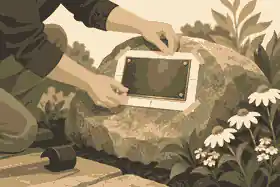
The physical form depends on the cemetery rules, budget, timing and the family’s sense of restraint. A small plaque attached to a headstone is flexible and often easier to replace than an engraved code. Engraving can look integrated but needs careful contrast, size and future maintenance planning. A printed code on a funeral programme is useful for immediate sharing but is not the same as a grave installation. A QR code on a memorial bench, urn, niche plaque or keepsake may suit families without a traditional grave.
The plaque must be readable, not merely attractive. The code should be large enough to scan comfortably, placed where a visitor can point a phone without kneeling awkwardly, and protected from glare, heavy shadow, water pooling and lawn equipment damage. The US National Park Service’s cemetery preservation guidance treats cemeteries as dignified cultural resources and emphasises preserving the character and solemn nature of burial grounds, which is a useful principle for QR placement: the technology should support remembrance without dominating the memorial.
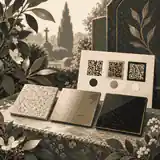
Material choice matters. Stainless steel, ceramic and quality engraved metal tend to be more suitable for long-term outdoor use than temporary stickers or low-grade printed labels. The family should consider rain, sun, salt air, irrigation, cleaning, vandalism, mounting method and replacement. Evaheld’s guide to best materials for QR memorial plaques covers the practical trade-offs between durability, readability and appearance.
Security is also physical. The FTC warns that scammers can use QR codes to send people to harmful links, and its QR code scam warning advises checking the URL before opening unexpected codes. A grave plaque is less likely to be swapped than a poster in a public place, but families should still inspect the plaque after installation, avoid using short links that hide the destination, and teach relatives to look for the correct Evaheld Memorials domain before entering any information.
Plan For Updates, Backups And Continuity
The best grave-linked website is not frozen on the day of installation. Families may add photographs after an anniversary, correct a date, include a service recording, invite a distant relative, add a tribute from someone who was not ready earlier, or adjust privacy after the first year. That is why updating QR memorial content over time should be part of the plan before the plaque is made.
Future-proofing has two sides. The physical code must remain readable, and the web destination must remain available. If the plaque breaks, a replacement should point to the same memorial page. If the family changes the page, the QR code should not need replacing. If the organiser dies or loses access, another trusted person should know how to maintain the memorial. Evaheld’s article on future-proofing a QR memorial is useful because no digital service should be treated as a substitute for family-owned backups.
Backups should include the memorial URL, login recovery instructions, approved photographs, original media files, written tributes, contributor lists, cemetery approval documents and plaque order details. Families in the United States may also need to consider consumer rights around funeral purchases; the FTC’s Funeral Rule guidance explains itemised price information and restrictions on misrepresenting legal or cemetery requirements. Even where the Funeral Rule does not directly cover a particular cemetery purchase, the principle is useful: ask for written pricing, terms, replacement conditions and hosting information.
Search visibility is another continuity issue. A public page may appear in search results; a private or unlisted page may not. Google’s personal information removal guidance explains that certain personal information can be requested for removal from search results, but removing a result from Google is not the same as removing the original web page. Families should decide search visibility before publishing, not after a sensitive detail has been indexed.
Use Examples To Decide Tone And Depth
Looking at public memorial profiles can help families decide how much story, chronology and visual material feels right. The Evaheld Memorials profile for Steve Jobs shows how a technology and design life can be presented through milestones, family context and public legacy. The profile for Princess Diana demonstrates how a public figure’s humanitarian memory can be framed with care. The profile for Alan Rickman shows how performance, voice, craft and personal relationships can sit together in a memorial narrative.
The lesson is not to imitate a famous person’s memorial. It is to recognise that a connected grave can carry more than a short inscription without becoming cluttered. For a private family memorial, the best page may be quieter: fewer public sections, more careful photo selection, and a stronger focus on how relatives can contribute over time. For a community figure, a wider public page with moderated tributes may be appropriate.
Bereavement also affects how people use the page. The NHS notes in its grief and bereavement support that grief can affect feelings, behaviour and daily life, while the American Psychological Association’s grief overview explains that grief may include distress, yearning, confusion and apprehension about the future. That is why the memorial should not force people through a complicated interface or ask them to make too many decisions while standing at a grave.
A Practical Setup Checklist
Begin with authority. Confirm who can approve changes to the grave, then ask the cemetery for written rules. Next, create the memorial website privately, choose the public landing content, decide what is restricted, appoint an organiser and a backup organiser, and invite trusted contributors. Test the page on several phones, including outdoors in bright light, before ordering the plaque.
Then prepare the physical code. Use a permanent QR destination rather than a temporary draft link. Choose a material and finish that fits the site. Ask for a proof with the exact QR code, test the proof from print and screen, and confirm that the destination opens quickly. Keep the memorial URL and QR file in the family records so a replacement plaque can be made later if needed.
After installation, scan the code from the position a visitor will naturally stand. Test it in daylight and shade. Check the landing page for speed, readability, spelling, dates, privacy and emotional tone. Tell close relatives what the code does, who manages it and how they can contribute. Review the page after the funeral period, after the first anniversary and whenever new material is added.
The best answer is therefore practical and humane: build the website with privacy and stewardship first, obtain permission for the grave connection, then add a QR code that opens a calm, editable memorial. When you are ready, Evaheld Memorials can help you connect a grave to a website with a memorial page that can be shaped around your family’s wishes.


FAQs
How do I connect a grave to a website? Privacy, setup and family sharing
Create the memorial website first, set the privacy level, confirm who manages it, then add a QR plaque or approved headstone QR detail that opens that page. Evaheld’s explanation of how memorial QR codes work helps with the memorial side, while the official history of QR Code development explains the technology behind the scan.
Can any cemetery refuse a QR plaque on a grave?
Yes. Cemeteries, councils, churches and private operators can set rules about materials, size, fixing methods and who may install a memorial. Evaheld’s guide to cemetery rules for QR codes explains the family checks, and the NSW interment rights guidance shows why authority over a grave matters.
Should the QR memorial page be public or private?
Choose public for a broad community tribute, private for family-only memories, or hybrid when the grave scan should show basic details but keep deeper material controlled. Evaheld’s article on private versus public QR memorials explains the options, and the ICO personal data guidance is a useful UK reference when living relatives are identifiable.
What should the QR code on a grave link to?
It should usually link to a calm memorial landing page with the person’s name, dates, photograph, life story and carefully chosen paths into photos, tributes or service details. Evaheld covers what a memorial QR code can actually link to, and the iPhone QR code scanning instructions show why a simple mobile destination matters.
How do I keep a grave-linked memorial safe from scams?
Use a clear destination domain, avoid hidden short links, inspect the installed plaque, keep account recovery secure and remind relatives not to enter information unless the URL is correct. Evaheld’s article on future-proofing a QR memorial supports long-term planning, and the FTC’s QR code scam warning explains common QR phishing risks.
Who should manage the memorial website after the QR code is installed?
The organiser should be a trusted person who can check facts, review contributions, update privacy and name a backup administrator for the future. Evaheld’s guidance on who controls an online memorial over time covers stewardship, while digital identity authentication guidance supports strong access planning.
Can family and friends add photos after the QR plaque is fitted?
Yes, if the memorial platform and plan allow contributor invitations, moderation and later updates; the plaque should keep pointing to the same editable page. Evaheld explains how to invite family and friends to help build the memorial, and the grief overview is a reminder that people may contribute at different times.
What material is best for an outdoor QR memorial plaque?
A durable, low-glare material with strong contrast is usually best, and families should consider weather, cleaning, vandalism risk and cemetery approval. Evaheld’s guide to best materials for QR memorial plaques covers the comparison, and the National Park Service’s cemetery preservation guidance reinforces the need for dignified long-term care.
Can I change the website after the QR code is on the grave?
Usually yes, if the QR code points to an editable memorial page rather than a static file or expired link. Evaheld’s article on updating QR memorial content over time explains why this matters, and the personal information removal guidance helps families understand search-related privacy limits.
What should Australian, UK and US families check first?
Australian families should confirm the interment right holder and cemetery operator rules, UK families should check local council or churchyard memorial regulations, and US families should check cemetery or veteran-marker requirements. Evaheld’s privacy FAQ on whether your memorial stays private until you are ready to share helps with the digital side, while the FTC’s Funeral Rule guidance supports transparent purchasing discussions in the United States.