What are headstone quote ideas? Wording, structure and examples
A practical, compassionate guide to headstone quote ideas, with wording structures, examples, cemetery checks and AU/UK/US differences.
What are headstone quote ideas? Wording, structure and examples are the practical choices that help a family turn a name, dates and one short line into an inscription that is readable, approved and still recognizably true to the person being remembered. Good headstone quote ideas balance feeling with space: they consider the cemetery rules, the stone or plaque size, the family voice, religious or secular language, future visitors and whether a fuller story should sit somewhere beyond the stone.
A headstone is not an obituary, a eulogy or a full biography. It is usually a public marker with a small amount of room, so the strongest wording often works in layers: the legal or preferred name, dates, relationships, a short epitaph, and sometimes one symbol or line from scripture, poetry or family speech. If your family also wants the fuller story, photos, eulogies and tributes preserved, keep the inscription steady and let the wider memorial hold what the stone cannot.
Start With The Job The Inscription Has To Do
Before choosing examples, decide what the headstone needs to communicate. Some inscriptions identify a resting place. Some record a relationship. Some make a promise of remembrance. Some quietly signal faith, service, humor, vocation or family belonging. The mistake is trying to make one line do every job at once.
A practical structure is: name, life dates, relationship or role, then one meaning line. For example: Amelia Rose Carter, 1948-2026, beloved mother and grandmother, steady in love. Another version might be: Thomas James Reed, 1939-2025, teacher, gardener, friend, still part of every story. Neither tries to summarize every achievement. Each gives visitors enough to understand the person without turning the stone into a crowded noticeboard.
The word epitaph is often used for the short commemorative wording on a grave marker, while inscription can describe the whole engraved text. In ordinary family conversation the terms overlap. What matters more is the practical distinction: the inscription includes the name and dates; the epitaph is the sentence or phrase that carries feeling.
Keep the first draft generous, then reduce it. A family might begin with: In loving memory of a devoted mother, nurse, sister and friend whose kindness shaped everyone she met. On a stone, that may become: Devoted mother, nurse and friend. Kindness was her way. The shorter version is easier to read, easier to engrave and less likely to feel overworked in ten years.
When the family wants more than the stone can hold, related memorial writing can carry the detail. Evaheld Memorials has dedicated memorial tribute writing support for shaping longer memories without forcing them into a headstone line.
Check Rules Before Falling In Love With Words
Headstone wording is not only an emotional decision. Cemeteries, churchyards, memorial gardens and military burial places can set rules about materials, dimensions, layouts, symbols, language, photographs, QR plaques and approval steps. In Australia, the United Kingdom and the United States, the exact rules are usually local to the cemetery, council, church authority, memorial park or veterans cemetery rather than one national standard.
For United States veterans, the Department of Veterans Affairs explains eligibility for VA headstones and markers, and the National Cemetery Administration gives detailed headstone and marker inscription rules covering mandatory, optional and additional items. Arlington National Cemetery shows how precise this can become: its headstone and niche cover guidance includes character limits, line counts and review steps. The lesson for every family, not only military families, is to ask for the rules and proofing process before settling on final wording.
In the UK, the wider administrative sequence also matters. Families may need to register the death, organize funeral arrangements and then work with the burial authority or churchyard rules before a permanent memorial is approved; GOV.UK after a death guidance and the separate GOV.UK death registration guidance help families understand the official steps around the death itself, though memorial approval remains local. In Australia, the ACCC funeral services guidance is useful when comparing funeral and memorial-related suppliers, while the United States FTC Funeral Rule is relevant when families are discussing funeral goods and services with providers.
Ask the cemetery or stonemason these questions before approving the inscription: how many lines are allowed; whether spaces count as characters; whether full dates or year-only dates are acceptable; whether nicknames can be included; whether religious symbols need approval; whether a second inscription can be added later for a spouse or partner; whether QR codes, ceramic portraits or emblems are permitted; and whether the proof shows the exact final size and line breaks.
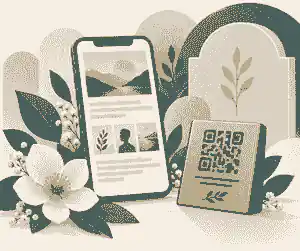
Families considering a digital link beside the headstone should also check cemetery rules for QR codes early, because permission can depend on the cemetery, grave type, plaque material and installation method.
Choose A Voice: Traditional, Personal, Faith-Based Or Plain
Most headstone quote ideas fail when the voice shifts halfway through. A line that begins formally and ends like a social-media caption can feel unsettled. Choose one voice before choosing the final words.
Traditional wording is restrained and widely understood: In loving memory, Rest in peace, Forever remembered, Beloved wife, mother and grandmother. It is a good fit when the family wants dignity, familiarity and little risk of regret. Personal wording uses more recognizable details: Always in the garden, Still saving us a seat, Her table was home, He made ordinary days brighter. Faith-based wording should reflect the person and family honestly, not just convention. Plain wording is sometimes the most moving: Loved by his family, Kind, steady and missed, Our mother.
If several relatives disagree, separate taste from accuracy. One person may want poetry; another may want simplicity. Ask: is the wording true to the person, readable on the stone, acceptable to the cemetery, and unlikely to burden future visitors? If yes, it is a stronger candidate than a clever line that only one person loves.
Do not overlook the person’s own language. A favorite saying can be powerful if it is short, kind and comprehensible without explanation. Avoid private jokes that will confuse later generations, lines that need a long backstory, and wording that could embarrass a spouse, child or sibling when they visit years later.
When a fuller spoken tribute is also being prepared, the headstone line and the eulogy should not compete. Use the stone for permanence and the service for story. Evaheld Memorials’ step-by-step eulogy writing can help families keep those roles separate.
If the words need to reflect a whole life rather than a single relationship, life story obituary prompts can help identify the values, places, work, family roles and small habits that may become a concise inscription.
Practical Headstone Quote Ideas By Structure
The easiest way to draft is by structure rather than by hunting for a perfect quote. Below are original examples families can adapt, subject to cemetery approval and available space.
Name, dates and a relationship line. Beloved husband, father and grandfather. Dear sister, aunt and friend. Loving mother and cherished Nan. Son, brother, uncle and loyal friend. Relationship lines work because they are direct. They are especially useful when the person’s family role is the central truth visitors will recognize.
Name, dates and a quality. Gentle in strength. Generous in all things. Brave, funny and kind. Warm hands, steady heart. Quiet courage, lasting love. Quality lines are best when one or two words genuinely fit the person. Avoid stacking too many virtues, because the line can begin to sound like a list of compliments rather than a memory.
Name, dates and a family memory. Her kitchen was our gathering place. Still with us in every song. He taught us how to notice the sky. Her laugh remains at the table. Every garden carries him home. These lines are more personal, so they need a little more care. They should make sense to visitors who did not know the private details.
Short secular epitaphs. Love remains. Always part of us. Remembered with gratitude. A life of kindness. Held in memory. Still loved, still missed. Secular does not mean cold. It simply means the wording does not rely on a religious promise or image.
Faith and spiritual lines. Held in God’s care. At peace in eternal light. Faithful in love. Resting in grace. Until we meet again. Faith lines should match the person’s belief and the family’s comfort. If beliefs differ across the family, a gentler line such as At peace may avoid making the inscription feel claimed by one voice.
Shared or companion headstones. For spouses or partners, leave room for the second inscription if the stone is being prepared before both deaths. A shared line might be Together in love and memory, Home was wherever they were together, or Two lives, one family story. The wording should honor both people equally. Avoid lines that make sense only for the first person if the stone will later serve two lives.
How To Keep The Wording Readable
Readability is a memorial decision, not just a design choice. A beautifully written inscription can fail if the letters are too small, the contrast is poor, the font is ornate, or the line breaks make the sentence awkward. The Arlington guidance is an unusually clear reminder that real markers have line and character constraints, and the same principle applies everywhere: stone, metal and weather impose limits.
Ask for a proof at actual scale. Read it aloud. Then read it as if you are a visitor standing a few steps away. Check whether the name is clear, the dates are correct, punctuation is intentional, and the meaning line does not look cramped. If a long phrase forces tiny lettering, shorten the phrase rather than shrinking the type.
Dates deserve special care. Some families use full dates, such as 12 March 1946 - 4 July 2026. Others use years only, especially when space is tight or when the design is more understated. Follow local rules and family preference. Check all spelling, accents, hyphens, maiden names, middle names, titles and military details. Errors can be expensive or impossible to correct cleanly.
Punctuation should be minimal. A line break can often replace a comma. Full stops are optional in many inscriptions. Quotation marks can clutter a short line unless the words are clearly a quotation. If you use a poem, song lyric or scripture passage, check copyright, attribution and available space. Public-domain wording, family-created wording and very short original lines are usually simpler than modern lyrics or lengthy published poetry.
For families who want the inscription to connect to a wider life story, an online memorial can hold photographs, obituary wording, eulogies and tributes without crowding the headstone. Start with meaningful online memorial inclusions so the stone and the digital tribute work together rather than duplicating each other.
What To Avoid On A Headstone
Avoid wording chosen mainly because it is popular. Familiar phrases can be right, but not if they erase the person. Avoid unresolved family disputes, blame, contested relationships, private medical details, sarcasm that may age badly, and anything that could feel cruel to future visitors. A headstone is public, permanent and usually encountered at emotionally vulnerable moments.
Be careful with humor. Some people lived with unmistakable wit, and a dry line can be truthful. But humor on a headstone needs the consent of the closest family and a clear sense that the person would have welcomed it. If in doubt, keep humor for the eulogy, memorial page or private family memory rather than the stone.
Avoid overclaiming. Lines such as loved by all or the best person who ever lived may come from grief, but they can feel generic or impossible. More precise wording is stronger: She made room for everyone, He kept his promises, Her kindness was practical. Specific truth outlasts exaggeration.
Also avoid publishing personal details that belong in private family records. If a QR code opens a digital memorial, think carefully about privacy. The Australian eSafety Commissioner’s online reporting and safety pathways are a reminder that digital content can travel beyond its first audience. On Evaheld Memorials, families can also compare private versus public online memorials before deciding what should be visible.
Australia, United Kingdom And United States Differences
The emotional task is similar across Australia, the United Kingdom and the United States, but the practical setting differs. In Australia, cemetery and memorial park rules are usually managed by state, territory, local council, cemetery trust, faith community or private operator. Families should ask the specific cemetery about monument permits, approved stonemasons, plaque materials, vase rules, photographs, QR plaques and inscription approval.
In the United Kingdom, local authority cemeteries, private cemeteries and churchyards can differ substantially. Churchyards may be more restrictive about wording, symbols and materials than municipal cemeteries. The family should confirm whether the grave is in a consecrated churchyard, a council cemetery, a natural burial ground or another setting before assuming that a design will be accepted.
In the United States, private cemeteries, municipal cemeteries, religious cemeteries and veterans cemeteries all have their own processes. Veterans benefits can add specific options and limits, especially for government-furnished markers. The VA and National Cemetery Administration sources above are particularly important for eligible veterans and service members, but private cemetery approval still matters when a privately purchased marker is involved.
Across all three countries, the safest order is the same: confirm the grave or memorial right, request cemetery rules, ask the stonemason for layout limits, draft several wording options, let the closest decision-makers review them, check spelling against official records, approve a proof, and keep a copy of the final wording for family records.
Grief, Timing And Family Review
Families often feel they must choose the inscription immediately. In many situations, they do not. A temporary marker, funeral notice or online memorial can support the first weeks while the permanent stone is considered more slowly. Grief can affect concentration, judgment and memory, so slowing the wording decision is often practical rather than avoidant.
The NHS grief and bereavement guidance, Better Health grief information and Mind’s bereavement information all emphasize that grief is not one fixed emotional path. The CDC’s stress management guidance is also relevant when practical decisions are piling up. If the wording choice is causing conflict, pause and return to the simplest shared truth: name, dates, relationship and one line that no one close to the person feels harms their memory.
A useful family review process is to create three drafts. Draft one is traditional and safe. Draft two is personal and specific. Draft three is the shortest possible version. Ask each decision-maker to mark what feels true, what feels wrong, and what might be regretted. Do not vote on grief. Look for the wording with the broadest peaceful agreement.
An online memorial can help during this period because memories can be gathered before the stone is final. Evaheld Memorials lets families save your progress and return later, which is useful when the first draft is not the final wording.
How Headstone Wording And Digital Memorials Can Work Together
A headstone gives a fixed place. A digital memorial gives space. The two can support each other when the stone carries the essential inscription and the digital memorial carries the story, photographs, funeral details, music, written tributes and updates. This is especially helpful when relatives live across Australia, the United Kingdom and the United States, or when the grave is far from many people who loved the person.
If a QR plaque is allowed, the stone can stay uncluttered while visitors can scan to see a fuller tribute. Evaheld Memorials explains how QR codes on headstones work, including the practical connection between the physical marker and the online memorial. The wording on the stone might be only Forever part of our story, while the linked memorial holds the life story, eulogy, obituary wording, photos and messages.
Ownership and access should be decided early. A memorial page may need a primary organizer, backup access, privacy settings and a plan for future updates. Evaheld Memorials covers who controls an online memorial over time, which matters if the headstone will point visitors to a page intended to last.
The most meaningful public memorials also show how little wording can carry a large life when the surrounding story is preserved elsewhere. The Evaheld Memorials profiles for Maya Angelou, Leonard Cohen and Princess Diana each demonstrate a different balance between a short remembrance line and a fuller life story. A private family memorial can use the same principle without imitating a public figure: keep the headstone concise, then preserve the texture of the life in a place relatives can revisit.
Original Headstone Quote Examples Families Can Adapt
For a mother: Her love made home. Mother, teacher, comfort and courage. She held us together with kindness. Forever our first safe place. Her care still guides us.
For a father: Steady hands, generous heart. He showed love by showing up. Father, friend and quiet strength. His wisdom walks with us. Always building, always giving.
For a grandparent: Stories, patience and warm hands. Our family’s gentle center. Every visit still feels close. Grandad, gardener, storyteller. Nanna’s love remains at the table.
For a spouse or partner: My home, my heart. Together in every season. Love kept its promise. Still beside me. Our years became a life.
For a child: Small life, endless love. Held always. Forever our child. Love knew you completely. Briefly here, never absent. Child loss wording should be reviewed with particular tenderness; families may prefer the simplest line because anything ornate can feel unbearable.
For a friend, sibling or chosen family member: Beloved friend, never ordinary. She made room for everyone. Brother, mischief, loyalty and love. His friendship changed our days. Chosen family, always remembered.
For a person of faith: Held in grace. Resting in God’s peace. Faithful, loved and home. Light beyond our seeing. Love continues in God.
For a secular memorial: Part of every story. Remembered with love and gratitude. A good life, generously lived. Kindness was their legacy. Still present in what they taught us.
If several relatives want to contribute phrases, invite them into the process but keep one person responsible for the final proof. Evaheld Memorials explains how family and friends can be invited to help build the memorial, which can also give families language for the headstone discussion.
A Simple Final Checklist Before Approval
Before signing off, check the inscription against this practical list: the cemetery has approved the style and wording; the stonemason has shown the final layout; every name and date matches the chosen records; the line breaks read naturally; the wording will still make sense if another inscription is added later; the family has considered whether religious, cultural or military wording needs documentation; any quotation is short, permitted and attributed if required; the digital memorial privacy setting is clear if a QR code is involved; and at least one trusted person has checked the proof when they are not exhausted.
When you are ready to keep the fuller story beside the shorter stone inscription, Evaheld Memorials can help families shape photos, life details, memories and contributions around the same tone. Begin with headstone quote ideas that feel true, then let the memorial page carry the story the stone cannot hold.
FAQs
What are headstone quote ideas? Wording, structure and examples
Headstone quote ideas are short wording options for the inscription on a grave marker, plaque or memorial stone. Start with the name and dates, then choose one clear meaning line; memorial tribute writing support can help with the longer story, while the VA headstones and markers page shows why formal memorial wording often has practical limits.
How short should a headstone quote be?
A good headstone quote is usually one short line, often under ten words, because readability matters more than filling space. If the words need more room, keep the stone brief and use meaningful online memorial inclusions for the fuller tribute; the headstone and niche cover guidance from Arlington shows how precise line limits can be.
What is the best structure for a headstone inscription?
The safest structure is name, dates, relationship or role, then one short epitaph. Families preparing spoken remarks can keep the stone concise and use step-by-step eulogy writing for the fuller message; the headstone and marker inscription rules from the National Cemetery Administration show how structured inscription fields work in practice.
Can a headstone quote be personal rather than traditional?
Yes, provided the wording is respectful, approved and likely to age well. A personal line such as a family phrase, vocation or remembered quality can work beautifully, and life story obituary prompts can help identify those details; the ACCC funeral services guidance is a useful reminder to compare providers and choices carefully.
Do cemetery rules affect headstone wording?
Yes. Cemeteries can set rules about size, materials, layout, religious symbols, photographs, QR plaques and inscription approval. Families planning digital additions should check cemetery rules for QR codes before ordering, and the FTC Funeral Rule gives United States families wider consumer context around funeral goods and services.
Should a headstone include an obituary-style life summary?
Usually no. A headstone works best as a concise marker, while the obituary or memorial page can carry the fuller life story. If your family is deciding what belongs where, meaningful online memorial inclusions can separate permanent inscription from expanded remembrance, and GOV.UK after a death guidance helps UK families understand wider administrative timing.
How do we choose wording when relatives disagree?
Use three drafts: traditional, personal and very short. Then choose the one that feels true, readable and least likely to cause regret. A shared digital draft can help because families can save your progress and return later; NHS grief and bereavement guidance also reminds families that grief can affect concentration and emotions.
Can a QR code link from a headstone to a longer memorial?
Often yes, if the cemetery allows it and the plaque or code is placed respectfully. The stone can carry a short quote while the QR destination holds photos and stories; how QR codes on headstones work explains the setup, while online reporting and safety pathways from eSafety are useful context for digital content visibility.
Who should control the wording and future memorial updates?
The closest organizer or agreed family representative should approve the stone proof and manage any linked memorial. This prevents conflicting edits, lost access and unclear responsibility; who controls an online memorial over time explains the digital side, while Better Health grief information gives practical context for how differently people may respond after a death.
What should we do if we cannot decide on the quote yet?
Use a temporary marker or simple memorial page while you wait. Many families make better wording decisions once the first pressure has eased, and how family and friends can be invited to help build the memorial can support a slower shared process; Mind’s bereavement information reinforces that grief has no single timetable.