How do I link local funeral notice links to a tribute page? Australian planning, cemetery checks and options
A practical Australian guide to linking local funeral notice links to a tribute page, checking cemetery rules, planning QR plaques and avoiding privacy or permanence mistakes.

How do I link local funeral notice links to a tribute page? Australian planning, cemetery checks and options begins with one stable tribute page, a checked funeral notice link, and permission-aware sharing so guests reach the right service details, cemetery information, QR plaque destination and memories in one place. To link local funeral notice links to a tribute page well, create or confirm the memorial destination first, test every notice, ask the funeral director or notice publisher how updates are handled, and check cemetery or plaque rules before printing or fixing any QR code.
This article is written for Australian families first, with United Kingdom and United States differences explained where they materially change the decision. In Australia, Services Australia says families may need to register the death through the relevant state or territory registry and organise funeral arrangements, and its what to do when someone dies guidance is a useful starting point when practical tasks feel crowded. The Australian planning context matters because a funeral notice, an online tribute, a cemetery record and a QR plaque are separate things: one announces, one remembers, one records a resting place, and one gives visitors a scannable path back to the digital tribute.
The simplest model is to treat the tribute page as the central home, then point local funeral notice links, printed orders of service, texts, emails, social posts and any future QR plaque towards that same destination. If the funeral notice is published by a local newspaper, funeral director, cemetery, crematorium or community group, ask whether the notice can include a live web link, whether the link can be edited after publication, and whether the publisher shortens or redirects URLs. If the notice cannot be changed later, do not use a temporary draft link.
Government guidance is clear that after a death there can be many competing tasks. myGov notes that people often need to work through practical steps after someone close dies, while when someone close to you dies guidance frames the process around tasks and support. The tribute-page link should therefore reduce work, not add another confusing destination. It should show the person’s name, photograph if appropriate, service status, privacy setting and a clear place for condolences or memories.
How to link local funeral notice links to a tribute page without confusion
Start by deciding which page is the authoritative destination. A funeral notice can be short-lived, syndicated, edited by a publisher, or removed from prominent placement after the funeral. A tribute page is usually better as the ongoing destination because it can hold the life story, funeral updates, photos, condolences, donation notes and QR memorial access. If you need service times, remote attendance details or late changes to sit beside the tribute, Evaheld Memorials’ guidance on funeral details and livestream options explains how families can keep practical information and remembrance together.
Use this sequence. First, create the tribute page and review it on a phone. Secondly, set the privacy level before sharing the link. Thirdly, copy the final public or shareable link from the tribute page, not from an editor preview or account dashboard. Fourthly, paste it into the local funeral notice, funeral director instructions, email announcement or SMS template. Fifthly, open the published notice on a different device and tap the link. Sixthly, ask one family member outside the admin group to test the journey from notice to tribute page without signing in.
If the family also plans a QR plaque, the order matters even more. The QR code should point to the same stable memorial destination that the local notice uses. A QR code is simply a scannable representation of a web address; the current ISO QR code specification describes the technical symbology, but it does not solve family decisions about privacy, permanence or what visitors should see after scanning. In plain terms, the code is only useful if the destination behind it remains available, respectful and current.
A good tribute page link should open directly to the memorial, not to a login prompt, payment screen, unpublished draft, shared drive folder, map-only pin or social media post that requires an account. It should work for older relatives on mobile data, for overseas family using different devices, and for guests who discover the link months later. That is why it is worth understanding what a QR memorial can actually link to before printing cards, approving a plaque or placing a link in a permanent cemetery record.
Australian cemetery checks before using a QR plaque
Australian cemetery rules vary by state, cemetery operator, grave type, section, faith area, memorial garden, niche wall and existing interment right. Never assume that because one cemetery allows a QR plaque, another cemetery will allow the same material, size, placement or fixing method. Families should check cemetery rules for QR codes before ordering a plaque or asking a stonemason to attach anything to an existing memorial.
Ask the cemetery or crematorium operator for written answers to five questions: whether QR plaques are allowed; whether approval is needed before installation; which materials, dimensions and finishes are permitted; who may install the plaque; and whether adhesive, screws, recessed fitting or freestanding placement is allowed. NSW Government’s after a death information is a reminder that funeral and memorial decisions often happen under pressure, so written approvals protect families from paying for an item that cannot be installed.
For burial sites, ask who holds the interment right or equivalent authority, because that person may control changes to the grave or memorial. For cremation niches, memorial gardens and lawn plaques, the site may have stricter visual standards than a traditional headstone section. For natural burial areas, the rules may limit physical markers more strongly, so a digital tribute link may need to be shared through the funeral notice, family messages or printed keepsakes rather than a permanent marker.
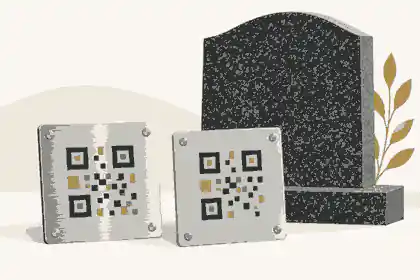
Placement should be practical and modest. A QR code on a headstone or plaque needs enough contrast, quiet space around the square, and a position visitors can scan without stepping on another grave, leaning dangerously, blocking a path or touching a fragile memorial. Evaheld Memorials covers this in where a QR code can be placed on a headstone, but the family’s local cemetery always has the final say on the physical installation.
Material choice matters in Australian conditions. Direct sun, coastal air, heavy rain, dust, garden maintenance and cleaning products can all affect legibility. Stainless steel, ceramic and properly produced outdoor plaque materials are usually more suitable than temporary printed labels, but the right answer depends on the site and supplier. Families comparing options can use best materials for QR memorial plaques to prepare better questions before speaking with a monument mason.
What the local funeral notice should say
A funeral notice should not try to carry every detail. It should give enough information for guests to understand who has died, when and where the service is, whether attendance is public or private, and where the fuller tribute page sits. NSW Government’s first steps after someone dies guidance notes that early tasks can include funeral arrangements, notifying people and finding the will; the notice should therefore be factual, calm and easy to verify.
Use plain wording such as: “Family and friends are invited to view service details, share condolences and add memories on the tribute page.” If the service is private, write that clearly: “Service details are being shared privately with invited guests; memories and condolences may be left on the tribute page.” If a livestream is planned, avoid posting a raw meeting link in every public notice unless the family is comfortable with wide circulation. Instead, let the tribute page hold the latest stream instructions and access etiquette.
Privacy is not a side issue. A public funeral notice can be indexed, copied, screenshotted and shared beyond the intended community. The Office of the Australian Information Commissioner explains that personal information can include names, addresses, photographs and location information, even though Australian privacy law has limits around information about someone who has died. Families should still be careful with living relatives’ details, home addresses, children’s names, private wake locations and sensitive health circumstances.
For a public link, place only information the family is prepared to have widely seen. For a link-only page, remember that anyone who receives or photographs the link may share it. For a private page, check whether guests can open it without creating friction. Evaheld Memorials’ article on private versus public QR memorials is especially relevant when a QR plaque is physically visible but the family wants control over what the scan reveals.
Keeping the link stable after the funeral
The greatest mistake is treating the link as a one-day funeral notice detail. The link may live in search results, condolence emails, printed service booklets, cemetery records, QR plaques, social posts and relatives’ saved messages. If the linked page is deleted, renamed or moved without a redirect, the notice and QR code may send people nowhere useful. This is why the destination should be chosen before permanent printing or engraving.
Evaheld Memorials’ guidance on updating QR memorial content over time is useful because most families add material gradually. A first version might include the notice, service details and one photograph. Later, relatives may add the eulogy, images from the service, video, voice memories, condolence messages, a fuller life story and information about donations or community causes.
From a practical planning view, decide who can edit the tribute page after the funeral. One organiser should hold responsibility for urgent funeral details, but long-term memorial care can be shared with trusted relatives. Avoid a single point of failure where the only person with access loses the login, changes email address or becomes unable to manage the page. The point of linking local notices to a tribute page is not only convenience during funeral week; it is continuity.
Security also deserves attention. The United States Federal Trade Commission warns that phishing messages often trick people into clicking links or entering account details, and its phishing scam guidance is relevant whenever bereaved families receive unexpected payment, donation or account messages. Use a recognisable memorial destination, avoid confusing shortened links where possible, and tell guests not to trust payment requests that do not match the family’s stated instructions.
Australia, United Kingdom and United States differences
In Australia, death registration, funeral arrangements and cemetery approvals sit mainly with state and territory systems, local councils, cemetery trusts, crematoria and private operators. Queensland Government’s what to do after someone dies guidance notes practical differences around expected and unexpected deaths, doctors, palliative care and funeral arrangements. Service NSW also explains that bereavement tasks can include notifying organisations and dealing with official records, and its death and bereavement guide is helpful for NSW families managing notifications.
In the United Kingdom, the immediate legal steps are different. GOV.UK explains how to register a death and separately how to arrange the funeral. UK readers should check local authority cemetery rules, churchyard faculty requirements where relevant, crematorium rules and the funeral director’s notice system before assuming a QR plaque or digital tribute link can be added to a grave marker.
In the United States, consumer protections for funeral homes are different again. The FTC’s Funeral Rule gives consumers rights around itemised price information from funeral providers, while its funeral costs and pricing checklist helps families compare funeral home charges. Cemetery rules, monument permissions and QR plaque approvals are often separate from funeral home pricing, so American families should check cemetery regulations and state law as well as the funeral provider’s notice options.
The cross-market principle is consistent: do not publish or engrave a link until the destination has been tested, the family understands privacy, and the relevant cemetery or memorial site has approved any physical addition. The wording may change by country, but the workflow does not.
Examples of thoughtful linked tributes
A tribute page can hold more than the facts of a service. Public memorial examples show why families often want one durable place for story, photographs and shared remembrance. The Evaheld Memorials profile for Olivia Newton-John shows how a life connected to Australia, music, film and advocacy can be remembered through biography, images and tributes. The page for Princess Diana demonstrates how public memory can include compassion, relationships and humanitarian work rather than only dates. The memorial for Stephen Hawking shows how achievements, voice, family and legacy can sit together in one structured remembrance space.
For a local family, the scale is different but the principle is the same. A tribute page gives the funeral notice somewhere meaningful to lead. Instead of a notice disappearing into an archive, the link can open the person’s story, service details, photographs, cemetery location notes if appropriate, and a respectful space for memories. If a QR plaque is later added, the scan can lead to the same destination that relatives already know.
Practical checklist before publishing or engraving
Before the local notice goes live, check that the person’s name is spelled exactly as the family wants it shown. Confirm dates, service time, venue name, suburb, access notes, livestream wording and whether the wake or committal is public or private. Open the tribute page on a phone using mobile data rather than the family Wi-Fi. Ask someone who is not logged into the account to test it.
Before ordering printed material, check the code size, contrast, margin, destination and fallback web address. Before approving a cemetery plaque, obtain the cemetery’s written rule or approval, confirm the installer, choose a material suitable for the setting, and test a proof under likely lighting. If there is any chance the family will change privacy settings later, understand how QR codes on headstones work so everyone knows the difference between changing memorial content and changing the encoded destination.
Before making the page public, decide whether condolences will appear immediately or be moderated. Check that donation links are genuine and that any charity, fundraiser or bank detail has been verified by the family. Keep a private copy of the obituary text, eulogy, photographs and service details outside the website as a family backup. Australian Consumer Law expectations around acceptable quality and services, summarised by the ACCC in consumer rights and guarantees, are also useful when comparing paid plaque, printing or memorial services.
Finally, write down who owns the memorial account, who can help update it, and what should happen if the main organiser is unavailable. If the family is still deciding what kind of digital memorial is needed, what a QR memorial is in practical terms can help separate the physical plaque, the scannable code and the online tribute. Families comparing Evaheld Memorials options should also check which plan comes with QR memorial plaques before promising plaques in a funeral notice or cemetery application.
When you are ready to bring funeral notices, cemetery checks, QR plaques and the lasting tribute together, Evaheld Memorials can help you link local funeral notice links to a tribute page with one calm, shareable memorial destination.



FAQs
How do I link local funeral notice links to a tribute page? Australian planning, cemetery checks and options
Use one stable tribute page as the main destination, add that final link to the local funeral notice, then test it from a separate phone before publication. If the notice includes service times or livestream details, align it with funeral details and livestream options, and check Services Australia’s what to do when someone dies guidance for broader Australian after-death tasks.
Should the funeral notice link go to the obituary, the livestream or the tribute page?
The tribute page is usually the best central destination because it can hold the obituary, livestream instructions, service updates, condolences and memories in one place. A QR destination can include several elements, so what a QR memorial can actually link to pairs well with myGov’s when someone close to you dies overview of practical steps.
Do Australian cemeteries allow QR plaques on graves?
Some do, some do not, and many require approval for the material, size, placement and installer before anything is attached. Always check cemetery rules for QR codes and compare that with NSW Government’s after a death guidance, which shows how many funeral and memorial decisions can overlap.
Where should a QR code sit on a headstone or plaque?
Place it somewhere easy to scan, visually restrained and allowed by the cemetery, with enough contrast and space around the code. Evaheld Memorials explains where a QR code can be placed on a headstone, while NSW Government’s first steps after someone dies guidance helps families keep early decisions organised.
What plaque material is best for an Australian outdoor memorial QR code?
Durable outdoor materials such as properly finished stainless steel or ceramic are usually stronger choices than temporary printed labels, but the cemetery and supplier should confirm suitability. Before ordering, compare best materials for QR memorial plaques and Queensland Government’s what to do after someone dies guidance for the wider planning context.
Can I update the tribute page after the funeral notice has been published?
Yes, if the platform allows editing, the page can usually be updated with photos, tributes, service recordings or corrected details without changing the funeral notice link. Families should understand updating QR memorial content over time and may also use Service NSW’s death and bereavement guide to keep related notifications in order.
Can a QR memorial be private if the funeral notice is public?
It can be partly private, but a public notice link or visible QR code can still be shared by anyone who sees it, so families should choose settings carefully. Evaheld Memorials explains private versus public QR memorials, and the OAIC’s personal information guidance is useful when deciding what details about living relatives to include.
Do UK families handle funeral notice links differently?
The linking principle is the same, but UK families should follow local death registration, funeral and cemetery requirements before sharing or installing anything. If a tribute page is connected to a QR marker, how QR codes on headstones work should be read alongside GOV.UK’s register a death guidance.
Do US funeral homes have to include my tribute page link in a notice?
Not necessarily; each funeral home or notice publisher may have its own format and policy, although US consumers have separate rights around funeral price information. If you are planning the QR destination, what a QR memorial is in practical terms sits alongside the FTC’s Funeral Rule explanation of funeral provider obligations.
Which Evaheld Memorials option includes QR memorial plaques?
Families who want physical QR plaques should check the current plan inclusions before mentioning plaques in a funeral notice, order of service or cemetery application. Evaheld Memorials answers which plan comes with QR memorial plaques, and the FTC’s funeral costs and pricing checklist is a useful US comparison tool when separating funeral costs from memorial extras.