What are obituary data backup policies? Pricing, privacy and platform safety
A practical family guide to obituary data backup policies, including pricing, privacy, exports, ownership, platform safety and AU/UK/US differences.

What are obituary data backup policies? Pricing, privacy and platform safety all come down to one question: if a family entrusts an obituary, tribute messages, photographs and service details to a memorial platform, how will that information be protected, priced, exported, corrected and preserved over time? Good obituary data backup policies explain where memorial content is stored, who can access it, how long it is kept, what happens if payment changes, how families can download exports, and what safety measures reduce the risk of loss, misuse or unwanted public exposure.
This matters because an obituary is no longer only a short notice in a newspaper. On a modern memorial site it may sit beside photographs, video, guestbook entries, donations, funeral details, QR plaque destinations, family contact information and private notes. A provider may describe the page as permanent, lifetime, free, private or secure, but those words are only useful when they are backed by clear rules. Families should be able to see the plan price, the privacy setting, the owner or administrator role, the export options, the deletion process and the platform safety practices before they invite relatives to contribute.
Evaheld Memorials uses the phrase obituary data backup policies in a practical family sense, not as a legal label. It means the combined policy picture that tells you whether your memorial material can be downloaded, whether it is linked to a subscription or one-time fee, whether public and private sharing are clearly separated, whether payment data is handled safely, whether a breach or platform closure has a sensible response path, and whether the family keeps its own independent copy. This article uses UK English for an international audience and covers Australia, the United Kingdom and the United States because privacy rules, consumer expectations and memorial customs differ across all three.
What obituary data backup policies should cover
A strong policy starts by naming the content it protects. For an obituary or online memorial, that content may include the obituary text, life story, dates, photographs, captions, guestbook messages, condolence notes, candle messages, service details, QR code destination, donation links, administrator account details, contributor names, visitor analytics, invoices and support correspondence. Families comparing online memorial cost factors should treat backup and export access as part of the true value, not a small technical extra.
The policy should then explain how content moves through the platform. A family may upload a photograph, invite a cousin to add a story, hold guestbook comments for approval, publish the page, share the link privately, make it searchable later, download a copy, or delete the memorial. Each stage changes the risk profile. Public viewing raises visibility questions. Private links raise access questions. Exports raise portability questions. Deletion raises finality questions.
Privacy rules also differ by country. In Australia, the Australian Privacy Principles cover collection, use, disclosure, security, correction and access rights for personal information handled by covered organisations. In the UK, UK data protection legislation requires personal data to be used fairly, lawfully, transparently, for specified purposes, with appropriate security and retention limits. In the United States, there is no single memorial-platform privacy law equivalent to the UK GDPR, so families often need to rely on the provider’s published policy, state privacy rights where applicable, payment safeguards and general consumer protection expectations.
Because memorial content often relates to a deceased person, families sometimes assume privacy law no longer matters. That is too simple. The obituary may mention living relatives, addresses, service locations, photographs of children, medical details, family conflict, donations, or stories that identify other people. Obituary data backup policies should therefore protect both the memory of the person who died and the privacy of the people still living.
Pricing, free plans and what backup access really costs
Competitor pricing pages often highlight free access, lifetime access, monthly upgrades or storage allowances. Those are useful facts, but a family should also ask what happens to the backup. A free plan may be enough for a simple public obituary, yet it may limit photographs, video, privacy settings, moderation, storage or exports. A monthly plan may include larger storage but create a long-term billing dependency. A one-time plan may reduce renewal stress but still needs clear terms about hosting, exports and future changes.
That is why the question whether Evaheld Memorials plans are one-time payments belongs beside any discussion of backup. A family trying to preserve an obituary should know whether access depends on a renewal, whether downgrading hides or limits content, and whether a download remains available if the paid plan changes. If a provider advertises lifetime access, families should ask whose lifetime, which product lifetime, what conditions apply and whether they can still keep their own copy.
Payment safety is part of platform safety. If a provider processes cards directly, it should be clear about payment security. Many reputable services use specialist payment processors rather than storing card numbers themselves. The PCI Security Standards Council explains standards designed to protect payment account data through technical and operational requirements. Families do not need to become payment compliance experts, but they should feel able to ask: who processes the payment, are card details stored by the memorial provider, and will billing records be separate from private memorial content?
Pricing also affects family control. A low-cost platform that makes exports difficult may become expensive later if relatives need to rebuild the memorial elsewhere. A platform with generous exports, clear ownership and practical moderation may be better value even if the headline price is higher. The safest comparison is not free versus paid; it is transparent versus unclear.
Privacy settings before public sharing
Before a family publishes an obituary online, it should decide what is public, what is private and what should never be uploaded. Public obituary information might include the person’s name, dates, photograph, life story and service notice. Private memorial information might include unpublished family photographs, internal planning notes, livestream links, contributor email addresses or messages intended only for close relatives. For families deciding between open and limited visibility, private versus public online memorials is usually the first practical decision.
Good obituary data backup policies do not treat privacy as a single switch. They distinguish public page visibility, search engine visibility, guest contribution permissions, moderation settings, administrator access, export access and deletion rights. A memorial may be private by default, link-only, password-protected, publicly listed, searchable, or mixed, with some details public and richer content restricted. Families who need time before sharing should confirm whether a memorial stays private until you are ready to share before inviting contributors.
The ICO data protection principles are a useful benchmark for UK readers because they emphasise lawfulness, fairness, transparency, purpose limitation, data minimisation, accuracy, storage limitation, security and accountability. Even outside the UK, those ideas are sensible tests for memorial platforms. Does the provider collect only what it needs? Does it explain why? Can the family correct errors? Is data kept longer than necessary, or deleted too quickly? Who is accountable if something goes wrong?
Australia has similar practical concerns under privacy law. The OAIC Notifiable Data Breaches scheme is relevant where an eligible Australian entity experiences a serious data breach involving personal information. Families do not need the legal detail to make a good choice, but they should prefer platforms that can explain how they would notify affected users, secure accounts and respond to a breach.
Exports, downloads and family-controlled backups
The safest memorial backup policy is layered. The platform keeps the memorial available, and the family also keeps its own copy. That independent copy should include the obituary text, final photographs, captions, service details, tribute messages, video files, audio files, donation information, QR destination and any important administrator notes. Evaheld Memorials’ companion article on downloading online memorial content covers the practical habit: do not wait for a crisis before saving what matters.
Exports should be understandable. A complete export may include original media files, resized images, written tributes, comments, dates, captions and a readable HTML or PDF version. A partial export may only save selected photos or visible text. A screenshot is better than nothing, but it is not a true backup because it may miss metadata, full-resolution images, videos, hidden comments or contributor details. Families should ask whether downloads are available at any time, whether the export is human-readable, whether video and audio are included, and whether deleted material is excluded.
Long-term digital preservation is a discipline of its own. The US National Archives family archives guidance reminds families that papers and photographs need active care to prevent damage. Digital memorials need the same mindset: copies should be organised, named clearly, stored in more than one place and reviewed occasionally. A single login, a single phone or a single cloud folder is not a preservation plan.
Australian families should also understand access and correction rights. The OAIC guidance on accessing your personal information is a useful reminder that personal data should not disappear into a black box. In memorial practice, that means families should be able to ask what information is held about the account holder, how it can be corrected, and what parts of the memorial can be exported or deleted.
For families with larger media collections, upload limits and format rules matter. The article on file limits for digital tributes explains why photo, video and audio choices affect cost, privacy and export practicality. A platform that allows very large uploads but no useful export may not serve the family well. A platform with sensible compression, clear file rules and practical download options may be easier to preserve.
Ownership, administrator succession and family access
One of the most common weaknesses in memorial planning is assuming that the person who creates the page will always be available. Obituary data backup policies should make administrator control clear: who owns or manages the memorial, who can edit it, who can invite contributors, who can approve guestbook entries, who can download exports, who can delete the memorial and how control can be transferred later.
The Evaheld Memorials article on who controls an online memorial is relevant because technical access and family authority are not always the same thing. A spouse, adult child, executor, sibling or close friend may be the right administrator, depending on the family. The key is to avoid one fragile login. Families should record the memorial URL, the account email, the recovery route, the chosen backup folder and the preferred successor administrator in a secure place.
US readers may be used to estate planning language around digital assets, while UK and Australian readers may think in terms of executor access, privacy rights and account recovery. In all three markets, a memorial platform should not encourage shared passwords as the main solution. Safer practice is to have named administrators, clear recovery processes and documented family wishes.
The NIST Privacy Framework is not a memorial-specific rulebook, but its risk-management approach is useful. Families can translate it into plain questions: what information is being handled, who could be affected, what could go wrong, how likely is it, and what controls reduce the harm? That framework is especially helpful where a memorial includes children, health details, addresses, private family history or unresolved conflict.
Platform safety, security and breach response
Platform safety means more than keeping a page online. It includes secure account access, encrypted connections, sensible staff access, payment safety, content moderation, export reliability, protection against spam, resilience against outages and a clear response if something fails. The NIST Cybersecurity Framework describes cybersecurity risk management in terms that organisations use to identify, protect, detect, respond and recover. Families can use the same logic when asking a provider how it protects a memorial.
The FTC guidance on protecting personal information is particularly useful for US readers because it stresses practical safeguards such as knowing what information is held, limiting what is kept, protecting it, disposing of it properly and planning for incidents. For memorial platforms, this means families should look for secure sign-in, private dashboard access, sensible password practices, moderation options and clear support routes if an account is compromised.
Security is also emotional. A hacked tribute page, spammed condolence book or exposed private album can cause real distress. That is why moderation tools, private sharing and administrator notifications are not luxury features. They are part of protecting grieving people at a vulnerable time. A platform does not need to promise that no incident can ever happen. It does need to explain what it does to reduce risk and what it will do if risk becomes reality.
For UK readers, GOV.UK data protection complaint guidance explains that people should first contact the organisation if they think data has been misused or not kept secure, and then complain to the ICO if dissatisfied. Australian readers can look to OAIC complaint and breach pathways. US readers may need to rely on the provider, state privacy rights, payment dispute channels and the FTC or state consumer protection offices depending on the issue.
Deletion, retention and the difference between removing and preserving
Deletion is not the opposite of preservation. A family may want to export the memorial, keep a private offline copy, and then remove a public version. Another family may want to delete an administrator account while keeping the memorial visible under a successor. A strong policy should separate account deletion, memorial deletion, contributor deletion, payment record retention, public search removal and backup retention periods.
UK readers can compare a platform’s deletion wording with the ICO explanation of the right to get your data deleted, noting that erasure rights may have exceptions. Memorial platforms should be honest about what can be removed immediately, what may remain in backups for a limited period, and what records must be retained for legal or accounting reasons.
Families should avoid rushed deletion while emotions are raw. A safer approach is to make the memorial private, download the content, decide who should keep the family copy, and then choose whether deletion is still the right step. This is especially important when a memorial includes tributes from many people, because those messages may later become a significant part of the family record.
What happens if the platform changes or closes
No memorial platform should ask families to believe that a website can never change. Companies can close, merge, alter pricing, change storage providers, redesign products, retire features or update terms. That does not make digital memorials unsafe; it means families need a backup plan. The article on what happens if a memorial site shuts down explains the core principle: permanence is strongest when the platform and the family both take responsibility.
A good shutdown or continuity policy should answer several questions. Will families receive advance notice? Can content be exported before closure? Will QR code destinations be redirected? What happens to paid plans? Are refunds or alternatives offered? How long will support remain open? Will public pages be archived, deleted or migrated? Are families told how to preserve media before access ends?
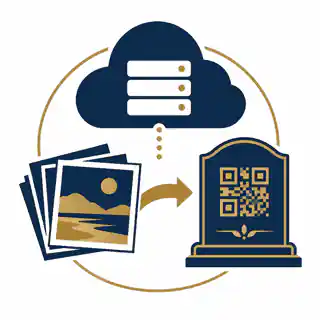
These questions become especially important for QR-linked memorials. A physical plaque may last for years, but the code is only useful if the destination remains active or can be redirected. If the linked obituary is backed up, documented and controlled by the family, replacing or redirecting the digital destination becomes easier. If nobody knows where the content lives, the physical code becomes vulnerable to platform failure.
For public examples of how a memorial can organise a life story over time, Evaheld Memorials profiles such as Steve Jobs, Olivia Newton-John and Tina Turner show why structured stories, photographs and tribute spaces are worth preserving beyond the first days after publication. The more meaningful a memorial becomes, the more important export and continuity planning become.
Australia, the UK and the United States: the main differences
Australian families should look for clear privacy collection notices, correction access, breach response and practical export options. The Australian Privacy Principles are especially relevant where a platform is covered by Australian privacy law or handles Australian users’ personal information. Families should also remember that public funeral details can reveal home absence, family names and children’s identities, so sharing should be considered carefully.
UK families should pay close attention to UK GDPR language, the provider’s role as controller or processor where relevant, rights around access, erasure, portability and complaint routes, and whether the memorial is indexed by search engines. The UK also has strong cultural expectations around data transparency; if a provider is vague about retention, deletion or exports, that is a warning sign.
US families face a more fragmented privacy landscape. State laws may give rights to some consumers, but not every family will have the same protections. As a result, provider terms, payment handling, security practices, export access and account succession become especially important. US readers should be cautious about memorials that publish too much identifying information, particularly addresses, school details, children’s images or medical information.
Across all three markets, the practical standard is the same: use the minimum public information needed, keep sensitive details private, choose a trusted administrator, download a copy, review privacy settings before sharing and avoid treating a social feed as the only family archive.
A family checklist before choosing a platform
Before publishing an obituary or memorial, ask whether the provider answers these questions in plain language. What content is collected? What is public by default? Can the page stay private until the family is ready? Who can contribute? Are contributions moderated? How are payments processed? Are exports available? What happens if a plan is downgraded? Can administrators transfer control? What happens if the platform closes? How are families notified of security incidents? Can the memorial be deleted permanently?
Setup should also be simple enough to manage while grieving. The FAQ on what information helps you start a memorial is useful because families do not need to upload everything immediately. A name, dates, a short story, a photograph and a careful privacy decision can be enough for the first version. The backup policy should support gradual improvement, not force rushed publication.
Family contribution is another test. The FAQ on inviting family and friends to contribute sits directly beside backup planning because the more people contribute, the more valuable the archive becomes. Contributor access should be clear, respectful and controlled. A cousin adding a photograph should not automatically gain full administrator power. A guest leaving a tribute should not be able to edit the obituary. A family member helping with captions should understand whether their name or email is visible.
The best policy language is usually calm and specific. Be wary of broad promises such as forever, permanent, military-grade, unlimited or fully secure unless the provider explains what those words mean. Stronger wording tells you what is backed up, what can be exported, what is excluded, how privacy works, what costs money, what happens after deletion, and who to contact if something goes wrong.
Common mistakes to avoid
The first mistake is relying on one platform as the only copy. A memorial platform is a home for remembrance, but it should not be the only place where the obituary, photographs and tributes exist. Keep originals and exports elsewhere.
The second mistake is publishing too much too soon. Funeral times, home addresses, children’s full names, medical detail and internal family circumstances can all become sensitive when placed on a public page. Use privacy settings before sharing widely.
The third mistake is ignoring administrator succession. If one person controls the memorial and no one else knows the account path, the page may become impossible to update later.
The fourth mistake is treating price as the whole comparison. Pricing is important, but privacy, exports, storage, moderation, support and platform safety decide whether the memorial still works after the initial publication period.
The fifth mistake is assuming that deletion and export are opposites. A family may want to download a complete copy before deleting or limiting a memorial. A good provider should make that process understandable.
How Evaheld Memorials fits this decision
Evaheld Memorials is separate from Evaheld’s digital legacy vault offering. For this topic, the relevant product is the memorial platform: a place to create an obituary-linked tribute, manage privacy, invite family input, gather condolences and preserve a respectful memorial record. The strongest approach is to start with the privacy and backup questions, then choose the plan and sharing settings that match the family’s needs.
If your family wants a memorial that begins with practical clarity, choose the administrator, decide public or private visibility, keep source files outside the platform, download exports when appropriate, and review the page after the first wave of tributes. Those habits turn obituary data backup policies from a technical concern into a form of care.
When you are ready to begin with those protections in mind, Evaheld Memorials can help you plan obituary data backup policies alongside the memorial itself, so pricing, privacy, exports and platform safety are considered before the page is widely shared.


FAQs
What are obituary data backup policies? Pricing, privacy and platform safety
Obituary data backup policies explain how a memorial platform protects, stores, exports and deletes obituary and tribute content, while pricing and platform safety show what families pay for and how access is protected. Families comparing online memorial cost factors should also consider privacy and export rights, and the Australian Privacy Principles show why collection, access, correction and security matter.
Should a free memorial plan include backups?
A free memorial plan should at least make clear whether families can save text, photographs and tribute messages, even if richer exports or larger media storage sit in a paid plan. The question whether Evaheld Memorials plans are one-time payments helps families compare long-term access, while UK data protection legislation is a useful reminder that retention and security should be explained plainly.
How often should families download memorial content?
Families should download or save memorial content after major updates, after a service, after a large group of tributes is added, and before changing privacy, payment or ownership settings. The practical steps in downloading online memorial content pair well with the US National Archives family archives guidance, which encourages active preservation rather than passive storage.
What happens to obituary data if a memorial platform closes?
If a memorial platform closes, families may need advance notice, export access, QR redirect support and clear information about paid plans, so keeping an independent backup is essential. Evaheld Memorials explains what happens if a memorial site shuts down, and the NIST Cybersecurity Framework reinforces why recovery planning belongs beside protection.
Can privacy settings reduce the need for backups?
Privacy settings reduce unwanted visibility, but they do not replace backups because private content can still be lost, deleted, locked behind an account or affected by platform changes. Families deciding between visibility levels should review private versus public online memorials, while the ICO data protection principles help frame privacy as transparency, minimisation, security and accountability.
Who should be allowed to export a memorial?
Export rights should normally sit with the memorial administrator or another trusted person chosen by the family, not with every visitor or casual contributor. The article on who controls an online memorial explains why administrator planning matters, and the NIST Privacy Framework supports thinking about access as a privacy risk decision.
Are payment details part of obituary data backup policies?
Payment details are usually separate from the obituary itself, but pricing policies should still explain billing, receipts, renewals, processors and whether the memorial provider stores card data. Families reviewing online memorial cost factors can use the PCI Security Standards Council as a benchmark for why payment account data needs specific safeguards.
What should US families ask about privacy?
US families should ask what the provider collects, whether the memorial is public by default, whether exports are available, how accounts are protected and what state privacy rights may apply. The article on file limits for digital tributes helps with media decisions, and the FTC guidance on protecting personal information gives practical security expectations.
What should UK families do if memorial data is mishandled?
UK families should first contact the organisation, explain the concern and ask for a remedy; if the response is unsatisfactory, they may seek ICO advice or complain. The family should also preserve evidence and export what they can, using downloading online memorial content as a practical step, while GOV.UK data protection complaint guidance explains the complaint route.
What is the safest first step before publishing an obituary online?
The safest first step is to decide what information belongs online, who will administer the memorial, how private it should be, and where the family will keep its own backup copy. The checklist in what information helps you start a memorial keeps setup manageable, while the OAIC Notifiable Data Breaches scheme shows why security and incident planning should be considered before sharing widely.