What is the cost of bronze cemetery plaques in Australia? Australian planning, cemetery checks and options
A practical Australian guide to bronze cemetery plaque costs, cemetery approvals, QR plaque options, privacy, materials and family planning checks.
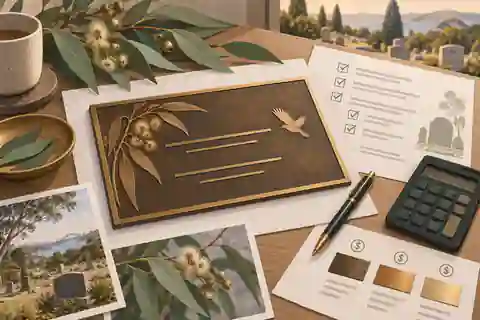
What is the cost of bronze cemetery plaques in Australia? Australian planning, cemetery checks and options starts with a practical answer: a standard bronze cemetery plaque in Australia commonly sits in the hundreds to low thousands of Australian dollars, but the final amount depends on the cemetery, plaque size, inscription, artwork, installation, permit rules, interment setting and whether a QR-linked memorial is included. Some public fee schedules show small bronze plaque options from about $300 to $990, larger or more specialised plaque styles above $1,000, and extra installation, proof, permit or refurbishment charges on top, so families should treat any headline price as incomplete until the cemetery has confirmed the exact approved option in writing.
The most important point is that the cost of bronze cemetery plaques in Australia is not set nationally. Australia does not have one cemetery plaque price, one headstone rulebook or one approval process. A Victorian cemetery can publish a different bronze plaque fee from a NSW council cemetery, an ACT memorial garden, a private memorial park or a religious cemetery. The same family may also face different rules depending on whether the plaque is for a lawn grave, wall niche, ashes garden, memorial beam, family grave, ex-service section, mausoleum, natural burial area or existing headstone.
Families usually search this topic because they want more than a number. They want to know what is fair, what the cemetery will allow, what a bronze plaque includes, when a QR plaque is sensible, and how to avoid ordering something that cannot be installed. This article puts the price question first, then works through cemetery checks, quote questions, QR options, privacy, durability, Australia, United Kingdom and United States differences, and the family instructions that make the decision easier to revisit later.
The cost of bronze cemetery plaques in Australia: realistic ranges and what changes them
A useful planning range for the cost of bronze cemetery plaques in Australia is roughly $300 to $1,300 for many standard cemetery-supplied bronze plaque options, with larger sculptured, custom, book, ex-service, garden, tree, ribbon or premium plaque styles potentially costing more. The public Victorian cemetery fee schedule for Rye Cemetery shows why a single average can mislead: it lists bronze plaque options at different sizes and purposes, including smaller bronze plaques, 10 x 8 plaques, larger gravesite plaques and separate affixing fees. That is one cemetery, not the whole market, but it demonstrates the principle well.
Families should separate the total into parts. The plaque itself may include a standard bronze casting or plate, a fixed number of inscription lines and a basic layout proof. Extra costs may apply for longer wording, emblems, motifs, ceramic photos, additional proofs, urgent production, detachable plates, flower containers, mounting bases, cemetery installation, memorial permits, removal of an old plaque, refurbishment or later inscription changes. If the plaque is for a burial right, ashes placement or niche, the cemetery may bundle some items together, while a monument mason may quote plaque manufacture separately from cemetery fees.
It helps to put plaque spending beside the wider farewell budget. Australian Government Moneysmart notes in its funeral cost guidance that funeral costs vary with choices such as burial or cremation, certificates, permits, cemetery plots and other service items. For a family comparing funeral, burial and memorial spending together, Evaheld Memorials’ article on funeral costs in Australia can help keep the plaque decision in proportion rather than treating it as an isolated purchase.
A bronze plaque is often chosen because it has a long cemetery tradition, a dignified finish and strong outdoor performance when properly cast, installed and cared for. Bronze naturally changes appearance over time, and families should expect patina rather than a permanently new-looking surface. The United States Department of Veterans Affairs explains in its headstones, markers and medallions guidance that bronze markers can develop patina and that inappropriate cleaning can damage memorial materials. Although that source is American, the maintenance principle is relevant to Australian families considering bronze for outdoor conditions.
What Australian cemetery checks should happen before ordering?
Before paying a deposit, ask the cemetery or memorial park for the current written rules for the exact location. A lawn section may require a specific bronze plaque size on a beam. A monumental section may allow a plaque on granite but require an approved mason. A columbarium niche may only accept the cemetery’s plaque format. A natural burial area may prohibit plaques entirely or allow only modest natural markers. Cemeteries & Crematoria NSW explains in its burial and cremation planning information that options, availability and costs vary by place, and that planning ahead gives families more room to make informed choices.
Start with five questions. First, who has the authority to approve the plaque: the interment-right holder, executor, next of kin, cemetery operator or another family representative? Second, which plaque sizes, shapes, materials and wording formats are allowed at the grave, niche or garden site? Third, who may install it: cemetery staff, an approved monumental mason or an external supplier? Fourth, are there permit, proof, installation, maintenance, refurbishment or removal charges? Fifth, how long does approval, manufacture and installation usually take?
These checks matter because a cemetery can reject a plaque that is the wrong size, uses unauthorised attachments, interferes with mowing, breaches visual standards or conflicts with the rights attached to the site. If the family is also considering a scannable code, the cemetery’s position on cemetery rules for QR codes should be confirmed before the QR detail is designed into bronze. A QR element may be acceptable in one cemetery and refused, restricted or redirected to a different position in another.
Families planning in Australia should also remember that state and territory systems differ. NSW uses interment rights terminology and recognises perpetual and renewable rights in certain circumstances. Victoria publishes cemetery trust fee information through state health systems. Local councils in other states may operate cemeteries with their own fee schedules and bylaws. None of this means families need legal expertise to choose a plaque, but it does mean the cemetery is the first authority for the physical memorial.
What should be included in a bronze plaque quote?
A sound quote should state the plaque dimensions, bronze type or finish, inscription allowance, design proof process, number of included revisions, emblems, motifs, photos, production time, delivery, installation, cemetery permit fees, GST, replacement policy and whether later additions are possible. If a supplier only gives a single round number, ask for an itemised quote before comparing it with another provider. Under Australian Consumer Law, the ACCC’s consumer guarantees guidance is a useful reminder that goods and services must meet basic rights and that businesses cannot remove those rights with their own terms.
Families should be careful with low quotes that omit cemetery costs. A plaque maker may be quoting only manufacture. A cemetery may charge for approval or installation. A mason may need to prepare a base or drill mounting points. If the plaque is being added to an existing headstone, the family may need advice on the condition of the stone, whether drilling is allowed, whether adhesives suit the finish and whether the placement can be cleaned safely later.
For digital memorials and QR-linked plaques, the quote should also explain the digital side. Does the plaque point to a stable memorial page? Is there an ongoing hosting cost? Can the family update the linked content later? What happens if the plaque is damaged but the digital memorial still exists? Evaheld Memorials explains broader comparison points in How Much Does a QR Memorial Cost?, because the plaque price and the online memorial price are often bundled differently by different providers.
Bronze, stainless steel, ceramic and QR plaque materials
Bronze is a strong traditional choice for many Australian cemetery settings, especially where the cemetery already uses bronze lawn plaques or bronze niche plates. Stainless steel can suit modern QR plaque designs because it holds high-contrast marking well and resists corrosion in many environments. Ceramic plaques can look softer and traditional but may be more vulnerable to impact. Printed laminates and vinyl labels may be cheaper but are generally weaker choices for exposed cemetery use.
The best material is not only the strongest material in theory. It is the material your cemetery permits, your stonemason can install properly, your family can maintain, and visitors can read or scan without awkward positioning. The Evaheld Memorials article on the best materials for QR memorial plaques is useful when the family is comparing bronze with stainless steel, ceramic, aluminium, granite or coated materials.
QR codes bring an extra requirement: contrast. Denso Wave’s explanation of the QR code technology story helps clarify that a QR code is a machine-readable pattern, not a decorative texture. If the code is too small, low contrast, distorted, placed on a reflective curve or allowed to weather badly, scanning becomes unreliable. For bronze specifically, ask whether the QR element is cast, engraved, etched, inserted as a separate plate or supplied as an attached medallion, because those methods weather differently.
Placement is just as important as material. A code that requires visitors to step onto another grave, crouch dangerously, reach across flowers or scan through glare is poorly placed even if the plaque is beautiful. Families deciding where to place a QR code on a headstone should think about dignity, safety, visibility and the cemetery’s mowing or maintenance patterns.
QR plaques, privacy and what the code should open
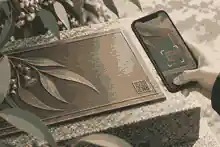
A QR plaque can do something a bronze inscription cannot: it can open a fuller story. It may lead to photographs, a life story, service details, a guestbook, videos, voice memories, family updates and tributes added over time. That is why QR plaques are becoming part of modern memorialisation, particularly when a small cemetery plaque cannot hold everything the family wants remembered.
However, a QR plaque is physically public. Anyone at the grave can scan it, photograph it or share the link unless the linked destination has controlled access. Families should decide what belongs on a public-facing memorial and what should stay private. OAIC’s privacy rights information and the Commonwealth Privacy Act 1988 are not cemetery plaque manuals, but they are useful reminders to treat personal information carefully. Do not publish addresses, private medical details, sensitive family disputes or details about living relatives unless the family has clear consent.
Evaheld Memorials separates the bronze or QR marker decision from the question of public access. Families comparing private versus public QR memorials should decide whether the scanned page should be public, link-only, password-controlled or limited in content. A public page may be right for a widely known person. A private page may be better when there are children, family sensitivities or cultural restrictions.
There is also a security angle. A QR code on a permanent memorial should point to a trustworthy destination and should not be replaced with an unknown sticker or temporary file link. The United States Federal Trade Commission’s Funeral Rule information focuses on funeral price transparency, but the same practical consumer mindset applies: ask what you are buying, what is included and who remains responsible after payment. If a QR plaque links to a platform, families should know who controls that page and how the link is maintained.
How long will a bronze cemetery plaque or QR plaque last?
A well-made bronze cemetery plaque can last for decades, but it will not remain visually unchanged. Weather, salt air, sun, irrigation, soil, cleaning products, mower damage, nearby trees and cemetery maintenance practices all affect appearance. The digital side of a QR plaque has a different lifespan: it depends on the stability of the web address, provider, hosting model, account control and backup practices. The Evaheld Memorials article on how long QR memorials usually last explains why the physical marker and digital destination must both be planned.
Families should ask how the plaque can be cleaned, who is allowed to clean it, whether polishing is recommended, whether protective coatings are used and whether the cemetery offers refurbishment. Avoid harsh chemicals, wire brushing or power washing unless the cemetery or memorial supplier has specifically approved the method. For older bronze, patina may be part of the normal ageing process rather than a defect.
For QR plaques, test the code before installation and again after installation. Test it with more than one phone, in daylight and shade, and from the normal standing position. If it fails after the plaque is installed, the family may need a replacement plate even if the online memorial is still working. That is why a supplier’s replacement policy matters. Evaheld Memorials covers this practical problem in replacing damaged QR memorial plaques.
What should families write on the plaque?
Most bronze cemetery plaques include the person’s name, dates and a short inscription. Space is limited, so simple wording is usually stronger than crowded wording. Choose a name format the family recognises, confirm spelling, check birth and death dates against official documents, and decide whether titles, honours, military service, cultural names, maiden names or nicknames belong on the plaque.
For a QR-linked plaque, avoid trying to make the bronze inscription do everything. Let the plaque carry the permanent essentials, then use the linked memorial for the life story, photographs, memories, service details and contributions from others. That approach is especially helpful for families inspired by notable public memorials. For example, Olivia Newton-John is remembered not only through dates and career facts but through music, advocacy and Australian cultural memory; Alan Rickman is remembered through performances, voice, craft and generosity; and Princess Diana is remembered through public service, family, symbolism and continuing public affection. A cemetery plaque can be brief while a digital memorial carries fuller context.
If family members disagree about wording, pause before approving the proof. Bronze is not like a web page. Errors can be expensive to correct, and emotional wording can feel different after the first weeks of grief have passed. A practical method is to create three versions: a very short version, a medium version and a fuller version for the QR-linked memorial. Then ask which words truly belong in metal.
Australia, United Kingdom and United States differences
Australia is the primary market for this article, so the main advice is to check the Australian cemetery, council, memorial park or cemetery trust that controls the site. The United Kingdom and United States have similar practical issues but different regulatory systems. In the UK, the Competition and Markets Authority’s Funerals Market Investigation Order 2021 is mainly about funeral-sector price transparency, while cemetery memorial rules are often set by councils, churchyards, burial authorities or private cemetery operators. In the US, cemetery rules vary widely by cemetery, state and veteran eligibility, and the National Park Service describes national cemeteries as places with protected historical and commemorative character in its national cemeteries information.
For Australian readers with relatives overseas, do not assume a plaque approved in Sydney, Melbourne, Brisbane, Perth, Adelaide, Hobart, Darwin or Canberra would be accepted in London, Manchester, Edinburgh, New York, California, Texas or a US veterans cemetery. Terminology also changes. Australians may say plaque, cemetery, ashes, lawn grave and interment right. UK readers may see memorial permit, burial authority, churchyard regulations or cremated remains plot. US readers may see grave marker, flat bronze marker, cemetery setting fee or memorial medallion. The planning principle is the same: get the site rules before ordering.
How to make the decision easier for family later
A good plaque decision leaves a clear record. Save the cemetery approval, quote, proof, receipt, installation date, supplier contact, warranty, cleaning instructions, QR destination, login details and family decision notes somewhere the next organiser can find them. If the QR memorial content will grow over time, decide who can update it, who can moderate guest contributions and who will take over if the first organiser cannot continue.
Digital content has a major advantage here. A bronze plaque is fixed, but the linked memorial can be expanded thoughtfully as relatives find photographs, write tributes or add service details. Evaheld Memorials explains updating QR memorial content over time so families understand what can change without replacing the physical plaque.
Planning ahead also reduces pressure on grieving relatives. The Australian Government’s advance care planning information encourages people to communicate values and preferences before a crisis. For memorial plaques, that might mean recording whether someone preferred burial or cremation, bronze or natural markers, a public or private memorial, religious or secular wording, and whether a QR memorial should be used.
A practical checklist before paying for a bronze cemetery plaque
Before ordering, confirm the cemetery location, grave or niche details, interment-right holder, allowed plaque size, approved wording, material requirements, QR policy, supplier requirements, installation method, permit cost, inscription limits, production time, proof approval process, maintenance expectations and replacement terms. Ask for every cost in writing. If the family is comparing a physical plaque with a digital tribute, also compare online memorial costs, because a lower plaque price may not include the long-term memorial destination.
If the family wants a QR code, test the final destination before manufacturing the plaque. A QR code should open the correct person’s memorial, on a mobile phone, without a confusing login screen. Evaheld Memorials explains how do memorial qr codes work for families who want the practical mechanics before they approve a permanent object.
Finally, give yourself permission to choose a restrained option. A bronze cemetery plaque does not need to summarise an entire life. Its job is to mark a place with care, accuracy and dignity. The life story, photographs, tributes, songs, service details and private family memories can sit beside it through a QR-linked memorial or family archive.
If your family wants a calm way to connect the physical plaque decision with a digital tribute, Evaheld Memorials can help you compare the cost of bronze cemetery plaques in australia with QR-ready memorial planning options before the cemetery proof is final.

FAQs
What is the cost of bronze cemetery plaques in Australia? Australian planning, cemetery checks and options
The cost of bronze cemetery plaques in Australia commonly ranges from several hundred dollars to more than $1,000 before every extra is counted, and the safest first step is to ask the cemetery for its current approved plaque schedule. Families comparing the plaque with a QR-linked tribute can use How Much Does a QR Memorial Cost? alongside the Victorian cemetery fee schedule for Rye Cemetery.
Why do bronze cemetery plaque prices vary so much?
Prices vary because cemeteries control different sizes, inscription limits, bases, installation methods, permits and maintenance rules. A broader funeral budget check through funeral costs in Australia helps families see the plaque as one part of the total, while Moneysmart funeral cost guidance shows how several funeral and cemetery items can sit together.
Can I buy a bronze plaque from any supplier and install it at a cemetery?
Usually no. The cemetery may require an approved supplier, approved installer or a permit before anything is attached. Families should check cemetery rules for QR codes if a scannable element is planned, and the Cemeteries & Crematoria NSW planning information shows why local rules and availability matter.
Is bronze better than stainless steel for cemetery plaques?
Bronze is traditional, durable and widely accepted in many cemetery sections, while stainless steel can be useful for high-contrast QR work. The right choice depends on cemetery approval, design and maintenance, so compare the best materials for QR memorial plaques with the US Department of Veterans Affairs marker guidance on material and setting responsibilities.
Can a QR code be included on a bronze cemetery plaque?
Sometimes, but the cemetery must approve the design and the QR code must remain readable after weathering. Families should understand how do memorial qr codes work before committing the code to metal, and Denso Wave’s QR code technology explanation helps explain why contrast and scannability matter.
Where should a QR code sit on a headstone or plaque?
The QR code should be visible, discreet, safe to scan and permitted by the cemetery. Families deciding where to place a QR code on a headstone should consider visitor posture, glare and maintenance, while the National Park Service cemetery information reinforces why cemetery character and dignity matter.
How long does a bronze QR memorial plaque last?
The bronze plaque may last for decades, but the QR code remains useful only while the marking scans and the linked memorial remains available. Evaheld Memorials explains how long QR memorials usually last, and the ACCC consumer guarantees guidance is useful when reviewing supplier promises.
Can the digital memorial be updated after the plaque is installed?
Yes, if the QR code points to an editable memorial page rather than a fixed file or temporary link. Families should review updating QR memorial content over time and keep privacy in mind using OAIC privacy rights information.
What happens if the QR plaque is damaged?
If the physical QR code becomes unreadable, the family may need a replacement plaque or medallion, ideally using the same stable memorial destination. Evaheld Memorials covers replacing damaged QR memorial plaques, while the FTC Funeral Rule information is a reminder to seek clear pricing and terms before buying funeral-related goods.
Should a QR memorial be public or private?
A QR plaque is visible in a public or semi-public place, but the linked content can still be managed thoughtfully. Families deciding between private versus public QR memorials should avoid sensitive information about living people, and the Privacy Act 1988 provides wider Australian context for handling personal information carefully.