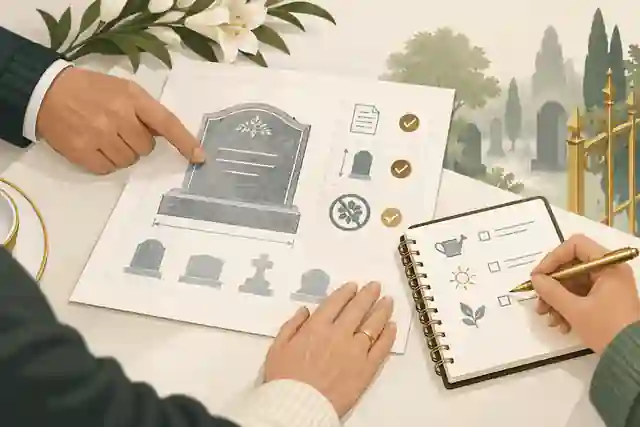
What is the standard size for a cemetery plaque? Wording, materials and care
A practical AU/UK/US guide to cemetery plaque sizes, wording, materials, QR options, approval rules, proofing and long-term care.
The standard size for a cemetery plaque is not one universal measurement: it depends on the cemetery, grave type, country, material and whether the plaque is for a lawn grave, ashes plot, niche wall, headstone, bench or QR memorial. A practical starting point is to ask the cemetery for its written size rules before ordering; common examples range from small 15 cm x 10 cm remembrance tablets in parts of the United Kingdom to 380 mm x 280 mm bronze plaques in some Australian lawn and ashes sections, while a common United States flat veteran marker is 24 inches x 12 inches.
That answer matters because families often search for the standard size for a cemetery plaque at the moment they are also trying to choose wording, check a proof, arrange installation and avoid a mistake that would be difficult to change later. The kindest process is practical: confirm the permitted plaque size first, draft the words second, approve the proof only after several people have checked it, and choose materials that suit the climate, maintenance rules and the way visitors will read the memorial.
Why there is no single standard size for a cemetery plaque
Cemetery plaques sit inside local rules. A council cemetery, private memorial park, churchyard, crematorium garden, veterans cemetery, natural burial ground and columbarium wall may each use a different plaque system. The wording may feel personal, but the plaque itself is usually part of a managed landscape where safety, mowing, visual consistency, foundations, grave ownership and long-term maintenance all matter.
Australia, the United Kingdom and the United States also use different terminology. In Australia and the UK, families may hear plaque, tablet, memorial, headstone, ashes plaque, niche plaque, lawn plaque or cremation tablet. In the United States, flat marker, bronze marker, grave marker and headstone are common. These words are not always interchangeable. A cemetery may allow a tablet on an ashes plot but not a larger upright headstone; another may allow a bronze plaque only in a lawn section; another may permit a QR plaque on a headstone only after written approval. This is why cemetery rules for QR codes are worth checking before any QR or digital element is added to a physical memorial.
Authoritative examples show the range. In Australia, Mansfield Shire Council lists lawn and ashes grave plaques at 380 mm wide by 280 mm high, with up to 10 lines of text, while different niche wall plaques in the same council system use 200 mm square or 155 mm by 230 mm formats. In the United Kingdom, Dover District Council cemetery regulations give an example of ashes plot tablets or vases limited to 25 cm x 25 cm and Garden of Remembrance bronze tablets measuring 15 cm x 10 cm. In the United States, the National Cemetery Administration marker specifications set flat granite and marble grave markers at 24 inches by 12 inches by 4 inches, and flat bronze markers at 24 inches by 12 inches with a three-quarter inch rise.
These are not universal rules. They are evidence that plaque sizing is controlled locally and by memorial type. The safest wording to use with a supplier is not, What is your standard plaque? but, What size and fixing method will this cemetery approve for this exact grave, ashes plot, niche, bench or headstone?
The standard size for a cemetery plaque by memorial type
For a lawn grave plaque, Australian cemeteries often use bronze or cast plaques set flush or low on a concrete beam, plinth or approved base. A size around 380 mm x 280 mm is common enough to be familiar, but it is not guaranteed. A small ashes position, niche wall or memorial rock may need a much smaller plaque, sometimes square, sometimes portrait, sometimes shaped by the available space. The wording capacity changes sharply with size: 10 lines on a lawn plaque may become eight lines on a niche wall and far fewer words on a small tablet.
For UK council cemeteries, dimensions can be especially specific. Stockton-on-Tees Borough Council states that desk-top tablet memorials must not exceed 61 cm in width, 37.5 cm in depth and 10 cm maximum thickness, while flat plaque memorials must not exceed 30 cm x 30 cm x 5 cm. Royal Borough of Kingston upon Thames cemetery regulations show a different pattern again, with lawn memorials limited by height, headstone width, depth and base dimensions, and cremated remains graves capped separately. Luton Borough Council memorial charges also distinguish between standard size memorials, large memorials, cremation plot memorial stones and child or infant memorials.
For United States cemeteries, the 24 inch x 12 inch flat marker is widely recognised because of veterans markers and lawn cemetery conventions, but private cemetery sections can differ. A companion marker, infant marker, cremation marker or niche marker may be a different size. The NCA also lists bronze niche markers at 8.5 inches by 5.5 inches, which shows how much smaller a columbarium-style plaque can be than a grave marker.
If the plaque will carry a QR code, the available size needs to leave space for the name, dates, inscription and scannable code. Families comparing the best materials for QR memorial plaques should treat the plaque as both a physical memorial and a gateway to a digital tribute. A beautiful plaque that is too crowded, too reflective or too small for comfortable scanning may look finished but not work well for visitors.
How much wording fits on a cemetery plaque?
The usable wording area is smaller than the plaque size. Borders, raised edges, motifs, emblems, vases, fixing points, QR codes and cemetery-required plot numbers all take space. A 380 mm x 280 mm plaque may allow a full name, dates, relationship line and short epitaph; a 15 cm x 10 cm tablet may need only a name, years and a few words. The body copy, headstone wording, plaques and materials must be planned together because each choice affects the others.
Most plaques work best with this order: full name or preferred name, dates, relationship or identity line, then one short inscription. If the person used a nickname, confirm whether the legal name, preferred name or both should appear. If a family includes multiple languages, ask whether the cemetery and mason can support the characters, spacing and proofreading needed. If faith wording or cultural wording is important, confirm both family consent and cemetery rules before approving the proof.
Short wording is not a failure of love. A plaque is a fixed surface. It does not need to hold every story, achievement or feeling. Families can keep the plaque restrained and then use an what a QR memorial is in practice approach to connect visitors to photographs, stories, tributes and fuller memories. That balance protects the dignity of the cemetery plaque while still preserving the person more completely.
Useful inscription frameworks include: Beloved wife, father, grandmother or friend; a role and a quality, such as teacher, gardener and generous neighbour; a brief faith line; a line from a public-domain poem or scripture; or a phrase the person would have recognised as true. For families shaping longer digital or printed wording, how to write a memorial tribute can help separate the permanent plaque text from the richer remembrance that can live elsewhere.
Materials: bronze, granite, stainless steel, ceramic and QR-ready plaques
Material choice affects appearance, maintenance, cost and readability. Bronze is traditional for many lawn plaques and flat markers. Granite is common for headstones, bases and tablets. Stainless steel can work well for QR plaques because it can be durable, corrosion-resistant and readable when finished with low glare. Ceramic can carry detailed imagery and crisp contrast but may be more vulnerable to impact. Acrylic may be suitable in protected settings but is usually weaker for long-term outdoor use.
For QR memorials, contrast matters as much as the material. GS1 2D barcode guidance explains that a QR code needs a quiet zone around all four sides and that colour, sheen and surface interference can affect scan performance. On a cemetery plaque, that usually means a dark code on a light matte field, enough blank space around it, and a location where a visitor can scan without fighting glare, shadow or awkward angles. Families planning QR placement can use where to place a QR code on a headstone to think about height, visibility and restraint.
Installation standards matter too. In the UK, NAMM burial authority guidance connects memorial safety with the NAMM Code of Working Practice and BS 8415, while BRAMM burial authority guidance describes a register intended to improve memorial fixing standards in British burial grounds. Families do not need to become technical experts, but they should ask whether the mason is approved for that cemetery, whether the fixing method complies with the cemetery rules, and whether a certificate of conformity or installation record will be provided.
Wording decisions that prevent regret
Proofreading is the most important care step before installation. Check spelling, dates, accents, middle names, maiden names, military details, religious wording and punctuation. Read the proof aloud. Ask one person who was not involved in drafting to check it slowly. Compare dates against official documents, not memory alone. Confirm whether the cemetery requires plot numbers, grave references or particular formats.
Avoid trying to fit every relationship onto a small plaque. A long list can become visually crowded and may accidentally exclude someone important. If the person had a complex family structure, blended family, estrangement, adoption, multiple marriages or chosen family, choose wording that is accurate and gentle. Sometimes In loving memory of, beloved by family and friends, or their preferred name and dates is more peaceful than a complete relationship inventory.
Faith and cultural wording should be used with care. Some phrases are deeply meaningful inside a tradition and feel wrong if used casually. Some cemeteries restrict symbols, portraits, humour, slogans or non-standard ornament. Cultural inscriptions may need specialist letterforms, and some languages require careful direction, spacing or diacritics. If the family is unsure, consult the faith leader, elder, cultural adviser or relative most likely to know what is appropriate.
Humour can be right for a person who clearly wanted it, but the plaque is public and long-lasting. A private joke may not age well, and future visitors may not understand it. If humour is important, keep it kind, brief and unmistakably connected to the person's character. For a fuller story, photographs and anecdotes can sit in meaningful online memorial inclusions rather than being forced onto a small plaque.
Australia, United Kingdom and United States differences
In Australia, local councils and cemetery trusts often manage plaque ordering, proofing and installation for lawn graves, ashes graves, niche walls and memorial gardens. A family may not be allowed to source or install a plaque independently. The cemetery may specify bronze, size, border, relief image, line count and the installation process. Australian consumer protection also matters: the ACCC funeral services guidance reminds families to compare services, ask for clear pricing and watch for misleading or unfair practices when arranging funeral products and services.
In the United Kingdom, a grave owner often needs the Exclusive Right of Burial or the proper authority to apply for a memorial. Local authority rules commonly require approved memorial masons, cemetery permits and compliance with recognised fixing standards. Sizes can vary dramatically between lawn sections, traditional sections, cremated remains graves and remembrance gardens. Do not assume that a plaque permitted in one borough will be accepted in another.
In the United States, cemetery rules are often set by the cemetery, memorial park, municipality, religious cemetery or veterans cemetery. Federal veterans markers have clear specifications through the National Cemetery Administration, but private cemetery plaques and companion markers are governed by local section rules. The FTC Funeral Rule gives consumers rights around funeral price lists and selection of goods and services from funeral providers, but cemetery plaque dimensions still need to be confirmed with the cemetery or memorial park.
Care, cleaning and long-term maintenance
Care begins with choosing a plaque that can survive its setting. Coastal air, full sun, sprinklers, shade, tree sap, frost, mowing equipment and foot traffic all affect durability. A cemetery plaque near irrigation may need different maintenance expectations from one on a sheltered niche wall. A QR plaque should be checked periodically to make sure the code remains readable and the linked destination still works.
Cleaning should be gentle. The National Park Service grave marker cleaning guidance warns that cleaning can accelerate deterioration and recommends the gentlest means possible, avoiding wire brushes, power washers and harsh cleaners. That principle applies even when a plaque is newer than a historic gravestone. If the marker is unstable, cracked, lifting or attached to a headstone, ask the cemetery or approved mason before touching it.
Families sometimes want the plaque to look new forever, but weathering is part of outdoor memorial life. A better aim is legibility, safety and dignity. Keep vegetation from covering the wording if cemetery rules allow, report movement or damage, photograph the plaque after installation for family records, and keep the proof, receipt, cemetery approval and supplier details in a shared folder. If there is a QR element, keep a copy of the linked memorial URL and know who controls the page. Evaheld Memorials explains how QR codes on headstones work so families can understand the physical code and the digital destination together.
Privacy, QR codes and the living memorial beside the plaque
A cemetery plaque is public. Anyone standing nearby can read it. A QR code on or near that plaque adds another layer because it can connect a visitor to a digital memorial. That can be beautiful, but it should be planned deliberately. Decide whether the linked memorial will be public, private, searchable, moderated, editable and suitable for relatives who may not want every memory publicly visible.
Evaheld Memorials keeps brand separation clear: an online memorial page belongs with Evaheld Memorials, while digital legacy vault terms belong to Evaheld. For cemetery plaque planning, the relevant concern is the memorial page visitors reach from a QR plaque or family-shared link. Families weighing visibility can compare private versus public online memorials before putting a code on a headstone, grave marker or plaque.
Notable memorial profiles show why the permanent and the digital can complement each other. A physical marker usually stays concise, while an Evaheld Memorials profile such as Steve Jobs can hold a fuller story, timeline, photographs and tributes. A public figure such as Princess Diana also shows how remembrance extends beyond a single location, while Olivia Newton-John demonstrates how a life story can include work, advocacy, family and messages of remembrance. A cemetery plaque cannot carry all of that, and it should not have to.
A practical cemetery plaque checklist
Before ordering, confirm the exact cemetery section, grave type, grave owner or authority to apply, permitted plaque size, material, thickness, fixing method, border style, symbol rules, flower holder rules, QR code policy, approval fee and installation process. Ask whether the cemetery or council must order the plaque directly, or whether an approved mason can do so.
Before approving wording, check the full name, preferred name, dates, relationship wording, line breaks, punctuation, cultural wording, faith wording, military details, spelling of every family name and whether a QR code or emblem reduces the available text area. Ask for a proof at actual scale if possible. If a phrase looks crowded on the proof, shorten it rather than reducing readability.
Before installation, ask who installs the plaque, when installation usually occurs, whether ground settling affects timing, whether there is an inspection, how future damage is handled, and who to contact for additional inscriptions. If the plaque links to a digital memorial, confirm which plan includes QR memorial plaques and what is included in the Memorial Plaque & Tribute plan so the physical and digital parts are aligned.
The final decision should feel calm, not rushed. Choose the approved size, keep the wording simple, use durable materials, respect cemetery rules, and preserve fuller stories somewhere editable. When a family wants a plaque to point visitors towards memories, photographs and tributes beyond the stone, Evaheld Memorials can help with the standard size for a cemetery plaque as part of a wider remembrance plan.


FAQs
What is the standard size for a cemetery plaque? Wording, materials and care
There is no single universal plaque size; the safest answer is to ask the cemetery for the approved dimensions for that exact grave, ashes plot, niche or memorial wall before ordering. If the plaque will include QR access, the best materials for QR memorial plaques should be considered alongside local dimensions, and the National Cemetery Administration marker specifications show how formal marker sizes can differ by marker type.
How many words should go on a cemetery plaque?
Most plaques work best with a full name, dates and one short inscription, because line count and readability matter more than filling every available space. Families drafting longer remembrance text can separate the plaque from how to write a memorial tribute, while Mansfield Shire Council plaque guidance shows how one council links plaque size to a set number of text lines.
Can a cemetery refuse a plaque size or design?
Yes, a cemetery can refuse a plaque that does not match its rules for size, material, symbols, fixing or section style, even if the family has already paid a supplier. Before ordering, check cemetery rules for QR codes and design approvals, because Dover District Council cemetery regulations show how detailed local memorial rules can be.
What material is best for an outdoor cemetery plaque?
Bronze and granite are traditional, while stainless steel can be a strong option for QR plaques when it has a matte, high-contrast finish; the best choice depends on climate, cemetery rules and maintenance. The physical plaque should support what a QR memorial is in practice, and National Park Service grave marker cleaning guidance explains why durable surfaces and gentle care matter.
Can I put a QR code on a cemetery plaque?
Often yes, but only if the cemetery permits it and the plaque leaves enough space for a scannable code, quiet zone, name, dates and wording. The article on where to place a QR code on a headstone helps with respectful positioning, while GS1 2D barcode guidance explains why quiet zones, contrast and surface conditions affect scanning.
Who is allowed to install a cemetery plaque?
Many cemeteries require their own staff or an approved memorial mason to install plaques, especially where foundations, beams, tablets or headstones are involved. Families considering how QR codes on headstones work should still follow the physical installation rules, and NAMM burial authority guidance explains why recognised fixing practice matters in UK burial grounds.
How do Australia, the UK and the US differ on plaque sizes?
Australia often uses council or cemetery trust plaque systems, the UK commonly works through local authority rules and approved masons, and the US often depends on cemetery section rules or veterans marker specifications. If the plaque will connect to digital remembrance, private versus public online memorials should be decided early, while Kingston cemetery regulations show how UK dimensions can vary by memorial category.
What should I check before approving the plaque proof?
Check every name, date, spelling, accent, line break, symbol, relationship word, inscription and QR destination before signing the proof. For a fuller remembrance plan, meaningful online memorial inclusions can hold details that do not fit on the plaque, and ACCC funeral services guidance reminds Australian consumers to seek clear, itemised information.
Can a cemetery plaque be changed later?
Sometimes, but changes may require a new plaque, an additional inscription, cemetery approval and extra fees, so it is better to proofread carefully before manufacture. Families comparing permanent and editable remembrance can use what is included in the Memorial Plaque & Tribute plan, while Stockton-on-Tees memorial dimensions show how strict physical limits remain even when wording needs change.
Which Evaheld Memorials option includes QR memorial plaques?
Evaheld Memorials families should check the current plan details before ordering, because plaque inclusion, digital tribute features and privacy choices should match the cemetery approval. The clearest starting point is which plan includes QR memorial plaques, and US readers can also use the FTC Funeral Rule as a reminder to ask funeral providers for clear price information where applicable.