What are examples of memorial plaque wording? Wording, materials and care
Practical examples of memorial plaque wording, with guidance on tone, dates, materials, QR plaques, care and AU/UK/US differences.
What are examples of memorial plaque wording? Wording, materials and care starts with a simple answer: the best plaque usually combines the person’s name, dates, one true phrase, a material suited to the setting, and a care plan that protects the lettering over time. Good examples of memorial plaque wording are brief, accurate and personal enough to feel like the person, without trying to fit a whole life onto metal, stone or ceramic.
This article uses UK English for a broad Commonwealth and international audience, with practical notes for Australia, the United Kingdom and the United States. The wording examples below can be adapted for a cemetery plaque, cremation memorial, bench plaque, garden plaque, columbarium niche, headstone panel, QR plaque or family keepsake. It also explains how headstone wording, plaques and materials work together, because a beautiful phrase still needs to fit the approved surface, remain legible and withstand the conditions around it.
Start with the plaque’s job before choosing words
A memorial plaque is not always doing the same job as a full headstone. Some plaques identify a grave or niche, some accompany ashes, some mark a bench or tree, some sit in a home, and some include a QR code that opens a wider remembrance space. Before choosing the wording, decide whether the plaque must be formal, devotional, public, private, practical, scannable or quietly decorative.
For Australian readers, cemetery and crematoria rules are usually set by the cemetery operator under state or territory frameworks, so the right first step is to check the memorial permit, dimensions, fixing method and wording rules before approving a proof. The Australian Competition and Consumer Commission explains that funeral services should be compared carefully, and its funeral services information is a useful reminder to ask for itemised costs rather than making rushed decisions in grief. In New South Wales, the death and bereavement guide from Service NSW also shows how practical administration sits beside funeral and memorial planning.
For UK readers, cemetery, crematorium, churchyard and local authority rules can differ sharply. A parish churchyard may have stricter language, material and design rules than a municipal cemetery. The GOV.UK guidance after a death explains the wider sequence of registering a death and arranging the funeral, while Citizens Advice guidance on arranging a funeral is useful when families need to separate funeral decisions from later memorial choices.
For US readers, rules depend on the cemetery, state law and whether the person is eligible for a government marker. The US Department of Veterans Affairs explains eligibility for veterans headstones and markers, and the National Cemetery Administration sets out headstone and marker inscription items, including mandatory, optional and additional wording. The Federal Trade Commission’s Funeral Rule information is also relevant when families are comparing funeral goods and services in the United States, although it does not apply to every cemetery or third-party monument seller.
Examples of memorial plaque wording by tone
The safest plaque wording is often restrained. Start with the person’s preferred name, birth and death years or full dates, and one line that would still feel right in twenty years. If the plaque is small, use years only or reduce the inscription to one sentence. If the plaque is public, avoid private jokes or details that need explanation. If the plaque sits at home or in a private garden, the wording can be more intimate.
Short traditional wording can include: “In loving memory of Amelia Rose Hart, 1942-2025, beloved mother, grandmother and friend.” Another option is: “Remembering Thomas James Bell, whose kindness shaped this family.” A very small plaque might say: “Margaret Ellis, 1938-2024, loved always.” A cremation niche could read: “Together in memory, always in our hearts.” For a bench, a natural line is: “Sit awhile and remember Daniel, who loved this view.”
Gentle contemporary wording can be less formal without becoming casual: “Here we remember Noah, whose humour and patience stayed with everyone who knew him.” “For Priya, who made ordinary days warmer.” “In memory of Grace, teacher, sister, aunt and trusted friend.” “For Samuel, whose stories still gather us together.” “Loved by many, held by family, remembered here.”
Faith wording should be chosen with care and, where possible, by someone who understands the person’s beliefs. Christian examples include: “Resting in God’s peace,” “The Lord is my shepherd,” and “Held in grace.” Jewish wording may include “May her memory be a blessing,” while Muslim wording often needs family or faith-community review before transliteration or Arabic script is approved. The VA’s emblems of belief page is a useful US example of how official memorial systems distinguish approved faith symbols from social, political or commercial graphics.
Secular wording can still be solemn: “A life of courage, wit and generosity.” “Her work is finished; her love remains.” “He helped others feel at home.” “A steady presence, deeply missed.” “We carry your stories forward.” For literary or creative people, one carefully attributed public-domain line may suit, but families should avoid copyrighted song lyrics or recent poems unless permission is clear. The memorial for Maya Angelou shows how one line of remembered voice can frame a fuller life story without overloading a physical surface.
Relationship-based plaque wording examples
For a mother: “Beloved mother and grandmother, her care remains with us.” “Mum, your love made our home.” “She taught us tenderness, strength and patience.” For a father: “Beloved father and grandfather, steady in love.” “Dad, your hands built more than we can name.” “He gave quietly and loved faithfully.” For both parents: “Together in love, remembered by the family they built.”
For a spouse or partner: “My love, my companion, my home.” “Together was our favourite place.” “Loved through every season.” “In memory of my husband, whose kindness shaped our life together.” “For my wife, whose laughter still fills our days.” For a child or young person, shorter is usually kinder: “Loved in every breath.” “Our brightest little light.” “Held forever by family.” “A brief life, immeasurable love.” Families should not feel pressured to explain the death or make the wording answer other people’s questions.
For a friend, colleague or community member: “A generous friend and trusted colleague.” “Remembered with gratitude by all who worked beside her.” “For the coach who taught more than the game.” “A neighbour whose welcome made this place kinder.” For a public figure or community leader, dignified restraint is often stronger than praise stacked too high. The memorial for Princess Diana is an example of how public remembrance often turns on compassion, service and the emotional memory people share.
For a garden, tree or bench plaque: “This garden remembers Helen, who found peace among roses.” “In memory of Jack, who never hurried past a good view.” “Planted for Amina, whose love helped others grow.” “Sit here in memory of Robert, who always had time for a conversation.” If the plaque will be outdoors, keep the lettering large enough to read after years of weathering.
What details belong on a plaque?
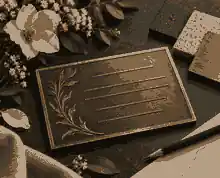
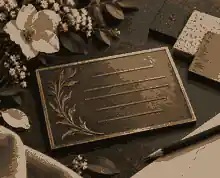
Most plaques include the preferred full name, dates or years, relationship words, and one phrase. The order is usually: dedication, name, dates, message. For example: “In loving memory of Eleanor May Hughes, 12 March 1936 - 4 August 2025, cherished by her family.” In Australia, the UK and the US, date style can cause confusion, so write the month as a word where international readers may visit the memorial.
Middle names, maiden names, honourifics, cultural names and nicknames deserve careful family review. If a person used a chosen name, that may matter more than a legal name on a personal plaque, although cemetery documents may still require legal details. For service members, official markers have stricter rules. The VA’s government headstones and markers FAQs explain how families apply and what they can ask for, while private cemetery plaques may allow more personal wording if the cemetery approves it.
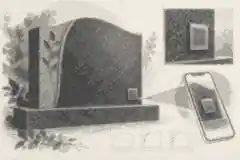
When a plaque links to a wider digital tribute, the physical wording can be shorter. Evaheld Memorials explains what a QR memorial is, and that distinction matters: the plaque can hold the essential name, dates and phrase, while the linked memorial can hold photographs, stories, voice memories, videos and condolences. This is especially useful when family members disagree about how much to say on the permanent material.
Materials, legibility and placement
Bronze is traditional, durable and dignified, but it will patinate and needs gentle cleaning. Stainless steel is often strong and crisp for QR plaques. Ceramic can look refined and hold sharp imagery, especially in sheltered settings. Granite and stone can feel visually integrated with a headstone, but contrast, depth and finish determine readability. Aluminium and acrylic may suit some protected or temporary settings, but families should be cautious about long-term outdoor exposure.
For QR plaques, scannability matters as much as beauty. Evaheld Memorials’ article on the best materials for QR memorial plaques explains why outdoor durability, glare, contrast and cleaning method affect whether visitors can still scan the code later. Placement also matters: a code placed too low, too close to a curve, behind flowers, or in hard glare may frustrate visitors. Evaheld Memorials’ advice on where to place a QR code on a headstone is useful before approving a plaque proof.
Cost also varies by market and material. In Australia, Moneysmart notes that funeral costs can include cemetery plots and related items, and its funeral payment guidance is useful when families are trying to keep plaque, service and burial costs separate. In Victoria, Births, Deaths and Marriages explains that a funeral director usually registers a death after burial or cremation, which is a separate task from memorial wording; the Victorian death registration page helps clarify that administrative sequence.
Privacy matters when a plaque connects to an online space. Do not engrave private addresses, full birth details of living relatives, personal document numbers or sensitive circumstances of death. The Australian Information Commissioner’s personal information guidance is a useful reminder that names, images and biographical details can be personal information. If relatives will help manage a linked memorial, the Australian Cyber Security Centre’s passphrase advice is practical for protecting the account that controls updates.
How to write the wording without rushing
Begin with three drafts: factual, warm and minimal. The factual draft might read: “In memory of David Lee Morgan, 1949-2026.” The warm draft might add: “Beloved husband, father and friend.” The minimal draft might say: “David Morgan, loved and remembered.” Seeing the three versions side by side helps families choose the right level of emotion.
Next, remove words that are too general. “Wonderful,” “special” and “amazing” can be true, but they do not tell visitors much. More specific words, such as patient, witty, faithful, brave, curious, generous, practical or musical, often carry more meaning. Evaheld Memorials’ advice on how to write a memorial tribute can help families find those true details before reducing them to one plaque line.
Then check length against the material. A long sentence may look graceful in a document and cramped on bronze. Ask for a proof at actual size, not only a digital mock-up. Read every word aloud. Check spelling, accents, dates, punctuation, titles and relationship terms. Ask at least two people to proof the wording separately, because a family member may read what they expect to see rather than what is printed.
Finally, decide what belongs on the plaque and what belongs elsewhere. An online memorial can hold the longer biography, photo gallery and evolving condolences. Evaheld Memorials’ online memorial inclusion checklist helps families choose what should live beyond the fixed inscription. If the first version is not complete, an online space can grow later; Evaheld Memorials also explains updating an online memorial after publication.
Common mistakes to avoid
The first mistake is approving wording before cemetery rules are clear. The second is making the phrase too long for the plaque size. The third is choosing a font that looks elegant but becomes hard to read at a distance. The fourth is using wording that pleases one branch of the family but excludes another. The fifth is adding religious language because it sounds traditional, even though it does not reflect the person’s beliefs.
Another common mistake is treating material as purely aesthetic. A plaque placed near irrigation, salt air, lawn equipment, strong sun or regular public touch needs a material and finish that can handle those conditions. Families should ask how lettering is made, how the plaque is fixed, whether replacement is possible, how cleaning should be done, and whether the QR code, if present, stays attached to the same memorial destination.
The final mistake is trying to settle every memory permanently. A plaque can be still and spare while the wider remembrance remains active. The memorial for Steve Jobs shows how a few defining facts can sit beside a larger story of work, relationships and legacy. Families can do the same at a smaller scale: keep the plaque precise, then preserve fuller stories where they can be added and shared.
A practical approval checklist
Confirm the cemetery, crematorium, churchyard, council or property owner allows the plaque type. Confirm size, fixing method, material, lettering, imagery and QR placement. Confirm the exact name and date format. Confirm whether a faith symbol, cultural phrase, military reference or language other than English is permitted. Confirm who in the family has authority to approve the final wording.
Gather the details before drafting. Evaheld Memorials explains what information helps you start a memorial, and the same thinking works for plaque wording: name, dates, relationships, tone, preferred privacy level and any words the person would or would not have wanted. If relatives need to contribute memories before the plaque is final, Evaheld Memorials explains inviting family and friends to help build the memorial. After publication, relatives and friends can also leave tributes and condolences, which means the plaque does not need to carry every message itself.
If the plaque will point to a digital tribute, build the page before the plaque is manufactured, not afterwards. A stable destination lets the family test the QR code, check what visitors will see, decide whether the memorial is public or private, and remove details that should not be permanently associated with a public marker. Evaheld Memorials’ practical process for creating an online memorial step by step is useful here because the same preparation list supports names, dates, photographs, privacy, family review and respectful sharing.
Keep one final proofing document. It should include the approved inscription, exact date format, material, finish, fixing method, QR destination if used, cemetery approval notes, cleaning guidance and the name of the person who signed off the proof. This is not bureaucracy for its own sake; it prevents a painful dispute later if a spelling, symbol, relationship word or scan destination is questioned.
For a natural next step, gather the wording, photographs and family-approved details in one place before anyone approves the final plaque. Evaheld Memorials can help families shape the wider remembrance around examples of memorial plaque wording so the physical plaque and the shared memorial support each other.

FAQs
What are examples of memorial plaque wording? Wording, materials and care
Examples of memorial plaque wording include a name, dates and one true phrase, such as “In loving memory of Grace Ellis, 1938-2024, beloved mother and friend” or “Sit awhile and remember Daniel, who loved this view.” For a fuller linked tribute, what a QR memorial is explains how a plaque can connect to a wider memorial, while the VA inscription guidance shows how formal marker wording can be structured.
How long should memorial plaque wording be?
Most memorial plaque wording works best when it is one to three short lines after the name and dates. If the family wants more story, the online memorial inclusion checklist can hold longer memories, while the Citizens Advice funeral guidance helps families separate practical funeral decisions from later memorial choices.
What should I write on a plaque for a parent?
For a parent, use wording that reflects relationship and character, such as “Beloved mother and grandmother, her care remains with us” or “Dad, your steady love shaped our family.” If relatives need to contribute memories before the wording is settled, inviting family and friends to help build the memorial can support that process, and the Service NSW bereavement guide shows how family tasks often sit alongside remembrance.
Can a memorial plaque include a QR code?
Yes, a plaque can include a QR code if the cemetery, crematorium, garden, venue or property owner allows it and the placement remains scannable. Evaheld Memorials explains where to place a QR code on a headstone, while the Australian Cyber Security Centre passphrase advice is useful for protecting the account that controls the linked memorial.
Which material is best for an outdoor memorial plaque?
Bronze, stainless steel, ceramic and stone can all work, but the best choice depends on weather, cleaning, glare, fixing method and whether the plaque includes a QR code. Evaheld Memorials’ article on the best materials for QR memorial plaques explains the outdoor trade-offs, and the Moneysmart funeral payment guidance helps Australian families keep memorial costs in context.
Should plaque wording use full dates or years only?
Use full dates when space allows and the family wants precision; use years only when the plaque is small, the design is minimal or international date formats might confuse visitors. What information helps you start a memorial is a useful checklist for names and dates, while the Victorian death registration page shows how official registration is separate from the wording families choose for remembrance.
Can memorial plaque wording be non-religious?
Yes, non-religious wording can be dignified and deeply personal, such as “A life of courage, wit and generosity” or “We carry your stories forward.” Evaheld Memorials’ guidance on how to write a memorial tribute helps families find honest language, while the VA emblems of belief page shows why belief-based symbols should be chosen carefully and accurately.
Can a plaque be changed after it is made?
Sometimes, but changes can be costly or impractical because engraving, casting and fixing methods differ by material. If you want a memorial that can grow after the plaque is installed, updating an online memorial explains the digital side, and the VA marker FAQs show why official marker changes need a defined process.
What should I avoid putting on a memorial plaque?
Avoid unapproved private details, unresolved family claims, copyrighted lyrics, unclear religious language, jokes that may age badly and anything the cemetery or venue has not approved. If the plaque links to online content, creating an online memorial step by step can help you review privacy first, and the OAIC personal information guidance explains why names, images and personal details should be handled carefully.
Who should approve the final plaque wording?
The person legally or practically responsible for the memorial should approve the final proof, but close family should review spelling, dates, tone and any faith or cultural wording before production. If the plaque is part of a wider tribute, leaving tributes and condolences can give others a place to contribute without crowding the plaque, and the FTC Funeral Rule information reminds US families to ask clear questions before paying for funeral goods and services.