How do I order a QR memorial plaque in Sydney? Australian planning, cemetery checks and options
A practical Australian guide to ordering a QR memorial plaque in Sydney, including cemetery approval, interment rights, materials, privacy, testing and Evaheld Memorials options.
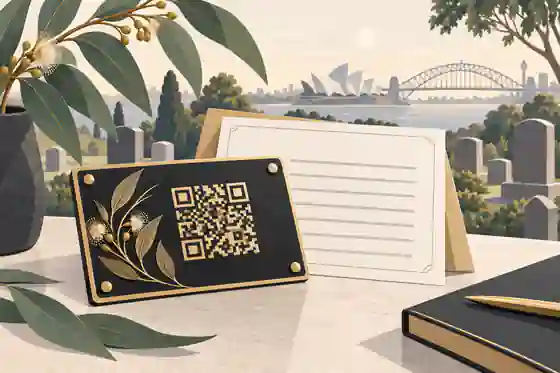
How do I order a QR memorial plaque in Sydney? Australian planning, cemetery checks and options starts with one practical sequence: confirm the cemetery or cremation memorial operator will approve the plaque, create the stable memorial destination first, choose a durable QR plaque material, test the finished code, then install only after written permission is clear. To order a QR memorial plaque in Sydney well, treat the QR code, the physical plaque, the online memorial, the cemetery approval and the family privacy decision as one connected plan.
If you are asking how to order a QR memorial plaque in Sydney, the safest first step is not choosing a design. It is finding out who controls the grave, niche, wall, bench or memorial position. In New South Wales, Cemeteries & Crematoria NSW explains that the interment right holder is the person able to authorise actions such as the erection and maintenance of memorials, so the plaque conversation should begin with the recorded right holder or the operator's required decision-maker: NSW interment right holder responsibilities. That matters because a QR plaque may be treated as a new memorial item, a change to an existing monument, a removable adornment or a supplier-led installation, depending on the cemetery and the section.
Sydney families often move through grief, paperwork and memorial decisions at the same time. Service NSW notes that the death must be registered and that the funeral director usually handles this where one is appointed; its bereavement guidance also explains that an executor or next of kin commonly carries responsibility for notifications and arrangements: Service NSW death and bereavement steps. A plaque does not need to wait until every estate matter is complete, but it should not run ahead of the people legally and practically responsible for the grave or memorial site.
Order a QR memorial plaque in Sydney without creating avoidable problems
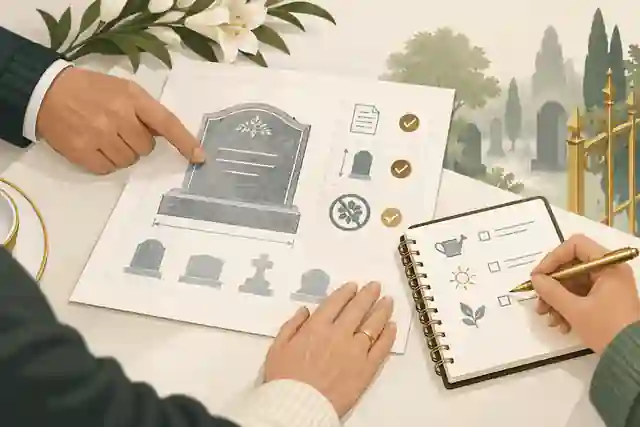
The practical order is simple. First, identify the cemetery, memorial garden, crematorium niche wall, council cemetery, religious burial ground or private memorial location. Second, ask that operator whether QR plaques are allowed in that exact location and whether approval must come from the interment right holder, a stonemason, a monument company or the family. Third, build the digital memorial page that the code will open. Fourth, decide whether the page will be public, link-only or private. Fifth, confirm plaque size, finish, material, attachment method and wording. Sixth, test the final proof and the finished plaque before installation.
New South Wales cemetery regulation gives families a useful starting point, but individual operator rules still decide the outcome. Cemeteries & Crematoria NSW describes burial and cremation rights, including the way interment rights apply to burial places, ashes, mausoleums, crypts and niche walls: burial and cremation rights in NSW. This is why a plaque that is acceptable in one Sydney cemetery may be refused in another. A lawn section may require uniform flat markers. A heritage section may restrict modern additions. A cremation garden may allow small plaques but only through an approved supplier. A religious burial ground may assess visual tone, theology and community expectations as well as safety.
Before you spend money, ask the operator for written answers to these questions: is a QR plaque allowed on this grave or niche; is it classed as a monument alteration; who must apply; what material, colour, size and edge rules apply; may it be adhesive-fixed, screw-fixed or recessed; must a licensed monumental mason install it; will the operator remove it if it deteriorates; and can the approval be kept with the family's records? Evaheld Memorials' own guidance on cemetery rules for QR codes is a useful companion because it focuses on the real approval issues families tend to encounter before buying anything permanent.
It also helps to understand the practical function before discussing it with a cemetery. A QR code does not hold the whole life story inside the square. It holds a link. The photographs, tributes, videos and service details live on the destination page, so the page must be stable, respectful and easy to recognise when scanned.
Choose the digital destination before the plaque design
The page behind the QR code should be created before permanent engraving, printing or laser marking. If the code points to a draft page, a temporary file, a login screen or a URL that later changes, the plaque may become frustrating even if the metal or ceramic is still perfect. The digital destination should open quickly on a phone, show the correct person's name and portrait, and make clear whether guests can simply read, leave a tribute or contribute photographs.
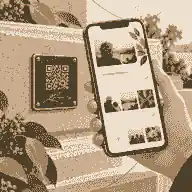
For many families, the destination begins with a calm life story, selected photographs, date details, funeral or memorial information where appropriate, and a way to leave condolences. Evaheld Memorials explains what a QR memorial can actually link to, including memories, service details, tributes, media and family-approved information. A Sydney plaque may sit in one physical place, but relatives in regional NSW, interstate, the United Kingdom or the United States may reach the same memorial by scanning a booklet, keepsake or shared image of the code.
Privacy needs to be decided early. A code fixed to a grave, bench or niche can be photographed and reshared. That does not make it unsafe, but it means the public-facing page should avoid sensitive addresses, phone numbers, living children's identifying details, private family conflict, financial information and anything shared without consent. The Office of the Australian Information Commissioner notes that personal information is about an identified or reasonably identifiable person, and its public guidance also explains the Privacy Act position for information about people who have died: OAIC guidance on personal information. A memorial may mainly be about someone deceased, but it can still reveal personal information about living relatives.
If the family wants the tribute to stay quiet until wording and photographs are agreed, plan that before the code becomes a public marker. Evaheld Memorials has a separate explanation of private versus public QR memorials, and the practical decision is often this: keep the plaque wording minimal, keep the page editable, and publish only the level of detail the family would be comfortable seeing if the code were shared beyond the cemetery.
Materials, Sydney weather and scan reliability
The best plaque material is the one that remains scannable, restrained and acceptable to the cemetery. Stainless steel, ceramic, anodised aluminium, stone-compatible inserts and high-quality engraved plates can all work, but each has trade-offs. Printed vinyl or laminate can be useful for temporary service cards or short-term displays, yet it is rarely the best choice for exposed cemetery weather. The Bureau of Meteorology's Sydney Observatory Hill climate averages show why outdoor materials matter: Sydney has rain, humidity, sun and seasonal heat that can affect adhesives, coatings and contrast over time: Sydney climate averages from the Bureau of Meteorology.
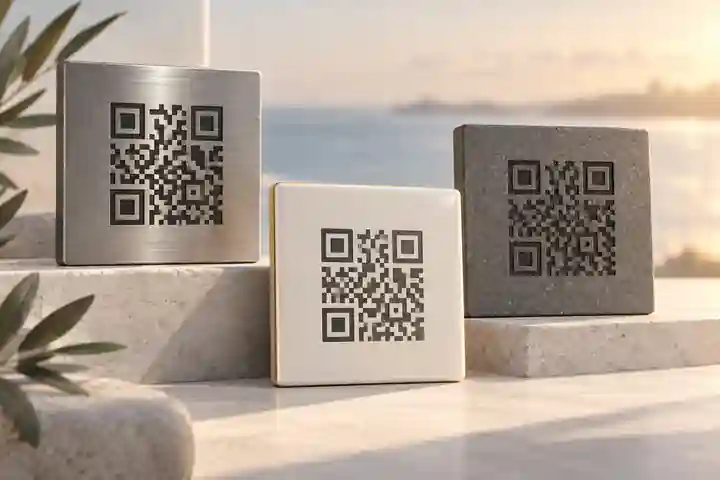
For physical comparison, focus on contrast, finish and attachment rather than marketing labels. A QR code should stay square, dark on light, uncropped and surrounded by a clear margin. Glossy finishes can reflect sky or sun. Curved surfaces can distort the pattern. Deep engraving without enough contrast may look refined but scan poorly. The current ISO standard for QR code symbology is ISO/IEC 18004:2024, which is the technical foundation behind QR code structure and scan behaviour: ISO/IEC 18004:2024 QR code specification. Families do not need to read the standard before ordering, but they should respect its practical consequences: square geometry, quiet space, contrast and error tolerance all matter.
For most Sydney cemetery installations, the most useful supplier questions are these: what material is used; how is the code created; is the finish matte or reflective; what outdoor life is expected; does coastal humidity or sprinkler overspray affect it; how should it be cleaned; can the same destination be preserved on a replacement plaque; and will the supplier provide a proof at actual size? Evaheld Memorials' article on which plaque materials cope best outdoors is particularly relevant when a family is comparing stainless steel, ceramic and printed options.
Cleaning and maintenance are often overlooked. QR plaques should not encourage harsh cleaning of the stone around them. The National Park Service recommends the gentlest, least invasive method for headstone care and warns against bleach, strong acids, strong bases, wire brushes, sanders and high-pressure washing on vulnerable stone: National Park Service headstone cleaning recommendations. Even though the guidance is from the United States, the conservation principle is broadly useful: do not damage the stone in an attempt to keep a small code looking new.
Placement, attachment and cemetery approval
QR placement should feel secondary to the memorial, not visually louder than the name, dates or inscription. On a headstone, families often consider the lower corner, a separate approved plaque, the reverse side if visitors can safely reach it, or a discreet panel designed by the stonemason. On a niche, the code may need to fit the operator's plaque format. On a bench, garden marker or family remembrance display, the question is usually less about cemetery law and more about durability, comfort and clarity.
For an existing headstone, approval is more sensitive than for a new monument. Drilling, adhesives, recessed inlays and added plaques can all affect the stone or breach site rules. Evaheld Memorials covers how a code can be added to an existing headstone, but the key Sydney point is that the cemetery or memorial operator should approve the method before the supplier manufactures the plaque. A stonemason can advise what is physically possible; the cemetery decides what is permitted.
Placement should also respect visitors. A code should not require someone to step over another grave, lean into plantings, kneel in wet grass, stand in a roadway or touch a fragile monument. If elderly relatives are likely to scan it, place it within comfortable viewing distance. If the site receives bright midday sun, avoid direct glare. If the memorial is in a lawn cemetery, avoid areas exposed to mower contact or pooling water. Evaheld's practical placement article on where a QR code can sit on a headstone can help families take a proposed position back to the operator or stonemason with better questions.
Under NSW Health guidance, final arrangements for deceased people sit within public health regulation covering the handling, preparation, storage, burial and cremation context: NSW Health final arrangements of the deceased. That does not mean NSW Health approves plaques; it means families should keep the broader regulated environment in mind and avoid assuming that a supplier's willingness to sell a plaque is the same as permission to install it.
Costs, consumer rights and plan choices
The total cost can include the digital memorial plan, plaque manufacture, proofing, engraving or laser marking, cemetery approval fees, stonemason installation and future replacement. Ask for each item separately. A cheap plaque can become expensive if it needs replacing early, while a beautiful plaque can still be poor value if the destination page is temporary or uneditable. Australian consumer guarantees require products and services to meet basic standards, and the ACCC explains that these guarantees cannot be removed by a business simply saying there are no refunds: ACCC consumer rights and guarantees.
Evaheld Memorials families comparing plans should check which plan comes with QR memorial plaques before committing to an outside plaque supplier. If the main question is the payment model, read current plan information alongside any cemetery or mason fees, because the digital and physical costs are not always charged by the same organisation.
International readers should note the jurisdictional differences. In Australia, cemetery and crematoria rules are state and operator specific, with NSW interment rights particularly important for Sydney. In the United Kingdom, GOV.UK explains that a funeral can usually only take place after the death is registered unless a coroner is involved, and it notes that funeral directors are legally required to publish a standard price list: GOV.UK arranging the funeral. The UK Competition and Markets Authority also made the Funerals Market Investigation Order 2021, which introduced legal obligations on funeral directors and crematorium operators: CMA Funerals Market Investigation Order 2021. In the United States, the FTC Funeral Rule gives consumers specific rights when buying funeral goods and services, including price information: FTC Funeral Rule consumer guidance. USAGov also gathers official steps for dealing with a death, including death certificates and agencies to notify: USAGov death of a loved one guidance.
Testing the finished QR plaque
Test the final object, not just the artwork file. A code that scans on a laptop may fail once etched onto reflective metal, printed under a glossy coating, reduced too far or placed in shade. Test with at least two phones, including an older device if available. Scan from the expected visitor distance. Try morning and afternoon light if possible. Confirm that the first screen shows the correct memorial and does not require a login unless the family intentionally chose restricted access. Print or record the plain memorial URL in the family file as a backup.
QR safety also belongs in the plan. The US Federal Trade Commission warns that scammers can hide harmful links in QR codes, so families should use trusted account access, avoid replacing public QR plaques without checking the destination, and teach administrators not to follow unexpected login prompts: FTC advice on harmful QR links. A cemetery visitor scanning a family-approved plaque should see an ordinary memorial page, not a request for payment, passwords or private details.
Longevity is a two-part question. The physical plaque must remain readable, and the digital memorial must remain controlled. Evaheld Memorials explains how long QR memorials usually last, and the strongest plan is to combine durable materials with a stable, editable memorial page. A family should also keep a backup of photographs, stories, plaque proofs, order confirmations, the memorial URL, login ownership and cemetery approval.
The linked page will probably need updates. A family may add funeral details, change privacy settings, upload new photos, moderate tributes, correct dates or add memories on anniversaries. That is why updating QR memorial content over time is a central buying question, not a later technical extra. If the code points to a page that can be edited, the plaque can stay in place while the memorial grows.
What to include before you place the order
Gather the person's full name, preferred name, dates, a short tribute introduction, approved photographs, the cemetery or niche details, the interment right holder's details, the operator's plaque requirements, the chosen privacy setting, the preferred contributor list and the family contact who will manage the page. Evaheld Memorials answers what information helps you start creating a memorial, and that same checklist helps the plaque supplier avoid errors in names, dates and destination links.
Some families find it useful to look at public memorial profiles before deciding how much story belongs behind a QR code. An Australian family may think of Olivia Newton-John, whose public memory spans music, film and cancer advocacy; a technology-focused family may recognise how a page for Steve Jobs can organise a life story around work, influence and personal history; and those planning for relatives across Commonwealth countries may understand the public significance carried in a profile such as Princess Diana. These examples should not make a family overfill a private tribute. They simply show that a memorial page can hold more context than a plaque ever could.
The final check before ordering is emotional as much as technical. Does the page feel respectful on a phone? Is the plaque restrained enough for the cemetery? Has the right person approved the installation? Are living relatives protected? Can the memorial be edited later? Has the family kept the plain URL and approval paperwork? If those answers are clear, the order is much less likely to create cost, privacy or installation stress.
When you are ready to build the destination before ordering the physical marker, order a qr memorial plaque in sydney with the memorial page, privacy choices and family review process planned first.
FAQs
How do I order a QR memorial plaque in Sydney? Australian planning, cemetery checks and options
Start by checking the cemetery or memorial operator's rules, confirming who can authorise the plaque, creating the destination memorial page, then ordering a plaque that matches the approved material, size and attachment method. Evaheld Memorials' cemetery rules for QR codes helps families prepare those questions, while NSW interment right holder responsibilities explains why the recorded right holder matters.
Do Sydney cemeteries usually allow QR memorial plaques?
Some do, some do not, and many decide by grave type, section, material and installation method rather than by QR technology alone. A family planning how a code can be added to an existing headstone should also check burial and cremation rights in NSW before treating supplier advice as cemetery permission.
What should the QR code link to?
The code should link to a stable memorial page that opens clearly on a phone and shows the correct person, approved photographs, tribute text and any guest contribution options. Evaheld Memorials explains what a QR memorial can actually link to, and Service NSW death and bereavement steps can help families keep memorial work aligned with broader after-death tasks.
Which QR plaque material works best outdoors in Sydney?
Durable, high-contrast materials such as well-finished stainless steel or ceramic are usually better for outdoor cemetery settings than temporary labels, but the cemetery's rules still come first. Evaheld Memorials' which plaque materials cope best outdoors pairs well with Sydney climate averages from the Bureau of Meteorology when considering rain, humidity, sun and heat.
Where should a QR code sit on a headstone or plaque?
Choose a discreet, scannable place that does not dominate the inscription, force visitors into unsafe positions or interfere with cleaning and maintenance. Evaheld Memorials covers where a QR code can sit on a headstone, while the National Park Service headstone cleaning recommendations show why attachment and cleaning methods should not harm the stone.
Can a QR memorial be private if the plaque is public?
The physical code can be visible while the linked content is limited, but anyone who sees or photographs the code may try to open it, so privacy settings and content choices matter. Evaheld Memorials' private versus public QR memorials should be considered alongside OAIC guidance on personal information.
How do I know whether a QR plaque will keep scanning?
Test the finished plaque with more than one phone, in real light, at the distance a visitor would use, and confirm that the memorial opens without an unexpected login or error. Evaheld Memorials explains how long QR memorials usually last, and the ISO/IEC 18004:2024 QR code specification underlines why square geometry, contrast and clear margins matter.
Can I update the memorial after the plaque is installed?
Yes, if the QR code points to an editable memorial page rather than a fixed document or temporary file. Evaheld Memorials' advice on updating QR memorial content over time is useful here, and FTC advice on harmful QR links is a reminder to protect account access and avoid suspicious replacement links.
Which Evaheld Memorials plan includes QR memorial plaques?
The plaque-enabled plan information should be checked before ordering so the family understands what is included digitally and physically. Evaheld Memorials explains which plan comes with QR memorial plaques, while ACCC consumer rights and guarantees help Australian families ask clear questions about goods, services and remedies.
What information do I need before I start the memorial page?
Gather the person's name, dates, approved photographs, a short life story, cemetery details, privacy preference, family contributors and the person responsible for approvals. Evaheld Memorials' what information helps you start creating a memorial supports that preparation, and GOV.UK arranging the funeral is useful context for UK families comparing how funeral timing and planning differ.