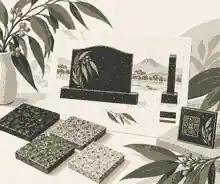
Do QR codes fade in rain? Cemetery checks, materials and setup
A practical guide to whether QR codes fade in rain, with cemetery approval checks, outdoor plaque materials, installation setup, privacy and maintenance advice.
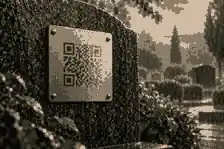
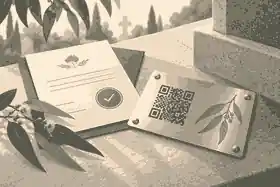
Do QR codes fade in rain? Cemetery checks, materials and setup matter more than the rain itself: a well-made QR memorial plaque should still scan when wet, but poor materials, low contrast, glare, dirt, weak adhesive or cemetery non-compliance can make it fail.
If you are asking whether qr codes fade in rain, separate the question into two parts. The QR pattern does not fade because rain falls on it for one afternoon; the surface carrying the pattern can fade, corrode, lift, haze, scratch or lose contrast over months and years. A cemetery setting adds its own checks: permission rules, mowing, irrigation, cleaning practices, sun exposure, mobile reception and the dignity of the memorial design.
qr codes fade in rain: practical guidance
A QR code is a visual pattern that points a phone to a web address. DENSO WAVE explains that the QR Code became an international standard under ISO/IEC 18004, and the format includes enough structure for cameras to recognise it quickly. Rain sitting on a plaque may add reflections or droplets, but it does not usually erase the pattern.
The more important technical feature is error correction. DENSO WAVE's explanation of QR Code error correction shows that different levels allow a scanner to recover data when part of a code is dirty or damaged. That does not make a badly made plaque indestructible. It means a high-contrast, correctly sized code has tolerance for real outdoor conditions.
Most modern visitors do not need a special app. Apple says people can use the iPhone or iPad Camera app to scan a QR code, and Google explains that Google Lens can take actions from visual information such as barcodes. The practical test is simple: can an ordinary phone read the plaque from a respectful standing position in ordinary cemetery light?
Families comparing surfaces should start with which plaque materials cope best outdoors, because the material and marking method decide whether the code remains readable after repeated rain, UV exposure and cleaning.
Why some QR plaques fade, even when rain is not the cause
The weakest QR memorials usually fail because the code is printed onto a thin sticker or coated surface that cannot cope with outdoor weather. Rain accelerates the problem when it carries grit, minerals, pollen, leaf tannins or cleaning residue over the surface. Water can also sit at plaque edges, creep under poor lamination, or weaken an unsuitable adhesive over time.
Australian families should think about intense sun as much as rain. The Bureau of Meteorology's Climate Data Online is a useful reminder that rainfall, heat and exposure vary dramatically by location. A coastal cemetery, an inland lawn cemetery and a shaded churchyard age materials in different ways.
UK readers may face more frequent damp conditions, moss, lichen and lower winter light. The Met Office's explanation of rain is relevant because persistent moisture is not the same as one short shower. Moisture itself is manageable; repeated wetting plus poor drying can encourage grime and biological growth around a marker.
US readers should also account for stormwater and flood-prone grounds. The National Weather Service's Turn Around Don't Drown safety advice is about people, not plaques, but it reinforces a practical rule: never visit or install at a cemetery during unsafe flooding, and do not test a QR marker in hazardous weather.
If the plaque is already on a grave, placement guidance helps prevent avoidable scan failures. Evaheld's notes on where a QR code can sit on a headstone explain why a lower corner, clean sightline and comfortable scanning angle usually work better than a decorative but awkward position.
Materials that handle rain, UV and cemetery cleaning
For long-term cemetery use, the most reliable options are usually stainless steel, durable ceramic, high-quality anodised aluminium or a professionally engraved stone solution. The best choice depends on exposure, the existing memorial, cemetery rules and whether replacement later would be straightforward.
Stainless steel is often the most practical all-round material. It resists moisture well, tolerates gentle cleaning and can hold a laser-etched or engraved pattern with good edge clarity. A brushed or matte surface is usually better than a mirror finish because glare can flatten the contrast that a phone camera needs.
Ceramic can be excellent where appearance and crisp contrast matter, especially on memorial walls, niches or sheltered grave settings. It does not corrode, but it can chip if struck by maintenance equipment. Ceramic is best where impact risk is low and the printed or fired image is made for outdoor use.
Anodised aluminium can be suitable when the finish is robust and the site is not especially harsh. It is light, neat and easy to mount, but thin surface marking, scratches and low-grade coatings can shorten its useful life. Acrylic and ordinary printed stickers should be treated as shorter-term options unless the setting is protected and replacement is acceptable.
Adhesive matters too. 3M's VHB tape product information notes that application temperature, surface fit and surface preparation affect bonding, and that different tapes have different minimum suggested surface temperatures. In plain terms: do not apply an adhesive plaque to a cold, wet, dusty or uneven stone and expect it to behave like a permanent installation.
Families working with an existing marker should review how a code can be added to an existing headstone before ordering, because an older stone may need cemetery approval, professional cleaning advice or a plaque rather than direct engraving.
Cemetery checks before ordering a QR memorial plaque
Many cemetery rules do not mention QR codes by name. That does not mean they are automatically allowed. In Australia, the United Kingdom and the United States, cemeteries commonly regulate what may be attached to a grave, what size additions may be, who may install them, whether adhesive is acceptable, and whether lawn sections can have extra objects.
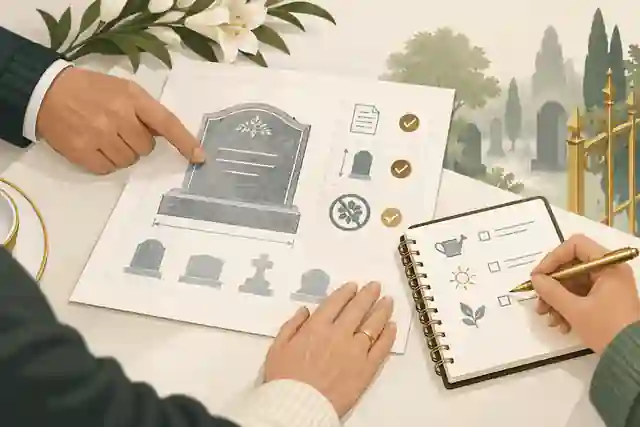
Ask the cemetery office before purchase, not after delivery. Describe the plaque size, material, colour, mounting method, exact location and whether the plaque can be removed without damaging the stone. If the cemetery requires a stonemason or memorial permit, follow that process. Verbal approval is helpful, but written confirmation is safer.
Evaheld's dedicated guidance on cemetery rules for QR codes is useful because the approval question often depends on the grave type, not only on the cemetery. Lawn graves, upright monuments, columbarium niches, natural burial areas and memorial benches can all have different restrictions.
Jurisdictional differences are practical rather than ideological. In Australia, cemetery trusts, councils and private operators may have their own memorial specifications. In the UK, local authority cemeteries, churchyards and private burial grounds may apply different rules, and churchyard memorial changes may involve additional permission. In the US, public, private, religious and veterans cemeteries can each have their own rules. In every market, the safest sentence to use is: “I would like approval for a small weatherproof QR memorial plaque before it is installed.”
Installation setup that keeps a QR code readable
Before installing, scan the code indoors, then outdoors, then at the cemetery while holding it in the intended position. Test with at least two phones if possible. Check whether the memorial page opens on mobile data, because cemetery Wi-Fi is rarely part of the plan.
Clean the surface gently and only in a way suitable for the stone. Do not scrape, bleach or pressure-wash an old memorial just to make room for a plaque. If the stone is fragile, stained, historically significant or heavily textured, ask the cemetery or a qualified memorial mason what is safe.
Rainproofing starts with timing. Install on a dry day, on a dry surface, within the adhesive manufacturer's temperature range. Press evenly. Keep the plaque undisturbed while the adhesive reaches strength. If a cemetery uses irrigation, avoid a position where sprinklers strike the plaque directly every day.
Size and contrast are the scanability basics. A small code can work if printed perfectly, but a memorial visitor should not need to crouch, zoom, wipe or guess. Use a quiet border around the QR pattern, dark modules on a pale background, matte or low-glare finish, and enough physical size for ordinary phones.
For lifespan planning, how long QR memorials usually last helps families think about both sides of the system: the physical plaque and the digital memorial page behind it.
Privacy, safety and the page behind the scan
A QR plaque is public in the sense that anyone standing at the marker can see it. The linked page does not need to reveal everything. Families can choose whether the memorial is public, private, limited to certain content, moderated, or shared first with close relatives.
Privacy rules differ by country, but the same editorial care helps everywhere. Australia's OAIC explains what personal information is, while the UK ICO explains personal data under UK GDPR. Memorial pages often include living people's names, images, messages and relationships, so consent and restraint still matter even when the person being honoured has died.
Security matters because people trust memorial links. The US Federal Trade Commission's guidance on phishing scams and the UK's National Cyber Security Centre advice on spotting and reporting phishing both support a simple family rule: visitors should be taken to the expected memorial page, not a confusing download, payment request or shortened link they cannot recognise.
Evaheld's article on private versus public QR memorials explains the difference between a visible code and controlled digital content. That distinction is important when relatives disagree about whether photographs, family details or condolence messages should be public.
Safety also includes moderation. If the linked memorial allows tributes, decide who reviews contributions and what should not be published. Addresses, financial details, private medical information and unresolved family conflict usually do not belong on a public memorial page.
What the QR code should open
A good QR memorial should open more than a thin product page. It should lead to a clear, mobile-friendly memorial with the person's name, dates if the family wants them shown, a life story, selected photographs, tribute messages and enough context for visitors who did not know the person well.
Evaheld's guidance on the kinds of content a memorial QR code can open helps families choose between a simple tribute, photo collection, service details, guest messages, videos, voice recordings and family updates. The page should be editable, because memories arrive over time.
That continuing quality is visible in public remembrance more broadly. A profile such as Marie Curie shows how a life can be remembered through achievement and context, while Nikola Tesla and Queen Elizabeth II illustrate how public memory often gathers around more than dates alone. A family QR memorial can do the same in a smaller, more personal way.
Think carefully before linking a QR plaque to a social media profile only. Platforms change, accounts are locked, privacy settings shift and posts can be difficult for older relatives to navigate. A dedicated memorial page gives the family more control over tone, access and future updates.
Maintenance after rain
After heavy rain, do not assume a scanning issue means the code has failed. First wipe water droplets gently with a soft cloth. Try scanning from a slightly different angle to reduce glare. Shade the plaque with your body if low sun is reflecting off the surface. Check mobile signal, then open the memorial link directly from a saved message.
If the code scans inconsistently, look for dirt in the quiet border, scratches across the modules, a lifted corner, water under a protective layer, or loss of contrast. Do not use abrasive pads or strong chemicals. The EPA's UV Index Scale is a useful reminder that outdoor surfaces sit in sun exposure as well as rain, so fading and haze may be cumulative rather than sudden.
If a plaque is damaged, the goal is to preserve the same memorial destination where possible. Evaheld's guidance on replacing a damaged QR memorial plaque explains why families should confirm whether the replacement can point to the existing memorial rather than starting again.
Common mistakes that make rain look like the problem
The first mistake is choosing a cheap printed label for a permanent outdoor grave. It may scan at first, but UV, scratching and moisture can quickly reduce contrast. The second is installing in poor conditions: wet stone, freezing weather, dust, moss or uneven texture can all compromise adhesion.
The third is putting the code where it looks neat but scans badly. A plaque tucked too low, too close to a bevel, on a curved surface or in a glare-heavy position may frustrate visitors. The fourth is linking to a page that cannot be updated, exported or managed by more than one trusted person.
The fifth is treating the QR plaque as the whole memorial. The plaque is only the doorway. The linked page should be cared for, updated and backed up. Evaheld's guidance on updating QR memorial content over time is important because families often receive better photographs, stories and recordings after the first version is published.
The sixth mistake is ignoring visitor confidence. If the plaque looks like an anonymous sticker, some visitors will hesitate to scan. A neat plaque, respectful placement and recognisable memorial destination make the experience feel intentional rather than intrusive.
Buyer checklist before you approve a plaque
- Ask the cemetery whether QR plaques are allowed on the specific grave, niche, bench or memorial type.
- Confirm who is allowed to install it: family, cemetery staff or a memorial mason.
- Choose stainless steel, durable ceramic or another outdoor-rated material with a permanent code marking.
- Avoid low-contrast colours, shiny finishes and printed stickers for exposed graves.
- Test the scan before installation, at the cemetery and from a normal visitor position.
- Install only on a clean, dry, suitable surface and within the adhesive temperature range.
- Check mobile reception at the plot and share the memorial link separately with family.
- Decide privacy, moderation and update responsibilities before the plaque becomes public.
- Keep a record of the QR destination, provider, login details and replacement process.
- Review QR memorial safety before publishing sensitive family details.
When the setup is thoughtful, the answer to “do qr codes fade in rain?” is reassuring: rain alone should not defeat a well-made QR memorial, but the wrong material, poor contrast, rushed installation or missing cemetery approval can. If your family is ready to plan the digital page and the physical placement together, Evaheld Memorials can help you organise the memorial before the plaque is finalised.
A careful setup gives visitors a simple scan and gives the family a memorial that can keep growing. To compare options for qr codes fade in rain, start with the page your loved one's QR code will open, then choose the plaque material and cemetery process around that lasting destination.


FAQs
Do QR codes fade in rain? Cemetery checks, materials and setup
Rain alone should not make a properly made QR memorial fade, but poor surface printing, weak adhesive, glare or grime can reduce scan reliability over time. Start by checking which plaque materials cope best outdoors, then compare that with DENSO WAVE's explanation of QR Code error correction.
Can a QR memorial plaque still scan when wet?
Usually yes, if the code has strong contrast, enough size and a non-glare finish. For setup details, where a QR code can sit on a headstone matters, and Apple confirms that visitors can scan with the iPhone or iPad Camera app.
What material is best for a rainy cemetery?
Stainless steel with permanent engraving or etching is often the safest exposed-site choice, while ceramic can work well in protected settings. Evaheld's which plaque materials cope best outdoors gives the memorial-specific comparison, and the Bureau of Meteorology's Climate Data Online shows why local exposure matters.
Do I need cemetery permission before installing a QR plaque?
Yes, you should ask first because many cemeteries treat any attached plaque as a regulated memorial addition. Evaheld explains cemetery rules for QR codes, and the Met Office's information on rain is a reminder to discuss local weathering and maintenance conditions too.
Can I add a rainproof QR code to an existing headstone?
Often you can, but the existing stone, cemetery rules and surface condition decide the safest method. Evaheld covers how a code can be added to an existing headstone, while 3M's VHB tape product information shows why surface preparation and temperature affect adhesive performance.
How long should an outdoor QR memorial last?
It depends on the plaque material, marking method, exposure, cleaning and the stability of the linked memorial page. Evaheld explains how long QR memorials usually last, and the EPA's UV Index Scale helps families remember that sunlight as well as rain affects outdoor materials.
What should I do if the QR plaque stops scanning after bad weather?
Wipe it gently, test from another angle, check mobile reception and open the saved link before assuming the plaque has failed. Evaheld's replacing a damaged QR memorial plaque explains next steps, and the National Weather Service's Turn Around Don't Drown advice is a useful safety reminder after severe weather.
Can the memorial content be updated without changing the plaque?
Yes, if the QR code points to an editable memorial page rather than fixed, unchangeable content. Evaheld explains updating QR memorial content over time, and DENSO WAVE's QR Code standardisation helps explain why the printed code can stay the same while the web page changes.
Can a QR memorial be private if the plaque is visible?
The plaque is visible, but the linked memorial can still use privacy settings, limited sharing or careful content choices. Evaheld explains private versus public QR memorials, and the OAIC's page on what personal information is is helpful for Australian families thinking about living relatives.
How do I make sure visitors trust the QR code?
Use a neat permanent plaque, a recognisable memorial destination and a page that does not ask visitors for unnecessary downloads or payments. Evaheld's QR memorial safety guidance pairs well with the FTC's advice on phishing scams.