Can I record a video message to be sent after I die? Ethical tools, memories and safety
A practical, ethical guide to recording a video message for after death, with consent, privacy, AI, storage and sharing advice for AU, UK and US families.
Yes, you can record a video message to be sent after I die, but the safest approach is to treat it as a living-memory recording that you control now, not as an automated surprise that may distress people later. The right ethical tools, memories and safety choices make the difference: consent, clear delivery instructions, privacy, context, backup copies and family review should come before any AI memorials, photo restoration or voice features.
People search for how to record a video message to be sent after i die for many reasons. Some want to leave birthday words for children, a practical message for a partner, a blessing for grandchildren, a story that would otherwise be lost, or a short farewell for people who could not be present near the end of life. Others are thinking about newer AI tools that can restore an old photo, animate a portrait, clean up audio, imitate a voice or schedule content after death. Those possibilities can be meaningful, but they also raise hard questions about consent, accuracy, timing, privacy and emotional impact.
The strongest answer is practical: record the message yourself while you have capacity, state when and how it should be shared, keep the original file, make a simple access plan, and avoid making relatives guess what you intended. If any technology changes your image or voice, label that use clearly and keep the unaltered recording beside it. For families already building a memorial, adding videos and music to memorials works best when the person’s own words, favourite music and home recordings are handled with restraint.
What a posthumous video message can and cannot do
A recorded message can preserve tone, facial expression, humour, cadence and small details that written notes cannot hold. It can say “I love you”, explain a family story, offer guidance, share gratitude, apologise where appropriate, or tell future relatives what mattered most. It should not be treated as a replacement for legal documents, medical consent, a will, an enduring power of attorney, funeral instructions or professional mental-health support. In Australia, the United Kingdom and the United States, legal and estate processes differ by jurisdiction, so a video may support your wishes but should not be the only place where important instructions live.
When the recording is intended for bereaved people, restraint matters. A long unscheduled video can be overwhelming; a short, clearly labelled message may be easier to receive. The UK’s NHS guidance on grief, bereavement and loss explains that grief affects people differently, which is why timing and choice should be built into any message delivery. A recipient should be able to decide when to watch, pause or decline.
There is also a difference between a message from you and a synthetic version of you. A real video recording is direct evidence of your own expression at a particular time. An AI-edited or generated video may be helpful for cleaning up quality or restoring an old visual memory, but it becomes ethically sensitive when it changes what you appear to say, creates new gestures, simulates a conversation, or makes the dead seem responsive. Families considering AI photo animation for a memorial should separate enhancement from impersonation.
Consent is the first safety feature
The clearest ethical standard is consent from the living person being recorded. If you are making your own message, record an opening sentence that says who the message is for, when you would like it shared, whether it can be edited, and whether AI tools may be used on it. If you are recording someone else who is seriously ill or elderly, do not pressure them into a performance. Ask open questions, allow breaks, and let them choose what stays private.
Consent also applies to other people mentioned in the recording. If the message names family conflicts, medical details, adoption history, finances, paternity, trauma or private relationships, the recording can affect people who never agreed to public disclosure. In many cases, keep sensitive material in a private family archive rather than publishing it on a memorial page. The Australian Office of the Australian Information Commissioner describes personal information as information about an identified or reasonably identifiable person; even where a deceased person’s privacy is treated differently, living relatives’ personal information still deserves care.
In the UK, the Information Commissioner’s Office explains that UK data protection law is concerned with data protection principles such as fairness, transparency and purpose limitation. In the United States, privacy and publicity rights vary by state, while federal consumer-protection rules can still matter if a service misleads families. In Australia, privacy obligations may depend on the type of organisation, the people identified and the way information is handled. The practical rule across all three countries is the same: do not publish private details about living people just because they appear in a memorial recording.
How to record a video message to be sent after i die
Start with a simple recording plan rather than a perfect script. Choose one recipient group at a time: a partner, children, siblings, friends, colleagues or future grandchildren. Decide whether the message is private, family-only or suitable for a public tribute. Keep each video short enough to be watched in one sitting. A useful structure is: who this is for, why you are recording, one or two memories, what you hope the person carries forward, and whether the recording may be shared.
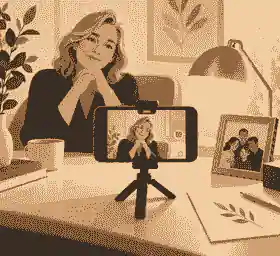
Use ordinary tools if that makes the process easier. A current phone camera, stable light from a window, quiet room, lapel microphone or wired earphones, and a simple tripod are usually enough. Test sound before recording the final version. Say the date on camera. If you want the recording delivered after death, make a written note naming the file, where it is stored, who may access it, and the event that should trigger sharing. If your family is already working through what information you need before starting a memorial, include the location of any video, audio or written messages in that preparation.
Accessibility is part of respect. Add captions or a transcript, especially if the recipient may be older, Deaf, hard of hearing, grieving, watching without sound or reading in a second language. The W3C’s guidance on captions for audio and video explains why captions help many users beyond people with hearing loss. A transcript also gives the family a readable record if the file format fails later.
Delivery options: personal handover, memorial page or scheduled service
The safest delivery method is usually a trusted person, solicitor, executor, attorney, family organiser or designated digital contact who knows your instructions. Automated delivery can fail if accounts close, cards expire, passwords change, a service shuts down or a recipient changes email address. If you use a scheduled service, keep an offline backup and make sure someone can cancel or pause delivery if circumstances change.
A memorial page can be a gentler place for selected recordings because it gives context. Family members can decide what appears publicly, what stays private, and what should be held back for a smaller group. Before uploading personal media, it helps to understand what to include on a memorial page so the video sits alongside a life story, photographs, tributes and service details instead of feeling abrupt or isolated.
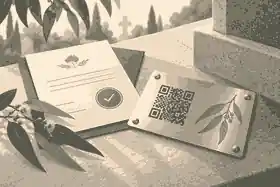
If the message is linked from a QR plaque or headstone, assume that anyone at the memorial site may be able to scan the code unless the linked page has privacy controls. Families using physical memorial access should understand the kinds of content a memorial QR code can open before placing intimate video content behind a public marker.
AI editing, photo restoration and synthetic voice: where the line should be
AI can support memorial work when it repairs damage, improves clarity or helps organise existing material. It becomes risky when it creates the appearance that someone consented to words, movements or opinions they never expressed. The US National Institute of Standards and Technology’s AI Risk Management Framework is not written for family memorials specifically, but its emphasis on validity, reliability, transparency, accountability and harm reduction is a useful lens for bereavement technology.
For posthumous video, use a three-part test. First, is the source authentic? Keep the original video, image or audio file. Second, is the edit truthful? Noise reduction, colour correction and trimming silence are very different from adding new words. Third, is the result disclosed? If a voice has been cleaned, a face restored, or an image animated, the family should know. The Content Authenticity Initiative’s work on content credentials reflects a broader industry move towards provenance and disclosure, which is especially important where grief makes people vulnerable to confusion.
Copyright also matters. In the United States, the Copyright Office has addressed questions about copyright and artificial intelligence, including how authorship and machine-generated outputs are assessed. The details differ outside the US, but the practical memorial rule is international: use material you created, have permission to use, or can lawfully share. Do not upload commercial music, film clips or photographs merely because they feel emotionally important.
Voice cloning is the most sensitive area. A short voice-cleanup pass that makes a real recording audible is different from generating new speech in a dead person’s voice. The US Federal Trade Commission has warned about AI-enabled voice cloning because realistic synthetic voices can be misused for deception. In a memorial setting, the same realism can cause emotional confusion if relatives are not told what they are hearing.
What to say in the recording
A good message is specific, kind and bounded. You do not need to summarise your whole life. A better message might say, “This is for my daughter on a day when she needs to hear my voice. I want you to know the story of the red suitcase, why your grandmother kept that photograph, and how proud I am of the way you choose your own path.” That kind of message gives the recipient something real without trying to control their grief.
For children, keep age and timing in mind. A five-year-old and a twenty-five-year-old will need different language. Consider recording separate messages for milestones, but avoid burdening the child with instructions they cannot fulfil. For a partner, it may be kinder to record one private message and one public-friendly message. For friends or colleagues, short gratitude and one clear memory are often enough. If you are preparing broader life-story material, record your life story before its lost forever can help turn scattered memories into prompts before the final video is made.
Some messages should be written rather than recorded. Complex family history, legal wishes, inheritance explanations and apologies may need careful review, not a spontaneous video. A lawyer, counsellor, mediator, religious leader or trusted family member may be more appropriate depending on the subject. In the United States, the Department of Justice’s guidance on advance planning shows why important wishes should be documented in the right legal form rather than left only in informal media.
Privacy, access and family review
Before a video is shared, decide who can see it, who can download it, who can comment on it, who can remove it, and who can make decisions after the first organiser dies or steps back. These are not only technical settings. They are family-governance decisions. If several relatives may contribute media or memories, inviting family members to help build the memorial works best when permissions are clear rather than informal.
For public memorials, avoid full birth dates, addresses, financial details, account names, identification numbers, medical information and private family conflict. For private memorials, still assume that screenshots and downloads can travel further than intended. The Australian Cyber Security Centre’s advice on strong passphrases is a useful reminder that access planning depends on basic account security as much as sentiment.
Moderation matters because a recording can invite responses. People may leave loving tributes, but they may also post inaccurate stories, sensitive details or comments that reopen conflict. If a memorial allows guest messages, understand how to moderate online memorial comments well before opening the page broadly.
Keeping files usable for the long term
A message that cannot be opened later is not much help. Keep at least two copies in different places: one in secure cloud storage and one on a local drive kept with important records. Export common formats such as MP4 for video, WAV or high-quality MP3 for audio, and PDF or plain text for transcripts. The Library of Congress’ personal archiving guidance encourages people to identify, decide, export and manage digital materials so they can be preserved rather than trapped in apps or old devices.
File organisation is a kindness to the person who will handle the message after death. Use names such as “2026-03-12-message-for-Maya-private.mp4”, not “finalfinal.mov”. Add a text file explaining who should receive it, whether it may be edited, and whether it may be included on a memorial. For online memorials, downloading online memorial content gives families an additional safeguard beyond any single website.
If you use AI restoration, preserve the original and the edited version separately. A restored photo, enhanced voice track or colour-corrected video may be moving, but future relatives should be able to distinguish source from interpretation. This is also why disclosure belongs in the memorial itself, not only in the organiser’s notes.
Public remembrance, famous examples and emotional context
Public figures show why voice, image and recorded memory can feel powerful long after death. The memorial profile for Harry Belafonte reminds readers how a person’s public voice can carry activism, music and moral conviction across generations. A family video is smaller in scale, but it can serve a similar human purpose: preserving a voice in its own context.
Creative legacies also show why boundaries matter. Stephen Sondheim left work shaped by exact language, tone and authorship, which is a useful reminder that posthumous editing should not blur what someone truly made. A restored clip can honour a person; a fabricated performance can confuse authorship.
For a performer such as Cicely Tyson, recorded presence is inseparable from dignity, timing and context. Families do not need celebrity-scale archives to apply the same principle. The most respectful video message is not the most technically advanced one; it is the one that keeps the person’s real values, voice and relationships intact.
Country differences families should understand
Australian readers should think about privacy, consumer protection, platform terms, estate instructions and whether living people are identifiable in the video. Privacy law may not treat a deceased person’s information in the same way as a living person’s, but relatives, carers, clinicians and children mentioned in the video may still be living people with privacy interests. State and territory succession law also means a video should not replace formal estate planning.
UK readers should separate remembrance from data protection, copyright and probate. UK GDPR does not apply in the same way to deceased people, but it does apply to living people whose data appears in the recording. If the video includes medical details, family conflict or children, private sharing is usually wiser than public posting. The European Commission’s ethics guidelines for trustworthy AI also provide a useful international framework: human agency, technical robustness, privacy, transparency, fairness and accountability all translate naturally into memorial decisions.
US readers should pay attention to state publicity rights, estate law, platform terms, privacy torts, copyright, and the growing problem of synthetic media. A state may recognise post-mortem commercial rights in a person’s name, image or likeness, while another may take a different approach. If the message is public, monetised, AI-generated or celebrity-related, get legal advice before publishing.
A practical safety checklist before sharing
Before the recording is sent, ask ten questions. Did the person consent to the recording and its future use? Does the file contain private information about living people? Is the intended audience clear? Is the timing compassionate? Is there a transcript? Is the original preserved? Are AI edits disclosed? Can the organiser remove or correct the video later? Are passwords and backups documented? Is the video being used to comfort rather than shock?
Families often need an editable memorial space because decisions change after the first wave of grief. A video that feels right in week one may need to be private in month six, or the family may later add captions, a transcript, a contextual note or a shorter excerpt. Understanding whether you can update an online memorial after publishing is therefore part of ethical planning.
If the recording will sit inside a broader digital tribute, consider the page as a whole. A life story, images, service information, guest tributes and a video message should work together rather than compete. For families comparing permanence, access and privacy, how long online memorials last is a more useful question than whether any one upload feels polished.
When not to send the message
Sometimes the most ethical decision is to hold the video back. Do not send a message that names a child as responsible for a parent’s emotional wellbeing, reveals a secret without considering the living people affected, gives instructions that conflict with legal documents, pressures someone to forgive before they are ready, or appears to speak from beyond death in a way that the recipient could experience as frightening.
If the recording was made when the person was confused, coerced, heavily medicated or unable to understand the future audience, do not treat it as informed consent. If the video has been heavily edited, generated or voiced by AI, explain that clearly. If family members disagree, slow down and use a smaller private audience first. Memorial technology should support remembrance; it should not force people into an emotional encounter they did not choose.
A calm next step is to record a short, authentic message, store it carefully, write down delivery wishes, and place it in a family-controlled memorial plan. When you are ready to gather those memories with privacy, context and care, Evaheld Memorials can help you record a video message to be sent after i die as part of a respectful remembrance space.
FAQs
Can I record a video message to be sent after I die? Ethical tools, memories and safety
Yes. The safest method is to record the message yourself, document who should receive it, and keep a backup before adding it to adding videos and music to memorials. Because grief affects people differently, the NHS guidance on grief, bereavement and loss supports giving recipients choice about when to watch.
Should I use AI to make the video look or sound better?
Small quality improvements can be helpful, but new words, synthetic speech or animated expressions should be disclosed and approved by the family. Families considering AI photo animation for a memorial should keep the original file beside the edited version, consistent with the transparency principles in the AI Risk Management Framework.
What should I say in a posthumous video message?
Say who the message is for, why you are recording, one or two specific memories, and any sharing limits you want respected. If you need prompts before filming, record your life story before its lost forever can help, while captions for audio and video make the final message easier for more people to receive.
Can a video message replace a will or formal funeral instructions?
No. A video can explain wishes or feelings, but formal legal and estate instructions should be recorded in the correct documents for your jurisdiction. When families are gathering what information you need before starting a memorial, the US Department of Justice guidance on advance planning is a reminder to keep legal matters separate from remembrance media.
Is it respectful to put a private video on a public memorial page?
It can be respectful if the person consented and the content is suitable for public viewing, but intimate messages are often better kept private or shared with named recipients only. Understanding what to include on a memorial page helps families avoid oversharing, and the OAIC explanation of personal information shows why living people mentioned in a video still matter.
How do I stop the message being lost or locked inside an old app?
Export the video in a common format, keep a transcript, store copies in two places, and document who can access them. Families planning downloading online memorial content can apply the same discipline, and the Library of Congress’ personal archiving advice supports choosing, exporting and managing important digital files.
Can family members help decide what is shared?
Yes, and family review is often wise when a recording includes sensitive memories, children, health details or private relationships. Inviting family members to help build the memorial can reduce mistakes, while the ICO’s data protection principles reinforce fairness, transparency and purpose limitation.
What if the video uses my voice after death?
A real recording of your voice is different from a synthetic voice that generates new speech, so write down whether voice cloning is allowed. Families using adding videos and music to memorials should label any AI voice use clearly, especially because the FTC warns about AI-enabled voice cloning risks.
Can a QR memorial link to a video message?
Yes, but families should decide whether the linked video is public, private or limited to a small audience before placing a code on a physical memorial. The kinds of content a memorial QR code can open can include video, but the content credentials movement shows why edited or AI-assisted media should carry clear context.
How can I keep the account secure for the person who will share the video?
Use a trusted organiser, strong account security, documented access instructions and backup copies outside the platform. If the memorial may change after publication, whether you can update an online memorial after publishing matters, and the Australian Cyber Security Centre’s advice on strong passphrases is a practical starting point.