What are rules for online memorial etiquette? Practical etiquette and support
A practical, compassionate guide to online memorial etiquette, sympathy messages, privacy, funeral details, virtual attendance and support.

What are rules for online memorial etiquette? Practical etiquette and support begins with consent, privacy, accuracy and kindness: tell the closest people first, follow the family’s wishes, write sympathy messages that are brief and sincere, and share funeral etiquette information only when it helps mourners attend or remember respectfully. The best rules for online memorial etiquette also recognise that grief moves at different speeds, so an online tribute should give people a calm place to gather without forcing publicity, argument or performance.
Online memorials sit between traditional funeral customs and everyday digital behaviour. That is why the etiquette can feel unclear. A chapel service has visible cues: people know when to stand, when to speak and where to sit. A memorial page, livestream, social post or virtual guestbook can be opened at midnight by a cousin in London, a colleague in California or a childhood friend in Sydney. The same message may comfort one person and overwhelm another. Good etiquette is not about rigid rules; it is about slowing down long enough to protect the bereaved, respect the person who died and make practical support easier to receive.
The first rule is simple: do not let the internet announce a death before the closest family is ready. The US National Institutes of Health Clinical Center advises families to consider who should be told before social media is used, because online posts may be the first way some people hear the news; its advice on bereavement and social media is relevant for Australian, United Kingdom and United States readers. Before posting anything public, check whether immediate family, close friends, carers, employers, faith leaders and key community members have been informed privately.
An online memorial is usually appropriate when it has a clear purpose and careful boundaries. Families still ask whether digital remembrance is respectful, and the answer depends on tone, consent and control; Evaheld Memorials’ discussion of online memorial appropriateness after a death separates genuine remembrance from public display. A respectful page can hold a life story, photographs, funeral details, condolences and later memories. It should not become a place for speculation, family conflict, medical detail, private financial information or posts that surprise the people closest to the death.
Rules for online memorial etiquette before you post
Before anything goes online, decide who has authority to speak for the family. This may be the executor, spouse, adult child, parent, sibling or another nominated organiser. In blended families, separated families or communities with strong cultural protocols, the answer may not be obvious. If there is disagreement, publish less rather than more. A short private message to invited people is easier to expand later than a public post that cannot be unseen.
Accuracy matters. Names, dates, service times, livestream links and donation links should be checked against the funeral director, celebrant, family representative or official notice. The ACCC funeral services guidance warns that funeral consumers can be vulnerable and should receive clear information about prices, contracts and optional services; that same expectation of clarity belongs in online memorial communication. If the page includes charity donations, funeral fund support or memorial gifts, state the purpose plainly and avoid pressure.
In the United States, the FTC Funeral Rule gives consumers rights to choose funeral goods and services and receive itemised information from funeral providers. This is not an online memorial rule, but it is relevant etiquette when a memorial page shares practical funeral planning information: do not present optional arrangements as compulsory, and do not use grief as a sales moment. In Australia, Moneysmart’s funeral payment guidance explains that funerals can involve funeral director fees, transport, certificates, burial or cremation and other costs, so families should be cautious about sharing fundraising or payment requests without context. In the United Kingdom, GOV.UK’s what to do after someone dies guidance explains registration and funeral steps, including the need to register the death before the funeral can take place.
The next rule is privacy by default. Australian privacy law has a specific technical position: the OAIC explanation of personal information is a reminder that details about living relatives can still be personal information even when the memorial concerns someone who has died. In the UK, the ICO guidance on personal data explains why identifiable living people’s details deserve care. In practice, etiquette should be stricter than the bare legal minimum. Do not publish addresses, phone numbers, exact travel plans, children’s details, family disputes, financial information, medical records, passwords, birth certificates or death certificate images.
Security also matters because grief can make families easier to target. The Australian Cyber Security Centre’s advice to secure your social media explains why visible personal information can create safety risks. A memorial page should therefore avoid oversharing identifying details about surviving relatives. If you share a livestream link, consider whether it should be public, invite-only or sent through a controlled channel. If comments are open, decide who will monitor them and what will be removed.
Moderation is not cold; it is care. Families who use how to moderate online memorial comments can set guestbook rules before emotions run high: no graphic details, no debate about the cause of death, no blame, no fundraising links unless approved, no reposting private photographs, and no comments aimed at settling old grievances. A moderator can also catch accidental mistakes, duplicate posts, insensitive wording and spam before they hurt the family.
Public memorial pages, private family pages and social media posts are not the same. A public memorial can help old friends and distant relatives find reliable information. A private page can protect a family that is not ready for wider attention. A temporary social post can announce service details quickly, but it is harder to organise over time. Families weighing visibility should compare private versus public online memorials before the page is shared widely.
What to write in sympathy messages online
Online sympathy messages should be specific, brief and steady. The NIH Clinical Center’s guidance on kind ways to support someone who is grieving says a sincere expression of sorrow and listening without trying to fix grief can be more helpful than polished language. A good condolence might say, “I am so sorry for your loss. I remember how warmly she welcomed new neighbours, and I am thinking of your family.” Another might say, “I worked with him for many years and will remember his patience, humour and fairness.”
Avoid lines that explain the death, minimise pain or claim to know exactly how the family feels. Phrases such as “everything happens for a reason”, “at least they lived a long life”, “they are in a better place” or “you need to be strong” can land badly, even when meant kindly. If you do not know what to say, say that honestly. A short sentence written with care is better than a long paragraph that tries to solve grief.
For people who want more structure, Evaheld Memorials’ approved support on what to say when someone dies practical sympathy messages is the right kind of preparation because it focuses on plain, compassionate wording rather than ornate phrasing. Online spaces make messages feel permanent, so read your words aloud before posting. Ask whether the message centres the bereaved family and the person who died, or whether it draws attention back to the writer.
Guestbooks and memory walls work best when people understand the difference between condolence and testimony. A condolence comforts the family. A memory preserves something true about the person. Both are welcome, but neither should expose secrets. If the deceased helped you privately, you can honour the kindness without naming the private situation. If there were difficult parts of the relationship, this is not the place to process them publicly. Evaheld Memorials’ explanation of how memorial messages work in practice helps families decide how contributions should appear and what visitors should expect.
Photos need the same care as words. Do not upload images of the person in hospital, distress, intoxication, private family settings or situations they would not have wanted published. Do not post children without parent or guardian consent. Do not add images from a private funeral unless the family has invited that. Where in doubt, send the photo privately to the organiser and let the family decide.
Public figures show how varied digital remembrance can be. Fans may remember Alan Rickman through performances, theatre work and the tributes that followed his death, while family-controlled remembrance would still need to protect private relationships and health details. Olivia Newton-John is often remembered through music, advocacy and public warmth, but respectful online memorial etiquette would still avoid turning illness into spectacle. Tina Turner is remembered for artistry and resilience, yet a dignified memorial focuses on her life and legacy rather than replaying trauma for attention.
Funeral etiquette online: service details, clothing and virtual attendance
Competitor funeral etiquette advice rightly reminds readers to arrive on time, dress respectfully, silence phones, follow the family’s wishes and save longer conversations for the wake. Online memorial etiquette should translate those principles into digital form. If you share funeral details online, include the date, time, time zone, venue, livestream link, dress code, parking or accessibility notes, flowers or donation preferences, and whom to contact with practical questions. Evaheld Memorials’ article on funeral details and livestream options gives families a way to keep those details beside the tribute rather than scattered through messages.
Dress etiquette still matters for virtual attendance. If you are joining a livestream, dress as you would for the service unless the family asks otherwise. Australian competitor guidance from SMCT emphasises dark or muted clothing unless a family requests colour, cultural dress or a personal theme. A future Evaheld Memorials resource on funeral clothing etiquette for cultural traditions, outdoor venues and family requests is relevant here because virtual attendance does not remove the need to respect family instructions. If the service notice asks for football colours, bright clothing or a favourite colour, follow that request without making it a costume.
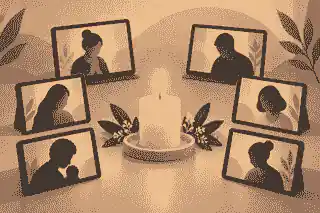
For virtual memorials, the host should open the room early, test sound, appoint a co-host, mute guests on entry, explain chat rules, and prepare a simple running order. Attendees should join from a quiet place, use their real name, keep the camera on if comfortable, mute when not speaking, avoid multitasking and avoid screenshots unless invited. Evaheld Memorials’ virtual funeral etiquette and compassionate hosting expands this into host and guest behaviour that feels calm rather than performative.
Time zones are a common source of accidental exclusion. If guests are joining from Australia, the United Kingdom and the United States, write the service time in more than one zone, and name the zone clearly. “Saturday 10.00 am Sydney time, Friday 11.00 pm London time, Friday 6.00 pm New York time” is clearer than “Saturday morning”. For international families, send the link early and offer a recording only if the family, officiant and speakers consent.
Culture and faith affect what belongs online. Some Jewish, Muslim, Hindu, Buddhist, Christian, Sikh, First Nations, secular and culturally blended families may have specific expectations about timing, images, flowers, donations, mourning periods, dress, chanting, burial, cremation, viewing, livestreaming or who may speak publicly. Do not assume that a popular online memorial custom fits every family. Ask the organiser what is welcome, then follow that answer without debate.
Australian readers should be especially aware that Aboriginal and Torres Strait Islander communities may have specific sorry business protocols, including restrictions on names, images or voices of people who have died. Services Australia’s death notification guidance acknowledges Indigenous traditions and customs after a death. If you are outside the community, do not repost images, names or recordings unless the family has clearly invited that form of sharing.
Privacy, access and contributor rules
A clear online memorial has a clear organiser. Decide who can edit the page, who can approve contributions, who can invite relatives, who can add photographs and who can remove content if something goes wrong. Evaheld Memorials’ FAQ on how family and friends can be invited to help build the memorial is relevant because collaboration is helpful only when roles are defined. Shared passwords are a poor substitute for proper access controls.
The family should also decide whether the memorial stays private at first. Evaheld Memorials’ FAQ about keeping the memorial private until sharing feels right speaks to a common grief reality: people may need a draft space before the wider community is invited. A private first version lets the family check names, dates, photographs and tone before the link moves beyond close relatives.
Set contribution rules in plain language. For example: “Please share memories, condolences and photographs that you would be comfortable showing the family. We may remove posts that include private details, graphic descriptions, arguments, fundraising links, medical information or images shared without permission.” These rules are not about controlling grief; they are about keeping the space usable for people who are already carrying enough.
Consider the difference between a memorial page and a social media account. The Digital Legacy Association’s definition of digital legacy is broader than a memorial page, covering photos, videos, accounts, devices and online information left after death. Families may need both: a plan for existing accounts and a separate, controlled memorial space.
For grief support, do not assume that online participation means someone is coping well. The NHS guidance on grief after bereavement or loss says there is no right or wrong way to feel after bereavement, and that support is available when stress, anxiety or depression become hard to manage. The National Institute on Aging’s grief and mourning information frames mourning as a major life change that may require support. Online memorial etiquette should therefore make room for silence, delayed messages and different forms of participation.
Common mistakes to avoid
The most damaging mistake is speed without consent. A post made too soon can force the bereaved family to manage shocked messages before they have finished telling relatives. Another mistake is centring your own grief in a way that burdens the closest family. It is natural to feel deeply, but an online memorial is not the place to compete over closeness or prove how much you cared.
Do not use the memorial to argue about the funeral, the will, medical decisions, family history or the cause of death. Do not correct small details publicly unless accuracy affects attendance or safety; send the organiser a private note. Do not publish livestream recordings, eulogies, orders of service or photographs from inside the funeral without permission. Do not tag bereaved relatives repeatedly. Do not ask the family to comfort you because you saw the memorial and feel upset.
Be careful with humour. A funny memory can be beautiful when it reflects the person and the family would recognise it warmly. It can be painful if it sounds like mockery, reveals private behaviour or clashes with the tone of the page. When in doubt, choose gentleness.
Do not treat public visibility as a measure of love. A private memorial, a small invite-only guestbook or a delayed post can be more respectful than immediate public sharing. Grief does not need an audience to be real.
A practical etiquette checklist for families and guests
For families creating the memorial, choose one organiser, decide privacy first, draft a short life story, select a few respectful photographs, confirm funeral details, write contribution rules, nominate a moderator, and share the link first with close relatives. If donations are included, explain the charity or practical purpose. If the page will be public, remove unnecessary personal details about living people. If the memorial will be connected to a QR plaque, make sure the content is appropriate for visitors who may scan it years later.
For guests, wait until the family has shared the death publicly, follow the memorial’s tone, write one sincere message, use the person’s name, share a specific memory if appropriate, avoid advice, avoid speculation, and respect silence if the family does not reply. If you cannot attend the funeral, send condolences anyway. If you attend virtually, be present. If you want to share a photo, ask first when the image is private, sensitive or includes others.
The best online memorial pages become steadier over time. The first version may carry practical funeral information. Later, it may hold eulogies, photographs, memories, voice recordings, anniversary messages and family stories. Online etiquette is what allows that growth to feel safe. When the page is moderated, accurate and respectful, it can support mourners across distance without replacing the rituals, visits and conversations that still matter.
If your family wants a calm place to gather memories, service details and condolences with thoughtful privacy settings, Evaheld Memorials can help you create rules for online memorial etiquette around the page from the start.


FAQs
What are rules for online memorial etiquette? Practical etiquette and support
Rules for online memorial etiquette are practical boundaries for posting, sharing and contributing after a death: tell close people first, follow the family’s wishes, protect privacy, write sincere sympathy messages and avoid speculation. Families often start by asking whether online memorial appropriateness after a death fits their situation, while the NIH Clinical Center’s bereavement and social media advice supports pausing before public posts.
Should I post about someone’s death before the family does?
No. Wait until the family or appointed organiser has shared the death publicly, because online posts can be how relatives first hear the news. If a memorial is already being prepared, respect keeping the memorial private until sharing feels right, and remember that GOV.UK’s what to do after someone dies process shows how many practical steps may still be underway.
What should I write on an online memorial page?
Write a short condolence, use the person’s name and add one kind memory if it is appropriate. Avoid advice, explanations or dramatic claims. Evaheld Memorials’ what to say when someone dies practical sympathy messages is a useful model, and the NIH Clinical Center’s support someone who is grieving guidance favours sincere acknowledgement and listening.
Can guests add photos to an online memorial?
Guests should add photos only when the family has invited contributions and the image is respectful, accurate and not private to someone else. Families can use how memorial messages work in practice to set expectations, while the OAIC’s personal information guidance is a reminder that photographs and details about living people may still raise privacy issues.
Should an online memorial be public or private?
It depends on the family’s purpose, culture, safety concerns and readiness. Public pages help distant people find information, while private pages give families more control. Evaheld Memorials’ private versus public online memorials can help families decide, and the ICO’s personal data guidance explains why living people’s information still deserves care.
How should funeral details be shared online?
Share only confirmed details: date, time, time zone, venue, livestream link, dress request, donation preference and contact person. Keeping funeral details and livestream options in one place reduces confusion, while the FTC’s Funeral Rule guidance is a useful reminder that funeral information should be clear and itemised when costs or provider choices are involved.
How do I moderate comments on a memorial page?
Set rules before inviting contributions, review posts before publication where possible, and remove comments that include graphic details, private information, conflict, spam or pressure. Evaheld Memorials’ how to moderate online memorial comments supports that approach, and Cyber.gov.au’s secure your social media advice explains why visible personal information can create safety risks.
What is good etiquette for attending a virtual memorial?
Join early, use your real name, mute when not speaking, dress respectfully, stay present and avoid screenshots or recordings unless invited. Evaheld Memorials’ virtual funeral etiquette and compassionate hosting gives practical host and guest guidance, while the National Institute on Aging’s grief and mourning information reminds guests that mourning is a major life change, not a performance.
Can family and friends help build the memorial?
Yes, if the organiser sets clear permissions and keeps responsibility with trusted contributors. This works best when people understand how family and friends can be invited to help build the memorial, and Services Australia’s who to tell when someone dies guidance shows why clear family communication is especially important after a death.
How can online memorial etiquette support grief?
Good etiquette lowers pressure: it lets people share memories, stay quiet, attend remotely or return later without being judged. A thoughtful memorial can sit beside funeral clothing etiquette for cultural traditions, outdoor venues and family requests and other practical decisions, while the NHS grief after bereavement or loss guidance makes clear that people grieve in different ways.