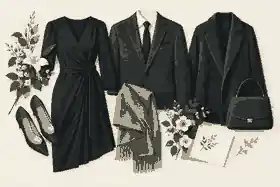
What should I wear to a funeral? Practical etiquette and support
A compassionate, practical guide to funeral attire, colors, cultural customs, outdoor clothing, children’s outfits, military services, sympathy messages and support across Australia, the UK and the US.
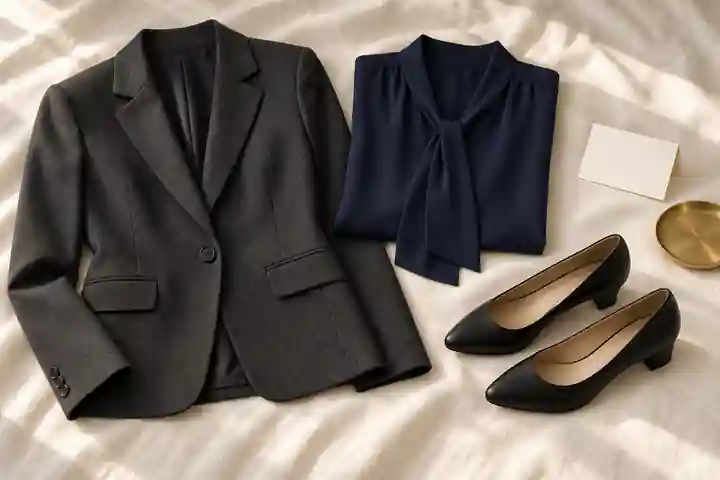
Wear clean, understated clothing that suits the family’s instructions, faith or culture, venue and weather; if no dress code is given, choose dark or muted colors, modest coverage and practical shoes. You do not usually need to wear black, buy a suit or follow gendered clothing rules: respectful presentation, practical etiquette and support for the bereaved matter more than a rigid uniform.
If you are asking, “What should I wear to a funeral?”, start with the quietest appropriate outfit you already own, then check whether the family has requested a favorite color, bright clothing, cultural dress, a uniform or a particular level of formality. Practical planning also includes sympathy messages, funeral etiquette, privacy and clear support for anyone who feels uncertain about attending.
What to wear to a funeral: the quick checklist
- Follow any request from the family, funeral director, celebrant or place of worship.
- With no instructions, choose black, navy, charcoal, dark brown or another muted color.
- Prefer clean, modest, low-contrast clothing without prominent slogans, branding or sparkle.
- Wear shoes that are safe for standing, stairs, wet grass, gravel and cemetery paths.
- Bring a plain layer for a cold chapel, air-conditioned venue or changing outdoor weather.
- Check cultural and religious expectations rather than assuming Western black clothing is universal.
- Avoid strong fragrance, noisy jewelry and accessories that require repeated adjustment.
- Do not create financial pressure by purchasing formal clothing you cannot comfortably afford.
In conventional Western services, a dark suit, simple dress, blouse with tailored pants, skirt with an understated top, or collared shirt with dark pants will generally work. This advice should be adapted rather than treated as a uniform: the family’s wishes take priority, and contemporary celebration of life planning ideas often include personal colors, relaxed venues and meaningful clothing requests.
Black, muted colors and family requests
You do not have to wear black. Black remains a reliable choice at many funerals in Australia, the United Kingdom and the United States, particularly at traditional Christian, civic and formal services, but it is not a universal requirement. Navy, charcoal, deep green, dark brown, burgundy, taupe and subdued blue can all look respectful when the overall outfit is simple.
The safest principle is not “everything must be black” but “do not make your clothing the center of attention.” Matte fabrics, quiet colors, clean lines and restrained accessories usually blend into the gathering. The Co-op Funeralcare explanation of humanist funerals shows why clothing and other personal choices may be shaped around the person’s life rather than a fixed religious script.
At a celebration of life, black may be unnecessary or expressly discouraged. The family may ask guests to wear yellow because it was the person’s favorite color, a football scarf, a floral item, a band shirt, traditional clothing or something associated with a profession or community. Humanists UK’s celebration of life advice explains that families may invite bright colors, a favorite shade, team colors or comfortable clothing.
Follow such a request thoughtfully. “Wear red” does not necessarily mean sequins and partywear; a red tie, scarf, blouse or restrained dress may fulfill the request without overwhelming the occasion. If the invitation says “no black,” choose navy, gray, brown, cream or the requested color rather than ignoring the family’s intention.
What colors can you wear besides black?
Navy and charcoal are the most dependable alternatives because they retain the formality of black without appearing identical. Deep brown, forest green, muted burgundy and dark plum can also work. Lighter neutrals such as stone, beige, cream or soft gray are more dependent on context, but they may be entirely appropriate for a daytime memorial, outdoor service, warm climate or tradition in which white and light colors carry mourning significance.
White is not automatically disrespectful. It is associated with mourning in a number of Hindu, Buddhist and East Asian communities, and it may be requested by the family. At many Western funerals, a white shirt or blouse beneath darker clothing is conventional. A head-to-toe white fashion outfit may attract attention at a Western service unless it has been requested, so ask when possible.
Bright colors are not automatically disrespectful either. They become inappropriate when they contradict clear instructions or make the wearer appear to be treating a solemn gathering as a party. Personalization is increasingly common, and the right choice depends on the person being remembered. Public memorials for Alan Rickman, Sridevi and Olivia Newton-John show how different lives can be remembered through distinctive stories, communities and identities; funeral clothing can likewise acknowledge individuality without becoming theatrical.
Choose clothing for the type of service
A traditional funeral in a church, chapel, funeral home or crematorium usually calls for smart, restrained clothing. A suit is optional for most guests, although close family members, pallbearers, speakers and people attending a formal civic or military ceremony may decide that one is appropriate. A plain jacket, sweater, cardigan or tailored coat can create a respectful impression without requiring a complete formal outfit.
A memorial service held weeks or months after a death may be less formal, especially when it takes place in a home, garden, community hall, restaurant or favorite outdoor location. The NSW Government overview of funeral and memorial service types distinguishes a funeral involving burial or cremation from a memorial service that can be held elsewhere. That distinction affects clothing: a garden memorial may require sun protection and flat shoes, while a crematorium service may suit businesslike clothing.
A wake, visitation or reception is often somewhat less formal, but it is still a bereavement gathering. Smart-casual clothing in muted colors is normally safe. If you are attending directly from work, school, a hospital or a long journey, being present is more important than achieving a perfect outfit. Make the practical adjustments you can—remove a high-visibility work layer, cover a large slogan, clean your shoes or add a plain jacket—without deciding that imperfect clothing means you should stay away.
A nonreligious service can be traditional or highly personalized. Families considering secular farewell planning may select any dress code that reflects the person, from conventional dark clothing to gardening clothes, club colors or an informal outdoor style. Read the invitation rather than assuming that “nonreligious” means casual.
A virtual funeral still deserves deliberate clothing, particularly if your camera will be on. Wear an appropriate funeral outfit, avoid visually distracting patterns and sit against a simple background. Review virtual funeral etiquette and compassionate hosting before the service so that clothing, camera position, sound and privacy are settled in advance.
Religious and cultural funeral clothing
No worldwide chart can replace instructions from the family or local faith community. Practices vary between denominations, regions, generations and individual households, even when people share a religious identity. Ask a mutual friend, funeral director, officiant or place of worship a simple question: “Is there anything guests should wear, cover or remove?”
For a Christian or church funeral, dark or subdued smart clothing remains a safe default, but different churches have different levels of formality. Some families ask for a particular color, and many churches welcome guests who are unfamiliar with worship. Covering shoulders or wearing a tie may be customary in one congregation but unnecessary in another.
For a Muslim funeral or prayers at a mosque, modesty is more important than wearing black. Choose loose, nontransparent clothing that covers the torso and generally the arms and legs. Some mosques ask women visitors to cover their hair, while local practice can vary, so bring a plain scarf and follow the hosts’ directions. The Muslim Council of Britain’s mosque visitor guidance recommends modest clothing, explains that visitors remove their shoes before entering the prayer hall and notes that women may wish to bring a scarf. Clean socks and footwear that can be removed easily are therefore practical choices.
At a Sikh funeral involving a gurdwara, both Sikh and non-Sikh visitors should expect to cover their heads and remove their shoes. Wear modest clothing suitable for sitting, often on a carpeted floor, and avoid hats associated with fashion or status when a simple scarf, turban or provided head covering is appropriate. The Kansas City Sikh gurdwara visitor instructions state that everyone must cover their head in the main gurdwara areas.
At many Hindu funerals, white or light, simple clothing is customary, but regional and family practices differ. The Hindu Temple of Delaware funeral guidance explains that northern Indian practice commonly uses white while southern regional practice may differ, reinforcing the need to follow the family rather than a generalized internet rule. Choose modest clothing, minimal adornment and shoes that can be removed if requested.
At a Jewish funeral, clothing is generally modest and respectful; black is not a religious requirement. Men may be asked to cover their heads, and some communities provide a kippah. Immediate mourners may observe practices that do not apply to ordinary guests. The Melbourne Chevra Kadisha guidance for attending a Jewish funeral explains conservative dress and common customs for visitors. Guests should follow the family and funeral staff rather than imitating a close relative’s mourning ritual.
For Buddhist funerals, clothing expectations differ greatly by cultural tradition. White, black, gray or other subdued colors may be used, while bright red can be inappropriate in some communities. For Indigenous, Pacific, African, Caribbean, East Asian and other culturally specific funerals, family and community instructions should always outrank broad assumptions. Traditional dress may be welcomed, expected, limited to community members or unsuitable when worn without understanding.
What adults can wear without relying on gender rules
Anyone can choose from the same practical categories: a suit, blazer, cardigan, sweater, dress, skirt, tailored pants, collared shirt, blouse, plain knitwear, cultural clothing or smart jumpsuit. The garment’s condition, coverage, comfort and suitability matter more than whether a fashion retailer labels it for men or women.
A simple formula is one dark base plus one quiet layer. Examples include navy pants with a pale shirt and charcoal jacket; a knee-length dark dress with a cardigan; a black sweater with gray pants; or a modest cream tunic with dark pants where lighter clothing is culturally suitable. If a tie feels appropriate, choose black, navy, gray or a subdued pattern. It is normally optional unless the family, uniform protocol or ceremony indicates otherwise.
Skirts and dresses need not meet a universal hemline rule, but they should allow comfortable sitting, standing and bending without constant adjustment. Sleeveless clothing may be acceptable in a warm secular venue, while a church or place of worship may call for an additional layer. Clothing should also respect the wearer’s disability, pregnancy, sensory needs, body size, gender expression and medical requirements.
Children, teenagers and babies
Children do not need miniature adult mourning uniforms. Choose clean, comfortable clothing in dark, neutral or requested colors, with shoes they can safely walk in. A plain sweater, polo shirt, dress, skirt, chinos, dark jeans or school-style outfit may be enough. Avoid creating conflict immediately before the funeral over a small logo, favorite comfort item or sensory-friendly garment.
Teenagers can follow the adult principles while remaining recognizable as themselves. Dark, clean jeans may be acceptable when tailored clothing is unavailable, especially at an informal service. A hoodie can work if it is plain, clean and not pulled over the face during the ceremony, although a sweater or jacket is preferable where available.
Babies should be dressed for temperature, feeding, changing and sleep. There is no need to buy black baby clothing. Pack spare clothes, and position yourself where leaving quietly will be possible. Supporting a child through the event matters more than maintaining a flawless appearance.
Outdoor, graveside and military services
Outdoor clothing should be dignified but safety-led. Check the forecast, venue surface and likely duration. Wear flat or low, stable shoes for grass and gravel, and bring a waterproof coat, umbrella, hat, sunscreen or warm layer as conditions require. Avoid heels that sink into soil and clothing that becomes transparent in rain.
Arlington National Cemetery’s attendance guidance recommends seasonally appropriate attire that respects the dignity of the occasion and footwear suitable for hard and soft surfaces. That is a useful rule for cemeteries in all three markets: practical safety is part of respect, not a departure from it.
At a United States military committal, civilian guests ordinarily wear respectful civilian clothing unless they are attending in an authorized uniform. Veterans and serving personnel should follow the regulations applicable to their status and branch rather than assembling a partial or improvised uniform. The US Department of Veterans Affairs description of military funeral honors explains the formal committal setting, including the presentation of the burial flag and the playing of Taps.
Military, police, fire, emergency-service and civic funerals may involve processions, salutes, assigned seating and longer periods outdoors. Arrive early, follow officials’ directions and keep bags and accessories manageable. If you have mobility needs, ask the organizer about drop-off points, seating and the distance between the ceremony and burial location.
Patterns, shoes, jewelry and grooming
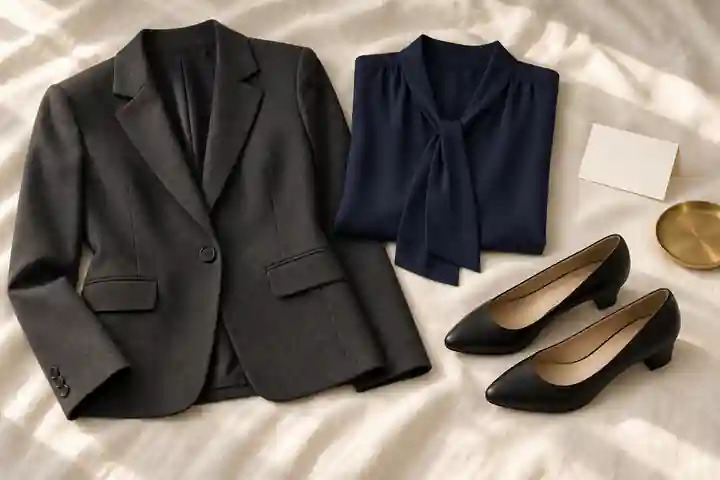
Small checks, pinstripes, tone-on-tone textures and restrained floral patterns can be appropriate. Large high-contrast florals, novelty graphics, political slogans, provocative wording and prominent commercial logos are more likely to distract. A pattern is not wrong merely because it is visible; assess whether the whole outfit feels calm or demands attention.
Shoes should be clean, safe and comfortable enough for standing and walking. Sneakers can be acceptable when they are the safest option, when the service is casual, or when disability, age, pregnancy or foot health makes formal shoes unsuitable. Dark boots, loafers, flats and simple lace-up shoes are dependable choices. Sandals may suit an outdoor warm-weather memorial but are less suitable for some places of worship and uneven cemetery ground.
Keep jewelry and accessories quiet unless a meaningful item has been requested. A person’s brooch, service pin, cultural jewelry, rainbow ribbon, flower, club badge or inherited watch can be a thoughtful tribute. Avoid accessories that jingle, flash, catch on seating or require repeated attention. Hats may be appropriate for weather, religious observance or a formal tradition, but remove them where the venue’s customs require it.
Use little or no fragrance. Close seating, asthma, migraines, medical treatment and sensory sensitivity can make strong perfume or aftershave difficult for other mourners. Grooming need only be clean and presentable; no one should feel required to conceal natural hair, tattoos, scars, mobility aids or culturally significant features to appear respectful.
What not to wear
Avoid treating the funeral as an occasion to display wealth, provoke discussion or advertise a cause unrelated to the person. Clothing that is extremely revealing, dirty, deliberately torn, covered in offensive wording or designed for nightlife will usually feel out of place unless the family has explicitly chosen an unconventional theme.
Do not wear a costume, ceremonial garment, medal, military item, clerical clothing or cultural dress to which you are not entitled. Personalization should honor the person rather than borrow another community’s identity. Likewise, do not ignore a religious requirement because it is unfamiliar; bring a scarf, remove shoes or cover shoulders when hosts request it.
Jeans are context-dependent rather than universally forbidden. Dark, clean jeans with a collared shirt, blouse, knitwear or jacket may be reasonable at a casual service or when they are the best available option. Distressed jeans, shorts and beachwear are less reliable defaults. Work clothes may also be acceptable when changing would prevent attendance, especially if you remove loose tools, dirty outerwear and high-visibility items where practical.
The largest mistake is often not a color but a decision to stay away because the available outfit feels imperfect. Unless your clothing would create a genuine disruption, quietly attending in clean, modest clothes is usually more supportive than missing the service.
Comfort, disability and financial pressure
Funerals can involve long periods of sitting, standing, walking, heat, cold and emotional strain. Wear medical footwear, compression garments, hearing devices, braces, cooling equipment, continence products or other necessary items without apology. If a garment increases pain, restricts breathing or creates a fall risk, it is not the respectful choice for you.
Grief itself can make decisions, concentration and social interaction harder. Healthdirect’s grief and loss information explains that grief can affect physical and mental health and differs for every person. The NHS bereavement guidance similarly emphasizes that grief does not necessarily follow a fixed sequence. Preparing clothing the night before, asking someone to check the dress code and traveling with a trusted person can reduce unnecessary pressure.
You do not need to purchase a new outfit. Borrowing a jacket, wearing familiar office clothing, choosing a plain inexpensive layer or using the best suitable clothes already available are all reasonable. Funeral etiquette should not become a test of income. If you are organizing the service, a sentence such as “Dark or muted smart-casual clothing is welcome; please do not buy anything new” can reassure guests.
Employment rights differ between markets. Australia’s Fair Work Ombudsman guidance on compassionate and bereavement leave explains the National Employment Standards entitlement to compassionate leave for eligible occasions. In the United Kingdom, statutory rights are narrower and include specific parental bereavement leave. In the United States, many workers need to check their employer’s policy, employment agreement and any applicable state provisions. Ask early if work schedules affect travel or clothing changes.
Helping guests by stating a dress code
Families and organizers can prevent uncertainty with one clear sentence in the funeral notice, email, text or memorial details. Useful wording includes: “Traditional dark clothing is welcome”; “Smart-casual clothing in muted colors”; “Please wear something blue”; “No black—bright colors encouraged”; “The burial is outdoors, so wear warm clothing and sturdy shoes”; or “Head coverings will be available at the gurdwara.”
Place that instruction alongside the time, venue, transportation, accessibility and livestream information. Evaheld Memorials’ advice on adding funeral details to memorial pages can help families keep updates in one place instead of relying on separate message chains.
A dress code should be an invitation, not a threat. Allow for disability, finances, work uniforms, school attendance, travel disruption, pregnancy, religious dress and people who receive the notice late. If a specific item is important, consider making it optional or providing it at the venue: colored ribbons, flowers, scarves or pins can create a shared visual tribute without forcing guests to buy clothing.
Funeral planning can be financially and emotionally demanding. In the United States, the Federal Trade Commission’s Funeral Rule guidance explains consumers’ rights to choose and pay for only the funeral goods and services they want. Clothing should follow the same humane principle: do not add unnecessary expense merely to satisfy an imagined standard.
What to say and how to offer support
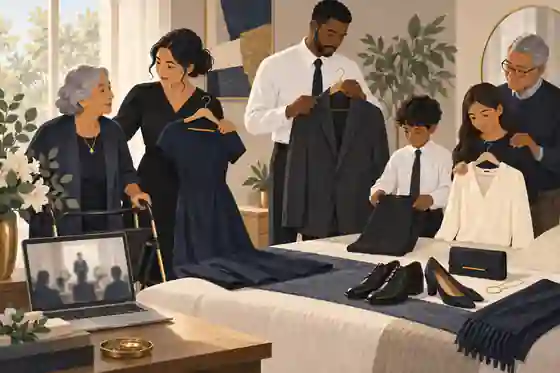
Your behavior will be remembered more than your outfit. Arrive on time, silence your phone, follow seating instructions and avoid photographing or posting without permission. A brief expression such as “I’m so sorry,” “I was grateful to know them,” or “I’m thinking of you and your family” is enough. If you knew the person, one specific, gentle memory may offer more comfort than a long speech.
Thoughtful sympathy messages should not explain the death, impose beliefs or demand a response. Avoid telling someone to be strong, suggesting that everything happens for a reason, or comparing losses before listening. If speaking feels difficult, a short written message can be left after the service; how to write a memorial tribute offers a practical structure for turning a real memory into sincere words.
Support can be concrete: offer transportation, sit with someone attending alone, bring water, help a parent with children, collect clothing from a dry cleaner or check whether an older guest needs a coat. After the funeral, practical help and continued contact matter. Evaheld Memorials’ grief support healing information can help families consider support beyond the day itself.
If the service includes a display, guests can contribute a photo, note or object when invited. Families arranging memory table planning should explain whether items will be returned, photographed or preserved. Do not place private photographs or sensitive information on a public display without permission.
Privacy and sharing after the funeral
Clothing requests, livestream links and venue details may reveal sensitive family information. Decide what belongs in a public notice and what should be shared privately. A public post may state the color theme, while the precise home address or private gathering instructions go only to invited guests.
Families choosing between private versus public online memorials should consider who can view service details, photographs and guest contributions. Evaheld Memorials also explains how tributes and condolences work and the value of keeping the memorial private until you are ready to share.
Do not upload photographs of mourners solely because their clothing matched the theme. Ask before posting identifiable images, particularly photographs of children, people in religious observance, military personnel or anyone visibly distressed. A coordinated color can be meaningful without becoming public content.

A calm final decision
If you have two possible outfits, choose the one that is cleaner, quieter, safer for the venue and less likely to need adjustment. If you have only one practical option, wear it with care. The purpose of funeral clothing is to help you enter the space respectfully, not to prove that you understand an invisible rulebook.
For organizers, communicate the dress code once, include cultural and weather information, and reassure guests that presence matters more than perfection. When your family is ready to coordinate service details, sympathy messages and shared memories with appropriate privacy, you can wear to a funeral.
Frequently asked questions
What should I wear to a funeral? Practical etiquette and support
Choose clean, modest clothing in black, navy, charcoal or another subdued color unless the family requests something different. Match the venue and weather, wear safe shoes and remember that support matters more than buying a formal outfit. celebration of life planning ideas can help when the family wants personal colors, while the Co-op Funeralcare explanation of humanist funerals shows how personal choices can be shaped around the person’s life.
Do I have to wear black to a funeral?
No. Black is traditional at many Western funerals, but navy, charcoal, brown and other muted colors are normally suitable. Follow a family request for bright clothing, team colors or a favorite shade. secular farewell planning shows how personal instructions can shape a service, and Humanists UK’s celebration of life advice includes bright and personalized dress codes.
Can I wear jeans to a funeral?
Dark, clean, non-distressed jeans may be acceptable at an informal funeral, outdoor memorial or when they are your best practical option. Pair them with a plain shirt, blouse, sweater or jacket and avoid prominent logos. virtual funeral etiquette and compassionate hosting also helps with remote attendance, while the NSW Government service overview explains why formality varies by event type and venue.
What should I wear to a Muslim funeral?
Wear modest, loose, nontransparent clothing that generally covers your arms and legs. Bring a plain scarf if prayers are at a mosque and follow local instructions about head covering and removing shoes. Families can place such instructions with adding funeral details to memorial pages, and the Muslim Council of Britain’s mosque visitor guidance recommends modest clothing and removable shoes for prayer areas.
What should I wear to a Hindu or Sikh funeral?
Simple white or light clothing is common at many Hindu funerals, although regional practice varies. At a gurdwara, modest clothing, a head covering and removable shoes are important for all visitors. how to write a memorial tribute can help with respectful words, while the Hindu Temple of Delaware funeral guidance emphasizes that family and regional dress customs should be followed.
What shoes are appropriate for a graveside funeral?
Choose stable, comfortable shoes that can manage grass, gravel, mud, stairs and extended standing. Dark flats, boots, loafers or simple lace-up shoes are dependable, while narrow heels can create a fall risk. grief support healing encourages practical care during a difficult day, and Arlington National Cemetery’s attendance guidance specifically recommends footwear suitable for hard and soft surfaces.
What should children wear to a funeral?
Children can wear clean, comfortable clothing in dark, neutral or requested colors; they do not need formal black outfits. Prioritize weather, sensory comfort and safe shoes, and allow a familiar comfort item when needed. memory table planning includes age-aware ways for children to participate, while Healthdirect’s grief and loss information explains that grief affects people in different emotional and physical ways.
What should I wear to a military funeral?
Civilians should wear dignified civilian clothing appropriate for the season and cemetery. Serving personnel and veterans should follow the uniform rules applicable to their status rather than wearing an incomplete or unauthorized uniform. private versus public online memorials can help families control ceremony information, and the US Department of Veterans Affairs military funeral overview explains the formal committal and honors process.
How should a family describe the funeral dress code?
Use one specific sentence, such as “Dark smart-casual clothing is welcome,” “Please wear something blue,” or “The burial is outdoors, so bring warm clothing and sturdy shoes.” Include exceptions for comfort, disability and finances. how tributes and condolences work can support family communication, while the Federal Trade Commission’s Funeral Rule guidance reinforces the broader value of avoiding unnecessary funeral expenses.
What if I cannot afford suitable funeral clothing?
Wear the cleanest, quietest appropriate clothing you already own, borrow an item if convenient, or combine a plain top with dark pants or a skirt. Your presence and conduct matter more than a new purchase. keeping the memorial private until you are ready to share can reduce planning pressure, and the NHS bereavement guidance offers support when grief is making everyday decisions difficult.