What should I wear to a funeral in Australia? Practical etiquette and support
A practical Australian guide to respectful funeral clothing, colours, venue etiquette, cultural considerations, sympathy messages and support for AU, UK and US readers.
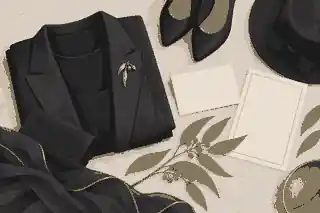
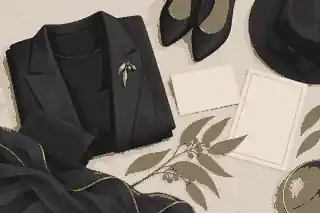
What should I wear to a funeral in Australia? Practical etiquette and support starts with restraint: choose neat, modest clothing in black, navy, charcoal, deep green, brown, burgundy or another subdued colour, then adjust for the family's wishes, the venue, the weather and the person's culture or faith. If the notice asks for bright colour, club colours, uniforms, cultural dress or casual clothing, follow that request because funeral etiquette is about respect rather than a single outfit rule.
For most Australian services, the safest answer is a dark or muted outfit that would not draw attention away from the ceremony. A suit, dress, skirt and blouse, tailored trousers, dark shirt, simple knitwear, closed shoes, a modest coat, a restrained hat or clean smart-casual layers can all be appropriate. What matters is care: clean clothing, quiet presentation, practical footwear, weather awareness and a willingness to honour the tone set by the family.
What to wear to a funeral in Australia
The phrase wear to a funeral in Australia often brings up black clothing first, but black is a convention, not a law. In many Australian funerals, black remains safe because it signals formality and mourning without explanation. Dark navy, charcoal, deep grey, muted brown, forest green and restrained burgundy are also widely accepted. White may be appropriate in some cultural or religious contexts, while bright colours may be requested for a celebration of life, a sports supporter, a child, a creative person or someone whose family wants a less sombre atmosphere.
If you are unsure, dress one level more formally than your everyday clothing. Men and masculine-presenting guests might choose dark trousers with a collared shirt, jacket or neat knit, while women and feminine-presenting guests might choose a modest dress, skirt, blouse, tailored trousers or jacket. Gender-neutral choices such as dark slacks, a simple shirt, blazer, cardigan, enclosed shoes and a coat work well. For broader clothing decisions, Evaheld Memorials keeps separate Funeral clothing etiquette for cultural traditions, outdoor venues and family requests, which is useful when the service is not a standard chapel funeral.
Australia's weather makes practicality part of respect. A summer graveside service may require breathable fabric, sun protection and shoes that can handle grass or gravel. A winter service in Tasmania, Victoria, the ACT or regional New South Wales may call for a dark coat, scarf and warm layers. Tropical heat in Queensland or the Northern Territory may make a lightweight dark linen shirt more respectful than heavy formalwear that leaves you visibly uncomfortable. The Australian Government's Bureau of Meteorology is worth checking before an outdoor service because heat, rain, wind and fire-weather conditions can change quickly.
Black, colour and family requests
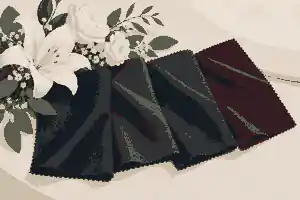
You do not always have to wear black. Black is the least risky choice for a traditional Australian funeral, yet respectful colours besides black are common. Navy, charcoal, grey, deep blue, bottle green, plum, dark brown and subdued patterns can all be suitable if they look calm rather than celebratory. Avoid fluorescent colour, loud prints, novelty slogans, very revealing clothing, beachwear, activewear, thongs, dirty shoes, clubwear or anything designed to be noticed unless the family has specifically asked for it.
The most reliable source is the funeral notice, family message, celebrant, funeral director or service livestream page. Some families write instructions such as no black, please wear a touch of yellow, garden party attire, club colours welcome, uniform optional, or bright colours for a celebration of life. Those requests override generic rules. When colour is specifically requested, you can still keep the shape and finish of the outfit respectful: a blue tie, a floral scarf, a favourite-team pin or a coloured blouse can acknowledge the request without turning the service into a costume event. Families considering these choices often find funeral colors besides black etiquette for respectful services helpful, even though Australian copy should use colour in local spelling.
For government and venue expectations, funeral customs vary more than many articles admit. New South Wales explains that families may organise services in different settings, including religious, non-religious, graveside and memorial options, and the NSW guidance on different types of services is a reminder that clothing should fit the actual setting, not just the word funeral. A chapel service, church mass, mosque prayer, synagogue service, crematorium gathering, surf-club farewell, RSL service, backyard memorial and livestream-only memorial can all require different judgement.
Culture, faith and Australian diversity
Australia is not culturally uniform, so a single outfit rule will fail some families. The Australian Bureau of Statistics cultural diversity data shows why funeral practice in Australia often reflects many ancestries, languages and religions. Some families expect black or subdued formal dress; some use white, cream or other mourning colours; some prefer covered shoulders, longer hems or head coverings; some may ask guests to remove shoes; some may discourage leather; and some will want clothing connected to military service, sporting life, Country, faith community or cultural identity.
If you do not know the custom, ask quietly. A simple message such as, Is there anything I should know about dress or protocol for the service? is usually welcomed. Do not ask the closest bereaved person if another relative, celebrant or funeral director can answer. The aim is to reduce the family's emotional labour. If you make a mistake, do not make the mistake the centre of attention; behave respectfully, sit quietly and follow cues.
For Aboriginal and Torres Strait Islander families, avoid assumptions. Some communities may have specific sorry business protocols, image and name sensitivities, kinship expectations or local practices. If you are distressed, Aboriginal and Torres Strait Islander people can contact 13YARN crisis support; non-Indigenous guests should use that source as a reminder to approach cultural matters with humility and not treat all First Nations funerals as the same.
Venue-specific clothing choices
A church, temple, mosque, synagogue or other faith venue usually calls for modesty. Covered shoulders, longer hemlines, understated jewellery and clean enclosed shoes are sensible. A crematorium chapel may be slightly less formal, but neat clothing is still expected. A graveside burial needs shoes that are safe on grass, gravel, uneven ground or wet soil. A beach, garden or rural property farewell can be less formal but should still look intentional. If you are attending a viewing, wake or gathering before the service, clothing should be quiet and respectful unless the family has clearly set a relaxed tone.
Funeral directors, cemeteries and crematoria may have practical rules about timing, seating, flowers, vehicles and procession areas. The Australian Competition and Consumer Commission's information on funeral services is mainly about consumer rights and pricing, but it also reflects a broader truth: funeral arrangements involve practical decisions as well as emotion. Clothing should help you move through those arrangements calmly, not create avoidable discomfort.
When service details are online, check them before choosing your outfit. Location, start time, livestream link, burial or cremation details, refreshment plans and family instructions may all affect clothing. Evaheld Memorials explains how to add funeral details to memorial pages, including details that can prevent guests from arriving overdressed, underdressed or at the wrong location.
Clothing for virtual, livestreamed and hybrid funerals
Virtual attendance still deserves care. If your camera is on, dress as though you are sitting in the back rows of the service: dark or muted clothing, neat hair, no distracting slogans and a quiet background. If your camera is off because of bandwidth, illness, caregiving or time-zone constraints, dressing respectfully can still help you enter the moment with intention. A hybrid service may include in-person guests, remote relatives and recorded tributes, so avoid anything visually distracting on camera.
For virtual attendance, practical etiquette matters as much as clothing. Mute your microphone, join early, use your real name where appropriate, avoid screenshots unless invited, and do not comment casually in chat. Evaheld Memorials' virtual funeral etiquette and compassionate hosting support can help guests and organisers handle technology without losing the dignity of the farewell.
For readers in the United Kingdom and United States, the clothing principles are similar but the administrative environment differs. The UK Government explains practical steps for arranging a funeral after a death, while the United States has a consumer-protection framework through the Federal Trade Commission's Funeral Rule. Those sources do not prescribe clothing, but they show why funeral planning language, consumer rights and service formats differ by country. Australian readers should treat Australian family instructions and local venue rules as primary.
What not to wear
Avoid clothing that shifts attention to you. That includes very bright clothing unless invited, noisy accessories, strong perfume, novelty ties, political slogans, beach thongs, athletic gear, ripped or dirty clothing, revealing cuts, nightclub styling, hats that block views indoors, and shoes that will sink into wet ground. Jewellery can be personal, but keep it quiet unless it has meaningful connection to the person who died. If a uniform is relevant, confirm whether full dress, medals or a small badge is expected; ceremonial uniforms can carry protocol.
Children do not need adult formality, but they should look cared for. A dark school uniform, neat trousers, a simple dress, cardigan, clean shoes or a muted shirt is usually enough. Babies need comfort, spare clothes and weather-appropriate layers. Teenagers may need gentle guidance: respectful does not mean pretending grief is easy, but it does mean avoiding outfits designed to challenge the room.
If you are travelling interstate, pack one outfit that can flex. A dark jacket, subdued shirt or blouse, neat trousers, modest dress, comfortable shoes and a small colour accent can work across most services. If the notice later requests colour, add a scarf, tie, flower pin or ribbon. If the service becomes more formal, the jacket and dark shoes help.
What to say, bring and do
Clothing is only one part of funeral etiquette. Short, sincere sympathy messages are usually better than long explanations. You might say, I am so sorry for your loss, I am grateful I could be here, or I remember how kind she was to me. Avoid statements that explain grief away, such as everything happens for a reason. Evaheld Memorials offers what to say when someone dies practical sympathy messages for guests who are worried about getting the words wrong.
If you bring a card, keep it simple and specific. A handwritten note can mean more than a polished paragraph. Mention one memory, one quality, or one practical offer if you can genuinely follow through. For wording support, sympathy card wording etiquette for bereaved families gives examples that suit a card, text message or memorial tribute.
Do not arrive late if you can avoid it. Turn your phone to silent. Sit where ushers direct you. Let close family leave first unless asked otherwise. At a wake, do not overstay if the family looks tired. If food is served, follow the tone of the room. If donations are requested instead of flowers, respect that choice. If photographs are not invited, do not take them. The Australian Government's what to do following a death information also shows how many administrative burdens families may be carrying, so a calm guest is a real support.
Planning for grief and support
Many people search for what to wear because clothing feels controllable when grief does not. That is normal. If you are close to the person who died, choose an outfit the day before if possible, lay it out, pack tissues, water, medication, a charger and anything the family asked you to bring. If grief feels physically overwhelming, ask someone to travel with you. Healthdirect's Australian overview of grief and loss explains that grief can affect emotions, sleep, appetite and concentration, which is why simple preparation matters.
If you are supporting someone bereaved, practical help is often more useful than perfect words. Offer a lift, bring a meal, check the service notice, help with childcare, take notes from the celebrant if invited, or quietly coordinate guests. Lifeline's information on grief and loss support is appropriate for Australians needing immediate emotional support, and Beyond Blue's grief and loss guidance can help families recognise when extra mental-health support may be needed.
Evaheld Memorials also keeps grief support healing resources for the weeks after the funeral, because the day of the service is rarely the end of practical or emotional care. In the United Kingdom, the NHS gives a clear explanation of grief after bereavement or loss, while United States readers can begin with USA.gov's practical page on what to do when a loved one dies. These differences matter: clothing etiquette is broadly similar, but support systems, paperwork and funeral consumer rules differ.
Personal remembrance without distracting from the service
A small personal touch can be appropriate if it honours the person rather than attracting attention. You might wear a quiet brooch they gave you, a tie in their favourite subdued colour, a scarf connected to their community, a lapel pin for a cause, or a flower requested by the family. At public memorials, clothing sometimes becomes part of collective remembrance. Australians remember Olivia Newton-John for warmth, advocacy and music, Steve Irwin for a distinctive outdoor life and conservation legacy, and Queen Elizabeth II for formal public service; each example shows that tone, setting and life story shape remembrance differently.
If the family creates a tribute table, memory wall or online memorial, your clothing may be less important than your contribution. A photograph, short story, condolence or memory can help the family see the fuller shape of the life being honoured. Evaheld Memorials explains celebration of life ideas when a farewell is intentionally personal rather than strictly traditional.
For families setting up a memorial space, start with the details that guests need: name, dates, service time, venue, livestream link if any, dress request, donation request, and privacy choice. Evaheld Memorials explains what information you need to start a memorial, and the same preparation helps families word dress instructions clearly. Guests can then respond with care, and families can receive memories in one place through how tributes and condolences work.
A practical outfit checklist
Before you leave, ask five questions. First, did the family request anything specific? Second, does my clothing suit the venue and weather? Third, can I sit, stand, walk and possibly travel to a graveside without difficulty? Fourth, will my outfit photograph respectfully if the service is recorded or livestreamed? Fifth, does my choice help me support the family without becoming the focus? If the answer is yes, the outfit is probably appropriate.
For Australia, a safe default is dark, clean, modest and practical. For the United Kingdom, the same dark-formal default usually works, with close attention to church, crematorium or family instructions. For the United States, black or dark clothing is also common, but regional, religious, military and celebration-of-life customs vary widely. The US Centers for Disease Control and Prevention describes healthy ways to cope with stress; that is relevant because funerals often combine grief, travel, family pressure and practical decisions. The best clothing choice reduces one small source of stress.
If you are a guest, focus on quiet respect. If you are the organiser, write dress guidance plainly: Traditional dark clothing welcome, Please wear a touch of blue, Outdoor service on grass, comfortable shoes recommended, or Cultural dress welcome. If a family needs one calm place to share those details, photos and condolences, Evaheld Memorials can help with wear to a funeral in australia as part of a wider memorial and service-information page.

Frequently asked questions
What should I wear to a funeral in Australia? Practical etiquette and support
Wear clean, modest, subdued clothing unless the family requests something different. Dark suits, dresses, tailored trousers, collared shirts, simple knitwear and practical shoes usually work, and Funeral clothing etiquette for cultural traditions, outdoor venues and family requests can help you adjust for venue, culture and weather. For Australian service types, the NSW Government explains different types of services.
Do I have to wear black to an Australian funeral?
No, black is common but not compulsory. Navy, charcoal, grey, deep green, brown and other restrained colours can be appropriate, and funeral colors besides black etiquette for respectful services explains how to choose alternatives without distracting from the farewell. The Australian Bureau of Statistics cultural diversity data also shows why mourning customs can vary across families.
What should I wear to a summer funeral in Australia?
Choose breathable, neat clothing in muted colours: a lightweight dark dress, linen-blend trousers, collared shirt, modest skirt, jacket you can remove, and shoes suitable for grass or gravel. If the family shares service details online through how to add funeral details to memorial pages, check the venue and timing before dressing. The Bureau of Meteorology can help you prepare for heat, rain or wind.
What should I wear to a virtual funeral?
Dress as though you are attending quietly in person if your camera may be on: dark or muted top, tidy hair, no slogans and a calm background. virtual funeral etiquette and compassionate hosting also covers chat, muting, privacy and remote attendance. The UK Government's arranging a funeral after a death page shows how funeral arrangements can include several practical decisions beyond dress.
What should I say to the family at a funeral?
Keep it brief and sincere: I am so sorry, I am grateful I could be here, or I remember their kindness. If words feel difficult, what to say when someone dies practical sympathy messages offers calm examples. Services Australia's what to do following a death information is a useful reminder that bereaved families may also be handling paperwork and benefits.
Should I bring a sympathy card?
A short handwritten card is often appreciated, especially when it includes one specific memory or a simple expression of care. sympathy card wording etiquette for bereaved families can help you avoid phrases that minimise grief. If the loss is affecting your own wellbeing, Lifeline provides grief and loss support.
What should children wear to a funeral?
Children should be comfortable, clean and subdued rather than dressed like small adults. A school uniform, dark trousers, simple dress, cardigan or neat shoes is usually enough, and celebration of life ideas may help when the service is more personal or relaxed. Beyond Blue explains grief and loss guidance that can also support families talking with children.
What if the family asks guests to wear bright colours?
Follow the request, but keep the outfit respectful in shape, coverage and presentation. A coloured scarf, tie, blouse, ribbon or favourite-team accent can be enough if you feel unsure, and what information you need to start a memorial can help organisers write dress instructions clearly. The ACCC's information on funeral services shows how many practical choices sit around a funeral.
How can guests support the family after the service?
Offer practical help, share a memory, send a card, bring food if appropriate, or contribute a thoughtful condolence. how tributes and condolences work explains how families can receive messages in one place after the day itself. The NHS has clear information on grief after bereavement or loss.
Are funeral clothing rules different in the UK and US?
The broad rule is similar: dress neatly, modestly and according to family instructions, but administrative systems and local customs differ. grief support healing can help families think beyond the service day, while the FTC's Funeral Rule explains US funeral consumer protections that do not apply in Australia or the UK.