What should families compare before choosing an online memorial site? Features, privacy and family fit
A practical Evaheld Memorials article that answers “What should families compare before choosing an online memorial site?”, explains compare before choosing an online memorial site, shows what to include, avoids common mistakes and helps families plan features, privacy and family fit.

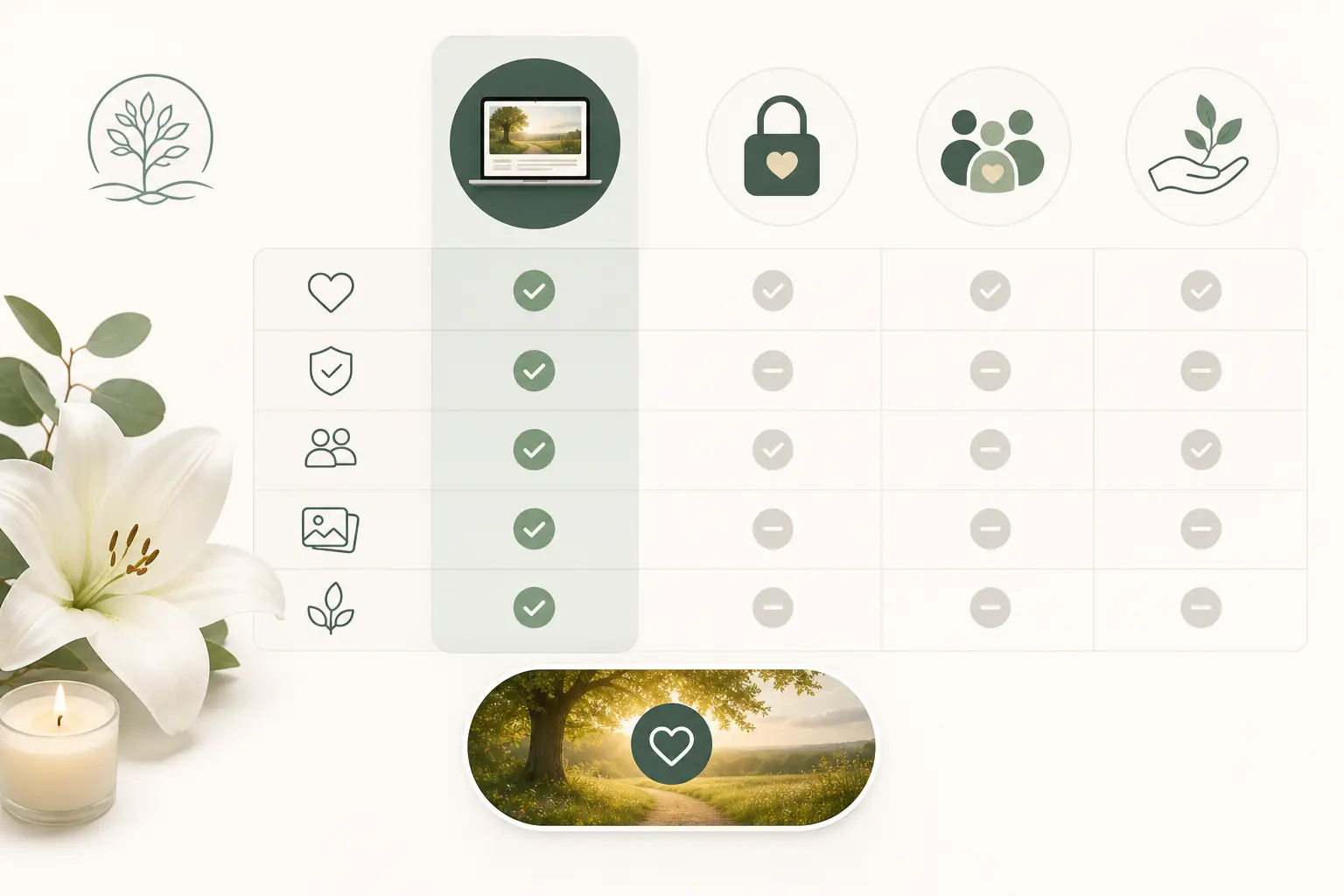
Families should compare features, privacy settings, ease of use, pricing, long-term access, family contribution tools, support, design quality and export or update options before choosing an online memorial site. A practical way to compare before choosing an online memorial site is to ask: will this platform help us create a respectful tribute, keep memories secure, invite the right people, and make changes over time without adding stress?
Online memorials can become a shared place for stories, photos, messages, funeral details, family history and remembrance rituals. The best choice is rarely about the longest feature list alone. It is about family fit: who will manage the page, who will contribute, what should remain private, whether the design feels calm and dignified, and whether the platform supports the way your family wants to remember someone.
Direct answer: What should families compare before choosing an online memorial site?
Before choosing a memorial website, compare the platform’s purpose, privacy controls, invitation options, content tools, guestbook features, storage limits, pricing, account security, customer support and long-term access. If family members are in different countries or generations, also check whether the site is simple enough for less technical users and flexible enough for photos, written tributes, voice notes, videos and updates.
A useful comparison should include both practical and emotional criteria. Practical criteria include whether the site has clear pricing, secure account access, easy sharing and reliable editing. Emotional criteria include whether the page feels warm rather than cluttered, whether contributors can participate gently, and whether the memorial can reflect the person’s life rather than a generic template. If you are comparing broader options, you may also find it helpful to read Evaheld Memorials’ guide to the compare online memorial websites and its overview of the top digital memorial platforms.
What it means to compare before choosing an online memorial site
To compare before choosing an online memorial site means looking beyond the first page of search results and assessing whether a platform can support your family’s remembrance needs now and later. Some families need a simple tribute page with photos and a guestbook. Others need a more organised memorial planning space where memories, instructions, messages and wishes can sit together in one place.
It also means considering digital preservation. The Library of Congress offers practical guidance on personal digital archiving, including the importance of organising files and keeping meaningful digital materials accessible. The U.S. National Archives also provides helpful advice on preserving family archives, which is relevant when you are gathering photographs, letters, documents and stories for an online memorial.
For many families, the comparison stage is also a privacy conversation. Memorial pages may include names, dates, images, family relationships and personal stories. Australian readers can review the Office of the Australian Information Commissioner’s guidance on privacy rights, while U.K. readers may find the Information Commissioner’s Office guidance for the public on personal information rights useful. Legal requirements vary by country, state and territory, so formal documents should be checked against local rules or reviewed by a qualified professional where needed.
When to compare before choosing an online memorial site
It is worth comparing platforms before you publish anything publicly, before you invite a large number of contributors, and before you upload sensitive family material. If a death has just occurred, you may need a quick, calm option that can be updated later. If you are planning ahead, you may have more time to compare user friendly online memorials, clean design memorial sites, privacy settings and online memorial pricing.
You should also compare options when responsibilities are shared across family members. One person may be arranging funeral details, another gathering photographs, and another writing the life story. A platform that supports shared contributions and clear permissions can prevent confusion. Evaheld Memorials’ guide to the easiest online memorial builders may help if simplicity is a priority.
Comparison is especially important when the memorial may include future updates, anniversary messages, cultural traditions, funeral instructions or digital legacy details. Evaheld Memorials provides a digital legacy vault for organising related wishes and information, but it should sit alongside, not replace, formal legal, financial or estate-planning advice where that advice is needed.
What to include when you compare before choosing an online memorial site
A thoughtful comparison should include the features that matter to your family, not just the features that sound impressive. Use this checklist as a starting point:
- Privacy and visibility: Can the page be public, private or invitation-only?
- Permissions: Can trusted people contribute without everyone having full control?
- Content types: Can you add photos, videos, written stories, voice recordings, guestbook messages and service details?
- Ease of use: Can older relatives and less confident users contribute without difficulty?
- Design: Does the page feel respectful, uncluttered and easy to read?
- Security: Are there sensible account protections and clear login processes?
- Pricing: Are free and paid options explained clearly, including any renewal or storage limits?
- Support: Is help available if something goes wrong or a family member needs guidance?
- Editing and updates: Can you change details, add memories or adjust sharing later?
- Long-term access: Does the platform explain how memorial content remains available over time?
Security should be part of the comparison. The Australian Cyber Security Centre explains why multi-factor authentication can help protect accounts, and its guidance on password managers can be useful for families managing shared responsibilities. The U.S. Cybersecurity and Infrastructure Security Agency’s Secure Our World guidance also encourages simple protective habits such as strong passwords and software updates.
If you would like to review the practical tools available in one place, Evaheld Memorials outlines its online memorial features, including ways to organise tribute content and share access with trusted people.
Step-by-step instructions to compare before choosing an online memorial site
- Define the memorial’s purpose. Decide whether you need a simple tribute page, a funeral notice, an ongoing remembrance space, or a broader planning and legacy hub.
- List the people involved. Note who will manage the page, who may contribute, and who should only be able to view it.
- Sort content by sensitivity. Separate public memories from private messages, family instructions, personal documents or contact details.
- Check privacy and permission settings. Look for clear controls before uploading anything sensitive.
- Compare free vs paid online memorials. Consider storage, support, design options, ads, privacy features and whether ongoing access is included.
- Test the user experience. If possible, ask a less technical relative to review the process and tell you whether it feels manageable.
- Review support and help resources. Look for plain-language guidance, FAQs and ways to ask questions.
- Confirm update options. Make sure you can add anniversaries, new photos, corrected details or additional memories later.
- Discuss responsibilities. Agree who will approve contributions, respond to messages and maintain the memorial.
- Choose the platform that feels sustainable. The right platform should reduce emotional and administrative load, not create more of it.
For privacy and scam awareness, the U.S. Federal Trade Commission provides guidance on protecting your privacy online and recognising phishing scams. These are useful reminders when inviting contributors, opening shared emails, or clicking links related to memorial pages.

Practical tips for families
Start small. A memorial page does not need to be perfect before it is meaningful. You might begin with a short life summary, a favourite photograph, service information if appropriate, and a simple invitation for close family to share memories. Over time, you can add more stories, music, milestones, messages and images.
Use a shared decision-making approach where possible. A clean design memorial sites review may help you narrow options, but family comfort matters too. Ask whether the platform feels dignified, whether the tone suits the person being remembered, and whether it supports cultural, spiritual or personal preferences. If there are disagreements about what to publish, keep sensitive material private until everyone has had time to consider it.
Be careful with image and document quality. The Digital Preservation Coalition’s Digital Preservation Handbook explains the broader importance of preserving digital materials thoughtfully. For families, that may mean saving original files, naming folders clearly, avoiding repeated compression of photos, and keeping a separate backup of irreplaceable items.
When reviewing platform features, look for practical support rather than pressure. Evaheld Memorials includes resources on memorial support questions, and families can also compare online memorial plans before deciding what level of support suits them.
Common mistakes
One common mistake is choosing a site too quickly because it appears first in search results or has the most polished homepage. Search visibility does not guarantee the best fit. Another mistake is focusing only on price. Free vs paid online memorials can both be suitable, but families should understand what is included, what may change later, and whether the platform supports privacy, updates and long-term access.
Families also sometimes publish more personal information than they intended. Memorials can be loving and generous without revealing private addresses, financial details, identity documents, medical information or family conflict. Australia’s eSafety Commissioner offers accessible guidance on online privacy, which can help families think carefully before sharing personal details.
Another mistake is not planning who will manage the page. Without a clear organiser, guestbook messages may go unanswered, incorrect details may remain visible, or several people may make conflicting edits. A simple agreement can prevent stress: one primary manager, one backup, and a shared understanding of what should be public, private or reviewed before posting.
What not to do
Do not upload sensitive documents to a memorial site unless you understand who can see them, how they are protected, and whether the platform is intended for that kind of storage. Do not publish private family disputes, unconfirmed cause-of-death details, financial information, passwords, account numbers or legal instructions that need formal handling. Memorial pages can support remembrance and organisation, but they are not a substitute for wills, probate processes, legal advice, medical advice, counselling or official record-keeping.
Do not rely on one person’s memory for important details. Names, dates, service times, relationship descriptions and cultural protocols should be checked. If the memorial connects to estate or account access issues, rules can vary significantly. The Uniform Law Commission provides information about the Revised Uniform Fiduciary Access to Digital Assets Act in the U.S., while major technology providers have their own processes, such as Apple’s guidance on Legacy Contact and Google’s Inactive Account Manager. These tools are separate from memorial websites but may be relevant to broader digital legacy planning.
Do not share login details casually. If several relatives need access, use proper invitation or permission tools where available. The National Institute of Standards and Technology’s digital identity guidance, including authentication recommendations, reinforces the importance of protecting accounts rather than treating passwords as informal family notes.
How Evaheld Memorials helps you compare before choosing an online memorial site
Evaheld Memorials is designed to help families create, complete, store, update and share memorial content in an organised way. Rather than scattering memories across text messages, social media posts, cloud folders and printed notes, families can bring tribute pages, photos, guestbook contributions, messages, wishes and instructions into one practical experience.
This does not mean Evaheld Memorials is the only suitable option for every family. Some families may prefer manual notes, a funeral director’s page, a private family archive, a lawyer-supported estate plan, cloud storage, printed albums or official government processes. The value of Evaheld Memorials is that it gives families a dedicated memorial planning layer: a place where remembrance content can be gathered, refined, updated and shared with trusted people when appropriate.
If you are ready to begin, you can create a memorial page, review the available online memorial features, compare online memorial plans, and explore plans for secure digital remembrance pages. Create a secure Evaheld Memorials page for compare before choosing an online memorial site, then update it over time and share it with trusted people when ready.

Final checklist
Before you choose a platform, pause and check the essentials. Can your family understand the site easily? Can you control who sees and contributes to the memorial? Does the design feel respectful? Are pricing and support clear? Can you update the page later? Are sensitive materials protected or kept elsewhere? Have you agreed who will manage the memorial and what should be reviewed before publishing?
A good comparison gives your family confidence without rushing grief. The right online memorial site should make remembrance easier, not more complicated. By comparing privacy, features, pricing, security, family access and long-term usefulness, you can choose a platform that supports both immediate needs and continuing remembrance with care.
FAQs about compare before choosing an online memorial site
What should families compare before choosing an online memorial site?
Families should compare features, privacy settings, ease of use, pricing, long-term access, family contribution tools, support, design quality and export or update options before choosing an online memorial site. A practical way to compare before choosing an online memorial site is to ask: will this platform help us create a respectful tribute, keep memories secure, invite the right people, and make changes over time without adding stress?
Families should compare privacy controls, ease of use, pricing, photo and story features, guestbook options, update access, long-term storage, support and sharing permissions. Evaheld Memorials explains key options on its online memorial features page, while the Library of Congress offers helpful guidance on personal digital archiving.
How can an online tribute feel personal and respectful?
It means looking beyond appearance and checking how well a platform will help your family preserve memories, invite contributions, manage permissions and make updates over time. You can review Evaheld Memorials’ create memorial page guidance alongside the National Archives’ advice on preserving family archives.
When should a family create or review the memorial?
Compare options before publishing a tribute, inviting wider family contributions or uploading sensitive photos and messages. If you are unsure what level of access is appropriate, Evaheld Memorials’ memorial support questions may help, and Australia’s OAIC explains practical privacy rights.
Who should manage the page and approve contributions?
Include a checklist for pricing, privacy, design, guestbook moderation, media uploads, download options, account access, family roles and support. Evaheld Memorials’ online memorial plans page can help you compare costs, while the FTC provides useful advice on protecting your privacy online.
What content belongs on the memorial page?
List your family’s needs, shortlist platforms, test ease of use, review privacy settings, check pricing, confirm update access and decide who can contribute. You can start with Evaheld Memorials’ guide to the easiest online memorial builders, then review CISA’s Secure Our World guidance for account safety basics.
How can families control privacy and sharing?
Common mistakes include choosing only on price, overlooking privacy, assuming all family members can contribute easily, and not checking how updates work later. Evaheld Memorials compares broader options in its compare online memorial websites guide, and the Digital Preservation Coalition explains long-term risks in its digital preservation handbook.
Which account details and backups should be retained?
Avoid uploading sensitive information before checking permissions, relying on one person’s login only, or choosing a platform that relatives find difficult to use. Evaheld Memorials’ digital legacy vault information may help you organise access, and the Australian Cyber Security Centre explains password manager safety.
How can relatives contribute safely?
Privacy and permissions determine who can view, comment, upload memories, receive updates or help manage the page. Evaheld Memorials outlines sharing considerations on its features page, while the UK ICO provides plain-English guidance on public privacy rights.
What common online memorial mistakes should families avoid?
Evaheld Memorials helps families create, complete, store, update and share memorial pages, photos, messages, guestbook contributions and wishes in one organised place. When you are ready, you can compare before choosing an online memorial site, and eSafety offers extra advice on online privacy.
How does Evaheld Memorials support long-term preservation?
Before publishing, check spelling, dates, permissions for photos, guestbook settings, family access, sensitive details and whether key relatives are comfortable with the page. Evaheld Memorials’ top digital memorial platforms guide may help, and Google explains options for inactive account planning.
If your family is ready to begin, create a free Evaheld Memorials page and add memories, photos and tributes at your own pace.