What are digital inheritance platforms? Privacy, access and family planning
A practical guide to digital inheritance platforms, privacy, trusted access, digital assets and family planning for Australian, UK and US families.
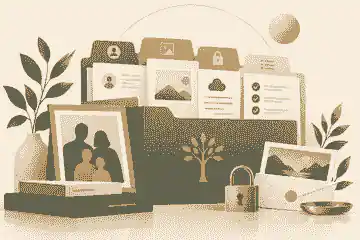
Digital inheritance platforms are tools, workflows or secured services that help a person organise digital assets, account instructions, private files, access wishes and family memories so the right people know what to do after death or incapacity. Good planning balances privacy, access and family planning: it protects sensitive information now while giving authorised people clear, lawful and practical instructions later.
The phrase can sound technical, but the family problem is simple. Modern life is spread across phones, cloud storage, email, subscriptions, social media, password managers, digital wallets, photographs, videos, documents and private messages. If nobody knows what exists, what should be preserved, what should be closed and who is allowed to act, relatives may face locked accounts, missing memories, unpaid subscriptions, identity risk and unnecessary conflict at the same time as grief.
A digital inheritance plan is not the same thing as publishing a tribute. It sits beside estate documents, funeral wishes and remembrance choices. For the memory side, families often start with digital memories and social media guidance so photos, videos and posts are protected before anyone decides what should be shared publicly. For the access side, they decide who can see a password manager emergency kit, who can contact platforms, who can handle subscriptions and who can maintain a memorial space. Used well, digital legacy planning can include private vaults, trusted people and clear family instructions without turning a memorial into a storage place for secrets.
What digital inheritance platforms should actually do
The best digital inheritance platforms do not simply store passwords. They create a controlled map of a person’s digital life. That map should include where important accounts live, which accounts contain financial value, which accounts contain family memories, which files are private, which files can be shared, which subscriptions should be cancelled, which records may be needed by an executor, and which people should be contacted before anything is deleted.
Apple’s official Legacy Contact process shows why this matters: a nominated contact may need both an access key and a death certificate, and some data such as purchased media or iCloud Keychain passwords is not available through that route. Google’s Inactive Account Manager takes a different approach by letting a user nominate trusted contacts, choose waiting periods and select which account data may be shared after inactivity. Microsoft’s deceased account access guidance is stricter again: without credentials, families may need legal authority, and personal email or cloud contents are not simply handed over on request.
These examples show a practical rule for every family: do not assume that a death certificate alone unlocks a digital life. Each provider has its own process, terms and limits. A platform can help organise the plan, but it cannot override law, contracts, privacy rights or platform rules.
Families should separate digital inheritance into five groups. First are access records: email, phone passcodes, password manager emergency options, recovery emails, two-factor authentication methods and device locations. Second are financial and contractual accounts: banking portals, superannuation or pension information, PayPal, subscriptions, domain names, online stores, paid software and digital assets with tax consequences. The US IRS explains that for tax purposes digital assets can include cryptocurrency, stablecoins and NFTs, so crypto records need particular care. Third are memory assets: photos, videos, voice notes, playlists, writings, saved posts, family history files and personal messages. Fourth are public presence accounts: social media profiles, websites, creator accounts, newsletters and communities. Fifth are private or sensitive materials that may need to be preserved for legal reasons but never published.
That separation helps avoid the most common mistake: giving one person unrestricted access to everything because the family is afraid something will be lost. A better plan gives the executor or legal personal representative the records they need, gives a trusted technical helper enough context to assist, and gives the family a respectful way to preserve memories without exposing private information.
Privacy, trusted access and lawful authority
Privacy has to come before convenience. A digital inheritance platform should never encourage families to publish passwords, share a single login among relatives or bypass platform rules. The UK National Cyber Security Centre explains that password managers support unique passwords and safer access, but the family still needs to decide how emergency access will be handled and who is genuinely trustworthy.
In Australia, the OAIC notes that personal information includes material that can identify a person, including photographs, addresses, biometric information and location information. It also notes that the Privacy Act does not cover the personal information of someone who has died, which can surprise families. That does not mean anything should be shared freely. Living people may appear in images, private messages may involve others, and health, financial or relationship details can still cause harm if published without care.
In the United Kingdom, probate is the formal legal right to deal with someone’s estate, and GOV.UK explains that probate may be needed before dealing with property, money and possessions. Digital files are not always treated as property in a simple way, but executors still need authority, records and caution before acting. In the United States, the Uniform Law Commission’s Revised Fiduciary Access to Digital Assets Act has influenced many state laws by addressing how fiduciaries may access digital assets, but state adoption and platform terms still matter. In Australia, state and territory succession rules apply, and practical after-death steps often begin with the death certificate, executor, bank, solicitor or public trustee rather than the platform itself.
For memorial content, the privacy question is different. A memorial can be deeply meaningful without revealing sensitive estate information. Families weighing public and invited-only remembrance should review private versus public online memorials before they upload personal stories, children’s images, health details or funeral logistics. The right answer may change over time: some families begin privately, then share selected memories once wording, images and permissions feel settled.
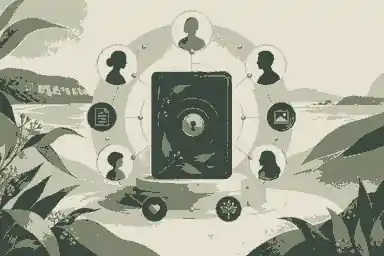
The best access model is layered. The owner creates a private inventory. A solicitor, executor or appointed person knows where the plan is stored. A trusted technical helper may be named for devices, password manager recovery or cloud exports. A memorial organiser may handle stories, photographs and tributes. Those roles can overlap, but they should not be assumed. Shared passwords are weaker than shared permissions, and clear roles are kinder than leaving relatives to negotiate access in the days after a death. For wider administration, legal and administrative steps overview can help families separate formal estate tasks from remembrance decisions.
What to include in a digital inheritance plan
Start with an inventory, not passwords. Record the account provider, purpose, username or recovery email, whether the account has financial value, whether it contains family memories, what should happen to it and who is authorised to act. Then store any sensitive access details in a safer location, such as a password manager, sealed estate instruction, solicitor-held document or secured vault, rather than in the inventory itself.
A useful plan includes email accounts, phone and computer access, password manager emergency settings, cloud storage, photo libraries, social media, subscriptions, utilities, banking portals, investment platforms, superannuation or pension portals, crypto wallets, domain names, website hosting, creator platforms, marketplace accounts, genealogy services, private notes, scanned documents and memorial materials. It should also include the recovery chain. If the main email account is needed to reset every other password, and the phone is needed for two-factor authentication, the plan must explain that dependency.
The Library of Congress personal digital archiving advice is useful here because it treats preservation as an active decision, not a passive hope that files will survive. The US National Archives also gives practical family archive preservation guidance, which reinforces the importance of organising and protecting records before they deteriorate, disappear or lose context.
For remembrance, do not try to preserve everything in the public memorial. Start with the person’s name, dates, story, key photos, service details if relevant and room for tributes. Evaheld Memorials has a practical online memorial inclusion checklist that helps families decide what belongs in a shared tribute and what should stay private. If relatives are adding memories, inviting family and friends to help build the memorial works best when the organiser has already decided which folders, captions and permissions are ready.
Some digital materials have emotional importance beyond their legal status. A voice note, unfinished letter, old recipe, captioned photograph or playlist may not be valuable in money terms, but it may be irreplaceable to the family. A digital inheritance platform should allow those items to be flagged separately from bills, tax records and account closures.
Australia, United Kingdom and United States differences
The core planning habit is similar in Australia, the United Kingdom and the United States: write down what exists, decide who can act, protect credentials, respect platform rules, preserve memories and seek legal advice for estate authority. The differences sit in terminology, procedure and legal authority.
In Australia, practical after-death administration often moves through state or territory registration, death certificates, banks, superannuation funds, Services Australia or equivalent agencies, solicitors and public trustees. NSW Government’s after a death guidance explains that locating the will, organising a funeral or memorial service, applying for a death certificate and identifying accounts and memberships may all become part of the process. Families should check their own state or territory and not assume that one national checklist covers every local requirement.
In the United Kingdom, GOV.UK’s after a death guidance covers death registration, Tell Us Once, funeral arrangements, bereavement support, estate valuation and probate. The language of probate, executor and estate may be familiar, but online accounts still depend heavily on provider terms. A will can express wishes and appoint executors, but it does not automatically make every private message or cloud account accessible.
In the United States, estate administration is generally state based, and digital asset access may depend on state law, platform settings, terms of service and court authority. Families should be especially careful with financial accounts, cryptocurrency, creator income and tax records. The Consumer Financial Protection Bureau’s fraud and scams information and the ACCC’s scam protection guidance are useful reminders that bereaved families can be targeted when personal information, death notices or account access details become visible.
Across all three countries, one principle is constant: private platform access is not the same as family entitlement. A person can make things easier by naming contacts, leaving instructions and using built-in legacy tools, but families should still expect formal processes, proof of death, identity checks and legal limits. When a death has already occurred and relatives are unsure where to begin, what to do when someone dies is the broader practical checklist that sits around digital inheritance tasks.
How digital inheritance platforms fit beside memorials
Digital inheritance platforms and memorial platforms solve different problems. A vault or inheritance plan protects access instructions, account lists and sensitive wishes. A memorial page helps family and friends remember, contribute and find appropriate public information. Confusing the two creates risk. A memorial is not the place for passwords, bank details, tax files, crypto seed phrases, private medical records or unresolved estate instructions.
At the same time, remembrance is often the part families feel most urgently. When photographs, stories and tributes are scattered, one person can become the accidental keeper of the whole family archive. A structured approach lets relatives preserve private source material, then choose a smaller public or invited collection. It also lets the family update the memorial as more memories arrive. For that reason, who controls an online memorial over time should be discussed alongside digital inheritance access, especially if the first organiser may not always be the right long-term steward.
Notable memorial profiles show why digital legacy is not only about administration. Steve Jobs is remembered through products, presentations, design decisions and public ideas that continue to live digitally. Princess Diana shows how public memory, family privacy and media archives can remain intertwined long after a death. Alan Rickman reminds families that performances, letters, interviews and shared memories can form a lasting digital record, but curation still matters.
Families should also plan for platform change. No service can honestly promise absolute permanence in every circumstance. That is why downloading online memorial content and keeping independent backups is important. It is also why families should understand what happens if a memorial site shuts down before relying on one page as the only copy of photographs, tributes or messages.
Digital inheritance platforms should support calm family planning, not turn grief into a technical project. Start small: one email account, one password manager decision, one cloud photo folder, one trusted person and one written instruction. Then expand the plan to financial accounts, important documents, social media, device access and memorial materials.
A practical checklist before choosing a platform
Before choosing any platform, ask what problem it solves. Does it store a private inventory? Does it support emergency access? Does it allow role-based permissions? Can it separate private records from shareable memories? Does it make export and backup possible? Does it respect platform rules and legal authority? Does it explain what happens if the provider changes, closes or is acquired? Does it support family review rather than one person publishing everything in haste?
Check security basics. The platform should use secure sign-in, sensible recovery options, clear privacy settings, export options and plain-language terms. It should not ask families to upload secrets they do not understand, such as crypto seed phrases, without explaining the risk. It should not blur estate planning, legal advice and memorial publishing into one vague promise. When money, property, tax, business records, cryptocurrency, intellectual property or disputes are involved, a solicitor, estate lawyer, accountant or regulated professional may be needed.
Check the family fit. Older relatives may need simple instructions. Adult children may need role clarity. A spouse may need practical bill information. An executor may need account lists, but not private messages. Friends may want to leave tributes, but not see private family archives. If a memorial remains private while the family gathers material, keeping a memorial private until you are ready can help reduce pressure.
Finally, decide how the plan will be reviewed. Digital inheritance is not a once-only document. Review it after moving house, changing phones, changing password managers, opening or closing bank accounts, starting a business, buying cryptocurrency, losing a family member, changing executors or creating a memorial. A plan that is never reviewed becomes less reliable every year.
For families who want a respectful place to preserve selected memories while keeping sensitive inheritance details separate, digital inheritance platforms should be evaluated by how well they support privacy, trusted access and careful family planning rather than by how much they promise to store.

FAQs
What are digital inheritance platforms? Privacy, access and family planning
Digital inheritance platforms help organise account instructions, digital assets, private files and trusted access wishes so families know what to preserve, close or hand to the right authorised person. They should sit beside digital memories and social media guidance, and Apple’s Legacy Contact process shows why provider-specific access rules still matter.
Do digital inheritance platforms replace a will?
No. They can support estate planning by organising digital information, but they do not replace a properly prepared will, probate process or professional legal advice. Families can use legal and administrative steps overview to frame practical tasks, while GOV.UK explains that probate may be needed before dealing with an estate.
Should passwords be stored in a digital inheritance platform?
Passwords should be handled carefully, ideally through a secure password manager or legally appropriate access process rather than a loose document shared around the family. Evaheld Memorials’ article on who controls an online memorial over time is useful for role clarity, and the NCSC explains how password managers can support safer account access.
What is the difference between a digital inheritance platform and an online memorial?
A digital inheritance platform usually protects private records, account instructions and access wishes, while an online memorial preserves selected stories, photographs and tributes for remembrance. Families can use the online memorial inclusion checklist, and the OAIC’s personal information guidance is a reminder to keep sensitive details out of public memorial spaces.
How should families handle social media after someone dies?
Start by checking each platform’s official options, preserving important memories and avoiding impersonation or rushed deletion. The Evaheld Memorials article on private versus public online memorials helps families think about visibility, while Google’s Inactive Account Manager shows how planning ahead can give trusted contacts clearer options.
Can a digital inheritance plan help prevent scams or identity misuse?
Yes, because it helps families identify accounts, close or secure them, preserve records and avoid exposing unnecessary personal details. The checklist on what to do when someone dies supports orderly notification, and the ACCC’s scam protection guidance explains how criminals use deception to steal money or personal information.
What digital assets need special care?
Crypto wallets, domain names, creator accounts, paid software, cloud storage, tax records, private messages and irreplaceable photos need special care because access, ownership and transfer rules vary. Families can pair downloading online memorial content with the IRS explanation that digital assets can include cryptocurrency, stablecoins and NFTs.
Who should have trusted access?
Trusted access should go to the smallest number of people who genuinely need it: often an executor, spouse, adult child, solicitor or technically capable helper with clear limits. Inviting family and friends to help build the memorial is different from giving estate access, and Microsoft’s deceased account access guidance shows that providers may require formal legal authority.
Should a memorial stay private while digital inheritance decisions are being made?
Often, yes. Keeping the memorial private can give families time to check photographs, wording, contributor permissions and sensitive details before wider sharing. Evaheld Memorials explains keeping a memorial private until you are ready, while NSW Government’s after a death guidance shows how many decisions can arrive quickly after a death.
How often should a digital inheritance plan be reviewed?
Review it after major account changes, new devices, new financial assets, changed executors, family changes, new memorial content or any move to a different password manager. The question of what happens if a memorial site shuts down also belongs in the review, and the Library of Congress personal digital archiving advice supports active preservation rather than passive storage.