What are pet loss quotes for stones? Pet tribute ideas, wording and memories
A practical, compassionate guide to pet loss quotes for stones, including short wording ideas, garden stone guidance, QR-linked tributes, and AU/UK/US rule differences.
What are pet loss quotes for stones? Pet tribute ideas, wording and memories are short inscriptions, names, dates, nicknames, or personal lines engraved on a garden stone, grave marker, plaque, urn marker, or keepsake stone for a beloved animal. The best pet loss quotes for stones are brief enough to read easily, specific enough to feel true, and practical enough to fit the material, setting, and family situation.
Choosing words for pet memorials can feel harder than expected because a pet was not an idea; they were a daily presence. They waited at the door, slept in one exact patch of sun, rode in the car, followed children from room to room, guarded the garden, comforted someone through illness, or turned a home into a place with rhythm. A stone cannot hold all of that, so the goal is not to summarize an entire life. The goal is to choose one true line that opens the memory.
This article focuses on stones, garden stones, grave markers, plaques, and QR-linked tributes for dogs, cats, horses, birds, rabbits, and other companion animals. It also explains practical differences for Australia, the United Kingdom, and the United States, because burial, cemetery, and memorial rules vary by location. For families who also want a fuller digital place for photos and stories, a pet memorial that lives beyond the short wording on the stone can preserve what the inscription cannot fit.
Pet loss quotes for stones: what the words need to do
A pet memorial stone usually has three jobs. First, it identifies the pet clearly, often with a name and dates. Second, it expresses the relationship in a few words. Third, it remains readable and appropriate wherever the stone will sit, whether that is a backyard, a balcony planter, a pet cemetery, a cremation garden, a stable memorial, a walking trail bench, or a private shelf at home.
Shorter wording usually works better on stone than long wording. The physical marker has real space limits, engraving can become harder to read when the line is crowded, and personal wording usually feels more lasting than a generic phrase. Choose wording that can stand alone physically, then use a digital memorial or QR destination for the fuller story if your family wants one. That lets the stone stay calm while the memories, photos, and videos have room to breathe.
Start with these elements before you draft a quote: your pet’s name, optional dates, one relationship word, one vivid memory, and one decision about tone. The tone might be warm, funny, simple, reverent, child-friendly, spiritual, secular, or quietly practical. If the stone is for a public pet cemetery or shared human cemetery plot, keep the wording restrained and check the operator’s rules first. If it is for a home garden, you may have more freedom.
The Humane World for Animals guidance on pet loss recognizes that mourning a companion animal can be real and deep, and it includes memorial rituals such as photos, memory boxes, planting, writing, and stones. That matters because families sometimes minimize their own grief. A memorial stone does not need to justify the bond; it simply gives the bond a visible place.
What to put on a pet memorial stone
The simplest stone format is often the strongest:
- Name
- Years or dates
- One short line
For example, a stone might read: "Milo, 2012-2026, always at the gate." Another might read: "Luna, our quiet shadow." A third might read: "Charlie, best friend, beach runner, couch thief." These are not borrowed sayings; they are small truths. If you need support shaping the language, Evaheld Memorials’ guidance on how to write a memorial tribute can help you move from a feeling to a clear phrase.
Useful stone wording categories include names only, name plus dates, nickname lines, role lines, habit lines, gratitude lines, spiritual lines, and child-written lines. A name-only stone can be beautiful when the name carries everything. A nickname line can be more personal than a formal inscription. A habit line, such as "followed every footstep," often feels more vivid than a broad phrase like "forever loved." A gratitude line can be especially gentle when the pet helped someone through a hard season.
If you do use a familiar line, choose it because it fits your pet, not because it appears on many plaques. "Run free" may be right for a dog who loved open fields, but it may not suit an elderly indoor cat whose happiest life was the laundry basket. "Always by my side" may be perfect for an assistance dog or a horse who carried someone with trust. "Paws in our hearts" can be sweet, but it may feel too generic if your family remembers a very specific personality.
For families collecting more than one memory, meaningful online memorial inclusions can separate essentials from optional details. A stone needs only a few essentials. A digital tribute can hold the favorite toy, adoption story, photo gallery, final walk, and messages from everyone who knew the pet.
Short pet memorial stone wording examples
Use these as starting points, not fixed formulas. Edit them until they sound like your family.
Simple and classic:
- Always loved
- Our faithful friend
- Forever beside us
- At rest in the garden
- Loved every day
- Safe in memory
- Home was wherever you were
- Our gentle companion
Dog memorial stone quotes:
- Good dog, every day
- Still waiting at the door in our hearts
- Walks are not the same without you
- Best friend, loyal shadow
- You made every mile better
- Guardian of the garden
- Beach runner, couch sleeper, family
Cat memorial stone quotes:
- Queen of the sunny chair
- Small paws, large presence
- Still curled in our hearts
- Our quiet shadow
- You chose us, and stayed
- Keeper of windowsills
- Soft steps, lasting love
Horse memorial stone quotes:
- Carried with trust, remembered with love
- Strong heart, gentle soul
- Hoofbeats we still hear
- Our steady one
- In the field of memory
- Grace, strength, and kindness
Small pet and bird memorial stone quotes:
- Tiny life, lasting love
- Small wings, bright days
- Little paws, big joy
- Our sweet companion
- You made the room happier
- Gentle friend, dearly missed
Cornell University College of Veterinary Medicine’s pet-loss support resources explain that grief after the death of a companion animal can be physical, emotional, social, intellectual, and spiritual. That is a useful reminder that memorial wording is not merely decorative. It can become part of how a family names the loss and makes space for continued affection.
Personal wording usually outlasts generic wording
The strongest wording often comes from what only the family knows. Write ten rough phrases without judging them. Include nicknames, routines, sounds, places, foods, toys, and repeated family sayings. Then circle the phrase that makes you recognize the pet instantly.
Ask these questions: What did they do every day? Where did they sleep? What did you always say to them? What sound or movement would you know anywhere? What would a child in the family remember first? What would make you smile at the stone rather than feel that it belongs to any pet?
If the answer is funny, it is acceptable to use humor if the setting allows it. A backyard stone can say "Professional sandwich thief" or "Chief squirrel inspector" if that is true and comforting. A public cemetery plaque may need more restraint. In either case, avoid sarcasm that might feel sharp later. The line should still feel kind in ten years.
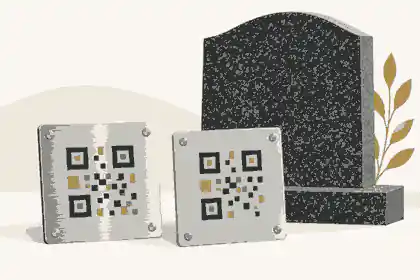
When a QR code or digital page is part of the memorial, the physical inscription can stay very short. Evaheld Memorials’ explanation of what a QR memorial can realistically link to helps families understand how photos, stories, audio, video, and tributes can sit behind a simple plaque or stone without crowding the inscription itself.
How much wording can fit on a stone?
The answer depends on the stone size, font, engraving method, material, layout, and provider. A small garden stone may only look polished with a name and five to eight words. A larger plaque may hold a name, dates, and two short lines. A bench plaque may allow more characters, but readability still matters. Do not use every available character just because space exists.
Before approving the final wording, print it in a similar shape to the stone. Read it from a few feet away. If it feels crowded on paper, it will usually feel more crowded when engraved. Ask the engraver or plaque maker whether punctuation, symbols, paw prints, hearts, or line breaks count toward the limit. Also ask whether the proof shows exact spacing or only an approximation.
Material affects clarity. Polished granite, slate, resin, ceramic, stainless steel, anodized aluminum, and bronze each behave differently outdoors. Evaheld Memorials’ article on which plaque materials cope best outdoors is especially relevant if the stone will include a QR code, because contrast and surface durability affect both readability and scanning.
The Woodland Trust’s tree-planting advice is also useful when families want a living memorial beside a stone. A tree, shrub, or planter can be meaningful, but the location, species, soil, and long-term care should be planned before the stone wording is finalized.
Where the stone will be placed changes the wording
A private garden stone can be more intimate than a cemetery marker. A stone placed near a school, shared home, rental property, public trail, or community garden should avoid private details. A balcony planter stone may need weather resistance and very short wording. A stable or farm memorial may need wording that respects other people who use the place.
For the United Kingdom, official GOV.UK guidance on fallen stock and dead animal disposal distinguishes pet animals from farm animals and notes that pet animals may be buried, while farm animals must be disposed of through approved methods. GOV.UK also has separate guidance for pet cemeteries in England, Scotland, and Wales, including planning, location, construction, and registration expectations. Northern Ireland has its own DAERA guidance noting an exemption for burial of a dead domestic pet in the garden where the pet lived.
For Australia, rules vary by state, territory, cemetery operator, and local council. Cemeteries & Crematoria NSW explains that from September 1, 2025, NSW families may legally bury or place animal remains in an interment site, while cemetery operators are not required to offer animal burials and may set site-specific rules through NSW interment rights guidance. The Parliament of Victoria has reported that Victoria legalized pet burials in human cemeteries, but cemetery trust approval and practical cemetery policies still matter. In Australia, always check the cemetery, council, body corporate, or property rules before assuming a stone can be installed.
For the United States, pet cemetery, backyard burial, cremation, and cemetery memorial rules differ by state, county, city, HOA, and cemetery. If a funeral home or cemetery is selling human funeral goods or services, the Federal Trade Commission’s Funeral Rule guidance is relevant to price transparency for human funeral arrangements, but pet memorial products and local cemetery rules may fall under different systems. Families should ask for written rules, itemized pricing, installation requirements, and proof approval before paying.
Public, private, and shared memorial choices
Before wording a stone, decide whether the memorial is private, public, or shared with a small circle. A public stone should be readable by strangers without exposing sensitive details. A private stone can use a nickname, a family phrase, or a child’s wording. A shared pet cemetery marker may need to suit the cemetery’s design standards.
If the stone links to a digital memorial, the same privacy question applies. Some families want the QR destination public because friends, neighbors, dog walkers, classmates, riding communities, rescue volunteers, or extended relatives may want to leave memories. Others prefer a private page while they gather photos and decide what feels right. Evaheld Memorials’ article on private versus public online memorials explains how visibility decisions affect sharing, search, and family comfort.
When many people loved the pet, guest contributions can be unexpectedly healing. A former neighbor might remember the dog greeting every delivery driver. A trainer might remember a first achievement. A grandchild might remember a cat sleeping on homework. Evaheld Memorials’ FAQ on whether visitors can leave tributes and condolences explains how messages can become part of a memorial rather than disappearing in text threads.
For families who want privacy while drafting, Evaheld Memorials also explains whether your memorial stays private until you are ready to share. That can be especially important for pet loss because people often write differently after the first shock has softened.
How children can help choose pet tribute wording
Children may not need a formal explanation of memorial writing. They often need one concrete task. Ask them to choose a favorite photo, draw the stone shape, write one sentence beginning with "I remember," or choose between two short wordings. Avoid saying the pet "went to sleep" if the child may take that literally. Use age-appropriate, truthful language.
The Cornell pet-loss resources advise honesty with children and note that drawings, stories, and shared memories can help children participate in memorializing the pet. The American Cancer Society’s grief guidance, while written for human loss, is useful because it explains that grief can affect emotions, thoughts, bodies, behavior, and family roles differently. Children may revisit the pet’s death in waves, and the stone can become a stable place for later questions.
Child-written wording can be simple and moving: "Thank you for sleeping by me," "You were my first friend," "I miss your loud purr," or "You made our house happy." If several children disagree, consider a short public line on the stone and a fuller private note in the digital memorial.
What not to put on a pet memorial stone
Avoid wording that may feel accusatory, medically graphic, or too tied to the final day. Many families are tempted to explain what happened, especially after a sudden accident, euthanasia decision, or illness. That explanation may belong in a private journal, family conversation, or fuller memorial page, but a stone usually benefits from focusing on the life shared rather than the manner of death.
Do not include your home address, phone number, full names of children, school details, or private circumstances on a public stone or QR destination. Do not assume a cemetery allows icons, QR codes, photographs, religious symbols, toys, solar lights, artificial flowers, or loose objects. Ask first. Evaheld Memorials’ article on cemetery rules for QR codes is useful even when the memorial is for a pet, because the same principles apply: approval, placement, materials, readability, and maintenance should be settled before installation.
Also avoid using a quote you do not understand. If a line comes from scripture, poetry, song, film, or a cultural tradition, make sure it fits your beliefs and does not create copyright, cultural, or family concerns. Short original wording is usually safer and more personal.
Pairing a stone with photos, video, and memories
A stone is fixed; memory is not. Families often remember new details months later. Someone finds a puppy photo. A neighbor sends a video. A child remembers a phrase. A QR-linked memorial or online tribute gives those later memories somewhere to go.
This is where Evaheld Memorials separates from a stone-only approach. A physical stone can carry a name and brief quote, while the digital memorial can hold the adoption story, favorite photographs, audio memories, videos, condolence messages, and updates. Before beginning, gather the basics using Evaheld Memorials’ FAQ on what information you need before starting a memorial.
Public figures show how memory often becomes layered rather than limited to one marker. The Evaheld Memorials profiles for Paul O’Grady, Steve Irwin, and Betty White are examples of how a remembered life can be associated with care, character, story, and public affection. A pet memorial can work the same way on a family scale: the stone holds the name, while the fuller tribute holds the texture of the bond.
Veterinary and grief-support organizations can also help families who feel alone after pet loss. The American Association of Equine Practitioners lists pet loss and grief management resources, including veterinary-school hotlines. Cornell’s Chronicle describes how a veterinary-college pet loss support hotline was created to offer sympathy and information to animal owners. These sources reinforce an important point: needing support after a pet dies is not excessive. It is human.
A practical stone wording process
Use this process when your family feels stuck:
- Write the pet’s name exactly as you want it engraved.
- Decide whether to include birth and death dates, years only, adoption date, or no dates.
- List five specific memories.
- Choose the tone: simple, warm, funny, spiritual, or child-led.
- Draft three versions under twelve words.
- Read each version aloud.
- Check the setting rules and engraving limits.
- Ask one trusted person whether the wording sounds like the pet.
- Sleep on it before approving the proof.
- Keep a copy of the final wording, proof, invoice, material details, and QR destination if used.
A good final line often feels obvious after this process. It may not be fancy. It may simply be true.
For a natural next step, families can use pet loss quotes for stones as the starting point for a fuller Evaheld Memorials tribute, keeping the stone wording simple while preserving the memories, photos, and messages that do not fit on stone.
Pet memorial stone wording templates
Use these templates when you want a structure rather than a finished phrase.
- [Name] / [years] / our [relationship word]
- [Name] / always [specific habit]
- [Name] / [nickname] / loved every day
- [Name] / thank you for [specific comfort]
- [Name] / still with us in [place or routine]
- [Name] / [favorite place] will remember you
- [Name] / [child’s phrase]
- [Name] / [one vivid trait], [one warm role]
Examples might become "Rosie, our porch watcher," "Finn, always first to the car," "Mabel, small cat, mighty heart," or "Scout, still on every trail." If dates feel painful or uncertain, use "arrived," "adopted," "rescued," or no dates at all. Rescue pets do not need a known birth date to be honored accurately.
Final checks before ordering or installing
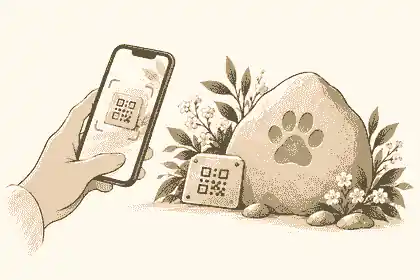
Before ordering, confirm the spelling of the pet’s name, date format, punctuation, line breaks, material, size, font, symbol use, proof approval, delivery time, installation method, and any cemetery or landlord permission. If a QR code is included, test it on multiple phones before installation and make sure the linked page is the final destination you want visitors to open.
For a home garden, think about weather, mowing, drainage, pets still living in the home, and whether you may move later. A portable stone, planter plaque, or indoor keepsake may be better than a fixed installation if the family is renting or likely to relocate. For a public cemetery, ask what happens if the stone is damaged, if flowers are removed, if rules change, or if the plot holder changes.
Most importantly, do not rush the wording because a checkout page asks for text. If the grief is new, choose a simple line now and keep the fuller tribute editable elsewhere. A stone can be final; memory does not have to be.
FAQs
What are pet loss quotes for stones? Pet tribute ideas, wording and memories
Pet loss quotes for stones are short memorial inscriptions used on garden stones, grave markers, plaques, urn markers, or keepsake stones after a beloved animal dies. The most helpful wording combines a name, an optional date, and one true detail, while a pet memorial that lives beyond the short wording on the stone can hold the fuller story beyond the stone; Humane World for Animals also recognizes memorial rituals as a valid part of coping with pet loss.
What is the best short quote for a dog memorial stone?
The best short quote for a dog memorial stone is usually specific to the dog, such as “always at the door,” “best trail friend,” or “good dog, every day.” If you need help making a line sound personal rather than generic, how to write a memorial tribute can help you shape a warmer phrase, while Cornell University College of Veterinary Medicine offers broader pet-loss support.
Should I put dates on a pet memorial stone?
Dates are optional on a pet memorial stone; years, adoption dates, “arrived” dates, or no dates can all be appropriate. If the stone links to a fuller page, meaningful online memorial inclusions can hold the details that do not fit on stone, and GOV.UK guidance on dead animal disposal shows why rules differ between pet animals and farm animals in the United Kingdom.
Can a pet memorial stone include a QR code?
Yes, a pet memorial stone can include a QR code if the material, contrast, size, placement, and cemetery or property rules allow it. Evaheld Memorials explains what a QR memorial can realistically link to, and FTC Funeral Rule guidance is a useful reminder to ask for written pricing and itemized terms when human funeral providers are involved.
What material is best for an outdoor pet memorial stone?
Outdoor pet memorial stones should use durable, readable materials suited to weather, drainage, sunlight, and cleaning. Evaheld Memorials’ article on which plaque materials cope best outdoors is especially useful when a QR code is involved, and the Woodland Trust gives practical planting guidance if the stone will sit beside a tree or shrub.
Do cemeteries allow pet memorial stones?
Some cemeteries, pet cemeteries, and memorial gardens allow pet stones, but rules vary by site, country, and operator. Evaheld Memorials’ guidance on cemetery rules for QR codes helps families ask the right approval questions, while GOV.UK pet cemetery guidance explains official requirements for pet cemeteries in England, Scotland, and Wales.
Should a pet memorial be public or private?
A pet memorial can be public if many people knew the animal, or private if the family wants a quieter space while grieving. Evaheld Memorials explains private versus public online memorials, and Cemeteries & Crematoria NSW shows how animal-remains rules can depend on cemetery policy even where the law permits certain options.
Can friends and family add memories to a pet memorial?
Yes, friends, relatives, neighbors, walkers, trainers, and children can often add memories when the pet memorial includes a digital tribute or guestbook. Evaheld Memorials explains whether visitors can leave tributes and condolences, and the American Association of Equine Practitioners lists pet-loss support resources for people who need more help.
Can I keep a pet memorial private until the wording feels right?
Yes, keeping a pet memorial private while you test wording, add photos, and invite only close contributors can be a gentle approach. Evaheld Memorials explains whether your memorial stays private until you are ready to share, and the Cornell Chronicle shows how veterinary pet-loss support has long recognized the depth of this grief.
What information do I need before ordering a pet memorial stone?
Before ordering a pet memorial stone, gather the pet’s exact name, dates or years if wanted, preferred wording, material, size, placement rules, proof requirements, and any QR destination. Evaheld Memorials’ FAQ on what information you need before starting a memorial helps organize those details, while DAERA Northern Ireland illustrates why local burial and property rules should be checked before placing a stone.