What adhesive should I use for grave plaques? Cemetery checks, materials and setup
A practical guide to choosing adhesive for grave plaques, checking cemetery approval, matching materials, preparing stone and setting up QR memorial plaques safely.
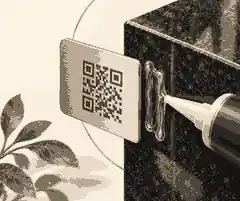
What adhesive should I use for grave plaques? Cemetery checks, materials and setup should start with permission, material and surface condition, not with a tube of glue. For most small QR grave plaques on smooth polished granite or sealed stone, the best adhesive is a cemetery-approved exterior acrylic foam tape or plaque system supplied by the plaque maker; rough, porous, historic, unstable or valuable stone should be assessed by the cemetery, monument mason or conservator before anything is attached.
The safest answer is practical: use the fixing method approved by the cemetery and compatible with the plaque, the stone and the climate. Industrial acrylic foam tapes can be suitable for small, flat-backed metal plaques on clean, dry, smooth surfaces because 3M VHB technical data explains that bond strength depends on surface preparation, pressure, minimum application temperature and gradual bond build. That does not mean every 3M-style tape is suitable for every cemetery plaque. It means adhesive selection should be treated as an installation system: correct product, clean surface, warm enough conditions, firm pressure, curing time and a plaque that is not too heavy for the bond area.
Families often ask this after choosing a QR plaque because the physical object seems simple. The QR technology is not the difficult part: DENSO WAVE’s QR Code history traces the code to 1994, and today visitors can usually scan without special equipment. The harder question is whether a cemetery will allow a plaque, whether the stone can safely take an adhesive, and whether the linked memorial will still be useful years later.
what adhesive should i use for grave plaques: practical guidance
Before buying adhesive, ask the cemetery or churchyard whether a plaque can be added at all. This is especially important in Australia, the United Kingdom and the United States because cemetery powers are local and section-specific. Victoria’s official memorial process says a person must apply to the cemetery trust before building or altering a memorial, so Australian families should treat a QR plaque as a memorial alteration unless the operator says otherwise. The same principle appears in many UK cemetery systems, and the ICCM memorial management policy is a useful professional reference for why burial authorities care about safety, stability and memorial control.
In the United States, rules vary between private cemeteries, municipal cemeteries and veterans’ cemeteries. The US National Cemetery Administration headstone instructions are a reminder that government-furnished markers have strict limits on later additions and alterations. Even when a private cemetery is more flexible, written approval is still the cleanest path because staff may remove unauthorised attachments during maintenance.
Evaheld Memorials covers that approval conversation in cemetery rules for QR codes, but the short version is this: ask before ordering, describe the plaque size, material, finish, adhesive method and exact location, and keep the approval in writing. A small plaque that seems respectful to a family can still conflict with lawn-section rules, heritage rules, religious rules, mowing clearance, stone warranties or a cemetery’s visual standards.
Which adhesive should I use for grave plaques?
For a small, lightweight plaque on smooth polished granite, the usual first choice is an exterior-rated acrylic foam tape or plaque adhesive supplied or specified by the plaque manufacturer. It should be rated for outdoor use, compatible with metal and stone, thick enough to make full contact, and applied only to a dry, clean surface at a suitable temperature. Acrylic foam tape is usually preferred over household double-sided tape because it can accommodate small movement between metal and stone, which matters when heat, cold and moisture make materials expand differently.
For rough granite, sandstone, old marble, porous concrete, flaky stone, painted stone or a plaque with a curved back, tape alone may be unreliable because it cannot fully contact the surface. In those cases the better answer may be a monument mason’s mechanical fixing, a recessed inlay, a cemetery-approved mounting plate or no attachment at all. Liquid construction adhesives and epoxies can be strong, but strength is not the only measure. They may stain porous stone, be difficult to remove, trap moisture, leave residue or create a repair problem for future families. If a liquid adhesive is proposed, the installer should confirm stone compatibility, removability, staining risk, cure conditions and whether cemetery approval covers that specific product.
Do not use indoor craft glue, hot glue, ordinary stationery tape, generic foam tape, silicone sealant chosen only because it is waterproof, or glue that has not been tested for exterior stone and metal. A grave plaque is exposed to sun, frost, rain, irrigation, cleaning, bird droppings, wind-blown grit and sometimes cemetery maintenance equipment. Australia adds high UV and heat in many regions; the Bureau of Meteorology climate information is a useful reminder that local exposure changes the answer. The United Kingdom often adds persistent damp and freeze-thaw cycles. Parts of the United States add snow, desert heat, salt air or large seasonal temperature swings.
Match the adhesive to the plaque material
Adhesive choice depends on plaque material. Brushed stainless steel, anodised aluminium, bronze, ceramic and engraved stone all behave differently outdoors. Stainless steel is stable and often bonds well when the back is clean and flat, but it can be heavier than aluminium. Anodised aluminium can be light and practical, but the quality of the finish matters. Bronze is traditional and durable, yet weight and patina must be considered. Ceramic can hold detail well, but impact and edge protection matter.
If you are still choosing the physical object, the best materials for QR memorial plaques should be considered before adhesive because a cheap printed label may fail long before the adhesive does. For QR plaques, the code must remain high contrast, flat enough to scan and protected from abrasion. A permanent adhesive under a short-lived printed sticker is a poor combination because removal later may be harder than replacement should have been.
QR codes can tolerate some dirt or damage, but not unlimited loss of contrast. The DENSO WAVE error correction explanation notes that QR codes have selectable error correction levels, with higher correction increasing resilience while also affecting code size. That is why the plaque should not be tiny, glossy, low contrast or placed where cleaning marks will cross the corner positioning squares. Adhesive solves only the attachment problem; readability is a separate design and maintenance issue.
Check the stone surface before setup
Surface condition is often the deciding factor. Smooth polished granite is usually the easiest surface for an adhesive-backed plaque because it gives the adhesive broad, intimate contact. Honed stone may also work if clean and sound. Rough-sawn granite, sandstone, limestone, old marble, delaminating stone or biological growth create much more risk. If the surface is dusty, crumbling, wet, oily, waxed, sealed, mossy or uneven, the adhesive may bond to contamination rather than to the stone.
Families should avoid aggressive cleaning to make adhesive work. The National Park Service headstone cleaning recommendations warn against harsh mechanical methods that can damage stone. For a family installation, the conservative approach is simple: seek permission, remove loose dust gently, use only the cleaning method approved by the cemetery or mason, let the surface dry completely and do not scrape, grind, sand or pressure wash a historic or delicate marker.
If the grave plaque is going on polished granite, the installer may use an alcohol-water wipe where the plaque maker specifies it and the cemetery allows it. If the stone is old, porous, carved, painted, gilded, heritage-listed or visibly fragile, stop and ask a professional. A plaque should never be worth damaging the original memorial.
Placement affects the adhesive
Even a suitable adhesive can fail if the plaque is placed badly. Avoid edges, corners that collect water, areas directly under flower vases, low points that receive irrigation, places struck by mower guards, and any surface that is curved or deeply textured. Choose a flat, accessible spot that visitors can scan without touching the plaque excessively. For many upright headstones, that means a lower side area away from the inscription, but the exact placement should follow cemetery rules.
Evaheld’s guidance on where a QR code can be placed on a headstone is useful because placement has to balance respect, scan distance and durability. A plaque hidden behind flowers may stay discreet but scan poorly. A plaque placed in direct glare may look neat but frustrate visitors. A plaque fixed to a high-polish sloping face may catch water or sunlight in ways that reduce readability.
Size also matters. If a plaque is too small, the QR code may require visitors to lean close, which increases touching, rubbing and wear. If it is too large, the cemetery may reject it or the adhesive area may need more careful engineering. A planning note on what size should a QR code be on a memorial plaque helps families think about quiet zones, scanning distance and the practical dignity of the design.
How to set up an adhesive-backed grave plaque
Use this sequence only when the cemetery has approved the plaque and adhesive method, the plaque maker supports adhesive installation, and the stone is sound. First, test the memorial link before going to the cemetery. Apple explains that visitors can use the camera to scan QR codes on iPhone, and Apple’s QR scanning instructions show how simple that process should be. Android visitors should also be considered; Android’s QR code scanning guidance explains camera and Lens-based scanning on many devices.
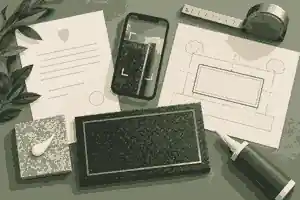
Second, take the plaque, approval note, soft cloth, approved cleaner if any, gloves, a phone with data signal, painter’s tape for temporary positioning and the plaque maker’s instructions. Third, hold the plaque in place and scan from the position a visitor will naturally stand. Check shade, glare, reach and mobile signal. Fourth, clean only the approved area and let it dry. Fifth, remove the backing without touching the adhesive. Sixth, align once; do not repeatedly lift and reapply. Seventh, press evenly and firmly for the time required by the adhesive instructions. Eighth, keep the plaque dry and undisturbed through the early cure period where the product requires it.
For granite-specific planning, the more focused checklist at granite QR plaque attachment checklist for cemetery approval is helpful because granite can be smooth, flamed, honed or textured. A method that works well on polished granite may be unsuitable on a rough panel or a stone that has been sealed.
When adhesive is the wrong answer
Adhesive is not automatically the gentlest method. It is wrong when the cemetery forbids attached items, when the plaque is too heavy, when the stone surface is weak, when the only available location is wet or rough, when the plaque needs to be theft-resistant, when the stone is historic, or when future removal would be unacceptable. In those cases, a separate freestanding marker, a mason-installed recessed plaque, a new approved inscription panel, a home memorial display or a digital-only QR link may be kinder.
Adhesive is also wrong when the family is divided. A grave is a shared place, and adding a scannable link can feel public even if the linked memorial has privacy settings. If the QR destination will contain photographs, videos, comments or stories, decide privacy before installation. Evaheld’s guidance on private versus public QR memorials explains why the physical code and the digital access setting should be planned together.
Maintenance after installation
A grave plaque should be checked gently after storms, heatwaves, frost, cemetery cleaning or seasonal maintenance. Look for lifting edges, corrosion, fading, scratches, trapped water, dirt over the code, loose corners and scan failures. Do not pry at the plaque. Do not scrub the QR pattern with abrasive pads. Do not apply wax, oil or household polish over the code. If it needs cleaning, follow the plaque maker’s instructions and the cemetery’s stone-care rules.
Evaheld’s clean a QR memorial plaque after cemetery approval guidance is relevant because plaque cleaning is not the same as headstone cleaning. The plaque may be metal or ceramic, while the surrounding monument may be stone. A cleaner that is harmless to stainless steel may be unsuitable for marble, and a brush that seems gentle may scratch a printed or coated code.
If the plaque is damaged, focus first on preserving the destination link. A damaged physical code can often be replaced, but a broken digital destination can make every plaque useless. Evaheld’s replacing damaged QR memorial plaques guide explains why families should ask whether a replacement can preserve the same memorial address. In Australia, product and service promises should also be read alongside consumer protections; the ACCC warranty guidance explains that warranties sit beside consumer guarantees. In the UK, the Consumer Rights Act 2015 overview is the starting point for faulty goods, services and digital content. In the US, rights vary by state, so written supplier terms and cemetery approvals matter even more.
Plan the QR destination before the plaque is fixed
The most durable adhesive in the world cannot help if the page behind the code is thin, abandoned or moved. Decide what the plaque should open before installation. At minimum, the memorial should include the person’s name, dates, a respectful life story, photographs, contribution settings, privacy choices and a plan for who manages it. Evaheld’s what a memorial QR code can actually link to guidance can help families avoid pointing a permanent physical plaque at a temporary or incomplete page.
The physical side and digital side should be planned together. A family might choose a stainless steel plaque, an adhesive approved for the grave surface and a memorial page that can be edited later; another family might prefer a digital memorial link shared privately until cemetery approval is settled. Evaheld’s explanation of how long QR memorials usually last is useful because durability depends on both the plaque and the page it opens, not one or the other.
Memorials have always joined material choices with meaning. The public memory of Leonardo da Vinci, Isaac Newton and Cleopatra VII shows how a life can be remembered through objects, stories and places long after the original moment has passed. A QR grave plaque is a modern version of that same responsibility: the small object should protect the stone, respect the setting and lead to a memorial worth visiting.
Australia, United Kingdom and United States differences
In Australia, cemetery trusts and operators commonly control memorial alterations, and state guidance such as Victoria’s process should be treated as a model even when your cemetery sits in another state. Ask whether the right of interment holder must apply, whether a licensed stonemason is required, whether adhesive attachments are allowed and whether the plaque can be installed on an existing monument. Heat, UV and coastal exposure may make supplier specifications more important than generic outdoor claims.
In the United Kingdom, local authority cemetery rules, churchyard faculty rules and heritage expectations can be stricter than families expect. Do not assume a QR plaque will be accepted in a churchyard simply because a municipal cemetery allows one. Ask whether the plaque is considered an additional memorial, an alteration, an ornament or an unauthorised attachment. Damp conditions and freeze-thaw cycles also mean the surface should be dry, clean and stable before adhesive is considered.
In the United States, rules depend heavily on the cemetery type. Private cemeteries may allow small adhesive plaques, municipal cemeteries may require written permits, and national or veterans’ cemetery markers can be tightly controlled. State consumer protections, supplier warranties and cemetery contracts vary, so keep records of approval, installation instructions and the provider’s promise about replacement or relinking.
Final checklist before attaching a grave plaque
Before installation, confirm five things. First, the cemetery has approved the plaque, location and fixing method in writing. Second, the right person has authority to request the alteration. Third, the plaque material, QR contrast and size are suitable for outdoor scanning. Fourth, the adhesive is exterior-rated and compatible with both plaque and stone under local conditions. Fifth, the linked memorial is ready, privacy-aware and controlled by someone the family trusts.
If any of those answers is uncertain, pause. The kindest installation is not the fastest one; it is the one that protects the grave, respects the cemetery and keeps the memorial useful. When you are ready to connect the physical plaque with a lasting digital tribute, Evaheld Memorials can help you plan what adhesive should i use for grave plaques in the wider context of cemetery approval, QR destination, privacy and family contributions.

FAQs
What adhesive should I use for grave plaques? Cemetery checks, materials and setup
Use the adhesive or fixing system approved by the cemetery and specified by the plaque maker, usually an exterior acrylic foam tape for small flat plaques on smooth polished granite. Before attachment, confirm cemetery rules for QR codes and follow the surface, temperature and pressure guidance in 3M VHB technical data.
Can I glue a QR plaque straight onto granite?
Sometimes, but only if the granite is sound, flat, clean, dry and approved for adhesive attachment by the cemetery. For a more specific setup path, use a granite QR plaque attachment checklist for cemetery approval and remember that Victoria’s official memorial process treats memorial alterations as something that needs cemetery trust approval.
Is epoxy better than tape for a grave plaque?
Not automatically. Epoxy may be strong, but it can be hard to remove, may stain porous stone and may be refused by a cemetery, while exterior acrylic foam tape may be better for small plaques on smooth surfaces. Material choice should come first, so compare the best materials for QR memorial plaques and use ICCM memorial management policy as a reminder that safety and long-term control matter.
How do I prepare the headstone before attaching a plaque?
Prepare only the approved attachment area, remove loose dust gently, use the cleaning method allowed by the cemetery or plaque maker, and let the surface dry fully before the plaque is pressed into place. For ongoing care, clean a QR memorial plaque after cemetery approval should be done gently, and the National Park Service headstone cleaning recommendations warn against harsh tools and pressure.
Where should a QR grave plaque be positioned?
Choose a flat, discreet, easy-to-scan position that does not cover inscriptions, catch water, interfere with cleaning or dominate the memorial design. Evaheld’s guidance on where a QR code can be placed on a headstone pairs well with DENSO WAVE error correction explanation because placement and code readability are linked.
What size should the QR code be on a plaque?
The code should be large enough to scan without visitors needing to touch or lean against the headstone, with a clear quiet zone and high contrast. Families can start with what size should a QR code be on a memorial plaque, then test the scan using Apple’s QR scanning instructions before the plaque is fixed permanently.
Will a QR plaque still scan in rain or sunlight?
A well-made QR plaque can scan in ordinary rain, but glare, dirt, fading, scratches and poor contrast can still cause problems. The page on how long QR memorials usually last explains the physical and digital sides, while Android’s QR code scanning guidance shows why visitors need a readable code and a working phone camera.
What if the plaque comes loose or the code is scratched?
Do not keep pressing or re-gluing a failing plaque without checking why it failed, because the stone, adhesive, weather exposure or plaque weight may be the real issue. Start with replacing damaged QR memorial plaques and keep warranty expectations realistic by checking ACCC warranty guidance or the equivalent consumer law in your country.
Can the linked memorial stay private if the plaque is public?
Yes, the physical QR code may be visible while the linked content is controlled through privacy settings, passwords or limited access, depending on the platform. Families should review private versus public QR memorials before installation, especially where US National Cemetery Administration headstone instructions or other cemetery rules restrict additions.
What should the QR plaque link to?
The plaque should link to a stable memorial page with the person’s story, photographs, tributes, privacy choices and an organiser who can update it over time. Evaheld’s overview of what a memorial QR code can actually link to helps families plan the destination, while the Consumer Rights Act 2015 overview is a useful UK reminder to check goods, services and digital-content promises before buying.