What are the best online obituary sites? Features, privacy and family fit
A practical Evaheld Memorials article that answers “What are the best online obituary sites?”, explains best online obituary sites, shows what to include, avoids common mistakes and helps families plan features, privacy and family fit.

The best online obituary sites are the ones that let families publish a clear tribute, add photos or video, invite memories, manage privacy, update details over time and share the page without confusing costs or intrusive advertising. For most families, the right choice is not simply the biggest website; it is the platform that best fits your person, your family’s privacy needs, your budget and how you want the memorial to be kept in the years ahead.
If you are comparing the best online obituary sites, look for a calm, easy editing experience, sensible sharing controls, secure account access, export or preservation options, and transparent pricing. Evaheld Memorials can sit within that decision as a practical memorial-planning space where families create, complete, store, update and share tribute pages, messages, photos, guestbook contributions, wishes and related instructions in one organised place.
Direct answer: What are the best online obituary sites?
The best online obituary sites are platforms that combine a respectful public tribute with practical family tools: obituary text, service details, photo and video memories, guestbook messages, privacy settings, ongoing updates and clear pricing. Some families prefer a funeral-home obituary page for short-term notice sharing; others prefer a dedicated online memorial platform for a longer-lasting tribute.
A useful comparison is to ask whether the site is built mainly for an announcement, a memory archive, a guestbook, a donation page, or a private family vault. These are related, but not identical. An obituary notice may be concise and public. A memorial page may be richer, more personal and updated over time. A digital legacy space may also hold wishes, messages and instructions that trusted people can access when appropriate.
When reviewing online memorial websites comparison guides, avoid treating “free” as the only measure. Free pages may be useful, but they can involve advertising, limited control, upgrades, data restrictions or uncertain long-term access. Paid options can also vary widely. A one-time-fee platform, a subscription model and a funeral-provider page may all be reasonable depending on your family’s needs.
What best online obituary sites is for
Online obituary and memorial sites help families share the essential facts of a death while also preserving the human story behind those facts. They can hold a notice, biography, service information, livestream details, photographs, videos, condolence messages, readings, music choices, charity links and practical updates for people who cannot attend in person.
They are especially helpful when family and friends live across different cities or countries. A single page can reduce repeated messages, keep details consistent and give people a place to return to after the funeral. The U.S. Library of Congress provides helpful guidance on personal digital archiving, including the value of organising digital materials so they remain findable over time. The U.S. National Archives also offers practical advice for preserving family archives, which is relevant when selecting photos, letters and records for a tribute.
For families considering a broader memorial-planning approach, Evaheld Memorials offers a way to create a memorial page and keep related memories and instructions together rather than scattered across emails, phones, cloud folders and messaging apps. You can also compare related options in our guide to virtual obituary platforms.
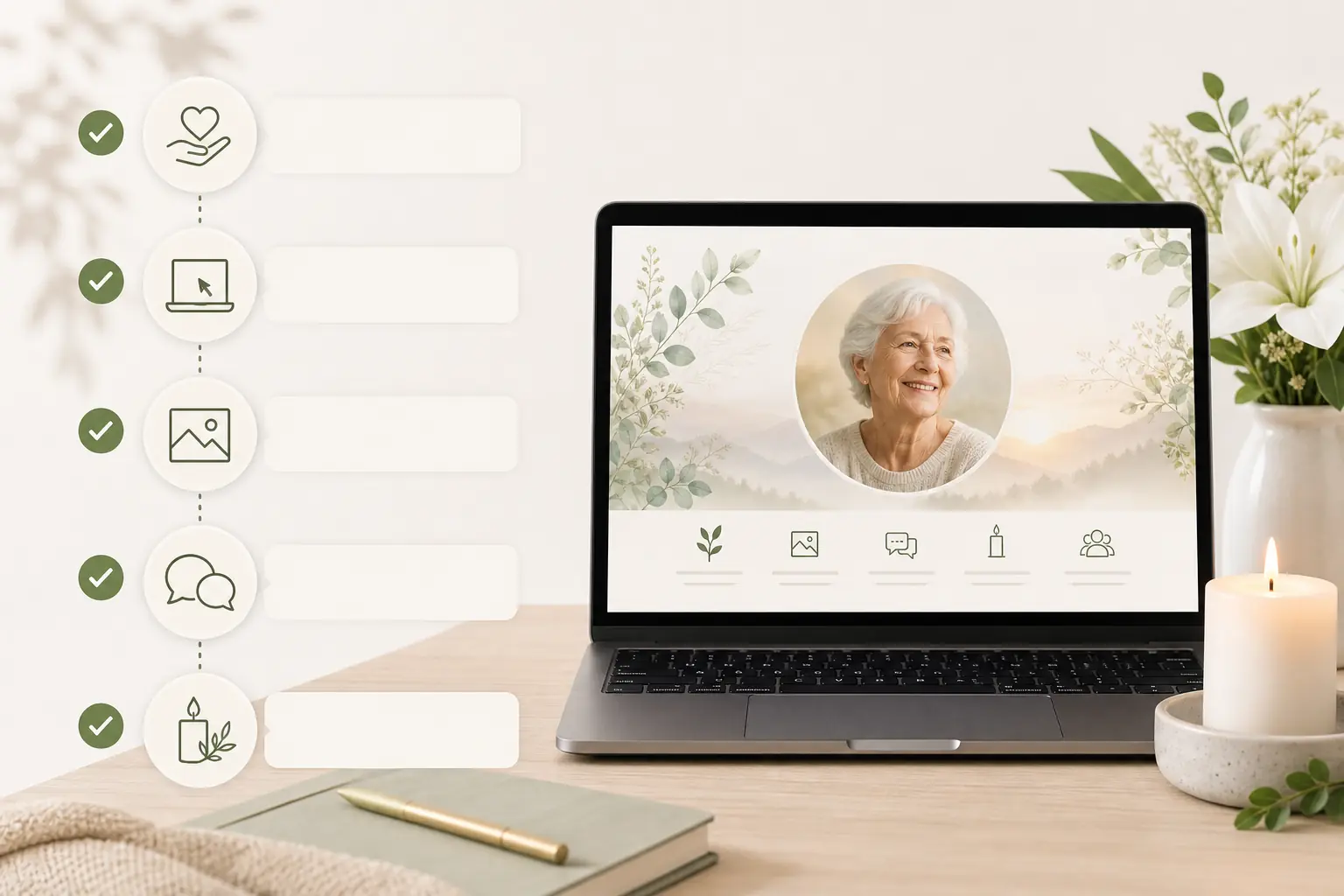
When to use best online obituary sites
Use an online obituary site when you need a central, shareable place for a death notice, funeral or memorial details, and family-approved memories. It can be used immediately after a death, in the lead-up to a service, after a private ceremony, on anniversaries, or as part of advance planning where someone wants to prepare their own words, wishes or life story.
In the first days after a death, families often need speed and clarity. A simple page can share the name, dates, service time, location, livestream link and contact preferences. Later, the same page can become more reflective, with photos, stories, readings and messages. If the family is still deciding what to make public, privacy settings matter. Australian readers may find the Office of the Australian Information Commissioner’s guide to privacy rights useful, while UK readers can refer to the Information Commissioner’s Office guidance for the public.
There are times when a professional should also be involved. Funeral directors can help with newspaper notices, service logistics and cemetery or crematorium requirements. Lawyers can advise on wills, probate and estate documents. Counsellors and bereavement professionals can support grief and family conflict. Legal requirements vary by country, state and territory, so formal documents should be checked against local rules or reviewed by a qualified professional where needed.
What to include in best online obituary sites
A strong online obituary balances practical information with warmth. Start with the person’s full name, preferred name, dates, place of residence if appropriate, and a short statement of death. Add immediate family details according to family preference, being careful with privacy for living people, children and vulnerable relatives.
Then include the story: birthplace, family life, work, service, interests, humour, values, community involvement, favourite places and small details that sound like the person. A tribute does not need to be grand to be meaningful. Often, a simple paragraph about how someone made others feel is more powerful than a long list of achievements.
Consider including:
- Funeral, memorial, wake or livestream details, if public.
- Clear contact instructions, such as whether the family prefers messages through the guestbook.
- Photo and video galleries with family permission.
- Guestbook or memory prompts for friends and relatives.
- Donation, flower or charity preferences, where appropriate.
- Readings, songs, poems or cultural traditions.
- Updates for anniversaries, memorial gatherings or later interment details.
- Private family notes, wishes or instructions if the platform supports restricted access.
If you are adding personal documents, scan quality and file naming matter. The Digital Preservation Coalition’s digital preservation handbook is a useful reference for thinking about long-term preservation, file formats and ongoing care. For photo- and video-heavy tributes, you may also find our article on online memorial sites for photos and video helpful.
Step-by-step instructions for best online obituary sites
Begin by deciding the purpose of the page. Is it a short public notice, a lasting memorial, a private family archive, or a combination? This decision will shape the platform, privacy settings, wording and who should be invited to contribute.
- Choose the audience. Decide whether the page will be public, link-only, private to invited people, or partly public and partly restricted.
- Gather core details. Confirm names, dates, service information and any family-approved wording before publishing.
- Select photos and media. Choose images that are clear, respectful and representative of different stages of life.
- Write the obituary text. Keep it accurate, kind and readable. Avoid publishing sensitive details that could affect living relatives.
- Set privacy and permissions. Check who can view, comment, upload photos or share the page.
- Invite trusted contributors. Ask a small group to review facts and suggest memories before wider sharing.
- Publish carefully. Share the link with the right people and update it as details change.
- Preserve and maintain. Keep login access secure, review comments, and decide how the page will be managed over time.
For account safety, use strong passwords and multi-factor authentication where available. The Australian Cyber Security Centre explains password managers and multi-factor authentication in practical terms. CISA’s Secure Our World guidance is also a useful reminder to strengthen accounts before sharing sensitive family information online.
Practical tips for families
Choose one or two page managers rather than giving editing access to everyone. This reduces accidental changes and helps keep the tone consistent. If family members disagree about wording, pause before publishing. A neutral phrase is often better than a rushed sentence that causes hurt.
Keep a simple folder of approved materials: obituary draft, selected photos, service details, charity information, and a list of people to notify. If you use Evaheld Memorials, the online memorial features are designed to help families keep memories, messages and sharing choices together. For broader planning, the digital legacy vault can help organise wishes and related information without replacing formal legal documents.
Think carefully before posting information such as a home address, exact birth date, names of children, travel plans, or details that could be misused. The Australian eSafety Commissioner provides accessible guidance on privacy online. The U.S. Federal Trade Commission also explains how to protect your privacy online and how to recognise and avoid phishing scams, both of which are relevant when memorial pages are shared widely.

Common mistakes
The most common mistake is choosing a platform quickly without checking ownership, privacy, pricing and update options. Families may also publish too much personal information, forget to moderate comments, lose access to the account, or rely on one person’s phone or social media account as the only archive.
Another mistake is assuming all “top digital memorial platforms” work the same way. Some are public obituary directories. Some are attached to funeral homes. Some focus on guestbook messages. Some are more like private memory vaults. A calm comparison table can help:
| Feature to compare | Why it matters |
|---|---|
| Privacy settings | Controls whether the page is public, private or shared by invitation. |
| Pricing model | Helps compare free, subscription-free, one-time-fee and ongoing subscription options. |
| Media support | Determines whether photos, videos and voice memories can be included easily. |
| Guestbook controls | Allows families to approve, remove or manage public contributions. |
| Long-term access | Clarifies whether the memorial can be updated and preserved over time. |
| Security features | Reduces the risk of unwanted access or account loss. |
If you are comparing affordable online memorial websites, include both visible and hidden costs. Check whether the platform shows advertisements, charges for extra media, limits storage, locks features behind upgrades, or requires ongoing payments. Evaheld Memorials publishes online memorial plans so families can review options before creating a page.
What not to do
Do not publish a memorial page before confirming the core facts with close family or the person responsible for funeral arrangements. Do not include sensitive personal information simply because it is available. Do not upload photos of others, especially children, without considering consent and family expectations.
Do not treat an online obituary as a substitute for official processes. Death registration, probate, estate administration, funeral permissions, cemetery rules, taxation, insurance and superannuation or pension matters can involve formal requirements. In the U.S., the Uniform Law Commission’s materials on fiduciary access to digital assets show why digital access can be legally sensitive. Requirements differ internationally, so seek qualified advice where needed.
Do not use weak account security for a page that may hold family memories, private messages or personal details. NIST’s digital identity guidance on authentication and password practices provides useful background, while Apple’s guide to Legacy Contact and Google’s help on Inactive Account Manager are worth reviewing when families are considering access to existing digital accounts.
How Evaheld Memorials helps create, complete, store, update and share best online obituary sites
Evaheld Memorials is designed to help families bring the practical and emotional pieces of a memorial together. Rather than keeping obituary drafts in one email thread, photos in several phones, funeral details in messages and wishes in a separate folder, families can create a more organised memorial experience that can be updated and shared with trusted people when appropriate.
That does not mean every family needs the same approach. Some may use a funeral director’s notice for immediate service details and a dedicated Evaheld Memorials page for the longer tribute. Others may prepare content in advance, invite family contributions, or use the page as a central place for memories after a private service. You can review memorial support questions if you are unsure where to start.
For families comparing the best ad-free online memorial platforms, subscription-free online memorials or online memorial platforms with one time fee, the important question is fit: what will be easiest for your family to maintain, what feels respectful, and what gives you enough control without making the process complicated? Create a secure Evaheld Memorials page for best online obituary sites, then update it over time and share it with trusted people when ready.
If location, jurisdiction or community expectations matter, it can also help to compare local options. Our guide to the most reliable local digital legacy spaces explains why families may weigh privacy, access and long-term preservation differently depending on where they live.

Final checklist
Before choosing or publishing an online obituary site, use this final checklist:
- Have we chosen the right type of page: announcement, memorial, archive or private family space?
- Are the name, dates, service details and family wording accurate?
- Have close family or responsible decision-makers reviewed the page?
- Are privacy settings appropriate for the audience?
- Have we avoided sensitive details such as addresses, full birth dates and unnecessary personal information?
- Are photos, videos and stories approved for sharing?
- Can we moderate guestbook messages or contributions?
- Do we understand pricing, renewals, storage limits and advertising?
- Is account access protected with strong passwords and multi-factor authentication where possible?
- Do we know who will maintain, update or archive the page over time?
The best online obituary choice is the one that helps your family communicate clearly, remember honestly and preserve what matters without adding avoidable stress. A simple, secure and well-organised memorial can become a place people return to on birthdays, anniversaries and quiet days when they want to feel connected.
FAQs about best online obituary sites
What are the best online obituary sites?
The best online obituary sites are the ones that let families publish a clear tribute, add photos or video, invite memories, manage privacy, update details over time and share the page without confusing costs or intrusive advertising. For most families, the right choice is not simply the biggest website; it is the platform that best fits your person, your family’s privacy needs, your budget and how you want the memorial to be kept in the years ahead.
The best online obituary sites are the ones that match your family’s needs for privacy, ease of updating, photo and video sharing, guestbook contributions, long-term access and clear costs. Evaheld Memorials helps families create and organise a page through its best online obituary sites options, while digital preservation basics from the Library of Congress personal archiving guidance can help you choose what to keep.
How can the tribute feel personal and authentic?
Online obituary sites are used to share a death notice, life story, service details, photos, videos, guestbook messages and memorial updates in one accessible place. Evaheld Memorials’ create memorial page option supports this, and the U.S. National Archives family archives guidance is useful for thinking about what family records to preserve.
When is the right time to begin writing or gathering memories?
A family may use an online obituary site soon after a death, before a funeral or memorial service, or later when they are ready to gather memories. Evaheld Memorials’ online memorial features can support staged updates, while the Digital Preservation Coalition handbook explains why ongoing care of digital material matters.
Who should contribute stories and check important details?
Include the person’s full name, key dates, a short life story, service details if public, photos, videos, family-approved wording and any donation or remembrance preferences. Evaheld Memorials’ guide to online memorial sites for photos and video can help, and the OAIC privacy rights guidance is a helpful privacy reference for Australian families.
Can an online memorial bring the finished tribute together?
Start with verified facts, choose privacy settings, add the obituary text, upload approved media, invite trusted contributors, review everything, then publish or share carefully. Evaheld Memorials’ memorial support questions page can help with common setup queries, and the eSafety Commissioner privacy guidance is useful before sharing personal details online.
How can sensitive family information be handled respectfully?
Common mistakes include publishing before facts are checked, sharing private addresses, using unapproved images, forgetting access permissions and choosing a platform without clear long-term options. Evaheld Memorials’ online memorial plans page helps families review costs, while the FTC privacy online guidance explains practical privacy precautions.
Which photos, notes and records are useful to keep nearby?
Avoid oversharing sensitive family details, posting financial information, rushing difficult wording or giving editing access too broadly. Evaheld Memorials’ virtual obituary platforms guide can help you compare options, and the FTC phishing scam guidance is useful when families receive unexpected messages after public notices.
How can relatives add their own memories?
Privacy and permissions usually control who can view, contribute to, edit or share the memorial page. Evaheld Memorials’ digital legacy vault can help keep related wishes and records organised, and multi-factor authentication guidance from cyber.gov.au explains one way to protect account access.
What common writing and storytelling mistakes should be avoided?
Evaheld Memorials helps families create, complete, store, update and share memorial content, including tribute pages, photos, messages, guestbook inputs and related wishes. Its guide to reliable local digital legacy spaces adds context, and CISA’s Secure Our World guidance offers general account-safety tips.
How can Evaheld Memorials preserve the finished story?
Check spelling, dates, names, service details, privacy settings, image permissions, contribution access and whether close family have reviewed the page. Evaheld Memorials’ plans page can help you choose an option, and password manager guidance from cyber.gov.au can support safer account handling.
If your family is ready to begin, create a free Evaheld Memorials page and add memories, photos and tributes at your own pace.