What are ideas for pet memorials in a garden? Pet tribute ideas, wording and memories
A practical, compassionate guide to pet memorial garden ideas, from stones, plaques and planting to wording, privacy, QR tributes and AU/UK/US burial differences.

Ideas for pet memorials in a garden include a planted remembrance corner, an engraved stone, a weatherproof plaque, a small path, a bench, a pot or raised bed, a native shrub, a discreet QR-linked tribute, and rituals that let family members keep adding memories over time. The best pet tribute ideas combine three things: a place you can return to, wording that sounds like your companion, and practical choices that will survive weather, soil, access and future family needs.
When people search for ideas for pet memorials in a garden, they are usually not asking for decoration alone. They are trying to work out what to do with love that still has daily habits attached to it: the sunny patch where a dog slept, the fence line a cat watched, the bowl that still feels too visible, the path walked every evening, or the empty space near the back door. A garden memorial can honor those ordinary memories without turning the whole garden into a formal site of grief.
Start with the relationship, not the object. A confident, sociable dog may be remembered through a path, a bench and visitor messages. A quiet indoor cat may suit a sheltered pot, a small stone and a private digital story. A horse, rabbit, bird or guinea pig may call for a tribute that reflects their enclosure, paddock, aviary, favorite food plants or daily care routine. Evaheld Memorials already has a pet-focused foundation for a pet memorial page with photos and stories, which works well beside a physical garden space because memories can keep growing when the stone or plant stays still.
A good garden memorial usually has one focal point, one living element and one memory layer. The focal point might be a stone, plaque, urn niche, low statue, bird bath, bench or stepping stone. The living element might be rosemary, lavender, grevillea, bottlebrush, a small tree, herbs, bulbs, grasses or seasonal flowers. The memory layer is what makes it personal: wording, a collar, a paw print, a photograph, a QR link, a child’s drawing, a favorite toy kept indoors, a birthday ritual or a quiet family message.
ideas for pet memorials in a garden: practical guidance
Large gardens can hold a dedicated corner with planting, seating and a marker. Small courtyards, balconies and rental homes can still hold meaningful remembrance through a container garden, a moveable pot, a small plaque, a photo tile, a hanging wind chime or a planter that can travel if you move. This matters because a memorial should not become a burden. If watering, cleaning or mowing around it will feel too hard, choose something simpler.
The most durable physical ideas are garden stones, engraved plaques, weatherproof markers and low-maintenance planting. Granite, slate, bronze, stainless steel and treated outdoor ceramics are usually more suitable than untreated timber, paper photographs or lightweight resin in exposed conditions. If you are deciding between a stone inscription and a plaque, Evaheld’s guidance on what to write on a pet headstone with tribute wording examples and pet memorial plaque wording materials and digital tribute planning gives the wording side a steadier structure.
For families with ashes, the first decision is whether the garden memorial is symbolic or whether it will include burial, scattering, an urn or mixed soil. Do not assume ashes automatically help plants. The science-based Ask Extension advice on pet cremation ashes in soil notes that high concentrations of ashes can raise pH and affect nutrients, so it is better to ask a veterinarian, crematorium, nursery or local horticultural adviser before placing ashes directly around treasured plants. Many families keep ashes in an indoor urn and use the garden as a living tribute instead.
UK readers should note that official GOV.UK animal burial guidance says small domestic pets such as dogs and cats can generally be buried on the owner’s land, while larger animals and sensitive groundwater conditions need more care. Pet cemetery rules are different: GOV.UK pet cemetery guidance explains separate registration, location and depth requirements for sites operating as pet cemeteries. Australian and United States rules vary more locally, so check council, state or local environmental requirements before burying a body or ashes, especially on rented land, strata property, near waterways or where a larger animal is involved.
For New South Wales readers, NSW Health’s guidance on burials on private land is written for human burials, but it is a useful reminder that councils may consider groundwater, land records, future access and site disturbance when burial happens outside ordinary cemetery settings. NSW cemetery law has also moved toward recognizing the human-animal bond: Cemeteries & Crematoria NSW explains animal remains in interment sites, while making clear that cemetery operators still set practical requirements. In the United States, the Merck Veterinary Manual’s carcass disposal guidance advises checking state and local agencies for lawful disposal methods and site requirements.
Garden memorial ideas that work in real life
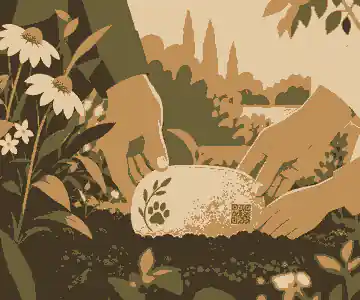
An engraved garden stone is the simplest lasting option. Place it where the pet actually spent time, not where it merely looks symmetrical. If your dog watched the gate, the gate may matter more than the rose bed. If your cat chose one warm paver, a small marker nearby may feel truer than a large monument. Garden stones can include a name, dates, a short phrase, a paw print, a line from a family saying or a small QR plaque leading to photos and memories.
A planted tribute can be more personal than a purchased object. Rosemary is widely associated with remembrance, lavender brings scent, native shrubs support local wildlife, bulbs return seasonally, and herbs can connect to daily care. The Royal Horticultural Society’s garden border planning advice recommends understanding light, soil, pH, style and maintenance before choosing plants. That is especially important for a memorial garden because a failed plant can feel emotionally sharper than an ordinary gardening setback.
For Australia, consider climate-suited planting such as grevillea, bottlebrush, westringia, kangaroo paw in suitable areas, native grasses or hardy herbs, always checking local conditions and pet safety. For the United Kingdom, rosemary, lavender, hebe, hardy geranium, snowdrops, daffodils, thyme and small trees can work depending on aspect and soil. For the United States, the USDA Plant Hardiness Zone Map helps families choose perennials and shrubs likely to tolerate local winter conditions. Across all markets, the ASPCA’s toxic and non-toxic plants list is worth checking if other animals still use the garden.
A stepping stone path can be gentle for children because it gives them a practical task: choosing a mold, pressing a paw print, adding glass pebbles, writing a name or placing the stone near a favorite route. If the pet has already died and there is no paw print, avoid making children feel they missed their chance. A heart, leaf, star, collar tag impression or drawn paw print can carry the same emotional meaning.
A bench, chair or small stool suits families who need somewhere to sit. The seat does not have to be engraved; a nearby plaque or small pot can do enough. This is often helpful after losing a dog because routines around walking, sitting outdoors and greeting neighbors may feel suddenly interrupted. A seat lets remembrance become part of daily rhythm rather than a formal visit.
Raised beds and container gardens are often the best answer for renters, older people, apartment dwellers or anyone expecting to move. A large pot with a small plaque, rosemary, dwarf shrub or seasonal flowers can be cared for without altering land. If you move later, the memorial can move too. This avoids the painful problem of leaving behind a marker in a garden you no longer own.
Wildlife-friendly memorials can also feel fitting. A bird bath, bee-friendly flowers, seed heads, a small water dish, native planting or a butterfly-friendly border can bring movement back to a quiet part of the garden. The RHS planting for the environment guidance explains how garden plants can support wildlife, soil and wellbeing. The key is restraint: one bird bath or pollinator bed is usually calmer than many decorative features competing for attention.
Wind chimes, solar lights and lanterns can work when they are subtle. Choose one sensory element rather than several. A low warm solar light near a stone can help the place feel present at night. A wind chime may be comforting for one person and intrusive for another, particularly in close neighborhoods, so think about sound, privacy and neighbors before installing it.
Memory boxes and photo displays belong in sheltered spaces. Outdoor photographs fade, damp enters frames and laminated prints deteriorate. If you want a photograph in the garden, ceramic photo plaques, sealed tiles or a QR-linked digital tribute are usually more reliable. Evaheld’s advice on how to choose between pet urns stones and plaques for a pet tribute decision is useful when the family is comparing physical keepsakes rather than choosing from emotion alone.
A QR-linked garden plaque can bridge the physical and digital memorial. The garden marker holds the name and presence; the online tribute holds the fuller story, photographs, videos, voice notes and messages from people who knew the pet. This is particularly useful when friends and relatives are in Australia, the United Kingdom and the United States, or when children grow older and want to revisit more than a short inscription. For families considering this, pet memorial stone with QR-linked online tribute planning explains how the two forms can support each other.
Wording for pet garden stones, plaques and digital tributes
Good pet memorial wording is specific, brief and true. Avoid phrases that feel borrowed if they do not sound like your animal or family. A stone has limited space, so let it carry the simplest truth and place longer memories in a digital tribute, journal or family message wall.
Short wording ideas include: “Milo, our sunny shadow”; “Luna, keeper of the garden”; “Ruby, loved in every ordinary day”; “Max, still walking beside us”; “Bella, the softest welcome home”; “Charlie, always at the gate”; “Nala, queen of the warm stones”; “Oscar, faithful friend and garden companion”; “Thank you for every walk”; and “Loved beyond words, remembered in small things.”
For pets with strong routines, include the routine. “Breakfast inspector”; “Chief stick finder”; “Window watcher”; “Keeper of the sofa”; “First to the door”; “Protector of the veggie patch”; “Tiny paws, huge presence.” These phrases can feel more truthful than formal memorial language because they preserve personality. If the memorial is for a working animal, therapy animal, assistance dog or horse, keep the wording dignified but still personal: “Steady, brave and trusted”; “Our patient teacher”; “A loyal partner in every season.”
Longer digital wording can follow a simple structure: who they were, what they loved, what they changed, what the family will keep doing in their memory. A paragraph might say: “Poppy loved the back steps, summer tomatoes, children dropping toast and the exact patch of afternoon sun beside the lavender. She taught our family to slow down, go outside and notice who needed comfort. We will keep this corner blooming for her.” That wording has more life than a generic phrase because it records memories no other pet could own.
If multiple family members disagree about wording, use the physical marker for the shared facts and the digital tribute for individual voices. The marker might simply say the pet’s name and years; children, siblings, neighbors and friends can add fuller memories online. Evaheld’s pet grave markers with wording privacy and memory planning can help families think through what belongs on a visible marker and what should stay private.
Privacy, access and family contributions
Pet memorials can become surprisingly communal. Neighbors may remember the dog at the fence. A dog walker may have photos the family has never seen. A child’s friend may want to leave a note. A vet clinic may have a paw print or card. An online memorial lets those contributions come together without crowding the garden itself.
At the same time, privacy matters. A public garden stone can be seen by visitors, neighbors or future property owners. A QR plaque can be scanned by anyone who reaches it unless the linked page has privacy controls. Decide whether the online memorial should be public, private, limited to invited people or kept as a draft until the family is ready. Evaheld’s guidance on letting loved ones leave tributes and condolences is especially relevant where guests may add messages, photos or memories.
For a pet memorial garden, the safest digital setup is usually: no home address, no private routines that identify when the house is empty, no children’s full names without consent, no vet account details, no unmoderated public comments and no sensitive family conflict in visible copy. The page can still be warm and personal without exposing information that does not belong in public.
If the pet belonged to a child, involve the child in age-appropriate decisions. Ask them to choose a flower, photo, stone color, short message or drawing. Do not require a long speech or a perfect goodbye. The RSPCA Knowledgebase notes that surviving animals may show behavior changes after a companion dies, including changes in appetite, sleep, toileting, restlessness or searching, and families should seek veterinary advice if concerned. That reminder from RSPCA Australia on animal grief is useful because the garden memorial may sit within a household where other pets are also adjusting.
Human grief also differs. Some people want to plant immediately; others cannot look at the garden for weeks. The AVMA’s pet owner resources include end-of-life and pet loss information through its pet care guidance, and the practical point is simple: there is no required timeline for making a memorial. You can place a temporary pot first, then choose a stone or plaque later.
Design mistakes to avoid
The first mistake is making the memorial too complex. A crowded space can be hard to maintain and visually noisy. Choose one main object, one planting scheme and one memory ritual. Add more only if the space still feels calm after a few weeks.
The second mistake is ignoring weather. Paper photographs, untreated timber, indoor ornaments, thin plastic, low-grade adhesives and delicate fabrics rarely survive long outdoors. If you want the garden memorial to last, use outdoor materials, keep precious keepsakes indoors and photograph fragile items for the digital memorial instead. Families comparing outdoor plaque materials may find which materials tend to suit QR memorial plaques best helpful before ordering anything permanent.
The third mistake is placing a burial or ashes without checking rules, groundwater, rental terms, strata rules, council expectations or future access. If you might sell the property, consider whether a moveable memorial would be kinder. A container garden, plaque, digital tribute and indoor keepsake can preserve the memory without tying the whole memorial to land you may not keep.
The fourth mistake is making the QR or digital element the whole memorial. Technology should support remembrance, not replace it. A QR code works best when the physical marker still makes sense on its own: name, dates if desired, short wording and a restrained design. The online content can then hold the fuller story. Evaheld’s overview of the kinds of content a memorial QR code can open is useful for deciding whether the linked page should include photographs, stories, videos, messages, music, documents or only a simple tribute.
The fifth mistake is choosing plants only for symbolism. Forget-me-nots, lilies, rosemary, lavender, roses and native shrubs all carry different associations, but the right plant is still the one that suits the site and is safe for animals who remain in the household. Check light, water, toxicity, mature size, maintenance and local climate before sentiment.
How famous animal lovers show the range of remembrance
Public memorials remind us that remembrance often reflects values, not just biography. Steve Irwin is remembered by many families through wildlife care, education and a fierce affection for animals, making him a natural reference point when a pet memorial garden includes native habitat or conservation giving. Bob Barker is closely associated with animal welfare advocacy, which suits families who want to honor a pet through shelter donations, spay and neuter awareness or rescue support. Paul O'Grady is remembered by many people for his warmth toward rescue dogs, a useful reminder that a pet tribute can include humor, tenderness and practical help for animals still waiting for homes.
Those examples do not mean a private family garden needs a public cause. They simply show that memorialization can take different forms: a planted corner, a donation, a rescued animal sponsored in memory, a digital page, a plaque, a yearly walk, a photo book, a child’s drawing or a quiet bench. The strongest choice is the one that fits the pet’s life and the family’s capacity.
A practical setup plan for a pet memorial garden
First, choose the location. Stand in the garden at the time of day you most associate with your pet. Notice sun, shade, drainage, visibility from the house, mowing paths, children’s access, other pets, neighbors and whether the spot feels comforting or too raw. A memorial should be easy to visit but not so intrusive that it hurts every time you pass.
Second, choose the focal point. If your budget is small, a single stone, pot or plant is enough. If you have more room, consider a bench, raised bed, low marker or small path. Decide whether the focal point should be permanent or moveable. Permanence can feel grounding, but moveable memorials are often wiser for renters, apartments, family homes likely to be sold or gardens shared with people who grieve differently.
Third, write the wording separately before ordering anything. Put three versions on paper: a very short inscription, a medium plaque line and a longer digital tribute paragraph. Leave them for a day or two. Read them aloud. Remove anything that sounds generic. Keep the details that make you think, “That was exactly them.”
Fourth, decide what will live online. A garden marker can carry a QR code, but even without a QR plaque, an online tribute helps preserve the fuller story. Include the pet’s name, favorite photos, everyday routines, nicknames, short family messages and any donation or rescue note. If you are not ready to invite others yet, gather the basics first; Evaheld’s what information you need to start a memorial explains the simple starting details before the page grows.
Fifth, make a care plan. Write down who waters the plant, who cleans the plaque, where the digital login or admin access is kept, whether the page is public or private, and what should happen if the family moves. These practical notes may feel unromantic, but they protect the memorial from becoming another difficult decision later.
Finally, give the memorial a ritual that is light enough to keep. It might be watering on Sunday mornings, adding one photo on the adoption anniversary, lighting a candle indoors on the date of death, taking the same walk once a month, donating annually to a shelter or inviting family to add a short memory each year. The ritual matters because memories are not only stored; they are revisited.
If you want a digital place to preserve the stories, photos and garden wording beside the physical tribute, Evaheld Memorials can help you begin ideas for pet memorials in a garden with a shareable memorial space that your family can shape at its own pace.

FAQs
What are ideas for pet memorials in a garden? Pet tribute ideas, wording and memories
Good ideas include an engraved stone, a planted remembrance corner, a container garden, a bench, a stepping stone, a wildlife-friendly planting bed, a plaque, a QR-linked tribute and a yearly ritual. A pet memorial page with photos and stories can hold longer memories beside the physical garden feature, while RHS garden border planning advice helps you choose plants that suit the actual site.
What should I write on a pet memorial garden stone?
Use your pet’s name, dates if you want them, and one phrase that sounds like them: “our sunny shadow”, “keeper of the garden”, “always at the gate” or “thank you for every walk”. For more structured wording, what to write on a pet headstone with tribute wording examples can help, and the AVMA pet care guidance gives broader context for pet loss and end-of-life care.
Can I bury my pet or their ashes in my garden?
Rules vary by country, state, council, property type and animal size, so check local requirements before burying a body or ashes. Families comparing a visible marker with a digital remembrance can use pet memorial plaque wording materials and digital tribute planning, while GOV.UK animal burial guidance explains the UK distinction between small domestic pets, larger animals and groundwater protection.
Are pet ashes good for memorial plants?
Not always. Cremated ashes can affect soil chemistry if used in high concentrations, so ask a crematorium, veterinarian, nursery or local horticultural adviser before mixing ashes around a valued plant. If you are deciding between urns, stones and planting, choose between pet urns stones and plaques for a pet tribute decision offers a practical framework, and pet cremation ashes in soil explains the pH concern.
What plants are best for a pet memorial garden?
Choose plants that suit your climate, soil, sunlight, water access and any animals still using the garden; rosemary, lavender, native shrubs, bulbs, herbs and hardy perennials can all work in the right place. A pet grave markers with wording privacy and memory planning approach helps align plants with the marker, while the USDA Plant Hardiness Zone Map is useful for United States perennial choices.
How can I make a pet memorial garden safe for other pets?
Avoid toxic plants, sharp objects, unstable stones, small swallowable decorations, loose wire, unsafe candles and any burial placement that other animals may disturb. If you are adding a QR-linked marker, pet memorial stone with QR-linked online tribute planning can keep the physical feature simple, and the ASPCA toxic and non-toxic plants list helps check plant safety.
Can family and friends contribute memories to a pet memorial?
Yes. Friends, neighbors, children, dog walkers, stable mates and relatives may all hold memories the immediate family does not have. letting loved ones leave tributes and condolences can bring those memories together, while RSPCA Australia on animal grief is a useful reminder that other pets in the home may also need routine and care after the loss.
Should I use a QR code on a pet memorial plaque?
A QR code can be helpful when the garden marker is small but the family wants to preserve photographs, stories, videos and messages. Keep the plaque discreet and make sure the linked page has the privacy level you want. the kinds of content a memorial QR code can open explains the digital side, and the Merck Veterinary Manual carcass disposal guidance reinforces why local practical rules should be checked for physical remains.
What material is best for an outdoor pet memorial plaque?
Granite, slate, bronze, stainless steel and quality outdoor ceramic are usually stronger choices than untreated timber, paper photographs or lightweight indoor ornaments. For QR plaques and outdoor finishes, which materials tend to suit QR memorial plaques best gives more detail, while RHS planting for the environment can help the surrounding garden stay resilient and wildlife-aware.
What information do I need before creating a pet memorial page?
Start with the pet’s name, favorite photo, rough dates if you want them, a few favorite routines, a short wording draft, privacy preference and who may contribute memories. Evaheld’s what information you need to start a memorial keeps the first step simple, and animal remains in interment sites from Cemeteries & Crematoria NSW shows why location and access rules should be checked when a tribute involves cemetery placement.