What should I write on a pet headstone? Pet tribute ideas, wording and memories
Practical, compassionate pet headstone wording ideas for names, dates, quotes, garden stones, QR memorials and AU/UK/US placement differences.
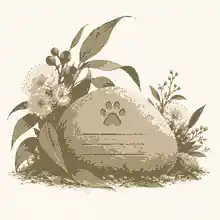
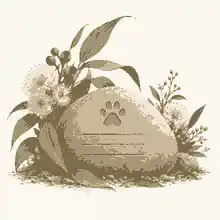
What should I write on a pet headstone? Pet tribute ideas, wording and memories usually begin with your pet's name, dates if you know them, and one short line that sounds true to the life you shared. If you need to write on a pet headstone while grief is fresh, choose clarity first: name, relationship, one distinctive memory, and only then a quote, symbol or longer tribute.
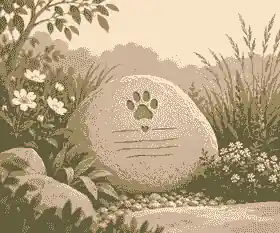
A good inscription does not have to explain the whole story. It should give the grave, garden stone or plaque enough identity that your family recognises your companion immediately: Bella, our beach-walk shadow; Milo, keeper of the sunny chair; Scout, brave heart and best friend. Pet memorials work best when the wording is specific, legible and emotionally durable, especially for families comparing garden stones, engraved plaques, urn markers or a digital tribute alongside the physical marker.
write on a pet headstone: practical guidance
Before choosing decorative wording, write the essentials in plain order: your pet's name, a date range or a single year, and one relationship line. For many families, that is enough. A simple marker might say: Ruby, 2012-2026, our gentle girl. Another might say: Max, adopted 2015, loved every day. If the birth date is unknown, use Arrived 2018 or Loved 2018-2026 rather than guessing. That small choice keeps the tribute honest.
Pet loss is not a minor form of grief. The American Veterinary Medical Association's pet loss guidance recognises that companion animals can be deeply woven into daily life, and the Association for Pet Loss and Bereavement exists specifically to support people grieving animals. That matters when you are choosing wording, because the line should not minimise the relationship or apologise for loving an animal deeply.
If you want the physical marker to connect with a fuller tribute, a pet memorial page with photos and stories can hold the memories that do not fit on stone: photos, routines, messages from children, the story of adoption, or the small habits that made your pet yours. The headstone can stay short while the digital memorial carries the fuller memories.
Choose the style of pet headstone wording
Most families settle into one of five wording styles. A name-only inscription is quiet and timeless: Luna, 2010-2024. A relationship line says what the pet was to you: Our loyal friend, Our little shadow, Family in every way. A memory line captures one behaviour: Met us at the gate, Slept beside every book, Waited for the school bus. A gratitude line speaks directly: Thank you for finding us, Thank you for every walk. A faith or afterlife line may fit some families, but it should match your actual beliefs rather than feel borrowed.
UK readers may say grave marker or memorial stone, Australian readers often use plaque, garden stone or pet grave plaque, and US readers commonly search for pet headstone, grave marker or memorial marker. The object may differ, but the wording principles are the same: keep it readable, make it personal, and check any cemetery, crematorium or council rules before ordering. For Australian families considering materials and placement, Australian pet grave plaque wording and QR memorial planning gives the market-specific frame that a general pet wording list often misses.
Support organisations also remind families that grief can affect people differently. The RSPCA pet bereavement toolkit, Cornell University's pet loss resources and Humane World for Animals' pet grief advice all support the idea that remembrance can help people process a real bond. That is why wording should be written for the people who will return to the marker, not for strangers passing by.
Pet headstone wording examples you can adapt
Short pet headstone wording can be as plain as: Charlie, our good boy; Daisy, loved beyond words; Oscar, always at the door; Nala, queen of the garden; Gus, our happy noise; Pepper, small body, huge heart; Willow, found in rescue, kept in love; Jasper, walked beside us; Molly, forever our girl; Toby, still part of home. These are intentionally simple. They give you shapes to adapt, not polished lines to copy without thought.
For dogs, try wording that reflects companionship and routine: Best walk partner, Guardian of the back gate, Slept at our feet, Brave to the end, Our muddy-pawed joy. For cats, a quieter or more characterful line may fit: Keeper of the windowsill, Soft paws and strong opinions, The house is quieter now, Sunbeam hunter, Our little sovereign. For horses, birds, rabbits or other companions, name the relationship rather than forcing dog-and-cat language: Steady heart, Morning song, Gentle jumper, Garden friend, Tiny life, huge love.
If you are tempted to use a famous quote, test it against your pet's personality. If the quote could sit on any marker, a nickname or habit may be stronger. The best line often comes from ordinary speech: Come on, trouble; Goodnight, sweetheart; Who wants a biscuit?; You found the sunny spot. A headstone can hold one private phrase without becoming childish if the phrase was genuinely part of your bond.
When several people are involved, gather ideas before editing. Children may remember toys, sounds and places adults overlook. A neighbour may remember a daily fence greeting. A vet nurse may remember courage at the end. If family members want to add messages beyond the inscription, letting loved ones leave tributes and condolences can turn one fixed line into a fuller shared remembrance.
It can also help to write three versions before choosing one. The first version should be very plain: name, dates and relationship. The second can be warmer, adding a habit or nickname. The third can be the most personal, using a phrase your household actually said. Put the drafts away for a day, then read them again. Grief can make every option feel either too small or too much; distance helps you choose wording that will still feel balanced when the immediate shock has softened.
What to leave off a pet headstone
Leave off wording that creates doubt, clutter or future discomfort. Do not add a full birth date if you do not know it. Do not list a breed unless it mattered to your family or is visually relevant to the design. Avoid long poems on small stones, because tiny lettering becomes hard to read and can age poorly outdoors. Avoid jokes that only feel funny in the first week unless the humour was truly central to your pet's character and will still feel kind years from now.
Be careful with blame, guilt or medical detail. A marker is rarely the right place for phrases about an accident, euthanasia decision or unresolved anger. The RSPCA Australia euthanasia policy treats euthanasia as an animal welfare decision when suffering cannot be relieved, but a headstone usually serves the living best when it centres the life rather than the final medical moment.
Also avoid overloading a small marker with every role your pet played. A line such as Our loyal, funny, brave, sweet, stubborn, beautiful, perfect boy may be heartfelt, but it is harder to engrave elegantly. Choose the one word that carries the rest. If you need more room, place the long tribute elsewhere and keep the stone calm.
Dates, names and layout that stay readable
Readability matters more than squeezing in every memory. A practical layout is name on the first line, dates on the second, and a short tribute on the third. For example: Archie / 2011-2025 / Still walking with us. Another: Coco / Rescued 2017 - Rested 2026 / Small paws, big courage. Use punctuation sparingly. A centred dot or simple dash is usually enough.
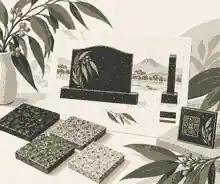
For outdoor markers, materials matter. Granite, bronze, ceramic, stainless steel and engraved stone age differently, and the surface affects how fine the lettering can be. Evaheld's material guidance on which plaque materials cope best outdoors is useful before approving small text, especially for rain, sun and long-term readability. For stone care, the Natural Stone Institute's care guidance warns against acidic cleaners on some stone, and the US Department of Veterans Affairs gives cautious government headstone cleaning advice that reinforces the value of gentle cleaning rather than harsh scraping.
If your marker will sit in a pet cemetery, garden, crematorium area or shared grave space, ask about size, fixing method, permitted images and whether QR plaques are allowed. In England, Scotland and Wales, GOV.UK pet cemetery guidance explains that pet cemetery operators must meet site and registration requirements; individual families do not need to become experts in those rules, but they should still ask the cemetery what is permitted before ordering a marker.
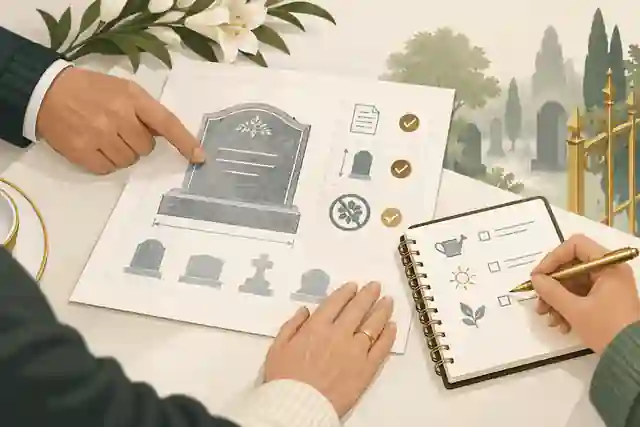
Good layout is also emotional editing. If the marker has a small face, a single clear line can feel more respectful than five cramped lines. Ask the supplier for a proof at actual size, not just a digital mock-up enlarged on screen. Check the spacing around the name, whether descenders such as g, y and p have room, and whether the date line looks secondary rather than competing with the tribute. If a paw print, heart, bird, star or flower symbol is included, make sure it supports the wording instead of taking space from the words that matter most.
Garden stones, home burials and jurisdiction differences
Rules differ sharply across Australia, the United Kingdom and the United States. In the UK, GOV.UK animal burial guidance says small domestic pets may usually be buried on your own land, while larger animals and pet cemeteries involve different requirements. GOV.UK fallen stock guidance also distinguishes pet animals from farm animals, which matters for rural families. Northern Ireland has separate waste guidance, including DAERA guidance on domestic pet garden burial.
In Australia, council rules vary by state, suburb, property type and whether the animal is buried at home, cremated or placed in a pet cemetery. RSPCA Queensland's practical advice on what to do when your pet passes away notes that some councils allow home burial and others restrict it. In the United States, rules are usually local rather than federal, so families should check city, county, homeowners' association and cemetery requirements before installing a marker.
Public health and environmental concerns are practical, not sentimental. The CDC's healthy pets guidance is a reminder that animals, soil, water and human health intersect. If you are unsure whether burial is appropriate, ask your veterinarian or local authority about cremation, pet cemetery burial or another lawful option. The wording decision should come after the placement decision, because a small home garden stone can carry more informal language than a regulated cemetery marker.
When a QR memorial helps the headstone stay simple
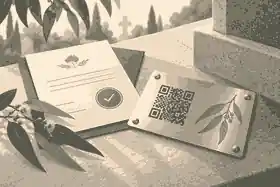
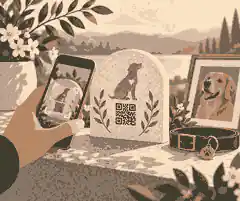
A physical marker has limits; a story does not. A QR memorial can let the headstone say only the name, dates and a short line while linking visitors to photos, videos, longer memories and messages. If you are new to the idea, what a QR memorial is in practice explains the basics, while what a QR memorial can actually link to helps families decide what belongs behind the code.
For pet memorials, the QR destination might include adoption stories, favourite walks, photos of the collar or toy, a child's drawing, voice notes, videos, or a guestbook for friends who knew the pet. That prevents the stone from becoming crowded. It also protects the inscription from trying to do every job at once: the stone marks the place; the memorial page holds the memories.
If privacy matters, decide it before sharing. Some families want a public tribute for a much-loved animal known by neighbours, club members or a wider community. Others prefer a private page for family only. private versus public online memorials is worth weighing before children, friends or extended family are invited to contribute.
A QR memorial also solves a common family disagreement: one person wants a very short inscription and another wants the whole story visible. The physical marker can stay restrained, while the online tribute can include the longer memories, photographs and messages without forcing every detail onto stone. This is especially helpful for pets who were loved across households, shared after a separation, cared for by a sitter or known by a wider community.
Writing the first draft without getting stuck
Use a three-part draft. First, write five facts: name, species, dates, favourite place, and one relationship word. Second, write five memories: a sound, a routine, a habit, a comforting moment and a funny detail. Third, circle the phrase that still feels true when read aloud. That phrase is usually closer to the final inscription than any quote list.
If you already have too many words, separate the fixed inscription from the longer tribute. A headstone might say Poppy, Our brave little heart. The memorial page can then say how she arrived, what she loved, who cared for her, and why the house feels different now. For human memorial writing, the same principle applies, and Evaheld's memorial tribute writing guidance can help families shape honest wording without making it formal or forced.
Families who are building a wider tribute can use what to include in a memorial page to decide what belongs online, and what information you need to start a memorial if they are gathering details before they feel ready to publish.
Try not to make the final line prove the depth of your grief. A headstone is not an argument for why the relationship mattered. The fact that you are marking the place already says that. The best pet tribute ideas usually name something concrete: the hallway where your dog waited, the blanket your cat claimed, the gate your horse leaned over, the morning song from a bird, the way a small animal changed the rhythm of a room. Concrete detail keeps the wording from becoming generic.
The public memorial profiles for Steve Irwin, Paul O'Grady and Queen Elizabeth II show how remembrance often centres on distinctive bonds, public roles and everyday details. Pet headstone wording works the same way at a smaller scale: the most durable words are the ones that preserve a recognisable relationship.
A practical inscription checklist
Before approving the final wording, ask six questions. Can the name be read easily from a normal standing distance? Are the dates honest? Does the line sound like your pet rather than a stock phrase? Will it still feel kind in ten years? Does it fit the stone, plaque or marker without cramped lettering? Have you checked the rules for the place where it will sit?
Then read the wording aloud twice: once as if speaking to your pet, and once as if a visitor is reading it years later. If both readings feel steady, the wording is probably close. If it feels too performative, cut it back. If it feels too plain, add one concrete detail. For example, Loved always is fine; Loved always, muddy paws and all is more specific if it truly fits.
When you are ready to make the physical wording part of a fuller tribute, Evaheld Memorials can help your family write on a pet headstone while keeping the fuller story, photos and memories together in one respectful memorial space.

FAQs
What should I write on a pet headstone? Pet tribute ideas, wording and memories
Write your pet's name, dates if known, and one short line that captures your relationship, such as a nickname, habit or everyday memory. A pet memorial page with photos and stories can hold the longer tribute, while the American Veterinary Medical Association's pet loss guidance supports treating the grief as real and worthy of care.
Should a pet headstone include dates?
Dates are helpful but not compulsory; if you do not know the birth date, use a year range, an adoption year or a phrase such as Arrived 2018. what information you need to start a memorial can help you gather details, while the RSPCA pet bereavement toolkit reminds families that remembrance can be part of grieving.
What is a short inscription for a dog headstone?
Good short dog inscriptions include Our loyal friend, Best walk partner, Still beside us, Brave heart, Good boy always or Muddy paws, huge love. If you want others to add memories beyond the stone, letting loved ones leave tributes and condolences can help, and Humane World for Animals' pet grief advice suggests rituals such as writing, memory boxes and memorialising a pet.
What is a short inscription for a cat headstone?
Cat headstone wording can be quiet, affectionate or characterful: Keeper of the windowsill, Our little shadow, Queen of the garden, Soft paws, strong opinions or The house is quieter now. memorial tribute writing can help you find a natural voice, and Cornell University's pet loss resources recognise that companion animal grief can be significant.
Can I put a funny line on a pet grave marker?
A funny line is appropriate when it is affectionate, recognisable and likely to feel kind in the future, such as Chief sock thief or Professional treat inspector. If the humour needs more context, place the longer story in what to include in a memorial page, while the Association for Pet Loss and Bereavement shows why grief support and memorial expression can take different forms.
Can I bury my pet at home and add a headstone?
Sometimes, but rules vary by country, state, council and property, so check local requirements before burial or installation. Australian pet grave plaque wording and QR memorial planning is useful for Australian families, while GOV.UK animal burial guidance explains the UK position for small domestic pets on your own land.
How long should a pet headstone inscription be?
Most pet headstone inscriptions work best in one to three short lines: name, dates and a tribute phrase. which plaque materials cope best outdoors can help you think about readability, and the Natural Stone Institute's care guidance explains why stone type and cleaning method affect long-term appearance.
Can a QR code go with a pet headstone?
Yes, a QR code can sit on or near a pet marker when the cemetery, crematorium or property rules allow it, and it can link to photos, videos, stories and messages. what a QR memorial can actually link to gives practical ideas, while government headstone cleaning advice shows why physical markers should be treated gently once installed.
Should a pet memorial be public or private?
Choose public sharing if many people knew and loved the pet; choose private sharing if the family needs time, children are involved or the tribute contains personal details. private versus public online memorials explains the decision, and the CDC's healthy pets guidance is a reminder to think practically about animals, households and shared spaces.
What should I avoid writing on a pet headstone?
Avoid guessed dates, overcrowded poems, blame, medical detail, harsh humour and wording that feels generic to your pet. what a QR memorial is in practice can help you separate short marker wording from longer memories, while RSPCA Queensland's advice on what to do when your pet passes away shows that burial, cremation and remembrance choices often need to be considered together.