How do I invite family to contribute to a pet memorial? Pet tribute ideas, wording and memories
A compassionate, practical guide to inviting family to contribute to a pet memorial, with wording, tribute ideas, privacy choices, garden stone tips and AU/UK/US differences.
How do I invite family to contribute to a pet memorial? Pet tribute ideas, wording and memories are best handled by making one calm, specific invitation, explaining what people can add, and giving them choices: a short message, a favourite photo, a small story, a video, a voice note, a reading, or a line for a plaque. If you invite family to contribute to a pet memorial in a way that feels simple and optional, relatives are more likely to share memories that feel true to the pet rather than polished or forced.
A pet memorial can be a quiet online space, a garden stone, a framed photo, a keepsake box, a QR-linked tribute, or a small ceremony at home. The right format depends on the animal, the people grieving, and the practical limits around burial, cremation, public sharing, and privacy. For families spread across Australia, the United Kingdom, and the United States, the most important first step is the same: choose one organiser, decide what kind of contributions you want, and make it clear that nobody has to write perfectly. A single sentence such as ‘We are gathering small memories of Milo for his memorial; a photo, story, or few words would mean a great deal’ is often enough.
Pet loss can be deeply felt because animals are woven into daily routines, caregiving, and family identity. The American Veterinary Medical Association explains in its pet loss support material that grief after losing an animal companion can be real and significant, while the ASPCA’s end-of-life care guidance encourages families to think about comfort, quality of life, and support before and after a pet dies. This matters when asking for contributions: people may be grieving differently, and some may need a gentle invitation rather than a direct request.
Invite family to contribute to a pet memorial: practical guidance
The strongest invitation is short, specific, and easy to answer. It should name the pet, explain what the memorial is for, list two or three types of contributions, give a practical deadline if there is one, and reassure people that short memories are welcome. If the memorial will be public, private, printed, or placed on a garden stone, say so before people send anything. Families using a digital tribute can begin with how to create an online memorial thoughtfully, then add pet-specific details such as favourite walks, nicknames, daily rituals, toys, sounds, and small habits.
Try this wording for a close family group: ‘We are creating a memorial for Daisy and would love to include the little moments each of us remembers. If you would like to contribute, please send one photo, one short memory, or a few words about what she meant to you by Sunday. There is no pressure to write anything long; even one sentence helps us remember her properly.’ This works because it removes the pressure to produce a polished tribute and gives people a clear action.
For a wider group, use a lighter message: ‘We are gathering memories for Daisy’s pet memorial. If you knew her, loved her, walked her, cared for her, or simply have a favourite photo, you are welcome to share something. Short messages are very welcome.’ For children, ask for drawings, a favourite story, or a sentence beginning with ‘I remember when…’. For older relatives who may prefer not to use a platform, offer to type their words for them.
What To Ask Family Members To Contribute
Families often begin with wording for a marker or plaque, but the most meaningful material usually comes from everyday details. Ask for photographs from different life stages, memories of routines, funny habits, favourite places, favourite toys, small acts of comfort, and the pet’s relationship with each person. If you are building a digital memorial, meaningful online memorial inclusions can be adapted for a companion animal by replacing formal biography with the pet’s story: how they came into the family, what they loved, how they changed the household, and what people will miss in daily life.
Contribution prompts can be more useful than broad requests. Instead of asking ‘Can you send a tribute?’, ask one of these: ‘What did she do that made you laugh?’, ‘Where did he like to sit?’, ‘What sound, look, or habit do you remember?’, ‘What did our walks with him feel like?’, ‘What did she teach us about patience or affection?’, ‘Which photo feels most like her?’. These prompts are especially helpful when family members are sad, tired, or unsure whether their memory is important enough.
Professional grief and veterinary support services use a similar principle: name the loss and make support accessible. Cornell University’s Pet Loss Support Hotline and The Ohio State University’s Honoring the Bond support service both recognise that people may need space to speak about the human-animal bond. A family memorial can offer a smaller, private version of that permission: people can say why the pet mattered without needing to justify the depth of the loss.
Pet Tribute Ideas For Different Kinds Of Families
Not every family wants the same type of memorial. Some prefer a quiet photo album. Some want a digital guestbook. Some want a garden stone near a favourite tree. Others want a QR plaque that opens a fuller story. If relatives are scattered, how to invite family and friends to help build the memorial becomes practical rather than symbolic: it lets one person coordinate the page while others add the moments only they remember.
For a small household, consider a home ritual: light a candle, place the collar or tag beside a photo, read a few memories aloud, and choose one line for a frame or garden stone. For a wider family, collect contributions in a shared memorial and then choose a smaller selection for any physical plaque. For children, include drawings, paw-print art where available, or a memory jar with cards they can add to over time. For remote relatives, invite voice notes or short videos, because written words can feel difficult at first.
If you want a memorial that includes movement, sound, or longer stories, adding videos and music thoughtfully can help families decide what belongs in the tribute and what should remain private. A short clip of a dog greeting the family at the door, a cat purring in a sunny window, or a horse walking toward the gate can express what a plaque inscription cannot. Keep the editing gentle. The point is not to make a dramatic video; it is to preserve the pet’s presence honestly.
Wording For Pet Memorial Invitations
Use wording that matches the family’s tone. A formal invitation can say: ‘Our family is preparing a memorial for Bella. We would be grateful for any short memory, photograph, or message you would like included. Please send contributions by Friday so we can review them together.’ A warm invitation can say: ‘We are putting together a page for Max, full of the little things that made him Max. If you have a photo, a story, or even one line, please send it through.’ A very gentle version can say: ‘There is no pressure to reply, but if you would like to share a memory of Luna, we would love to include it in her memorial.’
For people who cared for the pet professionally, such as walkers, groomers, sitters, trainers, or veterinary staff, keep the request respectful and low pressure: ‘We are creating a small memorial for Oscar and wanted to thank you for the care you gave him. If you have a memory or photo you would like to share, we would be honoured to include it.’ Veterinary teams may not always be able to respond, but a kind invitation gives them permission if they wish to.
When the memorial includes condolence-style messages, it helps to guide tone. Families can use how people can leave tributes and condolences on a memorial to decide whether guests can post directly or whether one organiser should review contributions first. This is particularly useful where a child is reading the memorial, where there are difficult family dynamics, or where the pet’s death was sudden and people may write in a way that feels too raw for public sharing.
Choosing Between A Public, Private, Or Invitation-Only Memorial
Privacy should be decided before invitations go out. Some families are comfortable with a public memorial because the pet was known by neighbours, friends, or an online community. Others prefer a private page shared only with close family. In all three target regions, privacy expectations vary more by family than by law, but data protection and platform settings still matter. For a pet memorial that includes children, home locations, addresses, or identifying details, choose restraint.
A public page may be suitable when you want friends, neighbours, rescue volunteers, or former carers to find and add memories. A private page may be better when the pet’s death is recent, when children are involved, or when the family simply wants space. The practical comparison in private and public memorial options is useful here because it separates visibility, contribution permissions, and search access. Those are different decisions: a memorial can be shareable without being openly indexed.
The United Kingdom’s Blue Cross offers pet bereavement and pet loss support, PDSA provides advice on coping with pet bereavement, and Cats Protection runs Paws to Listen for people grieving a cat. These services are reminders that not everyone processes pet loss in the same way. A private memorial can let people contribute when ready rather than feeling watched.
Garden Stones, Plaques, And What Can Fit
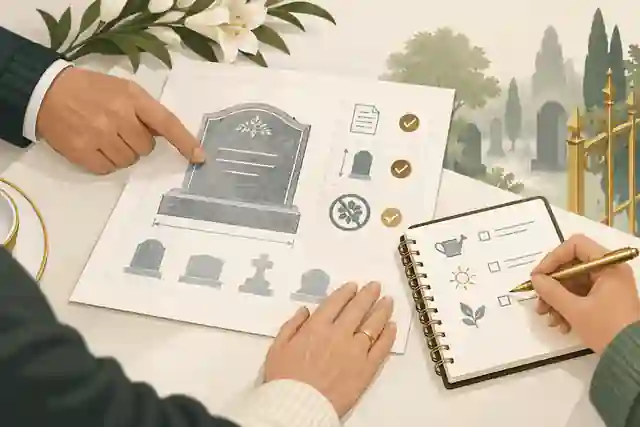
Competitor articles often focus on what to put on a pet grave marker, and that is a useful topic. A marker usually has limited space, so it should carry only the most durable information: name, dates if known, a short phrase, and perhaps one distinctive line. Examples include ‘Milo, our faithful walking companion’, ‘Luna, loved in every sunny window’, or ‘Bella, small paws, lasting memories’. Avoid trying to fit a full life story onto stone. Put the fuller story in the memorial, then use the physical marker as a doorway to that story.
A pet grave marker or garden stone should be readable, weather-appropriate, and allowed in the place where it will sit. In a private garden, families have more freedom, but should still think about durability, mowing, drainage, and whether the stone may need to move later. In a cemetery, crematorium garden, council space, apartment complex, or rental property, check permission before ordering a marker. UK government guidance on animal by-product disposal rules and its separate fallen stock guidance show why animal remains and disposal can be regulated differently by context. For ordinary companion animals, local rules still matter, especially outside a private home.
In Australia, the RSPCA knowledge base on what to do when a pet dies advises families to consider options such as veterinary support, cremation, and burial while checking local rules. In the United States, regulations vary by state, county, city, cemetery, and property type. In the United Kingdom, home burial may be treated differently from burial in public land or commercial settings. The safe rule across AU, UK, and US readers is this: ask the vet, crematorium, cemetery, local council, or local authority before placing remains or a permanent marker anywhere that is not clearly your private property.
How To Turn Many Memories Into One Coherent Memorial
Once family members send contributions, organise them by type rather than by sender. Put photographs together, short stories together, suggested inscription lines together, and longer reflections together. This avoids a memorial that feels like a pile of disconnected messages. The final structure can be simple: opening tribute, pet’s story, photo gallery, family memories, favourite places, messages, and closing line.
Do not feel obliged to include every contribution at equal length. If someone sends a long message, you can include the whole message in a private section and use one sentence in the main tribute. If several people send similar memories, combine them into a paragraph that honours the theme. If one person sends something that feels too painful, too private, or inaccurate, ask before publishing. A memorial is not an unedited record; it is a careful remembrance.
This is where updating a memorial after the first draft helps. You do not have to finish the tribute before inviting people. You can publish a first version with the pet’s name, photo, and simple story, then add family memories later. That often works better than delaying the memorial until everyone has found the right words.
Consider the example of public memorial profiles. The Evaheld Memorials profile for Betty White naturally connects to animal advocacy and reminds families that love for animals can be part of a life story. Paul O'Grady is also remembered by many for his affection for dogs and animal welfare work. Steve Irwin offers another kind of example: a public legacy can include relationships with animals, conservation, teaching, and family memory. A household pet memorial is smaller, but the editorial principle is similar: focus on the bond, not just the facts.
QR Links, Digital Guestbooks, And Long-Term Access
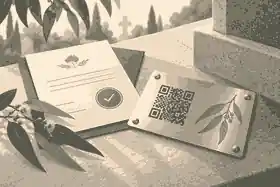
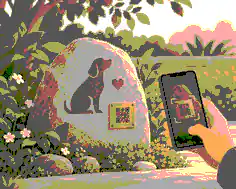
A QR code can be useful when a family wants a small physical marker and a richer digital tribute. The marker can carry the pet’s name and a short line, while the code opens photos, stories, videos, and family messages. If you choose this route, make sure the linked page is editable, privacy-aware, and not dependent on a random file link that may break. The article on what a QR memorial can link to explains why the destination matters more than the code itself.
For garden stones and plaques, keep the physical wording short. Use the digital memorial for the details: adoption day, favourite food, walking routes, funny habits, and the way the pet comforted people. The International Association for Animal Hospice and Palliative Care discusses animal hospice and palliative care, and the Association for Pet Loss and Bereavement provides pet loss support communities. These sources reflect a broader truth: pet care, end-of-life decisions, and remembrance are not trivial. A well-made memorial can give the relationship a respectful shape.
If relatives are contributing from different countries, be clear about timing and time zones. A message such as ‘Please send anything by Sunday evening your time’ is kinder than a rigid deadline. For families with members in Australia, the United Kingdom, and the United States, consider publishing a first version and leaving the memorial open for later contributions. If the memorial will be connected to a QR plaque, check that the page can be updated without replacing the plaque. That avoids treating the memorial as frozen on the day it is made.
What To Do With Photos, Videos, And Voice Memories
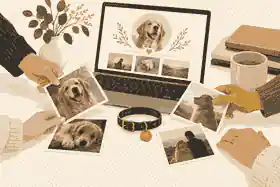
Ask contributors to send the highest-quality version they have, but do not shame anyone for imperfect files. A blurry photo of a dog asleep under a chair may mean more than a studio-quality image. Caption images with names, dates if known, and context: ‘Milo in the kitchen on Christmas morning’ is more useful than ‘Milo photo’. For videos, choose short clips that show personality. For voice memories, ask people to record one minute about what they remember most.
Preservation matters because phone galleries, text threads, and social accounts can be lost. If the memorial becomes important to the family, keep a copy outside the platform. Families planning long-term remembrance should use how memorial content can be downloaded later before assuming that a digital page is the only archive. Save original photos separately, keep captions in a document, and record who contributed what. This is especially important where siblings, former partners, adult children, or blended families all have memories of the same pet.
The Association of Private Pet Cemeteries and Crematoria in the UK gives context for pet cemetery and crematoria standards, while GOV.UK information on pet cemeteries shows that formal pet burial places can be subject to specific rules. These sources are not a substitute for local advice, but they reinforce the practical point: if the memorial has a physical component, permissions and permanence should be checked before money is spent.
A Step-By-Step Plan To Invite Family Without Overwhelming Them
First, decide who owns the memorial process. One person should collect contributions, manage privacy, and keep the tone consistent. Second, choose the format: digital memorial, garden stone, framed print, memory book, QR plaque, small ceremony, or a combination. Third, write a short invitation with three clear options: photo, memory, or few words. Fourth, send the invitation privately before posting publicly. Fifth, give people a reasonable deadline, but allow late memories. Sixth, review contributions for privacy, accuracy, and tone. Seventh, publish or display the memorial in stages.
Before you begin, gather the pet’s name, dates if known, favourite photo, brief story, and the names of people who should be invited. The FAQ on what information you need to start a memorial is useful even for a pet tribute because it keeps the first draft manageable. You do not need every date, photo, and message at the beginning. A simple first version can grow into something richer.
When people reply, thank them without ranking contributions. A short message is not less loving than a long one. Some family members may send a photo and no words; others may write a full reflection. Some may not contribute at all because the loss is too fresh. A compassionate memorial process makes room for all of that.
Common Mistakes To Avoid
Do not ask for ‘anything you want’ without guidance; people may freeze. Do not publish private details such as addresses, children’s routines, or exact locations without thought. Do not assume everyone agrees on burial, cremation, ashes, or display. Do not order a plaque before checking wording, spelling, size, and placement. Do not use a public memorial if the family needs privacy. Do not wait for perfect wording before beginning. The memorial can be revised.
Also avoid overloading the marker. Competitor examples often show short inscriptions, and that limitation is real. Names, dates, and one line usually work better than a crowded stone. If you need room for a full life story, use a digital memorial alongside the physical object. If you want relatives to contribute over time, choose a platform that allows updates, moderation, and family access rather than a static image or one-time post.
Finally, keep grief support separate from memorial production. A memorial can help people remember, but it is not therapy. If someone is struggling intensely, suggest professional or community support. Pet bereavement services, veterinary social work programs, and humane organisations can be more appropriate than asking that person to write immediately. The Humane World advice on coping with the death of a pet is another reminder that grief can be practical, emotional, and physical at once. The memorial invitation should be an opening, not a demand.
Short Templates You Can Use
For a family chat: ‘We are creating a memorial for Rosie. If you would like to help, please send a photo, a short memory, or a few words about what you loved most about her. We will keep it private while we put it together.’
For children: ‘We are making a memory page for Rosie. You can draw a picture, choose a photo, or tell us one thing you remember. It does not have to be long.’
For a garden stone: ‘We are choosing wording for Rosie’s garden stone. Please send any short phrase that feels like her. We may not be able to fit every line on the stone, but we can include longer memories in the memorial.’
For a remote family: ‘Because we are in different places, we are collecting memories online first. Please send a photo, voice note, or short message when you are ready. We will add contributions gradually.’
For a QR-linked marker: ‘The marker will have Rosie’s name and a short line, and the QR link will open her fuller memorial with photos and memories. If you have something you would like included, please send it to us before we review the first version.’
A practical closing step is to choose one next action today: draft the invitation, collect three favourite photos, or ask one trusted person to review the wording. When your family is ready, Evaheld Memorials can help you invite family to contribute to a pet memorial in a shared remembrance space that can grow as more memories arrive.
FAQs
How do I invite family to contribute to a pet memorial? Pet tribute ideas, wording and memories
Invite family with one clear message that names the pet, explains the memorial, and asks for a photo, short memory, or few words by a gentle deadline. If relatives will help build the page directly, how to invite family and friends to help build the memorial can support a shared process, while the AVMA’s pet loss support material shows why compassionate wording matters.
What should I ask relatives to write for a pet memorial?
Ask for specific memories: favourite habits, funny moments, comforting routines, favourite places, or one sentence about what the pet meant to them. Families shaping the first draft can use meaningful online memorial inclusions, and Cornell’s Pet Loss Support Hotline reflects how meaningful the human-animal bond can be.
How long should a pet memorial invitation be?
A pet memorial invitation is usually best at three to five sentences: what you are making, what people can send, when to send it, and whether the memorial is private or public. A first memorial draft can follow how to create an online memorial thoughtfully, while the ASPCA’s end-of-life care guidance supports a gentle, family-centred approach.
Should a pet memorial be private or public?
A pet memorial should be private if it includes children, home details, raw grief, or memories meant only for close family; public sharing can work when friends, neighbours, or carers also loved the pet. The comparison in private and public memorial options helps with that choice, and Blue Cross offers pet bereavement and pet loss support for people processing the decision.
What wording fits on a pet garden stone?
A pet garden stone usually fits the pet’s name, dates if known, and one short line such as a nickname, role, or memory. Longer stories belong in the memorial itself, especially when families use what a QR memorial can link to, and GOV.UK’s pet cemeteries guidance shows why physical placement rules should be checked.
Can family members add photos and videos to a pet memorial?
Yes, family members can contribute photos, videos, voice notes, and written memories when the memorial format supports them and the organiser reviews privacy first. The ideas in adding videos and music thoughtfully apply well to pet tributes, and PDSA’s advice on coping with pet bereavement recognises how personal those memories can feel.
What if someone sends a memory that feels too private?
If a contribution feels too private, ask permission before publishing it, edit identifying details, or keep it in a private family copy. The moderation principle behind how people can leave tributes and condolences on a memorial helps protect tone, while Cats Protection’s Paws to Listen service shows that pet grief may need discretion.
Can I update a pet memorial after family members send more memories?
Yes, an online pet memorial can often be updated after the first version, which is useful when relatives need more time to find photos or words. Families can plan for updating a memorial after the first draft, while Ohio State’s Honoring the Bond support service reflects why grief and remembrance may unfold gradually.
Do pet burial and memorial rules differ in Australia, the UK, and the US?
Yes, rules can differ by country, state, council, cemetery, property type, and the kind of remains or marker involved, so check locally before burial or permanent placement. Start with what information you need to start a memorial, then confirm physical plans against sources such as the RSPCA’s what to do when a pet dies advice.
How do I keep a copy of a pet memorial for the future?
Keep original photos, exported text, captions, and any videos in a separate family folder as well as on the memorial page. The steps in how memorial content can be downloaded later reduce the risk of losing contributions, and the Association for Pet Loss and Bereavement’s pet loss support communities show why preserving memories can remain important over time.