How do I print an online memorial as a book? Guestbooks, messages and moderation
A practical family guide to printing an online memorial as a book, with guestbook selection, message moderation, permissions, layout, privacy and archiving advice.
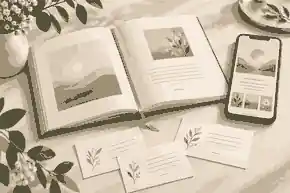
How do I print an online memorial as a book? Guestbooks, messages and moderation should be planned as one careful publishing process: gather the memorial content, review permissions, moderate guestbook entries, organise the layout, export or typeset a clean file, then print a family copy only after the people closest to the person have approved it. If your goal is to print an online memorial as a book, treat the book as a curated keepsake rather than a raw dump of every message, photograph and update.
A printed memorial book can hold the life story, selected photographs, funeral details, condolence messages, memory-wall posts, tributes, poems, readings and a short note explaining how the online version can continue to grow. It can be given to a spouse, children, siblings, close friends or older relatives who prefer something tangible. It can also become a backup copy if accounts change, links expire or a platform closes.
The practical work is simple, but the editorial judgement matters. Families should decide who has final approval, which messages are private, whether names should be shortened, how late contributions will be handled, and whether the finished book is for immediate family only or for wider sharing. Evaheld Memorials families often begin with download online memorial content because saving, printing and archiving are easier when the memorial has been structured from the beginning.
What to include before you print an online memorial as a book
Start with the core memorial page: the person's name, life dates, a clear portrait, a short biography and a fuller life story if the family has one. Add selected photographs with captions, then bring in the written material that made the online memorial meaningful: guestbook entries, memory-wall posts, tributes, condolences and messages from people who could not attend the funeral or memorial service.
The Library of Congress personal archiving guidance is useful here because it frames digital memory as something that needs file formats, descriptions and deliberate preservation, not just emotional value. A memorial book benefits from the same principle: name files clearly, keep the highest-quality originals, and avoid building the only copy from screenshots if better exports are available.
For paper keepsakes and scanned family photographs, the US National Archives family archives guidance encourages simple preservation habits for family papers and photographs. That matters because a memorial book often combines new digital messages with older images, certificates, letters or newspaper cuttings. If fragile originals are involved, scan them carefully and return them to safe storage rather than passing them around during the layout process.
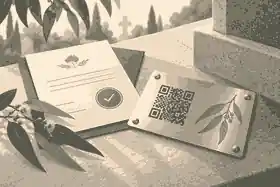
A strong book usually has five sections: a title page, a life story, a photo section, a guestbook or memory-wall section, and a closing page with thanks or future access details. If the online memorial includes audio, video or music, describe those items rather than pretending they can be printed. A still image from a video, a QR code to the continuing memorial, or a short transcript from a voice memory can help the printed version acknowledge richer media without losing clarity.
Families who are still building the page can use meaningful online memorial inclusions as a planning checklist. The printed book will only be as useful as the underlying memorial material, so it helps to prepare names, dates, captions, relationships and service details before inviting wider contributions.
Guestbooks, memory walls and condolence messages
A physical funeral guest book is often limited to the people who were present on the day. An online guestbook can include friends overseas, former colleagues, neighbours, school friends, carers and relatives who need more time before writing. That wider reach is one of the main reasons families later want a printed version.
The best guestbook section is edited lightly, not rewritten. Correct obvious typos only if they would distract from the message, and keep the contributor's voice intact. Do not change meaning, intensify emotion, or make every message sound formal. A sentence from an old workmate, a memory from a cousin and a short note from a neighbour can all belong together if the layout gives them enough space.
Evaheld Memorials' guidance on messages on memorial pages is relevant because guestbook entries are not just comments; they are records of relationship. When you print them, decide whether to show full names, first names, initials, relationship labels or location. For a family-only book, full attribution may feel natural. For wider sharing, initials or relationship labels may be kinder.
The eSafety Commissioner's digital legacy guidance is a useful reminder that online memories, accounts and photographs form part of a person's broader digital presence. When guestbook messages mention living people, children, locations, health details or family conflict, the issue is not only the deceased person's privacy. It may affect people who are still living.
A practical approach is to sort messages into three groups: print as submitted, print after family review, or keep online/private only. The last group may include very personal messages, late-night grief posts, family disputes, medical details, allegations, or messages that were kind in intent but too intimate for a printed book.
Moderation before printing
Moderation is not censorship when it is done transparently and respectfully. It is a safeguard for a grieving family and for contributors who may not realise that an online message could later appear in a printed keepsake. Before printing, one or two trusted people should review every entry for spam, duplication, distressing content, accidental disclosure and tone.
Families can use moderating memorial comments as a practical framework. The aim is to protect the memorial without flattening it. A printed book should still show the different ways people knew the person: affectionate, humorous, formal, brief, reflective, religious, secular and practical.
Good moderation questions include: Does this message identify a living person in a way they may not expect? Does it disclose health, adoption, relationship, financial or legal details? Does it include copyrighted words, song lyrics or images the family cannot use? Does it attack another person? Is it clearly from someone who knew the person, or does it look like spam? Would the contributor be surprised if this appeared in a book?
The Australian Cyber Security Centre's account security advice also matters because moderation depends on account control. Use strong account access, avoid shared passwords, and make sure the person exporting or downloading files is authorised by the family. If several relatives are helping, give each person a clear role instead of sharing one login informally.
For public memorials, moderation should happen before wider distribution. For private memorials, it can still be important because a printed book may circulate beyond the original audience. Families comparing settings should understand private versus public online memorials before they invite contributions that may later become part of a book.
Privacy and permission across Australia, the United Kingdom and the United States
Privacy rules differ, and a family memorial is not the same as a regulated business database. Still, the ethical rule is clear: print only what the family has authority to use and what contributors would reasonably expect to be preserved. In Australia, the OAIC explains personal information in a way that focuses on identifiable living individuals, while noting that the Privacy Act does not cover the personal information of someone who has died. In practice, a memorial message can still reveal information about living people.
In the UK, the ICO guidance on personal data explains that information about a deceased person is not UK GDPR personal data. That does not remove duties of care around living relatives, children, medical details, photographs or sensitive family circumstances. It simply means the legal route may be different from the moral responsibility.
In the United States, privacy and publicity rules vary by state, while copyright and funeral consumer rules have their own frameworks. If a printed memorial book will be sold, distributed widely, or include professional photography, music lyrics, published poems or celebrity images, get specific permission rather than assuming family sentiment is enough.
The US Copyright Office's copyright overview is a good plain-language starting point: original photographs, writing and recordings can be protected works. The UK Intellectual Property Office's notice on digital images, photographs and the internet reinforces the same practical point for UK readers: online availability does not automatically mean free permission to reuse.
Who should approve the memorial book?
Every printed book needs a responsible editor. That does not mean one person owns the grief. It means someone has to make final decisions about what is included, what is corrected, what stays private and when the book is ready. If the memorial has several close family branches, nominate a small review group and give them a deadline.
Evaheld Memorials' article on who controls an online memorial over time is useful because control can become unclear after the first few weeks. The person who created the online page may not be the person who should approve a printed family book. A spouse, adult child, executor, sibling or appointed family organiser may need to be involved, depending on the circumstances.
Approval should cover four things: factual accuracy, emotional appropriateness, contributor expectations and family distribution. A book printed for a widow or widower may include messages that would not be suitable for a public memorial table. A book made for grandchildren may need a gentler selection. A book shared with colleagues may need fewer intimate family photographs.
If the memorial is for a public figure, the same principle applies. A memorial profile for Alan Rickman shows how a life can be organised through biography, photographs, tributes and family context without turning every detail into public property. Families can borrow that editorial restraint: include enough to honour the person fully, but not so much that privacy disappears.
Layout, order and book design
The book should be calm to read. Avoid cramming every page with small text, decorative borders and low-resolution images. Use clear headings, generous margins and consistent captions. If a tribute is long, give it its own page. If many messages are short, group them by relationship or date.
For photographs, the Library of Congress photograph care guidance highlights the importance of proper handling and storage for photographic materials. In book production terms, that translates into respecting originals: scan at a sensible resolution, avoid over-editing faces, do not crop out important context, and keep a separate archive of the untouched files.
A simple order often works best: cover, title page, short introduction, life story, timeline, photographs, service details, guestbook messages, longer tributes, closing thanks and a note about the online memorial. If the person loved music, sport, gardening, faith, cooking or community service, use section titles that reflect the life rather than generic labels.
A profile such as Olivia Newton-John demonstrates how biography, public contribution and messages can sit together. For a family book, the same balance can help: honour achievements, but make room for everyday qualities, relationships and small memories.
Do not over-design grief. A memorial book does not need to look like a glossy sales brochure. It needs to be readable, durable and emotionally safe. Choose typography that older relatives can read, print test pages before ordering multiple copies, and check that every caption matches the right photograph.
Printing options and costs
Families usually choose between home printing, a local print shop, a photo-book service, a funeral stationery provider or a memorial platform's own print-ready export. Home printing works for a short draft or a single binder copy. A local print shop can help with paper weight, binding, colour proofing and reprints. Photo-book services can be beautiful, but they may be awkward for long guestbook sections. Funeral stationery providers may suit service booklets but not large memory-wall archives.
In Australia, the ACCC funeral services guidance reminds families to ask clear questions about funeral products and services and to watch for misleading pricing. In the UK, the CMA Funerals Market Investigation Order 2021 is part of a wider push for clearer funeral price information. In the US, the FTC Funeral Rule gives consumers rights around choosing funeral goods and services and receiving price information from funeral providers.
Those funeral rules may not directly govern every online memorial book, especially if you use a separate printer rather than a funeral home. They still provide a useful consumer mindset: ask what is included, what costs extra, whether reprints are easy, whether you can approve a proof, and whether digital files remain yours.
If your online memorial may be updated later, avoid printing too early. Evaheld Memorials' article on updating an online memorial over time explains why the first version is not always the final version. A sensible pattern is to print a small service booklet first, then a fuller memorial book weeks or months later when more messages have arrived.
Digital media, QR codes and content that cannot be printed
Some parts of an online memorial do not fit neatly on paper. Videos, voice recordings, music, livestream links, digital candles and interactive timelines need a digital home. A printed book can reference them with a QR code, a short description or a transcript, but it should not pretend that the book replaces the living memorial.
Families planning richer content can review video and music on a memorial before deciding what belongs in print. A good memorial book might include stills from a tribute video, a list of songs played at the service, a short note about a voice recording, and a QR code to the ongoing memorial page.
If the memorial includes professional music, film clips, readings, poems or scanned published material, be cautious. Private family use, funeral display, livestreaming, online publication and printed distribution can involve different permission questions. The safest approach is to use family-owned words and images where possible, ask photographers for permission, and avoid printing long copyrighted excerpts unless permission is clear.
A public memorial for Princess Diana shows how public remembrance can centre biography, places, tributes and photographs without needing to reproduce every famous speech, song or media artefact. Families can apply the same restraint: the book should point towards the person's life, not collect every available asset.
Archiving the finished book
Once the book is printed, keep the production files. Store the final PDF, original photographs, text exports, selected print files and a note explaining who approved the book. Keep one copy with the person who manages the memorial, one with another trusted family member, and one in cloud storage if the family is comfortable with that.
The NEDCC preservation leaflets are helpful for families who want to think beyond the first print run. Paper, photographs and digital files all need care. Avoid damp storage, extreme heat, unlabelled USB drives and a single laptop as the only archive.
Think about future readers. A grandchild may not know who signed "Aunty May", which house appears in the background, or why one school photo matters. Captions and relationship labels are small acts of kindness to the future. The book should not only comfort people now; it should make sense later.
Grief also changes how families use memorial material. The American Psychological Association grief guidance recognises that talking about the death and remembering the person can be part of coping, while professional support may be needed if someone feels stuck or overwhelmed. A printed memorial book should support remembrance gently, not force anyone to revisit everything at once.
Australian, UK and US families may have different local bereavement support services, but the practical principle is shared: a memorial book is not grief counselling, and it should be offered as something people can open when they are ready rather than something they must confront at once.
A practical step-by-step workflow
First, export or collect the memorial content. Save the main page, guestbook messages, photographs, captions, service details, poems, readings and tribute text. Second, appoint an editor and reviewer. Third, decide what is public, family-only or not for print. Fourth, create a clean structure. Fifth, moderate messages and confirm permissions. Sixth, prepare the layout. Seventh, proofread names, dates, captions and page order. Eighth, print one proof copy. Ninth, approve changes. Tenth, order only the number of copies you genuinely need.
If the memorial is still being created, creating an online memorial step by step can reduce rework. It is much easier to print a clear book from a clear memorial than to rescue scattered texts, cropped screenshots and unnamed images after the service.
If relatives are contributing, use inviting family and friends to contribute as an early planning point. Ask contributors whether their words may be printed in a family keepsake. Most people will say yes, but asking sets the right expectation and reduces later discomfort.
When the memorial is ready and the family wants a place to begin, Evaheld Memorials can help families print an online memorial as a book by first building a thoughtful online memorial with guestbook messages, tributes, photographs and sharing controls in one place.


FAQs
How do I print an online memorial as a book? Guestbooks, messages and moderation
To print an online memorial as a book, export or gather the memorial text, photographs, guestbook entries and tributes, moderate anything private or unsuitable, confirm family approval, then create a proof before ordering final copies. Families often start with download online memorial content, and the Library of Congress personal archiving guidance supports the same principle of keeping organised copies.
Should every guestbook message be printed?
No. Print the messages that are respectful, relevant and suitable for the intended audience, and keep very personal or sensitive notes private. Guidance on messages on memorial pages can help families sort contributions, while the eSafety Commissioner's digital legacy guidance explains why online memories need careful handling.
Who should moderate the memorial book?
Choose one editor and one or two close family reviewers who understand the person, the family context and the intended audience for the book. Evaheld Memorials explains moderating memorial comments, and the Australian Cyber Security Centre's account security advice is useful when several people are handling memorial files.
Can I print photos from the online memorial?
You can usually print family-owned photos, but check permission for professional images, scans from publications, social media pictures and photographs supplied by friends. Families planning meaningful online memorial inclusions should also consider the US Copyright Office's copyright overview before printing wider copies.
Is a private online memorial safer for a printed book?
A private memorial can make contribution and review easier because the family controls who sees and contributes before anything is printed. Evaheld Memorials explains private versus public online memorials, while the ICO guidance on personal data helps UK families think about living people mentioned in memorial content.
Who owns or controls the printed memorial book?
The family should agree who controls the source files, proof approvals, reprints and distribution before printing. Evaheld Memorials covers who controls an online memorial over time, and the OAIC explains personal information in a way that helps Australian families distinguish deceased-person details from information about living relatives.
When is the right time to print?
Many families print a small service booklet first, then wait several weeks or months for a fuller guestbook book. If you expect more tributes, updating an online memorial over time is worth planning, and the American Psychological Association grief guidance recognises that people may revisit memories gradually.
Can videos, music and voice recordings be included?
They cannot be printed directly, but the book can include still images, short descriptions, transcripts or a QR code to the online memorial. Evaheld Memorials explains video and music on a memorial, and the UK IPO notice on digital images, photographs and the internet is a useful reminder to check rights before reuse.
How can family members help without creating confusion?
Give relatives clear tasks such as collecting captions, checking names, choosing photographs or reviewing guestbook entries, rather than letting everyone edit the same file. Evaheld Memorials covers inviting family and friends to contribute, while US National Archives family archives guidance supports the habit of organising family records clearly.
What should I do with the files after printing?
Keep the final PDF, original images, text exports, proof copy and approval notes in more than one trusted place. Evaheld Memorials' creating an online memorial step by step helps families organise from the beginning, and the NEDCC preservation leaflets explain why paper and digital memories both need long-term care.