How do I save ancestor life stories? Prompts, photos and legacy preservation
A practical guide to saving ancestor life stories with prompts, photos, recordings, privacy choices, backups and legacy preservation for AU, UK and US families.
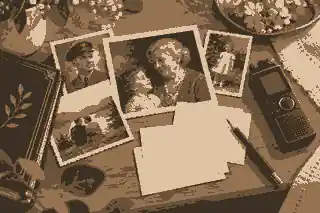
To save ancestor life stories, begin with one named relative, ask practical prompts linked to photos and places, record with permission, label every file, protect private material and preserve the finished legacy in more than one format. The aim is not to capture every detail at once; it is to turn family stories, photographs, voice, documents and life history into a clear archive that relatives in Australia, the United Kingdom and the United States can understand, add to and revisit.
Many families begin because a grandparent is ageing, a parent is downsizing, a funeral has brought old photographs out of storage, or someone has realised that the family history lives mostly in one person’s memory. That can feel urgent, but the best work is usually calm and selective. A strong project to save ancestor life stories has five parts: an interview plan, a photo workflow, a privacy decision, a preservation system and a way for the family to contribute without turning the archive into a confused pile of files.
If you already have old albums, start with the photographs rather than a blank page. A single image can open a remembered kitchen, migration journey, work uniform, wedding, schoolyard, military posting, recipe, song, house, pet or family saying. The Smithsonian oral history guidance explains that oral history preserves personal recollections through planned recorded interviews, and that principle works just as well at a kitchen table as it does in an institution. For broader family history planning, Evaheld Memorials has practical support for family history preservation prompts that connect stories, photos and documents into something organised.
Start with a small life story map
The most common mistake is trying to record a whole life in one sitting. Ancestor stories need shape before they need volume. Make a one-page map with six chapters: childhood and home, family and relationships, work and service, turning points, values and sayings, and later-life reflections. Add a seventh section for uncertain facts so no one feels pressured to pretend that memory is perfect.
This map protects the interview from becoming either too broad or too clinical. Instead of asking, “Tell me your life story”, ask, “What did the front door of your childhood home look like?”, “Who was always at the table?”, “Which object in this photo matters most?”, or “What did the family do when money was short?” Specific prompts are kinder because they give memory something to hold. The Oral History Association best practices also emphasise preparation, open questions, consent and respect, which are useful standards for families as well as researchers.
A good map also helps different relatives contribute. One person may know dates, another recognises faces in photographs, another remembers the family’s language, recipes or religious customs, and another knows where documents are stored. If the person whose story you are saving is still living, let them choose which chapters matter most. If they have died, build the map from records, photographs and second-hand memories, marking each item as confirmed, remembered or uncertain.
Where the story is likely to become part of a public tribute, keep the archive and the memorial separate at first. The archive can hold everything the family is allowed to keep; the memorial should hold what is appropriate to share. Evaheld’s article on record your life story before its lost forever is useful when a living relative wants to speak in their own words before details fade.
Use prompts that invite stories, not yes-or-no answers
The best prompts sound ordinary. They ask for a scene, not a performance. Try “Walk me through the house where you grew up”, “What did your mother or father do on a normal weekday?”, “What was your first paid work?”, “Who taught you to cook, fix, sew, sing, drive, pray or save money?”, “What family story did you hear so often that everyone assumed it was true?”, and “Which family member should we not forget?” These questions create usable life history because they bring together names, places, routines and feeling.
For grandparents, photos and objects often work better than abstract themes. Place one photograph on the table and ask who is pictured, where it was taken, who owned the camera, what happened before and after, and whether anything in the image is misleading. That last question matters: formal photographs can hide grief, estrangement, poverty, migration stress or cultural pressure. The goal is not to force disclosure, but to leave space for nuance.
If the relative is hesitant, begin with easy prompts. Food, school, neighbours, work, music, childhood games and family sayings are often safer than war, illness, adoption, separation, financial hardship or conflict. Difficult stories may come later, once trust has built. The Alzheimer’s Society memory loss guidance is a reminder that memory changes can affect confidence and recall; families should be patient, avoid correction as a reflex and stop before the person is tired.
When a person shares a hard memory, do not rush to repair it. Thank them, ask whether they want that part kept private, and note any conditions they place on sharing. Some stories are valuable because they are true, but not every true story belongs online. If someone says a topic is closed, respect that decision. Consent is not a one-off formality; it is part of preserving dignity.
Record voice clearly and respectfully
Voice carries what a transcript cannot: pace, accent, humour, hesitation, tenderness and the way a person says a name. A smartphone is usually enough for family work if the room is quiet and the file is backed up. Put the phone on a stable surface between you, turn off the television, keep the microphone away from rustling papers, test the sound and say at the beginning who is present, where you are, the date and that the person has agreed to be recorded.
For better long-term quality, make an audio file rather than relying only on a video call recording. The Library of Congress audio visual care advice recommends careful handling, clean storage conditions and protection from heat, moisture and damaging environments for audio visual materials. For new digital recordings, the family equivalent is simple: save the original, export a listening copy, keep notes, and avoid trapping the only version in a messaging app.
Hearing matters too. Older relatives may need a slower pace, a quieter room, clear sightlines and one question at a time. The NIDCD age-related hearing loss information notes that hearing changes are common with age and can make conversation harder. Face the person, avoid shouting, reduce background noise and offer breaks. Good access is not a technical extra; it is what makes the recording possible.
Do not ask twenty questions in a row. Ask one, then listen. Leave silence. Let tangents happen. A relative may answer a question about school by explaining class, migration, language, disability, work expectations or gender roles. Those details are often the reason the story matters. If you need structure, use a recurring rhythm: one 30-minute session every fortnight, one photo per session, or one life chapter per month.
Turn photos into evidence, memory and connection
Photographs are not just illustrations. They are clues. A good photo note records who is pictured, who identified them, the approximate date, location, event, photographer if known, and any uncertainty. If someone says, “That might be Aunt Jean in Perth in the late 1950s”, write exactly that rather than converting it into false certainty.
Handle originals gently. The US National Archives family archives advice encourages families to protect records, photographs and heirlooms through stable handling and storage. Use clean hands, avoid food and drink near originals, keep photographs away from damp sheds and hot roof spaces, and scan or photograph items before they travel between households. If a relative is lending an album, record who owns it and when it should be returned.
Digitising should create order, not chaos. Use file names that make sense without opening the file: surname, first name if known, approximate year, place and sequence number. Keep a spreadsheet or simple note beside the files. If you have several relatives identifying the same image, record each identification and resolve disagreements later. Evaheld Memorials’ guidance on create an online memorial site with photos and stories helps families think about which images belong in a shared tribute and which should remain in a private archive.
For captions, write like a future relative is reading without context. “Nan at the beach” may be affectionate, but “Margaret Ellis at Manly Beach, probably summer 1964, identified by her daughter Anne in 2026” is far more useful. This is where metadata matters. The Getty introduction to metadata explains why descriptive information helps people find, understand and use cultural material; a family archive needs that same discipline at a modest scale.
Protect privacy before you invite the whole family
Family story projects can expose living people. A photograph may show children, addresses, school uniforms, medical equipment, religious rites or people who are estranged. An interview may mention adoption, fertility, institutional care, military service, family violence, mental health, sexuality, finances or immigration status. Before anything is shared online, ask who is identified, whether they are alive, whether they would reasonably expect privacy, and whether the story could cause harm.
In Australia, the OAIC personal information guidance explains that personal information can include details or opinions that identify a person or make them reasonably identifiable. In the United Kingdom, the public-facing ICO data rights guidance provides a useful starting point for understanding how personal data is treated. In the United States, the FTC online privacy guidance is a practical reminder to think about what websites and apps collect and how information may be used.
For a family archive, the safest approach is to create three access levels. Public items can appear on a memorial or family page. Family-only items can be shared with invited relatives. Private items can remain with the organiser, executor or a named family steward. Evaheld Memorials explains how a memorial can stay private until the family is ready, which is helpful when relatives need time to review sensitive material before wider sharing.
Also distinguish Evaheld Memorials from Evaheld. Evaheld Memorials is for memorial pages, tributes, stories and remembrance. Digital legacy vault language belongs to Evaheld, not Evaheld Memorials. That separation matters because a memorial story archive is not the same as a legal, estate or password vault. If a project touches wills, account access or estate instructions, keep those documents in the proper legal or secure planning environment rather than publishing them as family history.
Back up the archive so it survives more than one device
A life story archive fails if it lives only on one phone. After every recording session, move the file to a named folder, back it up, and share a copy with one trusted person if the interviewee has agreed. Keep at least one working copy, one backup copy and one off-site or cloud copy. The Library of Congress digital preservation information is institution-level guidance, but the family lesson is straightforward: digital files need active care, not passive hope.
For larger projects, follow a plain folder structure: interviews, photos, documents, videos, transcripts, permissions and public selections. Store originals separately from edited copies. If you crop, restore or colour-correct an image, keep the untouched scan. If you transcribe an interview, keep both the transcript and the audio. The Digital Preservation Coalition storage guidance reinforces that storage is an active preservation decision, not merely a place to put files.
Download planning matters if stories are later placed in an online memorial. Families should know how to keep their own copy of photographs, text, messages and recordings rather than assuming any platform is permanent. Evaheld Memorials covers how memorial content can be downloaded later, which should sit beside your archive plan from the beginning.
Do an annual review. Check that files open, names still make sense, passwords and access roles are current, and a second person knows where the archive lives. If the main organiser becomes ill, dies or loses access, the archive should not vanish with their account. A family history project is successful only if the next custodian can understand it without being present for every conversation.
Use records to support memories without flattening them
Documents can confirm dates, spellings and places, but they rarely explain a person fully. Birth, death and marriage records, census material, immigration files, citizenship papers, school records, military service records, electoral rolls, newspaper notices and funeral material can help you test what a relative remembers. The US National Archives genealogy resources show how broad family research can become once you move beyond names into records, topics and record types.
Australia, the United Kingdom and the United States differ in record access, privacy rules, terminology and where records are held. Australian families may rely on state and territory registries, Trove, National Archives of Australia material, state libraries and local cemetery records. United Kingdom families often work through General Register Office indexes, parish records, census material, The National Archives, local archives and county record offices. United States families commonly use federal census material, state vital records, county records, immigration files, military records and local newspapers. In all three markets, recent records may be restricted and fees or proof of relationship may apply.
When using records, keep source notes. Write the record title, issuing organisation, date, URL or archive reference, who found it and what it proves. If a memory conflicts with a record, do not immediately erase the memory. The discrepancy may point to a nickname, adoption, second marriage, changed spelling, migration paperwork, hidden grief or simple human error. Record both until you can verify further.
Copyright also differs by country and by the type and age of the material. The GOV.UK copyright duration guidance and the US Copyright Office duration FAQ show why families should not assume that every old photo, letter, newspaper clipping or recording is free to publish. Australia has its own copyright rules too. When in doubt, keep a copy privately, use short excerpts, seek permission where possible and avoid uploading material you do not have the right to share.
Invite relatives without losing control of the story
A family archive improves when more people contribute, but open contribution needs structure. Ask relatives for one memory, one photograph and one correction at a time. Give them a deadline, a preferred file format and a reminder not to send private documents through group chats. If several people are grieving, set expectations gently: contributions can be added over time, and nobody has to write perfectly.
Use roles. One person can manage file names, one can verify dates, one can contact relatives, one can scan images, and one can review what is appropriate for public sharing. If the story will sit inside a memorial, the family should know how inviting family and friends to help build the memorial works before sending access widely. Shared access should not mean shared passwords; it should mean clear permissions.
Written tributes are especially useful because they reveal the person through many relationships. A daughter may describe care, a friend may describe humour, a colleague may describe standards, and a grandchild may remember rituals. Evaheld Memorials’ article on what to include in a memorial page can help families decide how much of this belongs in the public-facing tribute rather than the private archive.
Use notable memorial profiles as reminders that a life can be told through different lenses. The Evaheld Memorials profile for Steve Jobs shows how work, family relationships and public legacy can sit together; Princess Diana demonstrates how public memory can include service, relationships and cultural impact; and Maya Angelou shows how voice, writing and lived experience can shape remembrance. Your family story may be quieter, but it still deserves structure, context and care.
Write the life history in layers
Once the material is gathered, write in layers rather than trying to produce a definitive biography. Start with a short summary: full name, dates if appropriate, places lived, closest relationships, work, interests and what people remember. Then add a longer life history arranged by chapter. Finally, attach photographs, audio, documents and captions.
A useful chapter structure is chronological but not rigid. Childhood, family home, education, work, love and friendship, migration or travel, parenting or caring, service or community, later years, values and legacy will suit many lives. If the person’s life does not fit that order, adapt it. A person who migrated, lived through war, experienced disability, changed faith, raised children alone, built a business, cared for relatives or created art may need different chapter headings.
Writing should not make the person sound generic. Include concrete details: the song they played while cooking, the street they walked to school, the job they disliked but endured, the saying the family still uses, the tool they always carried, the ritual they kept, the holiday they made possible, the recipe nobody has fully replicated. Evaheld’s life story obituary prompts can help turn raw notes into warm paragraphs without flattening the person into dates and achievements.
End with legacy preservation, not a grand claim. A person’s legacy may be as simple as children who felt loved, a trade passed down, a garden planted, courage during illness, a migration risk, a friendship circle, a habit of hospitality or a voice recording where future relatives can hear them laugh. If the article has one practical message, it is this: save ancestor life stories while there are still people who can explain the photographs.
A practical checklist to save ancestor life stories
Choose one person first. Make a chapter map. Gather five photographs. Ask permission to record. Start with easy prompts. Record in a quiet room. Label the file immediately. Write a short summary after each session. Mark private, family-only and public material. Verify facts with records where possible. Keep originals safe. Back up digital files in more than one place. Invite relatives with clear roles. Review sensitive material before publishing. Turn selected stories into a readable memorial, life history or family archive.
For Australian readers, pay particular attention to privacy, First Nations cultural considerations, state-based records and who has permission to share images. For United Kingdom readers, check data protection expectations, copyright, local record offices and General Register Office pathways. For United States readers, remember that recording consent and public records access can vary by state, and that federal, state and county records may all matter. Across all three countries, the ethical rule is the same: preserve generously, publish carefully and keep private material private.
If your family is ready to turn selected stories, photographs and memories into a respectful shared tribute, Evaheld Memorials can help you save ancestor life stories in a memorial space that can grow as relatives contribute.
FAQs
How do I save ancestor life stories? Prompts, photos and legacy preservation
Start with one relative, gather a small set of photographs, ask open prompts, record with permission, label every file and back up the archive. Evaheld Memorials’ family history preservation prompts can help you organise the project, while the Smithsonian oral history guidance supports respectful interview practice.
What questions should I ask an older relative first?
Begin with concrete, low-pressure prompts about home, food, school, work, family sayings and photographs before asking about grief or hardship. The Evaheld Memorials piece on record your life story before its lost forever offers a gentle structure, and the Oral History Association best practices reinforce open questions and consent.
Should I record audio, video or written notes?
Audio is often the easiest starting point because it preserves voice without requiring a camera, while written notes and transcripts make the recording searchable. If you compare platforms for storing life stories, also consider the Library of Congress audio visual care advice before deciding how to store files.
How do I organise old photographs for family stories?
Sort photographs by person, place or decade, then caption each image with who identified it, what is known and what is uncertain. Evaheld Memorials explains how to create an online memorial site with photos and stories, and the US National Archives family archives advice supports careful handling of family materials.
How should I back up ancestor recordings and photos?
Keep at least one working copy, one backup copy and one off-site or cloud copy, then review files each year to ensure they still open. Evaheld Memorials’ how memorial content can be downloaded later is a useful companion to the Library of Congress digital preservation information.
What privacy rules matter when sharing family stories?
Treat living people, children, health details, addresses, family conflict and sensitive records with extra care before publishing anything. Evaheld Memorials explains how a memorial can stay private until the family is ready, and the OAIC personal information guidance is a helpful Australian reference.
Can relatives help build the archive together?
Yes, but it works best when one person manages structure and relatives are invited to contribute specific memories, photos or corrections. Evaheld Memorials describes inviting family and friends to help build the memorial, while the Digital Preservation Coalition storage guidance explains why storage decisions need active management.
How do I write the life story after interviews?
Write in layers: a short summary, then chapters by life stage, then captions, recordings and documents for context. Evaheld Memorials’ life story obituary prompts help shape the writing, and the Getty introduction to metadata explains why descriptive notes make archives understandable.
How do I verify family stories without dismissing memory?
Use records to confirm dates and spellings, but keep remembered details marked as remembered when they cannot yet be proved. Evaheld Memorials’ digital memories and social media guidance supports careful digital handling, while the US National Archives genealogy resources show how records can support family research.
Can I publish old letters, photos or recordings online?
Only publish material when you have considered copyright, privacy, consent and family harm; private archiving is often safer than public posting. Evaheld Memorials’ what to include in a memorial page helps with selection, and the GOV.UK copyright duration guidance shows why copyright can last long after creation.