Preserving Family History: Ways to Save Stories
A practical family history hub for turning memories, photos and stories into something organised, shareable and lasting.
Last Updated: June 24, 2026
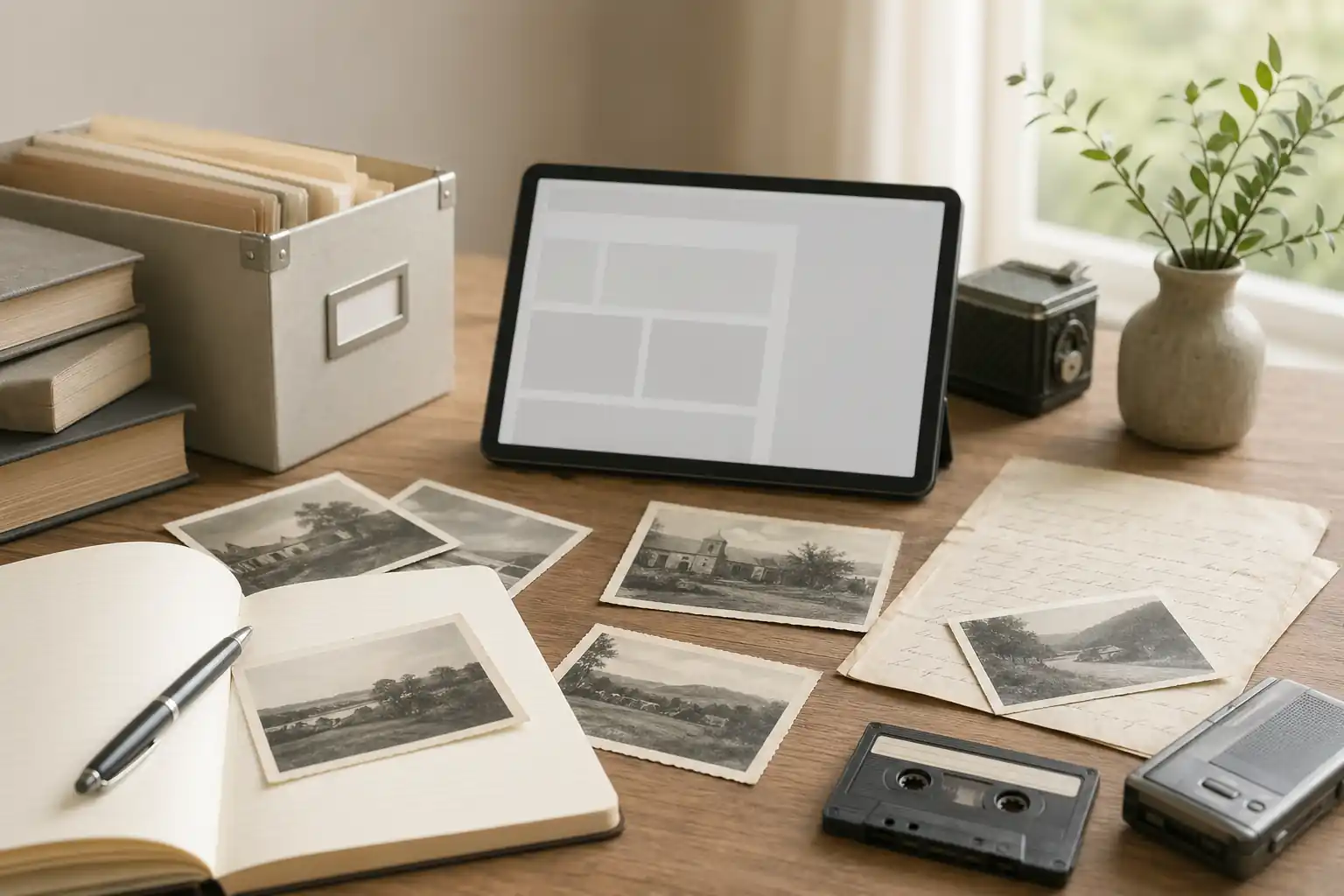
Preserving family history usually becomes urgent when someone realises how much is still carried in memory. A grandparent remembers a migration journey. A parent knows who is in the unlabelled photographs. An aunt can explain a recipe, a house, a family rift or the reason a keepsake mattered. If those stories are not captured, future relatives may inherit boxes of material without the context that gives them meaning.
This hub is for families who want a practical way to save stories before they become difficult to recover. It covers interviews, photos, audio, video, documents, digital files, privacy, backups and shared memorial spaces. It is not about building a perfect archive in one weekend. It is about making a thoughtful start, keeping the process manageable and leaving future family members with something they can understand.
Why does preserving family history matter now?
Family history is more than a family tree. Names and dates are useful, but stories explain how people lived, what they valued, where they moved, what they survived and how later generations came to be connected. The National Library family history research guide notes that Australian family research can draw on newspapers, photographs, maps, oral history, manuscripts and many other sources. That breadth matters because families are rarely explained by one document.
The risk is that personal knowledge often has no formal record. Someone may know the nickname behind an old inscription, the reason a medal was hidden away, or which branch of the family stayed in touch after a migration. These details can disappear quietly when a relative dies, moves into care, downsizes or loses confidence with memory. Starting while people can still contribute gives the family a better chance of preserving tone, humour, uncertainty and context.
Preserving family history also supports remembrance after a death. A memorial is stronger when it contains more than a date range and a formal notice. Evaheld Memorials has related support for life story obituary prompts, digital memorial and virtual tribute ideas and meaningful online memorial inclusions. Those resources help turn collected memories into a tribute that relatives can revisit.
What should a family history archive include?
A useful family history archive combines facts, memories and evidence. Start with names, dates, places, relationships and major events, then add the material that makes those facts human. Photographs, letters, recipes, certificates, school records, migration papers, military service details, funeral booklets, home movies, voice recordings, poems, objects, maps and newspaper notices can all help. The National Archives family research information is especially useful for Australian families because it explains how government records can reflect migration, citizenship, war service, voting and other public interactions.
Do not wait until every record is verified. A family archive can label some material as confirmed, some as remembered and some as uncertain. That honesty is better than pretending every story is settled. When a relative says, "I think this was taken in Brisbane around 1962", record the statement, the speaker and the date it was captured. Future researchers can check it later.
Use a simple structure. One folder might hold interviews, another photographs, another documents, another video and another notes. If you are building a memorial page as well, decide which items belong in the private family archive and which items can be shared publicly. Evaheld Memorials allows families to compare Memorials plan options, view public memorial examples and use the Memorials help centre before deciding how open the archive should be.
How can you capture stories through interviews?
Interviews work best when they feel like a conversation, not an interrogation. Begin with easy prompts: where did you live as a child, who was in the house, what did weekends look like, what food do you remember, who made you laugh, what changed the family most, and what do you wish younger relatives understood? The National Library beginner family history steps recommend starting with what you know and identifying gaps. Interviews are a humane way to fill those gaps.
Ask permission before recording. Explain who will hear the interview, where it will be stored and whether parts may be shared online. Some stories may involve grief, adoption, family conflict, migration trauma, institutional records or cultural knowledge. Let the person skip questions and stop when tired. A short respectful recording is better than a long session that leaves someone feeling exposed.
After each interview, write a short summary while the details are fresh. Record the speaker's full name, date, location, interviewer, main topics, names mentioned and any follow-up tasks. If the interview includes audio or video, create a transcript or at least a topic list so relatives can find useful sections later. The W3C transcript guidance is a practical reminder that transcripts make recordings easier to search, access and understand.
How should photos, audio and video be preserved?
Old photographs need both physical care and context. Handle them with clean hands, avoid writing directly on originals, keep them away from heat and moisture, and store them in stable envelopes or boxes. The Library of Congress photograph care advice gives practical preservation guidance. For each image, capture who is pictured, where it was taken, the approximate date, who identified it and any uncertainty.
Audio and video need extra attention because formats become obsolete. Cassettes, CDs, DVDs, phones and cloud accounts can all become difficult to access. The Library of Congress recording care advice and US National Archives format guidance are useful starting points for thinking about media fragility. Copy important files into common formats, keep originals where safe and write down what each file contains.
When sharing media, consider accessibility. Captions, transcripts and descriptions help relatives who cannot hear, watch or load large files easily. The W3C caption guidance and W3C audio description guidance are not only for institutions; they can also help families make recordings usable for older relatives, remote relatives and future generations. Evaheld Memorials also explains video and music memorial options for families who want media to sit inside a tribute.
How do documents and public records add context?
Documents can confirm details that memory cannot. Birth, death and marriage records, immigration files, citizenship papers, school reports, military service records, electoral rolls, court notices, land records, newspaper articles and funeral notices may all explain parts of a life. Trove newspaper and collection search is a valuable Australian discovery tool, and the State Library of Queensland family history research guides show how state library collections can support family research.
Be careful with sensitive records. Some documents name people who did not consent to public sharing. Some include outdated, offensive or distressing language. First Nations family history needs particular care because records may contain names, images and voices of people who have died, and official records may reflect harmful systems. The National Library First Nations family history research guide is a better starting point than general advice when Aboriginal or Torres Strait Islander family history is involved.
When adding records to a family archive, note the source. A simple citation can include the title, organisation, URL, date accessed and any record number. That makes it easier for relatives to verify the information later. If you use a document to write a life story or memorial tribute, keep the tone human. Records provide evidence, but stories need care, context and restraint.
What is a practical workflow for a family history project?
Start with a small scope. Choose one person, one branch of the family, one box of photographs or one topic such as migration, military service, recipes or family homes. Create a working folder and a simple spreadsheet or note with columns for item, person, date, source, permission, status and follow-up. The aim is to reduce overwhelm, not create museum-level cataloguing from day one.
- List the people who may hold important memories or materials.
- Choose two or three relatives to interview first.
- Gather photographs, letters, documents, audio and video in one safe place.
- Scan or photograph fragile items without discarding originals.
- Name digital files clearly, using dates and people where known.
- Write context notes for each item before memories fade.
- Mark private, family-only and public material separately.
- Back up the archive in more than one location.
- Turn selected stories into a memorial, life story or family history page.
- Review the archive once a year or after major family events.
If your family wants a private place for stories, photos, funeral details and memories, you can begin a family history memorial space with Evaheld Memorials and invite relatives when the first version is ready.
How can families manage privacy, consent and access?
Family history can involve living people, painful memories and documents that were never meant for broad public sharing. Before publishing a story, ask whether it identifies someone living, reveals health information, discusses adoption or family separation, includes images of children, or shares cultural knowledge that should remain private. The OAIC photo and video privacy information is a useful reminder that context matters when images are shared online.
Security matters too. Use strong passphrases, multi-factor authentication and clear access roles for shared archives. The Australian Cyber Security Centre passphrase advice, multi-factor authentication guidance and eSafety online safety topics all support safer digital sharing. Evaheld Memorials explains how a memorial can stay private until the family is ready and how relatives can add tribute and condolence messages.
Finally, plan for continuity. Decide who can download the archive, who can update it and what happens if the original organiser can no longer maintain it. Evaheld Memorials has guidance on memorial content download planning, private and public memorial choices and creating an online memorial when the family wants a more structured tribute.
Related Evaheld Memorials guidance
Families working through preserving Family History: Ways to Save Stories often need a few connected decisions in one place: search visibility for public memorials, how memorial content can be downloaded later, adding videos and music thoughtfully, how written tributes work alongside richer memorial content, how to add funeral details to memorial pages. These related guides help the article sit inside a fuller memorial planning path rather than leaving each decision isolated.
For Evaheld Memorials product details, the most useful companion pages are how quickly can I create an online memorial, plans with private memorial options, subscription or one-time memorial plans, free vs shared tribute plans, information needed to start a memorial. They explain setup, privacy, contribution and sharing choices before a family invites others into the memorial.
FAQs about preserving Family History: Ways to Save Stories
What should families know about preserving family history?
Preserving family history usually becomes urgent when someone realises how much is still carried in memory. A grandparent remembers a migration journey. A parent knows who is in the unlabelled photographs. An aunt can explain a recipe, a house, a family rift or the reason a keepsake mattered. If those stories are not captured, future relatives may inherit boxes of material without the context that gives them meaning.
Start with the practical facts, then leave room for memory, emotion and family preferences. how quickly can I create an online memorial can help you organise the Evaheld Memorials side, while SAMHSA coping tips gives families wider context before decisions feel rushed.
How can the tribute feel personal and authentic?
A respectful plan usually combines clear information, gentle language and a way for close people to contribute at the right time. plans with private memorial options supports that shared approach, and Moneysmart funeral costs guidance is a useful reminder that grief affects people differently.
When is the right time to begin writing or gathering memories?
Begin as soon as the task would reduce pressure rather than add to it. Families often start with a simple memorial draft, then refine details over time using subscription or one-time memorial plans; Healthdirect grief support can also help with the first administrative steps after a death.
Who should contribute stories and check important details?
The closest organiser should usually guide the final decisions, but relatives and friends can help with stories, photos and checks. free vs shared tribute plans explains how collaboration can work, while Services Australia guidance after a death outlines broader steps families may need to consider.
Can an online memorial bring the finished tribute together?
Yes. A memorial page can hold service details, photos, tributes, updates and a lasting place to return to after the immediate arrangements are over. information needed to start a memorial shows how quickly that can begin, and USA.gov steps after someone dies offers trusted context for bereavement care.
How can sensitive family information be handled respectfully?
Keep sensitive information out of public copy, review contributions before publishing and choose privacy settings before sharing widely. search visibility for public memorials explains private memorial options, while GOV.UK guidance after a death gives practical consumer context around funeral and memorial decisions.
Which photos, notes and records are useful to keep nearby?
Keep the memorial URL, service details, donation preferences, key family contacts and any relevant documents in one place. how memorial content can be downloaded later helps families compare plan needs, and National Institute on Aging end-of-life guidance can support cost and planning conversations.
How can relatives add their own memories?
Invite people to contribute specific memories, photographs or messages, then review everything before it appears publicly. adding videos and music thoughtfully explains tribute and condolence controls, while Better Health grief information offers supportive guidance for people coping with loss.
What common writing and storytelling mistakes should be avoided?
Avoid rushing public details, copying private messages without permission or turning the page into a list of tasks. how written tributes work alongside richer memorial content helps families understand free and paid options, and FTC funeral rule information is useful when funeral-related decisions need clear consumer information.
How can Evaheld Memorials preserve the finished story?
Evaheld Memorials gives families a guided place to create, edit, share and preserve a tribute as needs change. how to add funeral details to memorial pages keeps the memorial grounded in practical setup, while ACCC funeral services information helps families think about comfort and care beyond the page itself.
If you want a calm place to organise memories, tributes, photos and family contributions, create a lasting Evaheld Memorials tribute for your family.
What matters most about Preserving Family History: Ways to Save Stories
Preserving family history is a practical act of care. You do not need a perfect family tree, professional equipment or every answer before you begin. Start with the people and materials closest to you, record context while it is still available, protect private information and choose a storage system that future relatives can actually understand.
A strong family history archive helps memories survive beyond one person. It can also become the foundation for an obituary, a digital memorial, a celebration of life or a private family tribute. When you are ready to bring stories, photos and messages together in one respectful place, you can create a lasting family memory archive.
Related Evaheld resources
Continue with these carefully selected Evaheld Memorials guides and answers.