What is the best way to record grandparent interviews? Prompts, photos and legacy preservation
A practical, consent-led guide to recording grandparent interviews with prompts, photos, audio, backups and legacy preservation for AU, UK and US families.
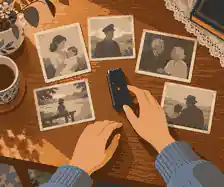
What is the best way to record grandparent interviews? Prompts, photos and legacy preservation work best when you ask permission first, use a simple phone or recorder in a quiet room, begin with one concrete memory prompt, bring a small set of photos, save the file immediately, and turn the best stories into a labeled family archive or memorial space. The best way to record grandparent interviews is not a studio session or a long life-story interrogation; it is a series of calm, consent-led conversations that preserve voice, context, family stories, photos and life history while your grandparent still has the energy and choice to shape what is remembered.
Start small because momentum matters more than perfection. A single 20-minute recording about a childhood home, a first job, a wedding day or a favorite recipe is more useful than a planned project that never happens. Professional oral history practice supports that practical instinct: the Oral History Association best practices emphasize preparation, informed consent, interviewing, preservation and access as connected parts of the same process. For a family, that means you prepare enough to be respectful, but you keep the moment human enough for your grandparent to speak naturally.
way to record grandparent interviews: practical guidance
For most families, a smartphone voice memo is enough. Place the phone on a table between you, check that it is recording, turn off notifications, and keep the microphone away from clinking cups, fans, televisions and open windows. Do not make your grandparent hold the phone, sign into an app, troubleshoot Bluetooth or perform for a camera unless they want to. If they are more comfortable by telephone, record a call only after you have checked the law and obtained clear consent from everyone involved.
Video is valuable when expression, hands, objects or photo albums matter, but it can make some people self-conscious. Audio often captures the important things: accent, rhythm, laughter, silence, hesitation, emphasis and the way a person says a child or grandchild's name. Written notes are useful for spellings, dates and summaries, but they should not be the only record when voice matters. If the interview may later support a tribute, record your life story before its lost forever is a helpful companion because it explains how voice, prompts, consent and archives fit together.
Before the first real session, do a 60-second test. Ask your grandparent to say their name, the date, where you are recording, and one easy sentence. Play it back through headphones. If you cannot hear clearly, move closer, soften background noise, or change rooms. A living room, kitchen table, porch, study or familiar chair often works better than a formal setup. StoryCorps advises beginning with a small question list rather than trying to cover a whole life in one sitting; its Great Questions interview preparation also shows why planning topics and titles helps future listeners understand what they are hearing.
Ask permission in a way that protects trust
Say plainly: “I would love to record some of your stories so our family can keep them. Is that okay? We can stop any time, and you can tell me if something should stay private.” Then record their consent at the start of the file if they agree. For family purposes, a simple spoken agreement may be enough for private use, but public sharing, publication, research deposit or commercial use needs more care. The Oral History Society GDPR guidance recommends clear participation information before an interview and a recording agreement after it, especially where access, copyright, storage and restrictions matter.
Legal differences matter across Australia, the United Kingdom and the United States. In the UK, data protection rules focus on fair, transparent and limited use of personal data; GOV.UK data protection guidance explains those principles for organizations, and families can still learn from the same discipline when sharing private recordings online. The ICO consent guidance explains consent as freely given, specific, informed and unambiguous. In the United States, consent laws vary by state; the Digital Media Law Project recording law overview notes that some states allow one-party consent while others require all parties, and that interstate calls can be complicated. In Australia, surveillance-device rules differ by state and territory, so the safest family standard is simple: tell people you are recording, explain the purpose, and get agreement from everyone whose private conversation will be captured.
Consent is not only about law. It is also about dignity. Let your grandparent skip questions, pause, review sensitive stories, or decide that some material should remain for immediate family only. Privacy matters for other people named in the recording too. If a story mentions adoption, estrangement, abuse, medical history, immigration trauma, financial hardship, crime, family conflict or living relatives who may be affected, treat it as private until the people most directly involved have been considered. For photos and video, the eSafety Commissioner consent advice for sharing photos and videos is clear that people should be comfortable with sharing and able to change their mind.
Use photos, objects and places as memory keys
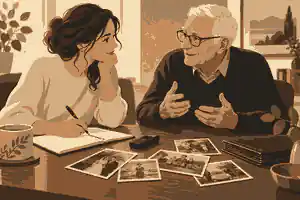
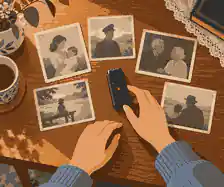
Photos often open better stories than abstract questions. Bring five to ten images, not a box of hundreds. Choose a mix: one childhood image, one family group, one workplace or service photo, one celebration, one ordinary home moment, and one picture with people you cannot identify. Ask, “What was happening just before this photo?” or “Who is missing from this picture?” rather than “Who is that?” If your grandparent struggles to recall names, ask about the room, clothes, smell, weather, music, food or mood. These details preserve life history in a way that a formal family tree cannot.
Objects work the same way. A recipe card, watch, sewing kit, medal, passport, prayer book, tool, school report, handwritten letter, concert program, apron or album can shift the conversation from performance to memory. When families later organize these materials, family history preservation prompts can help connect stories to names, places, dates and uncertainty instead of forcing every memory to sound fully verified. A family archive can honestly label information as confirmed, remembered, approximate or still to check.
Handle fragile originals carefully. The US National Archives digitizing guidance advises keeping originals after digitizing because digital files have their own risks, and it recommends careful handling, useful file names, metadata and the 3-2-1 backup rule. The Library of Congress personal digital archiving guidance also encourages families to plan preservation rather than trusting one device. For practical purposes, scan or photograph key items, name each file clearly, and connect it to the audio session where your grandparent explained it.
Build an interview flow that feels like a conversation
Do not begin with “Tell me your whole life story.” That is too large and often makes modest people retreat. Begin with a specific, easy doorway: “Walk me through the house you grew up in,” “What did Saturday morning sound like?” “Who cooked most often?” “What was your first paid job?” “How did you meet the person you loved?” “Which family saying did everyone know?” “What did your parents want for you?” “What was hard that younger people may not understand?” “What advice did you ignore and later understand?”
Use a loose sequence: warm-up, childhood, family, place, work, love, parenting, turning points, values, photos, and closing reflections. Ask one question at a time. Let silence sit. Follow tangents when they reveal something important. If your grandparent begins with a story about a first car and ends with a memory of wartime shortages, do not drag them back to your list too quickly. The list is a safety net, not a script.
For a first session, choose no more than five prompts. A useful starter set is: “Where did you feel most at home as a child?” “Who in the family shaped you most?” “What photo should future relatives understand?” “What did you learn the hard way?” and “What story do you hope we do not lose?” Those questions cover place, relationship, image, wisdom and legacy without turning the interview into a survey. If the answers later become part of a memorial page, creating an online memorial site with photos and stories gives a practical framework for arranging the material without overwhelming visitors.
Adapt the method for distance, shyness, hearing loss or dementia
If your grandparent lives far away, schedule recurring short calls instead of waiting for a major visit. A 15-minute call once a month can create a richer archive than one exhausting holiday interview. Send a photo in advance and ask them to choose one story about it. If they are shy, start with practical details or funny memories before tender subjects. If hearing is difficult, sit face to face, reduce background noise, speak clearly, and do not talk over them. If they prefer another language, involve a relative who can help with that language and label the recording accordingly.
When dementia or memory changes are present, the aim changes from collecting a complete biography to creating a safe, meaningful conversation. The Alzheimer's Society communication guidance recommends quiet, calm places, good lighting, time to respond, familiar prompts and avoiding pressure to remember. Do not quiz. Do not correct every detail. Use photos, music, familiar objects, favorite foods, songs and sensory cues. Ask narrower questions when broad questions become tiring: “Was this your mother?” may work better than “Tell me everything about your mother.”
If the recording becomes distressing, stop. A grandparent interview is not a deposition. You can still preserve dignity through shorter clips: a greeting to grandchildren, a blessing, a recipe explanation, a favorite song, a story about a family object, or a few words about what mattered most. digital memory preservation steps can then help the family protect these smaller files with the same care as longer interviews.
Organize files the same day
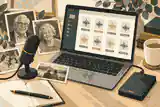
The interview is not finished when you press stop. Save the file immediately with a clear name: “Grandma-Maria-childhood-kitchen-2026-09-21.mp3” is far more useful than “New Recording 14.” Write a short note while the conversation is fresh: who spoke, who interviewed, where it happened, the main topics, names mentioned, photos used, sensitive sections, and follow-up questions. If you can, add a transcript later. If not, create a topic list with rough time markers.
Professional archives think carefully about access conditions, summaries and transcripts. The National Library of Australia oral history access guidance shows how recordings may be accompanied by transcripts or summaries and how access can depend on permissions. The British Library National Life Stories project is a strong example of long life-story methodology, documentation and preservation at scale. Families do not need institutional complexity, but they do need enough order that future relatives can find the right story.
Use a simple folder structure: Audio, Video, Photos, Documents, Notes, Transcripts and Permissions. Keep a spreadsheet or text index with file names, dates, people, topics, privacy notes and backup locations. Back up in at least two places, ideally with one off-site or cloud copy. Review access yearly, especially when someone dies, a family dispute changes, or a recording becomes suitable for wider sharing. If media will become part of a tribute, including richer media in remembrance helps families decide when voice, video and music add meaning rather than clutter.
Turn recordings into a lasting family legacy
A good grandparent interview can become several things: a private family archive, a transcript for descendants, a short audio clip at a celebration of life, captions for old photos, a family history chapter, a funeral reading, or part of an online memorial. The important rule is to respect the original context. Do not turn a private confession into public copy. Do not extract one dramatic sentence if it changes the meaning of the story. Keep the full file somewhere safe, and use excerpts with care.
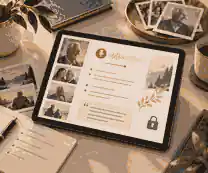
Evaheld Memorials is most useful when the family wants memories, photos, tributes and practical sharing to sit together in one calm place. meaningful online memorial inclusions can help decide which interview details belong publicly and which should stay in a private archive. private versus public online memorials is especially relevant when a grandparent is still living, when stories involve living relatives, or when the family wants to prepare a page before sharing it widely.
Public figures show why voice, craft and context matter. The memorial for Leonard Cohen reminds families that a voice can carry humor, faith, uncertainty and place across generations. Maya Angelou offers a clear example of how lived experience, spoken rhythm and written memory can become part of a wider legacy. The memorial for Olivia Newton-John shows how photographs, public work, family context and remembered warmth can sit together without reducing a life to dates.
For ordinary families, the same principle applies at a smaller scale. A grandparent's story does not need fame to deserve care. The way they made soup, crossed a border, survived a hard season, raised children, worked with their hands, kept faith, changed their mind, loved imperfectly, or laughed at a kitchen table may become the thing a future child most needs to hear.
A practical grandparent interview plan
One week before: ask permission, choose a time of day when your grandparent has energy, gather five photos or objects, and choose three to five prompts. The day before: charge devices, clear storage space, test the recorder, and decide where the files will be backed up. At the session: start with the date, names and permission; keep the first question easy; let the conversation breathe; stop before fatigue sets in; and ask whether anything should be kept private. Afterward: save the file, back it up, write a summary, label photos, note follow-up questions, and share only according to the agreed boundaries.
For families working together, assign roles. One person interviews, one gathers photos, one checks names and dates, one manages backups, and one helps decide what is suitable for a memorial. inviting family and friends to contribute can prevent one person from carrying the whole memory project alone. If the interview becomes part of an online memorial draft, keeping a memorial private until you are ready to share gives the family time to review wording, permissions and emotional readiness.
If you are not ready to publish anything, that is fine. A private archive still matters. downloading memorial content is worth thinking about early because families should keep their own copies of treasured recordings and tribute materials, regardless of where they are shared. The safest legacy is both accessible and backed up.
The final step is to make the project repeatable. End each session by asking, “What should we talk about next time?” That gives your grandparent agency and gives you a natural bridge into the next recording. A complete life history is built from many small sessions: one photo, one object, one place, one story, one careful save. When your family is ready to begin, Evaheld Memorials can help with the way to record grandparent interviews and preserve the stories in a space shaped by privacy, family input and lasting remembrance.
FAQs
What is the best way to record grandparent interviews? Prompts, photos and legacy preservation
The best approach is to ask consent, use a simple phone or recorder, begin with one photo or concrete prompt, keep the session short, and save the file with notes the same day. If the recordings may later become part of a tribute, record your life story before its lost forever gives a wider memory-capture framework, while the Oral History Association best practices explain why preparation, consent, preservation and access all matter.
How long should a grandparent interview last?
Most families should start with 20 to 40 minutes, then stop while the conversation still feels warm. If you want the stories to become part of family history preservation prompts, shorter recurring sessions are usually easier to label and revisit, and StoryCorps interview preparation similarly encourages choosing a few strong questions rather than trying to cover a whole lifetime at once.
Should I use audio or video for a grandparent interview?
Use audio when your grandparent is more comfortable speaking naturally, and use video when facial expression, hands, places or objects are important to the memory. including richer media in remembrance can help you decide how audio and video may later fit into a tribute, while the British Library National Life Stories project shows the value of long-form biographical recording.
Do I need permission to record my grandparent?
Yes. Explain what you are recording, who may hear it, where it will be stored and whether any part may be shared publicly. If privacy is a concern, private versus public online memorials can help with sharing decisions, and the ICO consent guidance is a useful UK authority on consent being specific, informed and freely given.
What questions should I ask first?
Begin with a memory they can enter easily: a childhood home, a family meal, a first job, a photo, a song or the story behind a keepsake. creating an online memorial site with photos and stories helps you think about which prompts will later be useful, and the National Library of Australia oral history access guidance shows why names, summaries and access conditions matter.
How do I record a grandparent with dementia or memory loss?
Keep the conversation short, calm and familiar; use photos, music or objects; avoid testing their memory; and stop if they become tired or distressed. digital memory preservation steps can help protect smaller recordings, while the Alzheimer's Society communication guidance recommends quiet spaces, time to respond and one idea at a time.
How should I use old photos during the interview?
Choose a small set of photos and ask about what happened before and after the image, who is missing, where it was taken and why it matters. meaningful online memorial inclusions can help decide which images belong in a tribute, and the US National Archives digitizing guidance explains why originals still need care after scanning.
How do I store grandparent interview recordings safely?
Name each file clearly, add a short summary, keep at least two copies and record any privacy limits beside the file. downloading memorial content is part of a wider backup mindset, and the Library of Congress personal digital archiving guidance is a strong authority for planning personal digital collections.
Can family members help with the interview project?
Yes, and the project is often better when one person interviews, another gathers photos, another checks names and another manages backups. inviting family and friends to contribute can make the later memorial more accurate, while the Oral History Society GDPR guidance is a useful reminder to define storage, access and permissions clearly.
Should grandparent interview recordings be public or private?
Keep them private unless your grandparent clearly agreed to wider sharing and the recording does not expose other people unfairly. keeping a memorial private until you are ready to share gives families time to review sensitive material, and the eSafety Commissioner consent advice for sharing photos and videos explains why people should be comfortable with what is shared online.