What consent should families consider before using AI memorial media? Ethical tools, memories and safety
A practical, compassionate consent framework for AI memorial media, covering photos, voice, privacy, copyright, grief safety and AU/UK/US differences.

What consent should families consider before using AI memorial media? Ethical tools, memories and safety should begin with the person’s known wishes, the closest family’s agreement, the rights in each photograph, voice or video, and a clear decision about privacy, disclosure, review and future removal before anything is uploaded or shared. Families should treat AI memorials, photo restoration and voice work as emotionally powerful memorial media, not as ordinary editing, because these tools can change how memories are understood, preserved and trusted.
The practical answer is simple but important: do not start with the tool. Start with consent, purpose and limits. Decide whether AI is genuinely needed, whether a still photograph or written memory would be more respectful, who should approve the result, who may view it, whether it will be labelled as AI-assisted, and what will happen if a relative later objects. A careful consent process protects the dignity of the person who died, the wellbeing of the living, and the integrity of the memorial itself.
This article uses UK English because the search intent is international and Evaheld Memorials serves Australia, the United Kingdom and the United States. The legal details differ across those places, but the ethical core is shared: consent should be specific, recorded, revocable where possible, and matched to the level of realism, interactivity and public exposure involved.
What consent should families consider before using AI memorial media?
Families should consider six kinds of consent before using AI memorial media: the person’s own wishes, the authority of the person making the decision, the agreement of close relatives, consent from living people shown or heard in the source material, copyright or licence permission for the material being adapted, and informed consent from viewers or contributors who may encounter the AI result. These are separate questions. A person may have family authority to organise a memorial but still lack permission to use a studio photograph, a song, a private voicemail, or a group image containing people who have not agreed.
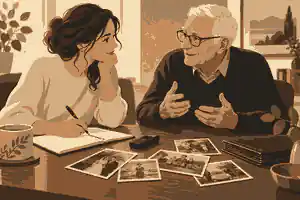
The starting point is the person who died. Did they ever say they disliked photo manipulation, voice cloning, public social media tributes, artificial likenesses or being shown in certain ways? Did they leave written preferences, a will, a digital legacy instruction, a funeral plan, or a clear conversation with family? If they did, that should carry substantial weight. Where no direct instruction exists, families should use a stewardship test: would this use be consistent with the person’s values, humour, privacy, relationships and sense of dignity?
The second question is who should decide. The person paying for a memorial tool is not automatically the right ethical decision-maker. A surviving spouse, adult children, parents, siblings, executor, long-term carer or chosen friend may all have a legitimate voice, depending on the relationship and local practice. The Evaheld Memorials article on who controls an online memorial over time is useful here because AI decisions should sit inside a wider plan for admin rights, review, access and succession.
The third question is family agreement. Unanimity is not always possible, but a realistic consent process should identify whose objection would be serious enough to pause the project. A cousin’s curiosity may not outweigh a spouse’s distress. A distant admirer’s request should not override a child’s concern. If the people closest to the person strongly disagree, choose the lower-risk option: keep the original still photograph, write a caption, use private sharing, or delay the decision.
Why AI memorial media needs a higher consent standard than ordinary editing
Traditional restoration repairs a damaged record. AI memorial media can create new expression: a face may smile, eyes may move, a voice may speak, a video may imply presence, and a chatbot may appear to answer. That shift changes the moral stakes. A cleaned photograph says, in effect, “this is a clearer version of an old image”. A synthetic voice or moving portrait may suggest the person is doing, feeling or endorsing something they never chose.
The 2026 academic paper supplied in the research set, “The making of digital ghosts”, usefully distinguishes design features such as timing, consent, data sources, disclosure, purpose, audience, governance and behavioural agency. Its key lesson for families is that risk rises when a system becomes more realistic, more interactive, more public, more open-ended, or less clearly labelled. Evaheld Memorials improves on that framework for family use by translating it into practical decisions: what material is being used, who approves it, how it is labelled, who sees it, how it can be removed, and how the original record is preserved.
Public regulators now make similar points in broader AI contexts. The NIST AI Risk Management Framework encourages organisations to govern, map, measure and manage AI risks; a family can apply the same logic in plain language by defining the memorial purpose, identifying affected people, testing the output privately, and refusing anything that feels misleading or harmful. The OAIC guidance on commercially available AI products is written for organisations, but its emphasis on due diligence, transparency, necessity and caution with personal information is directly relevant when families upload portraits, voices or private messages to a third-party AI service.
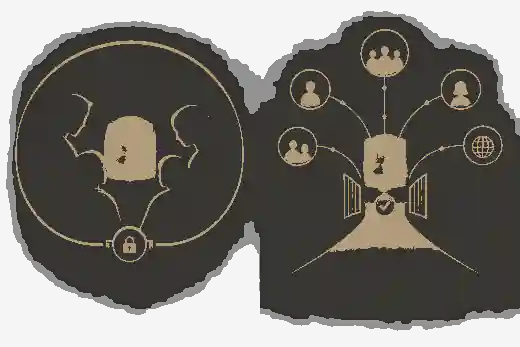
Consent also needs to match the type of media. Restoring scratches on a scanned portrait is usually lower risk than generating a new childhood scene. Subtle animation is usually lower risk than synthetic speech. A short private family clip is lower risk than a public social media video. An AI tribute video with captions is lower risk than a chatbot claiming to answer as the deceased. The more the media appears to speak, act or choose, the stronger the consent evidence should be.
A family consent checklist before uploading anything
Before using any AI tool, write down the answer to these questions. What is the purpose: remembrance, restoration, funeral display, private anniversary, education, or public sharing? What exact source file will be used? Who owns or controls that source file? Are any living people visible or audible? Does the source contain children, medical details, uniforms, location clues, religious context, private correspondence or intimate family circumstances? Who must review the result before it is shown?
Then ask what the AI tool will do with the file. Will it store uploads? Will it train models? Can you delete inputs and outputs? Does it create a public gallery by default? Does it use subcontractors? Does it process data overseas? Does it add watermarks or provenance metadata? Does it allow commercial use? Does it prohibit harmful impersonation? If the tool cannot answer these questions in clear language, do not upload sensitive memorial material.
Families planning richer media can use adding videos and music thoughtfully as a parallel decision model: richer memorial content should have a clear reason, respectful placement, and rights-aware handling. AI should not dominate the memorial or turn remembrance into spectacle. Often one carefully chosen restored image, displayed beside the original, will be more meaningful than a sequence of synthetic effects.
Make a small written record of consent. It does not need to be legalistic. A short note can say: “We used this 1984 portrait supplied by Maria. Anne and Daniel approved private AI restoration on 12 September 2026. No voice cloning, public advertising or social media reposting. The original and restored files are stored together.” That record helps future family members understand what happened and prevents the AI version being mistaken for the original.
Australia, the United Kingdom and the United States: what changes by jurisdiction?
This article is not legal advice, but families should understand the broad differences. In Australia, privacy law focuses on living individuals and organisations that handle personal information, but the practical privacy questions still matter for deceased people because family images often include the living and because commercial AI providers may process sensitive personal information. Australian families should also consider copyright in photographs, films, music and recordings. The Australian Attorney-General’s copyright basics explain that copyright covers visual images, music, sound recordings and films, and that permission or an exception may be needed before copying or communicating material publicly.
In the United Kingdom, UK GDPR and data protection law generally protect living people, but photos, voices and group recordings may include living relatives. The ICO artificial intelligence guidance explains how data protection principles apply to AI systems, while the ICO biometric recognition guidance is especially relevant where tools extract or compare facial, voice or behavioural features. A family restoration project is not usually a biometric recognition system, but face and voice tools can move closer to biometric processing when they analyse features to identify, verify or generate a person.
Across the European Union, GDPR Recital 27 states that the regulation does not apply to personal data of deceased persons, while allowing member states to provide their own rules. That matters for UK and EU families with relatives overseas because “the deceased are outside GDPR” is not the same as “anything is ethical or risk-free”. The European Commission’s AI Act transparency guidance also shows the direction of travel: people should know when they are interacting with AI or exposed to AI-generated or manipulated content, including deepfakes.
In the United States, privacy, publicity and post-mortem likeness rights vary significantly by state, and copyright questions remain separate. The U.S. Copyright Office AI reports discuss digital replicas and AI-generated works, which is relevant when a realistic likeness or voice could be reused beyond a private family memorial. The FTC voice cloning challenge announcement highlights voice cloning as a fraud and consumer-protection risk. For families, the practical rule is conservative: do not create synthetic speech in someone’s voice unless the consent basis is unusually clear, the use is private or tightly controlled, and the audience is told exactly what has been generated.
Photo restoration, animation, voice and chatbots are not the same consent question
Photo restoration is usually the safest AI-adjacent memorial use when it repairs fading, dust, tears or colour balance while keeping the historical image recognisable. Consent should still cover who supplied the image, whether living people are included, whether the restored version will be public, and whether the original will remain available. The Evaheld Memorials article on AI photo animation for a memorial cost explains why the real cost includes consent, privacy, quality, disclosure and preservation, not just credits or a subscription.
Photo animation sits in a middle zone. A blink, soft head movement or slight smile can feel moving to one person and disturbing to another. It should never be autoplayed unexpectedly, used as documentary footage, or presented without a caption. The safest wording is factual: “AI-assisted movement created from a 1972 family photograph; no original video exists.”
Voice cloning needs a stronger threshold. A voice is intimate and persuasive; it can be used for comfort, but also for impersonation, fraud or emotional pressure. Synthetic speech should not make the deceased apologise, forgive, endorse, give instructions, settle disputes, promote a product, or answer questions. If a person recorded a message before death specifically for posthumous use, that is a different situation from generating new words from old recordings. Even then, the family should label the result clearly and keep the original recording separate from any AI-assisted output.
Chatbots and “digital ghosts” require the highest caution. A chatbot does not merely preserve a memory; it generates new responses. That can blur the boundary between remembrance and replacement, especially for people in raw grief. If a family is considering any interactive AI representation, the consent should ideally be pre-death, written, specific about scope, limited in audience, easy to stop, and designed never to claim consciousness, authority or continuing identity.
Privacy, data retention and the original archive
AI memorial media can expose more than a face. A photograph may reveal health, disability, location, cultural practice, military service, childhood details, other people’s identities or private family context. A voice recording may reveal accent, emotion, medical condition, background conversation or third-party speech. Uploading these files to a tool is not just editing; it is disclosure to a service provider.
Use the smallest file needed for the task. Crop unrelated living people if the historical meaning is not harmed. Remove location metadata from sharing copies. Avoid uploading private messages, medical records, legal documents, intimate photographs, children’s images, or anything that would embarrass or endanger a living person. If the source includes children, be especially conservative; AI generation involving minors can create risks that far outweigh memorial value.
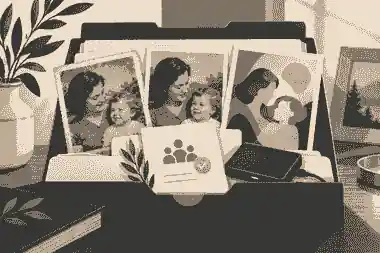
Families should also plan preservation before enhancement. The Library of Congress personal digital archiving guidance encourages people to organise and preserve digital memories deliberately, while CISA’s data protection guidance recommends secure backups and encryption for important files. Evaheld Memorials’ digital memory preservation steps can help families keep the original, the edited version, the AI output and the consent note together so future viewers know what is authentic, what is restored and what is synthetic.
Disclosure is part of preservation. The C2PA Content Credentials specification describes a technical way to record provenance and edits in digital media. Not every consumer export will preserve those credentials, so families should also use visible captions and a plain production note. A memorial should make trust easier, not harder.
Emotional safety: consent from the living matters too
AI memorial media can affect people differently. One relative may feel comfort when a photograph seems to move. Another may feel shocked, unsettled or angry. A child may misunderstand what is real. A person with complicated grief may feel pulled into repeated viewing. A private review process is therefore part of consent, not an optional courtesy.
The NHS grief guidance notes that grief can affect people in different ways and that there is no single correct response. The National Institute on Aging guidance on grief and loss similarly recognises that memories and stories can help some people while others may need more support. For memorial AI, that means no one should be forced to watch, listen, approve or share. Give people a description before playback, keep sound off by default, avoid surprise reveals at funerals, and let relatives opt out.
When the memorial will include public contributions, moderation also matters. AI media can attract strong reactions, speculative comments or inappropriate requests for more synthetic content. Families can reduce that risk by setting comment expectations before publishing anything likely to prompt debate.
Public figures, famous profiles and the difference between remembrance and reuse
Public figures are not consent-free material. Their images may be widely available, but that does not make synthetic reuse respectful or lawful. A memorial profile can help people remember a life; an AI recreation may imply endorsement, commercial exploitation or false intimacy. This distinction is especially important for people whose public image, voice or persona remains culturally powerful.
For example, a memorial reference to Stephen Hawking should avoid fabricating speech or simplifying the role of his communication technology into a synthetic novelty. A tribute involving Robin Williams should not turn a complex life into endlessly circulating reaction clips. A digital remembrance of Steve Jobs should not use a synthetic likeness to endorse products or opinions. These examples show the wider rule: fame increases responsibility; it does not remove consent.
The same principle applies inside ordinary families. A person may have been funny, musical, outspoken or visually distinctive, but an AI tool should not exaggerate that trait until the result becomes caricature. A memorial should preserve context. It should not make the person perform for an audience they never chose.
Safety boundaries: deepfakes, minors and intimate material
There are some uses families should refuse outright. Do not create sexualised, humiliating, violent, deceptive or mocking AI media. Do not generate new scenes involving deceased children. Do not create “aged-up” images of a child who died. Do not use AI to place a person into events they never attended, relationships they never had, or statements they never made. Do not use synthetic voice to ask for money, influence legal decisions, or pressure family members.
The Australian eSafety Commissioner’s discussion of deepfake image-based abuse is a reminder that synthetic media can cause real harm even when viewers know something is fake. Memorial use is not the same as abuse, but the same technical capabilities can be misused. A responsible family boundary is therefore firm: if an output would shame, coerce, sexualise, deceive or exploit, it does not belong in a memorial.
Even respectful AI media should not be used to settle family conflict. Do not generate a message that makes the deceased appear to choose sides. Do not create a voice note saying what someone “would have wanted” about inheritance, relationships, medical care or disputes. Those subjects require human honesty, not synthetic authority.
How to publish AI-assisted memorial media responsibly
Publishing should be staged. First, test privately with one low-risk image. Second, reject outputs that distort anatomy, invent teeth, alter disability, change skin tone, exaggerate emotion, remove cultural or religious markers, or make the person look unlike themselves. Third, add a caption beside the media, not hidden elsewhere. Fourth, review with the closest family. Fifth, publish in the smallest appropriate audience.
If the memorial itself is still being shaped, start with what to include in a memorial page and decide whether AI media genuinely adds meaning. Many pages are stronger with a clear portrait, a short life story, service details and space for tributes than with complex media. If privacy is the main concern, compare private versus public online memorials before sharing a link widely.
Within Evaheld Memorials, families can plan the human memorial first and AI-assisted media second. The FAQ on what Evaheld Memorials is and how it works explains the wider creation flow, while how family and friends can be invited to help build the memorial is relevant when several people need to review memories, photographs or captions. If the family needs more time, whether a memorial stays private until you are ready to share should be settled before AI content is added. Once public participation is open, the FAQ on how people can leave tributes and condolences on a memorial helps families understand what visitors may contribute.
A respectful decision framework
Use this sequence when the family is unsure. First, name the purpose in one sentence. If the purpose is vague, pause. Second, classify the media: restoration, animation, synthetic voice, video, or interactive AI. Third, rate the audience: private individual, close family, invited memorial guests, public page, social media or press. Fourth, identify the decision-maker and reviewers. Fifth, check rights and tool terms. Sixth, prepare disclosure and storage notes. Seventh, review the emotional response privately. Eighth, publish only if the result still feels truthful after everyone has had time to reflect.
Where there is doubt, choose the less synthetic option. A still photograph with a handwritten caption can be more faithful than a moving portrait. A family-written tribute can be more honest than a cloned voice. A private memorial can protect grief better than a public post. A delayed decision can be more respectful than a rushed experiment.
Evaheld Memorials can help families make those choices inside a calmer memorial process. When you are ready to bring memories, approval, privacy and sharing into one place, what consent should families consider before using ai memorial media can become a practical family conversation rather than a hurried upload.

FAQs
What consent should families consider before using AI memorial media? Ethical tools, memories and safety
Families should consider the deceased person’s known wishes, close-family agreement, consent from living people in the media, copyright permission, privacy settings and clear AI disclosure before using the content. The Evaheld Memorials explanation of what Evaheld Memorials is and how it works can help families place those decisions inside a reviewable memorial workflow, while the OAIC AI privacy guidance explains why personal information should be handled cautiously in AI tools.
Is it ethical to animate a photo of someone who has died?
It can be ethical when the animation is modest, family-approved, clearly labelled and consistent with the person’s values, but it is not automatically appropriate simply because the technology exists. Families weighing animation should first read AI photo animation for a memorial cost because consent and privacy are part of the real cost, and the C2PA Content Credentials specification shows why provenance and disclosure matter.
Should families use AI to recreate a deceased person’s voice?
Voice recreation needs a much higher consent threshold than photo restoration because synthetic speech can falsely imply endorsement, instruction or continuing presence. Before adding audio, families should consider adding videos and music thoughtfully and read the FTC voice cloning challenge announcement, which highlights the wider risks of AI-enabled voice misuse.
Do privacy laws protect deceased people’s data?
Privacy law often focuses on living people, but deceased people’s images, voices and messages can still involve living relatives, copyright, platform terms and ethical duties. The Evaheld Memorials article on private versus public online memorials helps families choose visibility carefully, while GDPR Recital 27 explains that EU GDPR itself does not apply to deceased persons but allows member states to create rules.
What if relatives disagree about AI memorial media?
If close relatives disagree, pause the AI project and use a lower-risk option such as the original photograph, a written tribute or a private draft. Families can clarify decision rights with who controls an online memorial over time, and the NHS grief guidance is a useful reminder that grief responses differ and should not be forced into one timetable.
How should AI-assisted memorial media be labelled?
Label it plainly beside the media, for example by saying that an image was AI-restored or that movement was AI-assisted and no original video exists. Families can keep the caption aligned with digital memory preservation steps, while the European Commission AI transparency guidance reinforces the importance of telling people when they are exposed to AI-generated or manipulated content.
Can families upload old family photos to free AI tools?
Only if the tool’s privacy, retention, deletion and training terms are clear enough for the sensitivity of the image, and only after considering who appears in the photograph. The Evaheld Memorials guidance on what to include in a memorial page helps families decide what belongs online, while the ICO artificial intelligence guidance explains why AI systems using personal information need transparency and risk assessment.
What should families do with the original files?
Keep the original file, the edited copy, the AI output and the consent note together, with clear filenames and at least one secure backup. Families can follow Evaheld Memorials’ digital memory preservation steps, and the Library of Congress personal digital archiving guidance explains why organising and preserving family digital memories matters.
Are AI memorial tools safe for images of children?
Families should be extremely cautious and should avoid generating new AI scenes, aged-up images or synthetic content involving children, even when the intention is loving. If relatives need support reviewing contributions, how family and friends can be invited to help build the memorial can help structure review, while the eSafety Commissioner’s deepfake image-based abuse guidance shows why synthetic image misuse can cause serious harm.
When is it better not to use AI memorial media at all?
It is better not to use AI when consent is unclear, close family members object, the output feels misleading, the tool’s data terms are vague, or the result may intensify distress. Families can keep the memorial human-centred through how people can leave tributes and condolences on a memorial, while the National Institute on Aging guidance on grief and loss recognises that people need different forms of support after a death.