What are AI memorialization platforms? Ethical tools, memories and safety
A compassionate, practical guide to AI memorialization platforms, covering ethical tools, photo restoration, voice, privacy, safety and family review.

What are AI memorialization platforms? Ethical tools, memories and safety are best understood together: these platforms use artificial intelligence to help families create, organise, restore, caption, animate or share memorial content, but they should do so with consent, privacy, transparency and human review at the centre. The practical question is not whether AI can help remembrance; it is whether a family can use it in a way that preserves memories without pretending to replace the person, rewrite their wishes or expose private material.
AI memorialization platforms can include photo restoration, gentle image animation, transcript support, tribute drafting, audio organisation, voice-note preservation, QR-linked memorial pages, guestbook moderation and family contribution tools. The safest versions keep the human family in control. They use AI to support memory work, not to impersonate the deceased. A family might use AI photo animation for a memorial when a still portrait needs subtle movement for a service slideshow, but the same family should avoid generated speech that appears to make the person say words they never said.
The strongest starting point is a simple distinction. Restoration improves or repairs existing material. Generation creates new material. Organisation helps people find, caption and arrange what already exists. Simulation claims, or appears to claim, that the deceased person is speaking, acting or responding now. Those four categories carry very different ethical risks. A scratched photograph can be restored with relatively low risk when the family owns the image and keeps the original. A synthetic conversation with a deceased parent is far more sensitive because it can blur memory, authorship and consent.
This article uses UK English because the query is international rather than country-specific, while covering Australian, United Kingdom and United States differences where they matter. The word memorialization appears because it is the approved keyword and a common search spelling; the editorial language otherwise follows memorialisation, organisation and other UK conventions. The article also keeps Evaheld Memorials separate from Evaheld: online memorial and online memorial page language belongs to Evaheld Memorials, while digital legacy vault language belongs to Evaheld.
AI memorialization platforms in plain language
An AI memorial platform is a digital remembrance tool that applies AI to memorial tasks a family may already be doing: selecting photographs, writing a life story, turning memories into a tribute, restoring damaged images, summarising contributions, captioning media, translating messages, preparing service materials or managing a shared memorial space. A responsible platform makes the AI role visible and keeps the final decision with the family. It should not present generated material as literal historical record unless the evidence supports it.
For families, the value is often practical. People are tired, grieving and dealing with paperwork, funeral decisions and relatives in different time zones. AI can help turn scattered notes into a first draft, suggest a calmer structure for a tribute, or reduce the technical burden of sorting files. That is why digital memories and social media guidance matters before anyone starts uploading: the best memorial begins with deciding what should be preserved, what should remain private and what should be left alone.
The main types are straightforward. Photo restoration tools repair fading, scratches, colour loss or blur. Photo animation tools add subtle movement to a still image. Voice tools preserve existing recordings or, more controversially, clone a voice. Writing tools help draft obituaries, eulogies and tribute text from family-provided facts. Archiving tools organise media and metadata. Memorial-page tools gather stories, photographs, condolences and service information in one place. Some platforms combine several of these functions; others focus on one narrow feature.
Evaheld Memorials sits in the memorial-page and tribute-support category. Families can use what Evaheld Memorials is and how it works to understand how guided memorial creation, family input and shareable remembrance fit together. That matters because the safest AI memorialisation is usually not a single spectacular generated output. It is a careful workflow: gather facts, preserve originals, draft gently, review with family, publish only what is appropriate, and leave room for later correction.
What ethical tools should and should not do
Good AI memorial tools share several non-negotiable behaviours. They ask for clear authority to use the material. They avoid making unsupported claims. They distinguish restored, edited and generated content. They give families privacy controls. They offer takedown or deletion routes. They make it possible to keep originals. They avoid engagement loops that push grieving people to keep generating more content. They do not market themselves as a way to bring someone back.
The NIST AI Risk Management Framework is useful here because it treats AI risk as something organisations must govern, map, measure and manage rather than wave away. In a bereavement context, that means looking at emotional harm, privacy harm, misrepresentation, bias, data retention and misuse of likeness before the product reaches a grieving user.
Australian readers should pay close attention to the OAIC guidance on commercial AI products, especially where personal information is uploaded into third-party systems. UK readers should consider the Information Commissioner's Office position on generative AI and rights, including the need to build privacy and individual rights into systems from the start through the ICO generative AI call for evidence. US readers face a patchwork of privacy, publicity, consumer-protection and state deepfake rules rather than one national privacy law equivalent to the GDPR.
For Europe and the UK, data-protection issues are especially important when living people appear in memorial material. The European Commission's GDPR application guidance explains the broad framework for personal data processing in the EU, while the UK has its own version of data-protection law. A deceased person is not always protected by privacy law in the same way as a living person, but living relatives, children, carers, guests and mourners in photos or recordings may be.
Transparency is not a courtesy; it is part of dignity. The EU's Article 50 guidance on AI Act transparency obligations is a strong signal that people should know when they are interacting with or viewing AI-generated or manipulated content in relevant contexts. Even outside the EU, families should label AI-restored, AI-animated or AI-generated material clearly. A memorial can be moving without asking viewers to mistake generated material for original footage.
Technical provenance can help. The C2PA specification for content credentials supports a wider ecosystem for recording provenance and edits. Families do not need to become technical experts, but they should prefer tools that do not strip provenance, hide edits or encourage misleading presentation. A caption such as “AI-restored from the original 1978 photograph” is often enough for family use; public memorial media may need even clearer context.
Consent, authority and family disagreement
Consent is simple when a living person has clearly agreed to a specific use. It is much harder when the person has died. In that case, families usually work from authority, relationship, known wishes and cultural expectations. A spouse, adult child, parent or legally authorised representative may be the right steward, but even then disagreement can arise. One sibling may find an animated portrait comforting; another may find it distressing. A respectful process allows disagreement to slow publication rather than treating speed as success.
Before using AI, ask four questions. Did the person ever express views about photography, public attention, privacy, religion, image manipulation or online sharing? Who is most directly affected by this memorial choice? Could the material embarrass, expose or misrepresent someone living? Would the family still feel comfortable if the file were copied beyond the intended audience? These questions are more useful than a vague statement that AI is either good or bad.
Consent also applies to contributors. When relatives are invited to upload photos, audio, video or stories, they should understand whether their contribution will be private, public, downloadable, editable, moderated or visible in search. adding videos and music to memorials requires particular care because media may contain other people, private homes, hospital rooms, children, names, locations or background conversations.
Known wishes deserve special weight. If the person disliked public photographs, avoided social media, objected to AI, belonged to a tradition with specific rules about images of the dead, or asked for a simple farewell, the family should not override that lightly. AI can make it easy to do something technically impressive and ethically wrong. Restraint is often the more respectful choice.
Photo restoration, animation and voice
Photo restoration is usually the least controversial AI memorial use when it improves an existing family image and the original is preserved. It can remove scratches, improve contrast, correct fading or make a face clearer. The family should still avoid over-editing. Skin texture, age, clothing, disability, scars and ordinary signs of life are part of the record. A polished image that erases the person’s real appearance may feel less truthful, even if it looks more modern.
Photo animation is more sensitive because motion implies life, mood and personality. A blink, slight head turn or soft expression can feel comforting when labelled clearly and kept within family context. Dramatic gestures, lip-syncing, invented scenes or emotional performances are more likely to misrepresent the person. The best standard is modesty: if the animation would shock close relatives or appear to claim original footage exists, it is probably too much.
Voice is the highest-risk area. Preserving an existing voicemail, speech or interview is different from cloning a voice to generate new words. A real recording can be contextualised, captioned and kept with permission. A synthetic voice can create false intimacy and false attribution. It can also be misused for scams, fraud or emotional manipulation. The Australian Competition and Consumer Commission's scam guidance is relevant because voice and identity misuse can exploit trust, urgency and grief.
There may be rare cases where voice synthesis is ethically defensible: the person gave explicit pre-death consent, the script was approved in life, the output is labelled, access is restricted, and the family understands the limits. Without those safeguards, voice cloning of the deceased should usually be avoided. A memorial should preserve a person’s voice, not put new words in their mouth.
Copyright also matters. Families may own a print but not the copyright in a professional photograph. They may have a song associated with the person but not the right to upload it publicly. The US Copyright Office digital files FAQ is a useful reminder that copying and online distribution remain legal acts even when the motive is remembrance. Australia and the UK have their own copyright frameworks, so public use should be cautious, especially for professional photographs, commercial music and broadcast clips.
Privacy, safety and platform selection
The safest AI memorialization platforms make privacy a design feature rather than an afterthought. Families should be able to choose public, private or limited sharing; moderate contributions; remove material; invite specific relatives; and keep sensitive information out of search. private and public online memorials differ not only in visibility but also in emotional impact. A public memorial can help wider communities participate; a private memorial can protect the family while grief is raw.
Look closely at file retention. Does the service say how long uploads are stored? Can the family delete originals? Are uploads used to train shared models? Is there a takedown process if another relative objects? Can the memorial be exported or downloaded? Can an administrator be changed later? These practical questions are safety questions.
Internationally, there is no single law for AI memorials. Australia focuses heavily on privacy, consumer law, misleading conduct and emerging AI governance. The UK has a principles-led AI regulation approach, reflected in the UK AI regulation white paper. The United States relies on a mixture of consumer protection, state privacy laws, publicity rights, copyright and specific deepfake or election laws. The EU has the AI Act and GDPR. Families should therefore treat platform terms, privacy controls and practical common sense as the first line of protection, not assume the law has already solved every issue.
Moderation is part of safety. Memorial spaces can attract spam, family conflict, inappropriate comments or well-meant but painful remarks. how to moderate online memorial comments is relevant to AI memorial tools because automated drafting can also produce wording that sounds polished but wrong. A human moderator should be able to review tributes before publication and correct generated text before anyone sees it.
Ownership should be settled early. who controls an online memorial affects future edits, privacy changes, deletion requests and family access. AI adds another layer because the administrator may also control source photos, generated outputs and prompts. Shared passwords are not a good succession plan. A named organiser, backup administrator and family agreement are safer.
Memories, grief and emotional safety
AI memorial content can support continuing bonds when it helps people remember, tell stories and integrate loss into ongoing family life. It becomes riskier when it encourages repeated simulation, emotional dependence or confusion between memory and presence. The American Psychological Association's grief information is a helpful reminder that grief varies widely; there is no single correct emotional response to a memorial image or recording.
Some people will find an animated photograph deeply comforting. Others will find it intrusive or distressing. Both responses are valid. Families should avoid surprising mourners with AI-generated memorial media during a service, especially if the content includes movement, voice or a recent death. A safer approach is to preview the material with the closest relatives first, label it, and provide an alternative still image or written tribute for anyone who would rather not watch.
The international ethics landscape supports this restrained approach. The UNESCO Recommendation on the Ethics of AI emphasises human rights, dignity and responsible governance, while the OECD AI Principles focus on inclusive growth, human-centred values, transparency, robustness and accountability. In memorialisation, those principles translate into clear family consent, limited collection, honest labelling, privacy by default and an easy path to remove material.
Academic work on AI afterlives also warns that design choices shape grief, agency and identity after death. For families, that means platform design matters: a tool can nudge people towards careful remembrance or towards more intense simulation. The product design is part of the ethics, not a neutral wrapper around it.
Broader AI ethics scholarship, including the AI4People ethical framework, identifies beneficence, non-maleficence, autonomy, justice and explicability as core principles. In a memorial setting, beneficence means helping families remember. Non-maleficence means avoiding harm. Autonomy means respecting the person’s wishes and the family’s choices. Justice means not exploiting grief or excluding people through inaccessible design. Explicability means making AI use understandable.
What to include, what to leave out and how to preserve originals
A strong AI-supported memorial still depends on human curation. Include the person’s name, dates, relationships, life story, photographs, chosen service details, tributes, meaningful media and a clear indication of any AI-restored or AI-animated material. what to include in a memorial page is a useful foundation because AI should support the memorial’s structure, not replace it with a generic biography.
Leave out identity documents, private addresses, medical records, financial details, unapproved images of children, sensitive disputes, private messages and any material the person would probably have considered humiliating or intimate. Avoid prompts that ask AI to invent missing facts, recreate private conversations or fill emotional gaps with fictional detail. If a detail is unknown, say it is unknown or omit it.
Accessibility is often overlooked. If an AI tool creates a video, add captions or a transcript where possible. The W3C captions guidance explains why captions help people who are deaf or hard of hearing, people watching without sound and people who need language support. Memorial content is often viewed by older relatives, distant friends and people using phones in quiet places, so captions are practical compassion.
Preserve originals separately. Keep the unedited photograph, the restored version, the AI output and any prompt notes in labelled folders. The US National Archives page on preserving family archives gives practical preservation principles that apply well to memorial files: prevent damage, handle carefully, store properly and digitise thoughtfully. A memorial platform can host and share, but a family should still keep its own archive.
Backups are part of ethical use. AI outputs may feel precious, but they should not become the only copy of a memory. Families should save original scans, captions, transcripts and final memorial text somewhere they control. downloading online memorial content protects the family if a service changes, an account is lost or a future relative needs the material in another format.
Examples of appropriate and inappropriate AI memorial use
Appropriate use: restoring a faded wedding photograph, labelling it as restored and keeping the original. Appropriate use: drafting a tribute from family notes, then editing it until it sounds like the family. Appropriate use: turning a real voice recording into a captioned memorial clip with consent from close relatives. Appropriate use: gently animating an old portrait for private family viewing when the family agrees and the animation is labelled.
Inappropriate use: creating a synthetic video of the deceased endorsing a product, political view or family decision. Inappropriate use: using a celebrity memorial profile or public figure image to generate new scenes for entertainment. Inappropriate use: cloning a voice without explicit consent. Inappropriate use: uploading sensitive hospital footage to an AI tool with unclear retention terms. Inappropriate use: presenting generated footage as real.
Public memorial profiles can help families think about the difference between record and invention. A profile such as Stephen Hawking is meaningful because it reflects a documented life and public legacy; AI should not be used to invent new scientific statements in his voice. A memorial for Robin Williams can honour performance, humour and compassion without generating new comedy in his style. A profile for Steve Jobs can discuss design and technology without fabricating new product speeches. The same principle applies to private families: honour the life, do not counterfeit the person.
A family checklist for safe AI memorial decisions
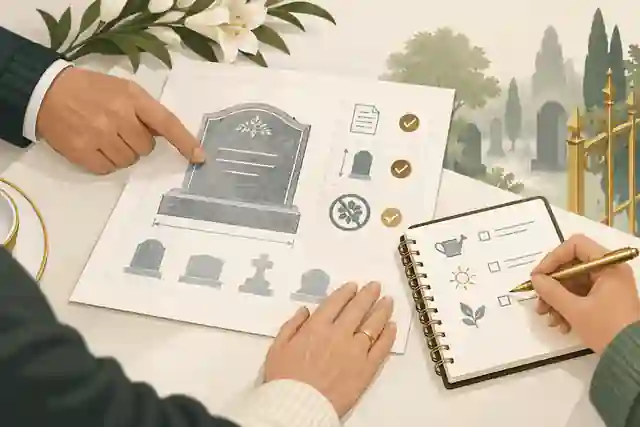
Before using an AI memorial tool, choose one organiser and one reviewer. Gather original files. Ask whether the person had known wishes. Decide whether the memorial will be public or private. Check who appears in each file. Remove sensitive information. Confirm copyright or permission where needed. Label AI-restored, AI-animated and AI-generated material. Keep originals. Save backups. Review the final memorial with close family before wider sharing.
When privacy is uncertain, start private. whether a memorial stays private until you are ready to share is one of the most important practical questions because families often need time. Grief changes. What feels right in the first week may feel different after the service, after relatives have contributed or after emotions settle.
The final test is simple: would this memorial choice help someone understand and honour the person more truthfully? If yes, AI may be useful. If the choice mainly creates spectacle, surprise, novelty or simulated presence, pause. The best AI memorialization platforms make memories clearer, safer and easier to share; they do not pressure families to turn grief into a demonstration of what technology can do.
For families who want a careful place to gather stories, photographs, tributes and privacy decisions, Evaheld Memorials can support ai memorialization platforms planning without asking you to make every decision at once.



FAQs
What are AI memorialization platforms? Ethical tools, memories and safety
AI memorialization platforms are tools that use AI to support remembrance through drafting, restoration, organisation, captions, moderation or carefully labelled media. They are safest when families begin with what Evaheld Memorials is and how it works and judge each feature against the NIST AI Risk Management Framework.
Is AI photo restoration acceptable for a memorial?
AI photo restoration is usually acceptable when it repairs an existing image, keeps the original, avoids over-editing and is labelled honestly; families can pair AI photo animation for a memorial with the National Archives family archive guidance so the memorial copy does not replace the preserved original.
Should families use AI voice cloning after someone dies?
AI voice cloning should usually be avoided unless the person gave explicit consent before death, the script was approved, access is limited and the output is clearly labelled; preserving real recordings through adding videos and music to memorials is safer than creating new speech, especially given the ACCC scam guidance on identity misuse.
How should AI-generated memorial content be labelled?
Use plain labels such as “AI-restored from the original photograph” or “AI-assisted draft reviewed by family”, and keep those notes near the content; what to include in a memorial page should also reflect transparency principles like those in the EU AI Act transparency obligations.
Can an AI memorial be private?
Yes, privacy depends on the platform settings and plan, so families should check visibility, search indexing, invitations and moderation before uploading sensitive files; private and public online memorials should also be considered alongside the OAIC guidance on commercial AI products.
Who should approve AI memorial material before sharing?
The closest appropriate family organiser should approve it with at least one trusted reviewer, especially for animation, voice, children or sensitive images; who controls an online memorial connects directly to accountability under principles such as the OECD AI Principles.
Can AI help write a tribute without making it sound fake?
AI can help structure notes, but the family should add specific memories, remove invented emotion and review every sentence before publication; what Evaheld Memorials is and how it works fits best with human-centred values reflected in the UNESCO Recommendation on the Ethics of AI.
What should families avoid uploading to AI memorial tools?
Avoid identity documents, medical records, private addresses, financial details, unapproved images of children, private disputes and files involving people who have not agreed; digital memories and social media guidance should be read with the European Commission GDPR guidance where living people appear.
Do AI memorial videos need captions?
Yes, captions or transcripts make memorial media easier for older relatives, deaf or hard-of-hearing viewers and people watching without sound; adding videos and music to memorials is stronger when it follows the W3C captions guidance.
How can families keep AI memorial content for the future?
Keep originals, exported memorial text, captions, transcripts, generated files and notes about AI use in family-controlled storage; downloading online memorial content supports long-term preservation alongside the C2PA specification for content credentials.