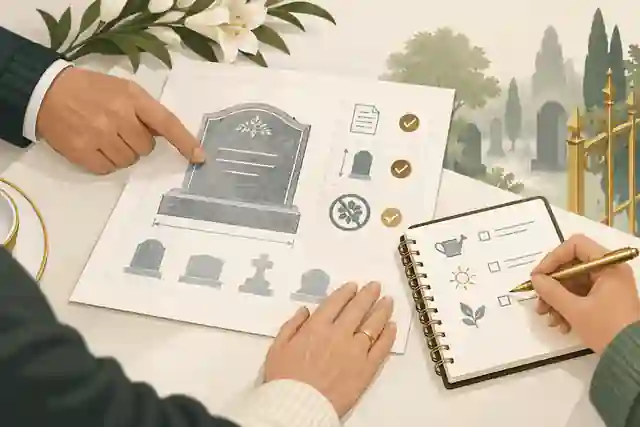
Facebook Memorials in 2025 or a Tribute Site?
Facebook offers reach, but families may want more privacy, control and permanence than a social feed can comfortably provide.

Last Updated: June 24, 2026
When someone dies, Facebook is often the first digital place people reach for. It is already on everyone’s phone, relatives know how to use it, and a memorialised profile can gather condolences quickly. In the first raw days after a death, that reach can feel merciful. Yet many families discover that the same platform convenience can also make grief feel exposed, interrupted, and strangely out of step with the tone they want to protect.
That is the real 2025 decision. It is not only whether Facebook can hold memories. It is whether a social platform built around feeds, notifications, advertising and shifting account rules is the right long-term home for remembrance. Guidance from the Be Connected digital legacy planning advice, the Office of the Australian Information Commissioner on social media privacy, the NSW Trustee and Guardian on digital legacy and social media and the NSW Law Reform Commission’s report on access to digital assets all point towards the same broader truth: families are not only choosing a place to post. They are choosing a level of control, privacy, access and future certainty.
That is where a dedicated tribute site changes the conversation. Instead of asking a family to fit remembrance into a social feed, a dedicated memorial is built around remembrance first. It can give one clear place for stories, service details, tributes, photos and moderation decisions. On Evaheld, confirmed public product material shows a path from a public memorial with written condolences and memories through to paid options with private memorial access, contributor invitations, media uploads and approval controls. If you want the broader landscape first, these explainers on public versus private online memorials, who controls an online memorial and how long online memorials last frame the core trade-offs well.
This comparison is therefore less about technology and more about emotional fit. Facebook memorials can still be useful. Dedicated tribute sites can also be a better choice when the family wants a quieter, more intentional place to remember someone. The right answer depends on reach, ownership, moderation, privacy, permanence and how much the family wants the memorial to sit apart from everyday social media noise.
When is Facebook enough for remembrance, and when does it start to feel intrusive?
Facebook can be enough when the immediate goal is speed. If the family needs to notify a broad community quickly, share service timing, and provide a familiar place for short condolences, Facebook is effective precisely because it removes friction. Many mourners are already connected there, so nobody needs to learn a new platform during a difficult week. For some families, that simplicity is not a compromise. It is the point.
A memorialised account can also feel appropriate when the person being remembered was already active on Facebook and their closest circle naturally associates that profile with their day-to-day life. The NSW Trustee and Guardian notes that memorialisation can preserve posts and photos, allow a legacy contact to manage some limited settings, and offer an online place where people share memories together.
The limits usually appear once remembrance needs more structure. Facebook is designed for interaction in a social feed, not for curation, archiving or family stewardship. Posts move down the timeline. Comments collect in different places. Important details can be buried under fresh activity. A remembrance message may sit beside unrelated notifications, event prompts or other platform activity that has nothing to do with grief. The family may also be relying on rules, access settings and product decisions made by a third-party platform rather than on a memorial experience designed around their needs.
Privacy expectations are another pressure point. The OAIC warns that if information on a social platform is publicly available, others may see it, copy it and share it beyond the original audience. The UK National Cyber Security Centre’s social media privacy guidance makes a similar point from a security angle: settings matter, but they do not eliminate the broader risks of sharing personal material online. That matters when a memorial includes names, dates, family stories, photos of children, or service details the family only intended for a defined circle.
Many families also underestimate the emotional impact of platform tone. Facebook is built to keep people moving through a stream of updates. Even when a profile is memorialised, the surrounding experience can still feel busy and public. Birthday reminders, unrelated comments, social advertising or changes in what the platform foregrounds can make grief feel interrupted rather than gently held. The Digital Legacy Association has long argued that digital legacy planning is not just about access after death but about whether the platforms involved match the user’s wishes and the family’s ability to manage the account responsibly.
Questions about access can become thorny too. The NSW Trustee and Guardian advice on wrapping up a life online and the Law Reform Commission’s work on digital assets both highlight a recurring issue: platform terms, executor expectations and privacy interests do not always align neatly. A family may assume that because a page exists, they fully control it. In practice, their options can be limited by account policies, what was arranged before death, and what the platform allows after it verifies the death.
That is why Facebook often works best as the announcement layer rather than the whole memorial strategy. It can be ideal for quick reach and community visibility. It becomes less ideal when the family wants a stable home for stories, organised media, contributor roles, moderation, privacy control and a tone that feels separate from ordinary social chatter. If those needs are already present, the more useful comparison is not whether Facebook works at all. It is whether Facebook is doing work it was never really built to do.
If your family already knows it wants a calmer place where remembrance can be shaped deliberately, you can build a calm, family-controlled memorial space while still sharing the final memorial link back through Facebook when broad reach is helpful.

How do dedicated tribute sites change privacy, control and long-term confidence?
A dedicated tribute site starts from a different premise. Instead of treating remembrance as one more type of social content, it treats remembrance as the primary purpose of the page. That changes everything from layout to contributor permissions. Families get a clearer place for funeral details, tributes, condolences, photos and stories, without asking visitors to navigate a platform designed for general social activity.
Control is usually the most important difference. On Evaheld, the confirmed plan catalogue shows that every plan begins with a personal memorial page, written memories, a digital condolences book, QR access and sharing by link, email or messaging. Paid tiers then add the features many families eventually want most: private memorial access, contributor invites, media uploads, moderation controls and approval workflows. That means the memorial can move from a simple public tribute to a more curated family project without asking the family to rebuild everything somewhere else. The related pieces on updating a memorial over time, moderating condolence messages carefully and bringing relatives into the memorial build support that use case.
Privacy becomes more deliberate too. The free Evaheld memorial is public, but paid plans can make the memorial private and pair that setting with contributor and moderation controls. That is a meaningful distinction from relying on general social privacy settings alone. Families who need time to agree on wording, gather photos or review tributes before wider sharing can work in a more contained environment. If you are weighing that question directly, the most relevant internal references are keeping the memorial private until sharing feels right and the comparison between the free memorial and the first private collaborative option.
Long-term organisation is another advantage. A tribute site is better suited to material that grows over months and years: anniversary reflections, updated biographies, extra photographs, service recordings, tribute videos or a QR plaque that keeps connecting visitors back to the same memorial. That is much closer to the memorial arc many families actually live through. They may need announcement today, a shared tribute next month, and a lasting place to revisit memories much later. The discussions around what happens if a memorial service ever closes, keeping downloadable memorial content and search visibility for public memorials are more relevant to that longer horizon than a simple social profile comparison.
Dedicated memorial tools can also improve tone. Instead of forcing grief into the same design language as ordinary posting, they give visitors a place that signals purpose. A memorial directory, a separate tribute page, a curated life story, a funeral booklet or a tribute video all tell mourners that they have entered a remembrance space. Public information from the Memorials product pages and FAQs shows that Evaheld can support a memorial page, contributor collaboration, QR-linked access and, on the highest plan, funeral booklets and tribute videos created from the same core memory set. The current plan comparison for memorial formats, the public memorial directory and the explanation of the funeral package with booklet and tribute video clarify how that structure works in practice.
There is also a subtle emotional benefit in ownership. The Healthdirect entry for Griefline, Griefline’s bereavement resources and the Better Health Channel’s grief guidance all reflect the same broad reality: grief affects concentration, decision-making and energy. A remembrance format that reduces uncertainty and centralises family control can be easier to live with than one that depends on a changing social platform.
None of this removes the need for a practical choice. A dedicated tribute site is usually the better fit when the family wants ownership of tone, clearer moderation, structured media, contributor roles, privacy options or a more permanent archive. Facebook remains useful when convenience and broad immediate reach are the main priorities. What matters is recognising that these are different tools doing different jobs.
Which choice tends to fit different family situations in 2025?
If the death has affected a large public community and the family mainly needs to notify people quickly, Facebook may be the easiest first step. It works especially well when the goal is a short announcement and a simple condolence thread rather than a long-term curated memorial. That can be true for school communities, clubs, workplaces or friendship groups who are already connected there.
If the family expects a memorial to become a shared archive, a dedicated tribute site usually fits better. That is particularly true when people in different households want to contribute photos and stories, the organiser wants approval control, or the family wants the memorial to remain usable beyond the first few weeks.
If the family wants a hybrid approach, the most practical pattern is often this: create the memorial first, then use Facebook as the way to distribute it. That preserves reach without making the feed the only record. It also reduces the risk that important details are scattered across posts, comments and different relatives’ profiles.
The clearest checklist is simple. Choose Facebook alone when you want immediate reach, low setup and a light-touch memorial thread. Choose a dedicated tribute site when you want stronger control, calmer design, structured remembrance, contributor access, privacy options and more confidence about how the memorial will function over time. Use both when the community is broad but the family still wants a memorial home that does not depend on the rhythm of a social platform.
For families comparing the practical setup, the most helpful next reads are how a memorial works end to end, including richer media in remembrance, how written tributes and condolences can be handled, what the memorial creation flow actually does and what one prompt can generate across memorial formats.
What should families do before deciding?
Before choosing a platform, it helps to answer five practical questions. First, who needs access now, and who may need access later? Second, is the memorial mainly for quick public notice or for longer-term storytelling? Third, will multiple people need to add or review content? Fourth, does the family want a public memorial, a private one, or something that starts private and is shared later? Fifth, would it help if the memorial could also support QR sharing, funeral materials or media uploads beyond text alone?
Families should also think about what happens after the first month. Will anyone want to update the memorial? Will someone want to upload photographs that are still being collected? Will children or relatives revisit the page years later? Will there be a gravesite, home display or funeral booklet that could use a QR path back to the memorial? Those are usually the moments when a purpose-built tribute site proves its value.
Related Evaheld Memorials guidance
Families working through facebook Memorials in 2025 or a Tribute Site? often need a few connected decisions in one place: what to include in an online memorial, how to create an online memorial, how to assess memorial websites, whether online memorials are free, online memorial cost choices. These related guides help the article sit inside a fuller memorial planning path rather than leaving each decision isolated.
For Evaheld Memorials product details, the most useful companion pages are private memorial sharing choices, tributes and condolences on a memorial, how quickly can I create an online memorial, plans with private memorial options, subscription or one-time memorial plans. They explain setup, privacy, contribution and sharing choices before a family invites others into the memorial.
FAQs about facebook Memorials in 2025 or a Tribute Site?
Should you use a Facebook memorial or a dedicated tribute site?
When someone dies, Facebook is often the first digital place people reach for. It is already on everyone’s phone, relatives know how to use it, and a memorialised profile can gather condolences quickly. In the first raw days after a death, that reach can feel merciful. Yet many families discover that the same platform convenience can also make grief feel exposed, interrupted, and strangely out of step with the tone they want to protect.
Start with the practical facts, then leave room for memory, emotion and family preferences. private memorial sharing choices can help you organise the Evaheld Memorials side, while Services Australia guidance after a death gives families wider context before decisions feel rushed.
How can an online tribute feel personal and respectful?
A respectful plan usually combines clear information, gentle language and a way for close people to contribute at the right time. tributes and condolences on a memorial supports that shared approach, and USA.gov steps after someone dies is a useful reminder that grief affects people differently.
When should a family create or review the memorial?
Begin as soon as the task would reduce pressure rather than add to it. Families often start with a simple memorial draft, then refine details over time using how quickly can I create an online memorial; GOV.UK guidance after a death can also help with the first administrative steps after a death.
Who should manage the page and approve contributions?
The closest organiser should usually guide the final decisions, but relatives and friends can help with stories, photos and checks. plans with private memorial options explains how collaboration can work, while National Institute on Aging end-of-life guidance outlines broader steps families may need to consider.
What content belongs on the memorial page?
Yes. A memorial page can hold service details, photos, tributes, updates and a lasting place to return to after the immediate arrangements are over. subscription or one-time memorial plans shows how quickly that can begin, and Better Health grief information offers trusted context for bereavement care.
How can families control privacy and sharing?
Keep sensitive information out of public copy, review contributions before publishing and choose privacy settings before sharing widely. what to include in an online memorial explains private memorial options, while FTC funeral rule information gives practical consumer context around funeral and memorial decisions.
Which account details and backups should be retained?
Keep the memorial URL, service details, donation preferences, key family contacts and any relevant documents in one place. how to create an online memorial helps families compare plan needs, and ACCC funeral services information can support cost and planning conversations.
How can relatives contribute safely?
Invite people to contribute specific memories, photographs or messages, then review everything before it appears publicly. how to assess memorial websites explains tribute and condolence controls, while SAMHSA coping tips offers supportive guidance for people coping with loss.
What common online memorial mistakes should families avoid?
Avoid rushing public details, copying private messages without permission or turning the page into a list of tasks. whether online memorials are free helps families understand free and paid options, and Moneysmart funeral costs guidance is useful when funeral-related decisions need clear consumer information.
How does Evaheld Memorials support long-term preservation?
Evaheld Memorials gives families a guided place to create, edit, share and preserve a tribute as needs change. online memorial cost choices keeps the memorial grounded in practical setup, while Healthdirect grief support helps families think about comfort and care beyond the page itself.
If you want a calm place to organise memories, tributes, photos and family contributions, create a lasting Evaheld Memorials tribute for your family.
What matters most about Facebook Memorials in 2025 or a Tribute Site?
Facebook memorials are familiar, immediate and useful for broad announcement. Dedicated tribute sites are usually better when the family wants clearer ownership, a gentler tone, better organisation and more control over who contributes and what remains visible. In 2025, that distinction matters more, not less, because digital remembrance now spans privacy, moderation, legacy planning and long-term access rather than a single condolence post.
If your family wants the reach of social sharing without leaving remembrance to the algorithm, you can create a lasting tribute your family can shape together and then share that memorial link wherever your community already gathers.
Related Evaheld resources
Continue with these carefully selected Evaheld Memorials guides and answers.