How do I share funeral history timelines with family? Prompts, photos and legacy preservation
A practical, compassionate guide to sharing funeral history timelines with family through prompts, photos, records, privacy, collaboration and legacy preservation.
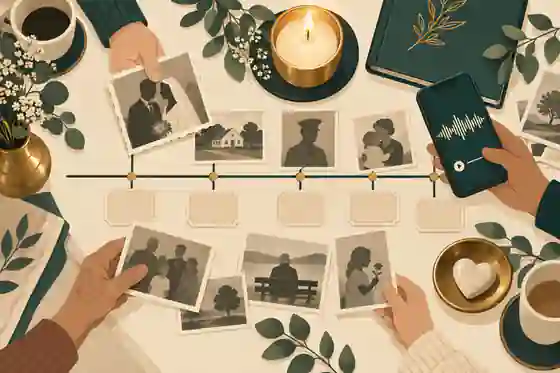
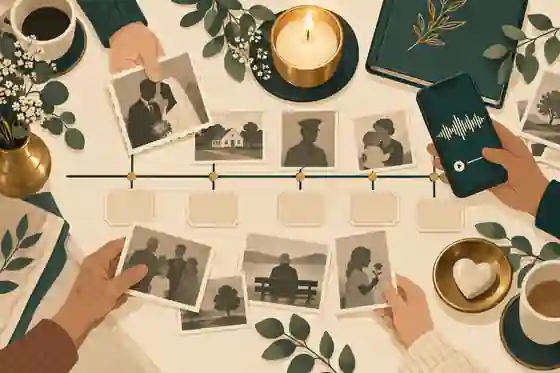
How do I share funeral history timelines with family? Prompts, photos and legacy preservation starts with one calm, shared timeline that combines verified facts, remembered stories, photographs, voice notes, funeral details, and clear permissions about what can be seen by relatives. To share funeral history timelines with family well, gather the essentials first, place them in date order, add context while memories are fresh, invite trusted relatives to contribute, and keep private details out of public view until the family has agreed.
A funeral history timeline is not only a record of a service. It can hold the life history that led to the farewell: childhood places, migration, education, work, relationships, service, faith or values, favorite routines, hard seasons, achievements, ordinary habits, photographs, letters, recipes, voice recordings, and the choices made around the funeral or memorial. The best timelines help relatives understand a person as a whole life, not only as a date of birth and date of death.
This article uses US English because the supplied search competitors primarily address US readers, while also explaining Australia, United Kingdom, and United States differences where records, privacy, death administration, and family history resources vary. In all three countries, the editorial principle is the same: treat memory as personal information, separate confirmed facts from remembered stories, and ask before sharing anything that may affect living people.
share funeral history timelines with family: practical guidance
Before gathering material, decide what the timeline is for. A funeral timeline may support a eulogy, a slideshow, an obituary, a family archive, a memorial page, a funeral booklet, or a private record for children and grandchildren. If you try to make one document serve every purpose at once, the result often becomes too long, too public, or too emotionally difficult to finish.
A practical first version can be simple: key dates, five to ten photographs, a short life story, service details, and a few prompts for relatives. Later versions can add deeper stories, captions, audio clips, video memories, and supporting documents. Evaheld Memorials already has family history preservation prompts for families who want a wider archive beyond the immediate funeral period.
It helps to name one main organizer. That person does not own the memories, but they keep the timeline coherent. They can track who supplied each photo, what date is confirmed, what story still needs checking, and which details should stay private. Without a coordinator, relatives may send material through text messages, social platforms, email threads, and cloud folders until no one knows which version is final.
Build the timeline in layers
The strongest funeral history timelines usually have four layers. The first is factual: full name, birth, death, family relationships, education, military service, migration, marriage, children, career, community roles, and funeral or memorial details. The second is sensory: favorite places, songs, food, sayings, clothes, routines, tools, hobbies, and everyday scenes. The third is relational: who loved them, who they helped, who they learned from, and who shaped them. The fourth is evidential: photographs, letters, documents, recordings, newspaper notices, programs, certificates, and captions.
Australia, the United Kingdom, and the United States organize historical records differently. The National Library of Australia family history research guide explains Australian sources such as births, deaths and marriages, cemetery records, shipping records, military records, newspapers, maps, and First Nations family history resources. The National Archives of Australia research guidance recommends gathering basic facts, personal papers, certificates, passports, letters, and photographs before searching government records. For US families, the US National Archives genealogy resources point researchers toward census, military, immigration, naturalization, land, and other federal records.
The United Kingdom has its own structure. GOV.UK provides official steps for what happens after a death, while UK archival research is often split between national archives, local record offices, registrars, church records, cemetery records, probate, and specialist collections. Do not assume one country’s record pathway applies to another. If a person lived across countries, add a place field to every timeline event so later relatives know which jurisdiction may hold the record.
Use prompts that invite stories, not one-word answers
Good prompts are open, specific, and gentle. Instead of asking someone to tell the whole life story, ask for one scene: what the kitchen looked like, what the first job paid, what the wedding day sounded like, what their laugh was like, what they always carried, what they did when someone needed help, or what changed after a migration, war, illness, business, marriage, child, or loss.
Prompts work best when they are grouped by theme. For childhood and roots, ask where they grew up, who lived in the house, what school days felt like, and which older relatives they remembered. For work and purpose, ask what jobs shaped them and what work made them proud. For family, ask about traditions, ordinary Sundays, holidays, and sayings. For resilience, ask what was hard and what carried them through. For values, ask what advice they repeated, what they believed mattered, and what they hoped younger relatives would understand.
The StoryCorps great questions approach is useful because it treats conversation as a relationship, not a survey. If that page is unavailable in some regions, the principle still stands: choose a few questions, listen fully, and follow the memory that appears. A timeline should not force people into a script. Tangents often reveal the most meaningful details.
If relatives are already grieving, keep prompts short. A family member may be able to answer, “What photograph feels most like them?” even when they cannot write a polished tribute. Evaheld Memorials’ support for creating an online memorial site with photos and stories can help families bring those short contributions into one organized place.
Record voice carefully and ethically
A written story is valuable, but a voice recording preserves tone, pauses, laughter, accent, and emotional rhythm. Ask permission before recording. Explain who will hear it, where it will be stored, whether it may be used at the funeral, and whether parts may be published online. In some places, recording without consent can also create legal problems. Even where the law permits one-party recording, a memorial project should not begin by breaking trust.
For older relatives, do not make technology the obstacle. Use a familiar phone call, a simple voice memo, or a video call where someone else handles the recording. Keep sessions short, ideally one or two questions at a time. Begin with something easy before moving toward tender subjects. If the person becomes tired, confused, or distressed, stop. A respectful five-minute memory is better than an exhausting hour.
When recording a dying person, a person with dementia, or anyone processing trauma, be especially careful. Let them decline topics, pause, correct themselves, or leave gaps. If they share something painful, receive it without trying to fix it. A funeral history timeline should honor agency, not extract content from someone who feels pressured. Families can use record your life story support when they want prompts for voice, video, photographs, consent, and family archives.
The W3C guidance on transcripts is relevant for families because transcripts make audio easier to search, understand, and share with relatives who are Deaf, hard of hearing, short on data, or unable to listen privately. A simple transcript does not need to be perfect. It should identify the speaker, date, main topics, and any names or places that may need checking.
Organize photos before memories scatter
Photographs are often the fastest way to unlock stories. Place a small group of images in front of relatives and ask who is pictured, where it was taken, who took it, what happened just before or after, and whether it can be shared publicly. Do not upload an entire box of unnamed photos and expect future relatives to understand them. Captions are the preservation work.
Keep original photographs safe. Scan or photograph them, but do not discard them after digitizing. The Library of Congress personal digital archiving materials emphasize that personal and family memories need active care because digital files depend on technology to remain available. The US National Archives preservation information by media type is also useful when families are dealing with photographs, paper, audio, video, and digital formats that may age differently.
Use consistent file names. A helpful structure is year-month-day, person, place, and short description, such as 1982-06-maria-james-wedding-chicago.jpg. If the date is uncertain, say so in the caption rather than guessing. For example: probably 1960s, identified by Aunt Elena in September 2026. This distinction between verified and remembered information protects accuracy.
If you plan to include many photos, consider how they will appear in the memorial itself. Evaheld Memorials has digital memories and social media guidance for families sorting photos, posts, videos, and other digital material after a death.
Separate private, family-only, and public material
Not every memory belongs in the same audience. A public timeline might include the person’s life milestones, a service date, selected photographs, public achievements, and an invitation to leave tributes. A family-only timeline might include childhood stories, voice recordings, scanned letters, recipes, and private photographs. A restricted archive might include sensitive documents, health details, adoption information, financial records, family conflict, addresses, or stories involving living people.
Australia, the United Kingdom, and the United States have different privacy laws, but families should follow a higher ethical standard than the minimum legal rule. The OAIC photo and video privacy guidance notes that identifiable photos and videos can be personal information in Australia. The Australian eSafety Commissioner also explains why consent for sharing photos and videos should be informed, freely given, and reversible.
Children’s images need extra care. The eSafety photo and video sharing guidance warns that online sharing can be copied, downloaded, or passed along in ways families do not control. Before posting funeral photographs, school images, hospital images, or pictures of children, ask whether the people shown, or their guardians, would reasonably expect those images to appear in a memorial timeline.
This is where memorial privacy settings matter. Families often need a quiet draft before inviting a wider circle. Evaheld Memorials explains keeping a memorial private until you are ready, which is especially useful when relatives are still choosing photographs, editing captions, and deciding what belongs in public.
Invite relatives with clear roles
A strong timeline is rarely made by one person. One sibling may know dates, a cousin may have photographs, a spouse may know daily routines, a friend may know work stories, and grandchildren may remember recent sayings or videos. Invite people by role rather than by obligation. Ask one person to check names, another to gather photographs, another to write two short stories, and another to review privacy.
Do not send a broad message that says, “Send anything you have.” That creates overwhelm. Better requests are specific: please send one photograph from the 1970s with a caption; please record a two-minute voice note about Sunday dinners; please confirm the spelling of these names; please tell us whether this photo is okay to share.
Evaheld Memorials answers invite relatives and friends to help build the memorial for families who want contribution without losing structure. A shared timeline benefits from multiple voices, but it still needs moderation, permissions, and one dependable final review.
When memories conflict, do not rush to declare one person wrong. People remember different emotional truths from the same event. Put confirmed facts in the timeline and, where appropriate, allow separate memories to sit beside them. If a date, place, or relationship affects official accuracy, verify it through documents. If the difference is interpretive, preserve the nuance respectfully.
Connect the timeline to funeral planning without making it a task list
Funeral history timelines can help a service feel personal. They can shape the order of photographs in a slideshow, the paragraphs of a eulogy, the readings, the music, the printed program, and the memories guests are invited to share. They can also prevent accidental omissions. Families often remember a military role, a migration story, a creative practice, a volunteer role, or a long friendship only after the service has passed.
Official after-death steps differ across countries. GOV.UK’s what to do when someone dies guidance covers UK steps such as registering the death, telling government departments, and arranging the funeral. US readers can use USA.gov’s death of a loved one guidance for US agency notifications, death certificates, survivor benefits, and related official tasks. Australian families will usually deal with state and territory registration processes, funeral directors, banks, superannuation, Centrelink or other government services, and local record holders.
The timeline should not replace legal or administrative checklists. Instead, it sits beside them. One path handles official duties. The other protects the person’s story. Both matter, but they have different rhythms. Administrative tasks often have deadlines; story preservation can continue gently over months and years.
Add memorial examples without copying famous lives
Published memorial profiles can show how a life story can be arranged into chapters, photographs, relationships, and milestones. For example, the Evaheld Memorials profile for Steve Jobs shows how public work, family relationships, and timeline milestones can sit together. The profile for Princess Diana demonstrates how service, public memory, and personal milestones can be layered carefully. The profile for Alan Rickman shows how creative work, friendships, partnerships, and later remembrance can form a coherent memorial narrative.
Use famous profiles as structural inspiration only. A family memorial should not imitate celebrity language or turn ordinary life into performance. The most meaningful details are often modest: the tool bench, the handwritten recipe, the phrase everyone repeats, the route walked every morning, the chair by the window, or the music played while cooking.
Preserve the finished timeline in more than one form
A timeline is not preserved because it exists once. It is preserved when it can be found, opened, understood, backed up, and passed on. Keep an editable version, a PDF or printable version, the original media files, transcripts, and a record of who supplied each item. Save copies in more than one location and make sure at least one trusted person knows how to access them.
Use a strong passphrase and account recovery plan for any shared archive. The Australian Cyber Security Centre passphrase advice recommends long, unique, unpredictable passphrases, while its multi-factor authentication guidance explains why more than one authentication factor helps protect accounts. US and UK families should apply the same practical security principles even if the government source is Australian.
Evaheld Memorials also explains downloading memorial content so families can think ahead about copies, exports, and long-term access. A memorial page is easier to share, but a family should still keep its own organized copy of the most important stories, photos, and files.
Make the timeline emotionally safe
Grief affects attention, memory, energy, and tolerance for disagreement. Some relatives may want every detail included immediately. Others may not be ready to look at photographs. Some may correct facts sharply because accuracy feels like care. Others may avoid the project because it makes the loss too real.
The NHS grief after bereavement guidance reminds families that grief can show up in different ways and does not follow a neat order. Build that truth into the timeline process. Give people choices. Let them contribute later. Avoid making the memorial a test of love.
Use careful language around difficult chapters. You can include hardship without exposing private pain. You can say a person lived through war, illness, migration, estrangement, addiction, or financial struggle without publishing intimate details that living relatives did not consent to share. If a story involves someone else’s trauma, ask whether it belongs in a public timeline at all.
A simple step-by-step workflow
First, open a working document with columns for date, event, source, contributor, permission, audience, and follow-up. Second, add confirmed life milestones. Third, choose ten anchor photographs and write captions. Fourth, ask three to five relatives for one specific contribution each. Fifth, record short voice memories with consent. Sixth, label each item as public, family-only, or private. Seventh, draft the funeral or memorial version. Eighth, let a trusted relative review names and sensitive details. Ninth, publish or share the first version. Tenth, save a copy and schedule a later review.
If the family wants a shareable memorial rather than a scattered folder, Evaheld Memorials explains meaningful online memorial inclusions, share a digital memorial link, and how to create an online memorial step by step. Those connected decisions help turn a timeline into something relatives can actually use.
The final test is simple: could a grandchild, niece, nephew, friend, or future researcher understand not only what happened, but why it mattered? If the answer is yes, the timeline has done its work.
When your family is ready to bring stories, photos, funeral details, and shared memories into one respectful place, Evaheld Memorials can help you share funeral history timelines with family.
FAQs
How do I share funeral history timelines with family? Prompts, photos and legacy preservation
Start with one edited timeline, confirm key facts, add captions to the most important photos, and invite relatives to contribute in small, specific ways. Keep sensitive material private until the family agrees, using family history preservation prompts to structure the work and the National Library of Australia family history research guide to understand records and context.
What should be included in a funeral history timeline?
Include confirmed life milestones, family relationships, places lived, work, service, favorite routines, funeral details, photographs, short captions, and selected memories. A fuller memorial can use meaningful online memorial inclusions, while the US National Archives genealogy resources show how records can support family facts.
How do I ask relatives for stories without overwhelming them?
Ask for one specific thing at a time, such as one photo with a caption, one voice note, or one memory from a particular decade. Evaheld Memorials explains how to invite relatives and friends to help build the memorial, and the W3C guidance on transcripts supports making recorded contributions easier to search and share.
Should funeral timeline photos be public or private?
Some photos can be public, but images involving children, private homes, hospitals, sensitive cultural settings, or living people should be reviewed carefully first. Families can use keeping a memorial private until you are ready while applying the OAIC photo and video privacy guidance.
How can I preserve voice recordings for the family?
Ask consent, record short sessions, name the files clearly, add a transcript or topic list, and save copies in more than one place. Evaheld Memorials’ digital memories and social media guidance pairs well with the Library of Congress personal digital archiving materials.
How do I share the finished timeline after the funeral?
Share a calm first version with close relatives, invite corrections, then decide whether a wider memorial link should be public or private. Evaheld Memorials explains how to share a digital memorial link, and eSafety photo and video sharing guidance explains why online images can travel beyond the first audience.
What if relatives disagree about dates or memories?
Separate confirmed facts from personal recollections, record the source of each claim, and let different memories sit beside each other when they do not create factual confusion. Evaheld Memorials’ record your life story support can help shape memories, while the National Archives of Australia research guidance encourages gathering basic facts and personal papers before deeper research.
How do I keep a funeral history timeline secure?
Use private sharing, strong account access, named contributors, and backups that trusted relatives can find later. Evaheld Memorials explains downloading memorial content, while the Australian Cyber Security Centre passphrase advice supports stronger account protection.
Can a funeral timeline support an online memorial page?
Yes, the timeline can become the backbone of the memorial’s life story, photo sequence, service details, and tribute prompts. Families can follow how to create an online memorial step by step, while GOV.UK’s what to do when someone dies guidance helps UK readers keep official tasks separate from remembrance work.
How do I handle grief while collecting family history?
Keep the process small, let people contribute later, and avoid treating participation as proof of love. Evaheld Memorials’ creating an online memorial site with photos and stories guidance can make the task more structured, while the NHS grief after bereavement guidance explains that grief affects people differently.