Understanding Cremation: Process, Options and Questions
A calm cremation hub covering process, costs, ashes, urns, paperwork, memorial choices and family questions.
Last Updated: June 24, 2026
Understanding cremation often starts with one practical question: what actually happens, and what choices does a family need to make? Some people are comparing cremation with burial. Others already know cremation is likely, but feel unsure about paperwork, costs, ashes, urns, scattering, faith customs or how to create a meaningful memorial afterwards.
This cremation hub brings those decisions into one calm place. It does not replace a funeral director, celebrant, faith leader or local authority, because rules and provider processes vary. It does give families a plain-English map of the process, options and questions worth asking before they commit to arrangements.
What does the cremation process involve?
Cremation is a regulated process where a person who has died is placed in a cremator and exposed to high heat until only cremated remains are left. Those remains are then cooled, processed into a consistent form and returned to the authorised person, usually in a temporary container or chosen urn.
Families usually work through a funeral director, although the exact process differs between providers and locations. The funeral director may collect the person who has died, organise care and preparation, explain service choices, arrange medical and cremation paperwork, book the crematorium, coordinate family instructions and return the ashes. ACCC funeral services information is useful because it encourages families to ask what is included in prices and what is optional.
A cremation may happen after a formal funeral service, after a small private farewell, or without a public ceremony. Some families choose a direct cremation first and hold a memorial later when people can travel. Others prefer a service with the coffin present before cremation. Neither option is automatically more respectful. The better choice is the one that fits the person, the family, cultural expectations, budget, timing and the need for a shared goodbye.
If you need a narrower step-by-step explanation, the Evaheld Memorials article on cremation process, costs and choices covers the practical sequence in more detail. This page is designed as the wider resource hub for families who are still comparing the main cremation decisions.
How should families compare cremation options?
The first choice is usually service style. A traditional funeral before cremation gives family and friends a time and place to gather. A chapel committal can be shorter and more private. A direct cremation can reduce pressure when the family wants time before planning a memorial. A later celebration of life may suit relatives travelling from interstate or overseas. The Evaheld Memorials collection of celebration of life planning ideas can help when the memorial will happen after the cremation.
The second choice is who needs to be involved. Ask whether close family want a viewing, whether a faith leader should be consulted, whether children need an age-appropriate explanation, and whether distant relatives need remote access. If a livestream is part of the plan, use a tested setup rather than leaving it to the last minute. The funeral livestream checklist explains platform, privacy, sound and backup decisions.
The third choice is what will happen to the ashes. Some families keep ashes at home in an urn. Others inter them in a cemetery, place them in a columbarium, scatter them at a meaningful location where permitted, divide them among relatives, or use a portion in memorial jewellery or a biodegradable urn. The decision can carry emotional weight, so avoid rushing unless there is a clear reason. It is acceptable to keep ashes safely while the family considers what feels right.
The fourth choice is budget. Cremation may avoid some burial costs, but the total still depends on transport, coffin or container, viewing, ceremony, crematorium fees, celebrant, flowers, printed materials, urns, death notices and memorial events. Funeral planning cost questions and average funeral cost information can help families compare quotes without feeling pushed into unnecessary extras.
What paperwork, permission and timing questions matter?
Before a cremation can go ahead, the provider must have the required permissions and documents. Requirements vary by state, territory and provider, so ask for a clear written list. Families commonly need identity details, medical certification, death registration steps, cremation authorisation and instructions about who will collect or receive the ashes. Services Australia death administration steps can help families understand the broader practical work that often sits around funeral arrangements.
Timing depends on paperwork, provider capacity, family decisions and whether a service is being held. If relatives are travelling, ask the funeral director which dates are realistic before sending invitations. If the person had expressed wishes in writing, locate those documents early and check who has authority to make arrangements. When family members disagree, it is better to slow down and clarify decision-making than to create a permanent point of conflict.
Privacy deserves attention too. Cremation services, ash scattering, livestreams and online tributes can involve photos, videos and sensitive family information. OAIC photo and video privacy information is a useful reminder that sharing images depends on context and audience. If your family wants a digital memorial but is not ready to share it widely, Evaheld Memorials explains how a memorial can stay private until the family is ready.
What can families do with ashes after cremation?
Ashes can become part of a lasting memorial, but the best option depends on the person and the family. Keeping ashes at home may feel close and comforting to one relative, while another may prefer a public place they can visit. Interment creates a fixed location. Scattering can feel natural and personal, but it may require permission from a landowner, cemetery, council, park authority or waterway manager. Do not assume that a meaningful place is automatically a permitted place.
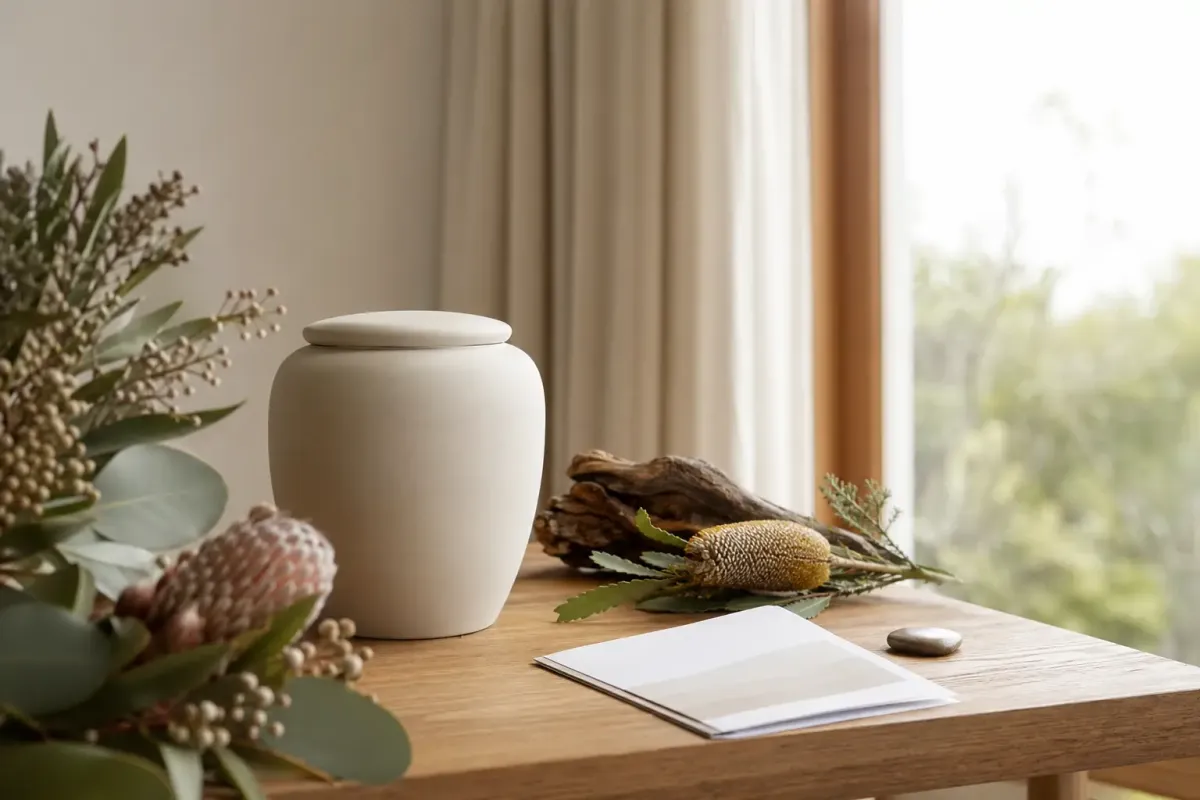
Urns vary from simple temporary containers to ceramic, timber, metal, biodegradable or keepsake designs. Some families choose one main urn; others divide ashes into smaller keepsakes. When relatives disagree, write down the practical questions: who will hold the urn, whether ashes will be divided, how future family members will know the location, and whether the memorial choice can be visited or shared.
Environmental preferences may also shape the decision. Families considering biodegradable urns, tree burials or natural memorials can start with biodegradable urn and tree burial options, then compare them with broader green burial cost considerations. Cremation is not the only environmentally conscious option, and different choices involve different trade-offs.
Grief can make ash decisions feel urgent even when they are not. Healthdirect grief and loss information, Better Health Victoria grief information, Dementia Australia grief guidance and Grief Australia support information all recognise that people respond differently after a death. If the family is unsure, choose a temporary respectful arrangement and return to the decision later.
How can cremation fit religious, cultural and personal beliefs?
Cremation can sit comfortably within some traditions and be discouraged or restricted in others. Even within the same faith or cultural community, family practice can vary. Ask the person's community, faith leader or elders what matters before finalising service timing, body preparation, viewing, prayers, music, committal words or ash handling.
Non-religious families also need structure. A secular farewell can include readings, music, photos, a eulogy, a memory table, silence, symbolic gestures or a later gathering. Evaheld Memorials has practical support for a non-religious funeral service, eulogy writing steps and memory table ideas.
Use inclusive language when invitations, online memorial text or service programs need to welcome people with different beliefs. Australian Government inclusive language guidance is helpful for avoiding assumptions. If a video or livestream is being shared, W3C caption guidance, W3C transcript guidance, W3C audio description guidance and Accesshub National Relay Service information can help families make remote participation more accessible.
Cremation planning checklist for families
- Confirm whether cremation reflects the person's wishes, beliefs and written instructions.
- Ask who has authority to make arrangements and collect ashes.
- Request an itemised quote before agreeing to optional services or products.
- Choose direct cremation, a funeral before cremation, a private farewell or a later memorial.
- Ask the provider which forms and permissions are required in your location.
- Decide whether relatives need a viewing, livestream, recording or travel time.
- Choose a temporary or permanent urn and record who will hold it.
- Check permission before scattering ashes on public, private, cemetery or natural land.
- Consider whether children or distant relatives need a simple explanation or written update.
- Plan a lasting memorial, such as an online tribute, gathering, plaque, tree or photo collection.
If you want one place for memories, photos, funeral details and later tributes, you can create a cremation memorial tribute space with Evaheld Memorials and invite family when you are ready.
How can Evaheld Memorials support families after cremation?
Cremation answers what happens to the body. It does not answer how a family will keep telling the person's story. An online memorial can hold photos, life stories, eulogies, condolences, service details and family contributions in one place. That can be especially helpful when ashes are kept privately, scattered, divided, or placed somewhere not everyone can visit.
Evaheld Memorials can be used gently and privately. Families can compare Memorials plan options, look through public memorial examples, use the Memorials help centre, or return to Evaheld Memorials when they are ready to create a tribute. If relatives want to contribute, the platform explains family and friend invitations and tribute and condolence messages.
Digital planning also needs security. If family members are sharing accounts, livestream links or memorial access, use strong account practices from the Australian Cyber Security Centre passphrase advice and multi-factor authentication guidance. For broader online sharing, eSafety online safety topics, Be Connected privacy tips and ACMA internet connection advice are useful when relatives are contributing from different places.
Related Evaheld Memorials guidance
Families working through understanding Cremation: Process, Options and Questions often need a few connected decisions in one place: how guests leave messages on memorial pages, how to moderate online memorial comments, private vs public online memorials, search visibility for public memorials, how memorial content can be downloaded later. These related guides help the article sit inside a fuller memorial planning path rather than leaving each decision isolated.
For Evaheld Memorials product details, the most useful companion pages are private memorial sharing choices, tributes and condolences on a memorial, how quickly can I create an online memorial, plans with private memorial options, subscription or one-time memorial plans. They explain setup, privacy, contribution and sharing choices before a family invites others into the memorial.
FAQs about understanding Cremation: Process, Options and Questions
What should families know about understanding cremation?
Understanding cremation often starts with one practical question: what actually happens, and what choices does a family need to make? Some people are comparing cremation with burial. Others already know cremation is likely, but feel unsure about paperwork, costs, ashes, urns, scattering, faith customs or how to create a meaningful memorial afterwards.
Start with the practical facts, then leave room for memory, emotion and family preferences. private memorial sharing choices can help you organise the Evaheld Memorials side, while ACCC funeral services information gives families wider context before decisions feel rushed.
How can cremation or burial choices reflect the person being remembered?
A respectful plan usually combines clear information, gentle language and a way for close people to contribute at the right time. tributes and condolences on a memorial supports that shared approach, and SAMHSA coping tips is a useful reminder that grief affects people differently.
When should families start comparing their options?
Begin as soon as the task would reduce pressure rather than add to it. Families often start with a simple memorial draft, then refine details over time using how quickly can I create an online memorial; Moneysmart funeral costs guidance can also help with the first administrative steps after a death.
Who should be involved in the decision?
The closest organiser should usually guide the final decisions, but relatives and friends can help with stories, photos and checks. plans with private memorial options explains how collaboration can work, while Healthdirect grief support outlines broader steps families may need to consider.
Can an online memorial complement a physical place of remembrance?
Yes. A memorial page can hold service details, photos, tributes, updates and a lasting place to return to after the immediate arrangements are over. subscription or one-time memorial plans shows how quickly that can begin, and Services Australia guidance after a death offers trusted context for bereavement care.
How should private family details be protected?
Keep sensitive information out of public copy, review contributions before publishing and choose privacy settings before sharing widely. how guests leave messages on memorial pages explains private memorial options, while USA.gov steps after someone dies gives practical consumer context around funeral and memorial decisions.
Which documents and provider details should families retain?
Keep the memorial URL, service details, donation preferences, key family contacts and any relevant documents in one place. how to moderate online memorial comments helps families compare plan needs, and GOV.UK guidance after a death can support cost and planning conversations.
How can relatives contribute memories respectfully?
Invite people to contribute specific memories, photographs or messages, then review everything before it appears publicly. private vs public online memorials explains tribute and condolence controls, while National Institute on Aging end-of-life guidance offers supportive guidance for people coping with loss.
What mistakes should families avoid when choosing an option?
Avoid rushing public details, copying private messages without permission or turning the page into a list of tasks. search visibility for public memorials helps families understand free and paid options, and Better Health grief information is useful when funeral-related decisions need clear consumer information.
How can Evaheld Memorials preserve memories over time?
Evaheld Memorials gives families a guided place to create, edit, share and preserve a tribute as needs change. how memorial content can be downloaded later keeps the memorial grounded in practical setup, while FTC funeral rule information helps families think about comfort and care beyond the page itself.
If you want a calm place to organise memories, tributes, photos and family contributions, create a lasting Evaheld Memorials tribute for your family.
What matters most about Understanding Cremation: Process, Options and Questions
Cremation decisions are easier when they are separated into practical parts: process, permission, service style, costs, ashes, beliefs, remote access and the memorial that follows. Families do not need to solve every emotional question at once. They can ask for itemised information, check local requirements, choose a service style that fits, and take time with ashes and memorial choices where possible.
When the cremation is complete, memory still needs somewhere to live. If your family wants a private, thoughtful place for stories, photos, condolences and future remembrance, you can start a cremation remembrance page.
Related Evaheld resources
Continue with these carefully selected Evaheld Memorials guides and answers.