How do I use AI without making a memorial feel fake? Ethical tools, memories and safety
A practical, ethical guide to using AI in memorials without making them feel fake, covering consent, privacy, restoration, voice, disclosure and family review.

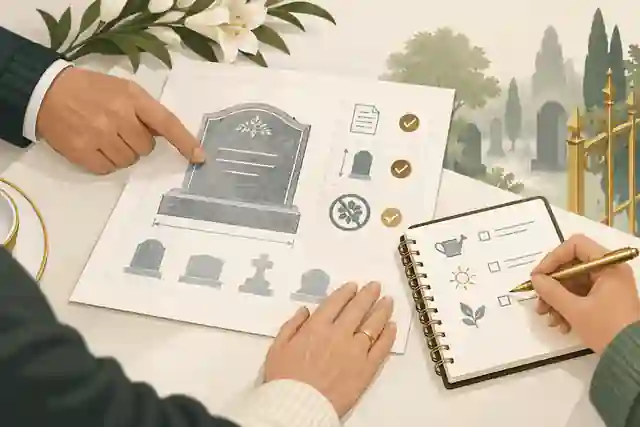
How do I use AI without making a memorial feel fake? Ethical tools, memories and safety start with a simple rule: use AI only where it helps the family preserve something true, and stop wherever it begins to invent personality, consent or emotion on behalf of the person who died.
If you want to use ai without making a memorial feel fake, treat AI as a quiet assistant for organisation, restoration, captions and accessibility, not as a replacement voice for the person. AI memorials, photo restoration and voice tools can be useful, but only when the family keeps the original materials, discloses what has been changed, checks privacy settings and gives relatives a genuine chance to say no.
Use AI without making a memorial feel fake by keeping the human record first
The most respectful memorials still begin with ordinary evidence: the photograph as it was, the story someone remembers, the song that mattered, the words the person actually wrote and the context family members can confirm. AI should sit after that work, not before it. A restored photograph can help people see a face more clearly; a generated caption can help organise a timeline; a transcript can make a recording easier to search. Those uses support memory. They do not pretend to be memory.
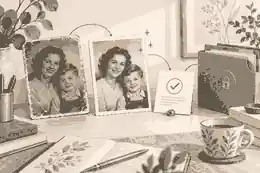
A practical first step is to gather originals before enhancement. The Library of Congress gives careful advice on handling and storing photographs, while the US National Archives explains family archive preservation for papers and photographs. In a memorial setting, that means scanning or photographing the original, saving an unedited master, then working only on a copy. If an AI-restored image later feels too smooth, too young or too unlike the person, the family can return to the real source.
Before any AI tool is used, decide what role the memorial itself should play. Families often need a place for the life story, photographs, funeral details and contributions from relatives; meaningful online memorial inclusions can keep the page grounded in real events rather than synthetic effects. If the page will contain voice notes, home videos or music, adding videos and music thoughtfully matters more than adding every possible AI feature.
What AI can help with, and what it should not do
AI can be genuinely helpful for low-risk memorial tasks. It can remove dust from an old scan, sharpen a blurred but recognisable portrait, suggest a chronological structure, draft alt text for accessibility, transcribe a family recording, translate a tribute for relatives in another country or help organise a large archive. These uses are still worth checking, because generative tools can be confidently wrong, but they do not usually claim the person is alive, speaking or feeling something new.
The risk rises when AI changes identity rather than presentation. Face animation, age progression, voice cloning, synthetic conversation and newly generated scenes can move from preservation into impersonation. The Federal Trade Commission warns that AI-enabled voice cloning can enable fraud, biometric misuse and creative harm. The US Copyright Office has also examined digital replicas and the problem of realistic unauthorised representations. A memorial should never make a person appear to endorse a message, say new words, apologise, forgive, give advice or react to current events unless there is explicit, documented pre-death consent and careful family agreement.
This is especially important for notable people. A memorial profile for Stephen Hawking reminds families that voice and communication can be central to dignity, so imitating a voice without permission is not a harmless flourish. A profile for Robin Williams also shows why public affection must not become permission to generate endless clips detached from a complex human life. With Steve Jobs, whose public image is strongly associated with presentations and product launches, a synthetic keynote would cross a different line from preserving a photograph or quoting documented words.
Consent, family agreement and jurisdiction differences
Consent is not only a legal question. It is also a family trust question. Ask whether the person expressed views about photographs, social media, privacy, voice, public attention or being represented after death. If they disliked being photographed, did not use social platforms, or asked for a modest farewell, that should carry weight. If relatives disagree, choose the lower-impact option: a still image, a transcript, a written note or a private draft.
Australian, UK and US readers should also be aware that privacy, image rights, copyright and consumer protection do not work identically. In Australia, the Office of the Australian Information Commissioner warns that organisations should take a cautious approach when personal information enters AI systems, and its guidance on commercially available AI products highlights due diligence, transparency, human oversight and data access. In the UK, the Information Commissioner's Office provides AI and data protection guidance for organisations using personal data in AI systems. In the US, rights of publicity and digital replica laws can vary by state, while copyright and consumer protection sit alongside those state-level rules.
For a family memorial, the safest practical approach is consistent across all three markets. Do not upload sensitive family material to a public AI tool unless you understand the terms. Do not assume that owning a print means owning copyright. Do not publish an AI output that a close relative reasonably finds distressing. Do not use a celebrity, public figure or unrelated person as a test subject. Do document who approved the work and what limits were agreed.
When privacy is the concern, private versus public online memorials should be decided before any AI media is shared. A private family review is very different from a public, searchable page. Families who are not ready to publish can use keeping a memorial private until you are ready as a calmer way to gather feedback first.
Copyright, photographs and music rights
Copyright is often overlooked because the family may physically possess the photograph. That does not always mean they own the copyright, especially for studio portraits, school photographs, professional wedding images or newspaper images. The Australian Attorney-General's Department explains the basics of copyright in Australia, while the UK government's notice on digital images and photographs explains how copyright can apply online. In the United States, the Copyright Office's fair use FAQ is useful background, but it is not a blanket permission for memorial use.
Music needs the same caution. A song may be emotionally perfect, but a streaming subscription does not normally let a family place that recording under a public tribute video. Consider silence, spoken memories, licensed music, public domain recordings where verified, or a family performance. If AI is used to clean audio, transcribe lyrics or create subtitles, keep a note of what was changed.
Disclosure makes AI feel less fake
Many families worry that disclosure will make an AI-assisted memorial feel cold. In practice, clear disclosure often does the opposite. It protects trust. A caption such as AI-assisted restoration from a 1974 family photograph; original preserved by the family tells visitors what they are seeing without turning the moment into a technology demonstration. A voice transcript can say transcribed from an original recording; punctuation lightly edited for readability. An animation can say AI-assisted movement created from a still portrait; no original video exists.
The Coalition for Content Provenance and Authenticity describes a technical standard for content provenance, but families should not rely only on embedded credentials. Social platforms, export tools and messaging apps may strip metadata. Keep a visible note on the memorial and a private production record with the original file, edited file, tool used, date, reviewer names and final decision.
Disclosure also helps future editors. If the page changes months later, updating an online memorial over time should not separate the AI-assisted media from its explanation. The note belongs beside the image or video, not hidden in a policy page.
A family review process that prevents harm
A good review process is simple, written and kind. Start with one image or one small task. Send relatives the original and the AI-assisted version together. Say what tool was used and what changed. Ask three questions: does this still feel like them, does anything feel misleading, and should this remain private? Make it easy for someone to object without having to defend their grief.
Grief can change how people receive images. The NHS explains that grief and bereavement affect people differently and can bring unexpected feelings. The World Health Organization's overview of mental health is a reminder that social, emotional and practical support all matter. AI is not therapy, and a memorial should never pressure someone to watch an animation or listen to a synthetic voice because another relative found it comforting.
When comments, tributes or memories are open to others, moderating memorial comments helps prevent speculation, insensitive reactions and disputes about AI material. If many relatives are contributing, inviting family and friends to help build the memorial should include agreement about who can upload, approve, edit or remove AI-assisted content.
How to choose an AI memorial tool safely
Do not choose a tool only because it produces the most dramatic output. The NIST AI Risk Management Framework encourages governance, mapping, measurement and management of AI risks; a family can adapt that simply. Govern means decide who is responsible. Map means define the purpose and affected people. Measure means test the output privately. Manage means reject or remove anything that fails the family's standard.
The European Commission's Ethics Guidelines for Trustworthy AI are aimed at a wider technology context, but their emphasis on human agency, technical robustness, privacy, transparency and accountability translates well to memorials. A respectful tool should say whether uploads train models, how deletion works, whether outputs are public by default, whether watermarks or provenance are supported, whether living people can be excluded, whether minors are restricted, and how complaints or takedowns are handled.
Cost should be judged alongside risk. AI photo animation for a memorial can involve credits, restoration, revisions, export quality and privacy trade-offs. A free tool that keeps images indefinitely or trains on family portraits can cost more in control than a paid service with clearer deletion and export terms.
A practical ethical workflow
Use this sequence before placing AI-assisted media into a memorial. First, identify the real memorial purpose: clarity, accessibility, restoration, translation, organisation or creative tribute. Second, gather the original file and save it separately. Third, check known wishes, copyright and living-person consent. Fourth, choose the least synthetic method that solves the problem. Fifth, test privately with one item. Sixth, reject outputs that invent features, emotion, speech or context. Seventh, add a visible disclosure. Eighth, review with close family. Ninth, publish only if the result still feels true. Tenth, preserve the original, the output and the decision note.
For larger archives, digital memories and social media guidance can help families keep copies outside any single platform. For AI-assisted memorial pages, what Evaheld Memorials creates from one AI prompt is best understood as a starting draft that remains editable, reviewable and family-controlled.
Special cases that need extra restraint
Some memorial situations need a stricter threshold than a normal family photograph. Images of children, people who died in traumatic or highly public circumstances, estranged relatives, people whose death attracted media attention, and people whose religious or cultural community has particular rules about images should not be treated as ordinary test material. If the family cannot confidently explain why AI assistance serves the person rather than curiosity, do not use it.
Living people in the source material also matter. A photograph may show the person being remembered beside a spouse, sibling, child, friend, carer or colleague who is still alive. AI restoration that improves lighting and scratches is one thing; face animation or generative expansion that changes another living person's expression, body, setting or apparent participation is different. Ask living people for permission where they are identifiable and central to the image. If permission is unavailable, crop respectfully, choose another photograph or keep the file private.
Historical and public-interest subjects require another layer of care. A museum-style note that distinguishes original photographs, restorations, reconstructions and interpretive material is more honest than presenting everything as if it were captured at the same time. Where a person's image is already widely circulated, the ease of finding a picture should not be mistaken for permission to generate new scenes. The same principle applies to family archives: access is not authority. A cousin may have a scan; another relative may know the person would have hated public enhancement. Both kinds of knowledge deserve attention.
How to write an AI note that feels human
The best disclosure is plain, close to the media and short enough that visitors will actually read it. Write it in the same calm voice as the rest of the memorial. Useful wording includes: restored from an original family photograph; colour and scratches corrected, but no new people or setting added. For transcription, try: transcribed from an original recording; pauses and punctuation adjusted for readability. For translation, try: translated from the original tribute and checked by a family member. These notes are not apologies. They are part of caring for the record.
Avoid wording that exaggerates what AI has done. Phrases such as brought back to life, hearing them again or letting them speak can make a memorial feel fake because they blur the boundary between remembrance and simulation. Prefer words such as restored, transcribed, translated, organised, captioned, edited or reviewed. Those verbs tell visitors that the family has used a tool while keeping human judgement in charge.
It also helps to separate public explanation from private documentation. The public note can be brief. The private record can include the file name, original source, tool, date, person who approved it, relatives consulted, known limits and any reason the family decided not to publish a version. This may feel formal, but it prevents confusion later when another person updates the memorial, downloads the archive or asks why one image looks different from the rest.
How to tell whether AI has improved the memorial
A useful AI change should make the memorial easier to understand, more accessible or better preserved without drawing attention away from the life being remembered. If visitors mainly talk about the tool, the effect, the realism or the shock of seeing movement, the technology may be too prominent. If they talk about the person, the memory, the context and the family story, the assistance is probably serving the memorial rather than competing with it.
Use a small review group before wider sharing. Ask one practical question, one emotional question and one accuracy question. Practical: can you tell what has changed? Emotional: does this feel respectful? Accuracy: does it still look, sound or read like the person we knew? If the answers are mixed, do not force consensus. Publish the simpler version, or keep the AI-assisted version only in a private archive.
Accessibility is one of the strongest reasons to use AI carefully. Captions can help people who cannot hear a recording. Transcripts can help relatives search a long interview. Translation can let family members in Australia, the United Kingdom and the United States read tributes in a shared language. Image descriptions can help visitors using screen readers. These uses rarely need spectacle. They make existing memories easier to reach.
When the right answer is not to use AI
There are times when restraint is the most respectful choice. Do not use AI if the person objected to image manipulation, if close relatives are divided, if the image includes children or vulnerable people without clear agreement, if the tool's privacy terms are unclear, if the result makes the person appear to speak, consent or emote in a way they never did, or if the process is making grief sharper rather than steadier. A memorial can be deeply meaningful with plain photographs, handwritten stories, audio that was actually recorded and tributes from people who knew them.
The best memorial technology disappears into the background. It helps the family organise, protect and share what is real. If you are ready to build a careful, family-reviewed tribute, use ai without making a memorial feel fake by starting with the person's true story and keeping every AI-assisted choice transparent.


FAQs
How do I use AI without making a memorial feel fake? Ethical tools, memories and safety
Use AI for support tasks such as restoration, transcription, organisation and accessibility, then keep the original material visible and disclose what changed. A private first draft through keeping a memorial private until you are ready gives relatives time to review the result, while the NHS grief and bereavement guidance is a useful reminder that people respond to loss differently.
Is AI photo restoration appropriate for a memorial?
AI photo restoration is usually appropriate when it clarifies an existing photograph without inventing a new face, age, setting or expression. Keep the unedited original and follow digital memories and social media guidance; the Library of Congress photograph care advice also supports careful handling of originals.
Should I disclose AI edits on a memorial page?
Yes. Disclosure protects trust and helps future visitors understand what is original and what is AI-assisted. When updating an online memorial over time, keep the disclosure beside the image or video; the C2PA content provenance specification shows why origin and edit history matter.
Can I use AI to recreate a loved one's voice?
Recreating a voice is much higher risk than restoring a photograph because it can make the person appear to say words they never said. If you want richer media, consider adding videos and music thoughtfully from genuine recordings instead; the FTC voice cloning warning explains why cloned voices can cause harm.
What privacy checks should I do before uploading a family photo to AI?
Check whether uploads are used for training, how deletion works, where processing happens, whether outputs are public by default and whether living people appear in the image. Private versus public online memorials can help frame the sharing decision, and the OAIC's commercially available AI products guidance explains key privacy questions.
Who should approve AI-assisted memorial content?
The closest family or nominated memorial administrator should approve it, and anyone strongly affected should have a clear way to object. Inviting family and friends to help build the memorial should include agreed review roles, while the ICO AI and data protection guidance reinforces transparency when personal data is involved.
Can I use copyrighted photographs in an AI memorial?
Possibly, but owning a print is not always the same as owning copyright, especially with studio, school, wedding or press images. Pair meaningful online memorial inclusions with permission records, and check the Australian Attorney-General's Department overview of copyright in Australia where relevant.
How do I decide whether an AI animation is too much?
If the animation invents emotion, looks uncanny, distresses close relatives or overshadows real memories, it is too much. The cost and review issues in AI photo animation for a memorial are worth checking before publishing, and NIST's AI Risk Management Framework offers a useful risk-first mindset.
How should comments about AI memorial content be handled?
Set a simple moderation rule: comments should honour the person, not debate relatives' grief or speculate about what the person would have wanted. Moderating memorial comments helps keep the page safe, and the European Commission's Ethics Guidelines for Trustworthy AI support transparency and accountability.
What can an AI memorial draft safely help create?
An AI draft can help organise facts, suggest structure, draft captions and turn family notes into an editable starting point, but relatives should correct tone, dates and meaning. What Evaheld Memorials creates from one AI prompt should be reviewed as a draft, and the US Copyright Office's digital replicas report explains why realistic synthetic representations need caution.