What photos should I add to a pet memorial page? Pet tribute ideas, wording and memories
A practical, compassionate guide to choosing pet memorial page photos, captions, privacy settings, garden stone links and tribute wording.
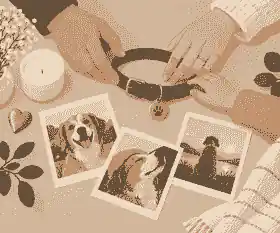
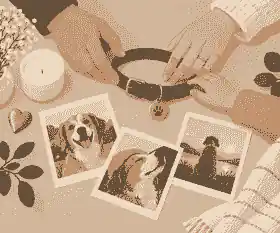
What photos should I add to a pet memorial page? Pet tribute ideas, wording and memories should begin with the images that show your pet as they truly lived: a clear portrait, everyday routines, family bonds, favorite places, funny habits, early-life or adoption moments, later-life tenderness, and any meaningful keepsakes such as a collar, toy, paw print or garden stones. The best pet memorials are not built from perfect photos; they are built from recognizable memories that help people feel the companionship, pet loss, humor, comfort and ordinary love your animal brought into daily life.
If you are wondering what photos should i add to a pet memorial page, start with a small, balanced set rather than every image on your phone. Choose one welcoming hero image, five to eight story photos, a few relationship photos, one or two keepsake images, and a final image that feels peaceful without being distressing. This gives visitors a full emotional arc: who your pet was, where they belonged, who loved them, what made them unmistakably themselves, and how they are being remembered now.
What photos should i add to a pet memorial page first?
Begin with one calm, high-quality portrait. It can be a bright outdoor photo, a favorite sleeping spot, a sofa picture, or a simple image where your pet looks relaxed and familiar. Do not worry if the photo is not technically perfect. A slightly blurred image of your dog racing toward you may say more than a formal pose. A cat curled in the exact chair they claimed for years may say more than a studio-style image. The first photo should help someone who loved them think, yes, that is them.
After the first portrait, add context. A memorial page works best when photos answer quiet questions: where did they live their happy life, what did they love, who did they trust, and what will the family miss most? Evaheld Memorials already explains the broader process of online pet memorial setup with photos and stories, but this article focuses specifically on choosing photographs with enough care that the page feels complete, not crowded.
It is natural to want to upload every beautiful image, especially soon after a loss. A gentler approach is to sort photos into chapters. You might use sections such as first days, daily routines, adventures, family, funny moments, old age, goodbye and remembrance. This keeps the memorial easy to browse and helps children, relatives and friends understand the story without feeling overwhelmed.
Pet grief is real and often underestimated. The RSPCA pet bereavement toolkit notes that many people feel their grief for an animal companion is dismissed, while its 2025 survey material reports that most respondents did not feel understood. That matters when choosing photos: the page should not apologize for the depth of the bond. It should quietly show why the bond mattered.
The essential photo set for a complete pet tribute
A strong pet memorial page usually needs ten kinds of images. You do not need all ten if they do not exist, and you should never include anything that feels too private or upsetting. The goal is not a perfect archive. The goal is a compassionate, useful selection that gives shape to love.
First, choose the main portrait. This is the image people see first, so it should be clear, warm and easy to recognize at a small size. Second, add an arrival photo if you have one: adoption day, puppy or kitten stage, rescue transport, first night at home, or the first ride back from the shelter. Third, include everyday routine photos: breakfast, the window seat, the stable, the hallway, the yard, the sunny patch, the bed they were technically not allowed on.
Fourth, include people. Photos with children, partners, older relatives, neighbors, dog walkers or close friends show the relationship, not just the animal. Fifth, include places: a beach, path, garden, park, kitchen, car, trail, couch or porch. Sixth, include joy and mischief. A muddy face, stolen sock, collapsed cardboard box, ruined cushion, or triumphant expression can be a sincere tribute when it captures personality.
Seventh, add milestone photos. Birthdays, gotcha days, training graduations, stable shows, holidays, camping trips, rescue anniversaries and final good days can all belong. Eighth, include companion photos with other animals if they are part of the story. Ninth, photograph keepsakes: collar, lead, bell, tag, bowl, blanket, ashes urn, paw print, toy, harness, ribbon, brush or favorite bed. Tenth, include a current memorial image, such as flowers in a garden, a candle beside a framed photo, or a stone marker.
If your page will also include written memories, the photo order should support the words. Evaheld Memorials has a broader checklist for what belongs in an online memorial, and the same principle applies here: essentials first, then details that make the remembrance feel alive.
The American Kennel Club pet grief guidance emphasizes that photographs can help people memorialize a dog and that support matters when grief is not understood by others. The same is true for cats, horses, rabbits, birds and other companion animals. A photo gallery can become a place where family members return when they cannot yet find words.
Choose photos that tell a life, not just a final chapter
A pet memorial should not be only about death. If the page begins and ends with the final days, visitors may miss the fuller life: the first trust, the habits, the friendships, the comfort, the ridiculous small moments that made the animal beloved. Include later-life photos with tenderness, but balance them with pictures from healthier, freer and more ordinary days.
For an older pet, include images that show dignity rather than decline. A grey muzzle in afternoon light, a cat resting in a favorite blanket, or a horse standing quietly with a trusted person can be deeply moving. Avoid medical images unless there is a specific reason to include them and the family agrees. IV lines, wounds, distress and clinical settings can be upsetting for children and guests, and they rarely help the memorial page do its main job.
For a sudden loss, you may not have a final peaceful photo. That is fine. Use the last happy ordinary image instead. A photo from the last walk, last sunny window, last cuddle or last normal breakfast can be enough. The ASPCA end-of-life care guidance explains that families may face choices around comfort, euthanasia, cremation and burial; a memorial page can sit beside those decisions without making the final medical moment the center of the story.
When a pet had a long illness, you may want to include one short note in the wording rather than a long visual record of treatment. The phrase might be simple: after a brave final season, after months of care, or after a gentle goodbye. Then let the photos show the life that came before.
Photo ideas by pet type
Dogs are often remembered through movement and companionship. Choose photos of walks, car rides, beach trips, couch naps, garden patrols, training milestones, silly sleeping positions, muddy paws, birthday treats, and their particular greeting at the door. If you have a short sequence, such as puppy, young adult, old dog, it can be especially powerful.
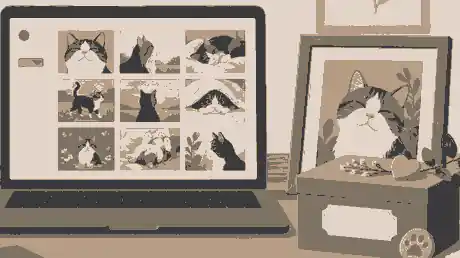
Cats are often remembered through place and personality. Include the window, the box, the chair, the laptop interruption, the garden wall, the curled paw, the judgmental stare, the soft belly photo if they allowed it, and the human they chose. A cat tribute does not need to be formal. It should show their domain.
Horses need scale, movement and partnership. Use paddock images, grooming moments, a bridle or saddle detail, competition or trail photos, quiet nose-to-hand moments, stable routines, and wide images that show the landscape where the relationship lived. If a horse was shared by a riding school, family or community, contributor photos can matter deeply.
For rabbits, birds, reptiles, guinea pigs and smaller companions, include habitat details as well as portraits: hutches, perches, favorite greens, tiny blankets, tunnels, lamps, climbing branches or the corner they always chose. Smaller animals are sometimes minimized by outsiders, so specific photos help show the real care and knowledge behind the bond.
If the page includes photos and videos, keep the visual mix intentional. Evaheld Memorials covers adding videos and music to memorials, and pet pages can benefit from one short clip of movement or sound: tags jingling, paws on the floor, a chirp, a nicker, a purr, a bark, or a favorite game.
Wording and captions for pet memorial photos
Captions do not need to explain everything. They should give enough context that the photo still makes sense years later. A useful caption might say: First day home, 2014; Queen of the laundry basket; Last beach walk with Sam; Waiting for toast; Morning stable rounds; The toy he carried everywhere. These short lines preserve the detail without turning every image into a paragraph.
For photo captions, avoid forced sentiment. Use the family voice. If everyone called the pet The Supervisor, use that. If the dog was always in trouble, a gentle funny caption may be more honest than a solemn one. Funeral and plaque competitors often lean heavily on short inscriptions, but an online memorial gives you more room to be specific. A garden stone may only hold a name, dates and a few words; the page can hold the fuller story.
When you need longer wording, write one short paragraph near the photo gallery rather than long captions under every image. Evaheld Memorials offers help with how to write a memorial tribute, and the same structure works for pets: name what they loved, name what you miss, name one ordinary scene that feels like them.
If you want examples, try lines like: She arrived tiny and left the house changed forever. He believed every visitor came to see him. She made the garden her kingdom. He was the soft landing at the end of hard days. These are not generic quotes; they are prompts for your own details.
Privacy, consent and family boundaries
Before publishing, decide who the page is for. A public pet tribute can be lovely when many people knew the animal: neighbors, school friends, rescue volunteers, club members, clients, or an extended family network. A private page may be better when children are involved, when grief is raw, or when photos include homes, addresses, uniforms, school logos, vehicle plates or identifiable children.
In Australia, the OAIC explanation of personal information is a useful reminder that images can reveal information about identifiable people, not just the animal. In New Zealand, the Privacy Commissioner privacy principles reinforce the broader point that personal information should be handled carefully. In the United Kingdom, families should apply the same common-sense privacy approach even when a personal household page may not feel like a formal data project.
Ask before using close-up photos of children, friends or people outside the immediate household. If a photo is beautiful but includes a child from another family, crop it, blur identifying details, choose another image, or keep the page private. For public pages, avoid posting your full street address, school names, gate codes, travel patterns or anything that turns a tribute into a map of private life.
Evaheld Memorials explains private versus public online memorials in more detail, and that decision should come before the photo upload. It is much easier to choose images well when you know whether the audience is a small family circle or a wider community.
Online safety also matters. The FTC guidance on recognizing phishing scams is not pet-specific, but it is relevant whenever families share links, receive messages or invite contributions. Use trusted links, avoid unexpected login requests, and be careful if someone asks for money, account access or sensitive details through a memorial-related message.
Photo quality, preservation and backups
Use the clearest version of each photo you can find. Avoid screenshots when the original file exists, because screenshots usually lose detail. If you only have a printed photograph, scan it or photograph it in indirect daylight without glare. Keep the original file name or add useful labels such as bella-beach-2019 or ollie-first-day-home. The future reader may not know what IMG_4821 means.
The U.S. National Archives family photograph storage guidance recommends cool, dry storage, protection from damp places, and photo-safe containers for physical family archives. That advice applies to pet photographs too. Keep printed images away from garages, hot attics and damp basements. For digital copies, keep more than one backup and make sure another trusted person knows where the archive is.
Evaheld Memorials also covers digital memories and social media guidance, which is important because many favorite pet photos live inside phones, messages, cloud accounts and social media posts. Download the best images before accounts change, phones are replaced or message threads disappear.
If several family members have photos, invite them to contribute before you finalize the page. One person may have the best portrait, another may have the funniest video, and a child may have the most emotionally accurate picture. Evaheld Memorials explains how to invite family and friends to help build the page, which can be especially helpful when a pet belonged emotionally to more than one household.
The Virginia Tech Honoring the Bond memorial board shows how meaningful it can be for people to share an animal’s story publicly in a dedicated remembrance space. That model supports the idea that photos and short memories can help people feel less alone after pet loss.
Pet grave markers, garden stones and QR-linked photo memories
Many people searching this topic are also thinking about grave markers, garden stones, plaques, ashes, pet cemeteries or a small home memorial corner. A physical marker and an online memorial do different jobs. The marker gives a place a name. The page holds the photographs, stories, captions, videos and later memories that do not fit on stone or metal.
Competitor articles about pet grave markers correctly emphasize names, dates, short wording, materials, character limits and the usefulness of keeping inscriptions brief. Evaheld Memorials can add a broader answer: choose the physical wording and the photo page together. Let the marker carry the simplest public line, then let the memorial page carry the richer detail: the adoption story, the favorite toy, the sofa photo, the old-age tenderness, and messages from people who loved the animal.
If a QR plaque or scannable code is part of the memorial, check readability and placement. DENSO WAVE’s QR code module size guidance explains that code sizing affects readability, and that principle matters outdoors where distance, light and weather can make scanning harder. The photo page behind the code should be mobile-friendly, because visitors at a garden stone or pet cemetery will usually open it on a phone.
Legal and practical rules vary. In the United Kingdom, GOV.UK guidance on fallen stock and pet animals distinguishes pet animals from farm animals and notes that pet animals may be buried under specific rules, while farm animals require approved disposal methods. For formal pet cemeteries in Great Britain, GOV.UK pet cemetery guidance covers registration, location and construction requirements. In Australia, rules are more local and state-based; for example, Cemeteries and Crematoria NSW interment guidance notes that, from September 1, 2025, NSW law confirms animal remains can be buried or placed in an interment site, although cemeteries are not required to offer that service. In Victoria, EPA Victoria dead stock guidance focuses on environmental risks from dead animals and the need for authorized disposal routes for stock, which is a reminder to check local council or cemetery rules before assuming a home or cemetery option is available.
What to leave out
Leave out duplicates unless they show a meaningful change. Ten nearly identical sleeping photos can dilute the effect of one excellent sleeping photo. Leave out images that show medical distress, injury, panic, visible suffering or private household information unless there is a careful reason and consent. Leave out images that may distress children or surviving family members. Leave out photos that center a person who has not agreed to be shown.
Also be careful with jokes. A funny photo can be perfect; a mocking caption can age badly. Choose humor that honors the animal rather than making grief feel small. If the pet was mischievous, let the caption be affectionate: Max, proud destroyer of tennis balls. Luna, formally in charge of the laundry. Jasper, inspecting every grocery bag.
Do not delay the page because one perfect image is missing. A memorial can be updated. Evaheld Memorials explains download online memorial content and backup planning, and that is part of good memorial care: publish a gentle first version, then preserve and improve it as more memories surface.
How to organize the gallery
A simple order works best: portrait, arrival, home routines, favorite places, family and friends, funny habits, later years, keepsakes, memorial setting. If you have many images, use captions to create breathing room. If you have only three images, choose one portrait, one relationship image and one memory object or place. A small truthful gallery is better than a large unfocused one.
Invite contributions thoughtfully. Evaheld Memorials explains how tributes and condolences work, and the same principle can apply to photo memories. A friend may remember the dog at the beach, a neighbor may have a fence photo of the cat, and a stable friend may have a quiet image of the horse being groomed. Ask for the story behind the photo, not just the file.
For families inspired by public remembrance, memorial profiles such as Paul O’Grady, Bob Barker and Steve Irwin show how a remembered life can be shaped through values, relationships and public affection. A pet memorial is more intimate, but the same editorial lesson applies: the strongest tribute is specific enough to feel real.
A practical checklist before you publish
Before publishing, check spelling, dates and names. Make sure the first image crops well on mobile. Confirm that any children or non-family adults shown are approved for the chosen privacy setting. Remove addresses, school uniforms, location clues and sensitive medical images. Add captions to the photos that may not make sense later. Choose one or two images that show your pet’s character rather than only their appearance. Keep original files backed up outside the memorial page.
If you are starting from scratch, Evaheld Memorials explains what information you need to start a memorial. For this specific task, the information is simple: pet name, dates if known, one hero photo, five meaningful images, a few captions, privacy preference, and one short sentence that explains who they were in your family.
A pet memorial page does not need to be finished in one sitting. It may begin with a portrait and a few words, then grow as people send pictures, write memories and find old files. That slower approach is often kinder. Grief can make sorting photos exhausting; you are allowed to choose enough for today and return later.

When you are ready to begin
Choose the photos that make your pet recognizable to the people who loved them: the face, the place, the habit, the bond and the small evidence of a life shared. When you are ready, what photos should i add to a pet memorial page can become a calm first step rather than another impossible decision.
FAQs
What photos should I add to a pet memorial page? Pet tribute ideas, wording and memories
Add a clear portrait, everyday routine photos, family or friend images, favorite places, funny habits, early-life or adoption photos, later-life tenderness, and keepsake images such as a collar, toy or paw print. Evaheld Memorials explains online pet memorial setup with photos and stories, while the RSPCA pet bereavement toolkit recognizes how deeply pet grief can be felt.
How many photos should a pet memorial page have?
A thoughtful first version can work with 8 to 15 photos: one main portrait, several story images, a few relationship photos and one remembrance or keepsake image. For a broader structure, what belongs in an online memorial can help you avoid clutter, and the American Kennel Club pet grief guidance notes that photos can support memorializing a beloved dog.
Should I include photos from my pet’s final days?
Include final-day photos only if they feel peaceful, dignified and helpful to the people who will view the page. You can also use a happier ordinary photo from the same season. Evaheld Memorials’ private versus public online memorials can help with audience decisions, and the ASPCA end-of-life care guidance explains how families often face comfort, cremation and burial choices near the end.
What captions should I write under pet memorial photos?
Use short, specific captions such as First day home, Queen of the sofa, Last beach walk or The toy he carried everywhere. For fuller wording, how to write a memorial tribute can help you sound personal rather than formal, and the Virginia Tech Honoring the Bond memorial board shows how short pet stories can create connection.
Can family and friends add photos to the pet memorial?
Yes, family and friends can often add meaningful photos or memories when the memorial is set up for contribution. Evaheld Memorials explains how to invite family and friends to help build the page, and the U.S. National Archives family photograph storage guidance is useful when gathering and protecting original photo files.
Should a pet memorial page be public or private?
Choose public sharing if a wider community knew the pet, and private sharing if the page includes children, home details, raw grief or images you want to keep within family. Evaheld Memorials covers private versus public online memorials, while the OAIC explanation of personal information is a useful reminder that photos can reveal identifiable details about people.
Can I link a pet memorial page from a garden stone or plaque?
Yes, many families use a QR plaque or similar link so a garden stone holds the name while the page holds photos, captions and stories. Evaheld Memorials explains adding videos and music to memorials, and DENSO WAVE’s QR code module size guidance shows why code size and readability matter.
What should I avoid putting on a pet memorial page?
Avoid distressing medical images, private addresses, school logos, vehicle plates, unapproved photos of children, excessive duplicates and captions that feel mocking rather than affectionate. Evaheld Memorials’ digital memories and social media guidance can help with careful selection, and the FTC guidance on recognizing phishing scams is relevant when sharing links and invitations.
Do pet burial or cemetery rules affect the memorial photos I choose?
The photos themselves are usually separate from burial rules, but the physical setting may affect whether you show a garden grave, cemetery marker, ashes urn or QR plaque. Evaheld Memorials’ download online memorial content advice can help preserve the digital side, while GOV.UK pet cemetery guidance explains that formal pet cemeteries have location, registration and construction requirements in Great Britain.
What if I only have a few photos of my pet?
A small gallery can still be deeply meaningful. Use one portrait, one relationship photo and one image of a place or keepsake, then add captions or a short tribute. Evaheld Memorials explains what information you need to start a memorial, and EPA Victoria dead stock guidance is a reminder that physical aftercare rules can vary while digital remembrance can remain simple and personal.