What are the best ad-free online memorial platforms? Features, privacy and family fit
A practical Evaheld Memorials article that answers “What are the best ad-free online memorial platforms?”, explains best ad free online memorial platforms, shows what to include, avoids common mistakes and helps families plan features, privacy and family fit.
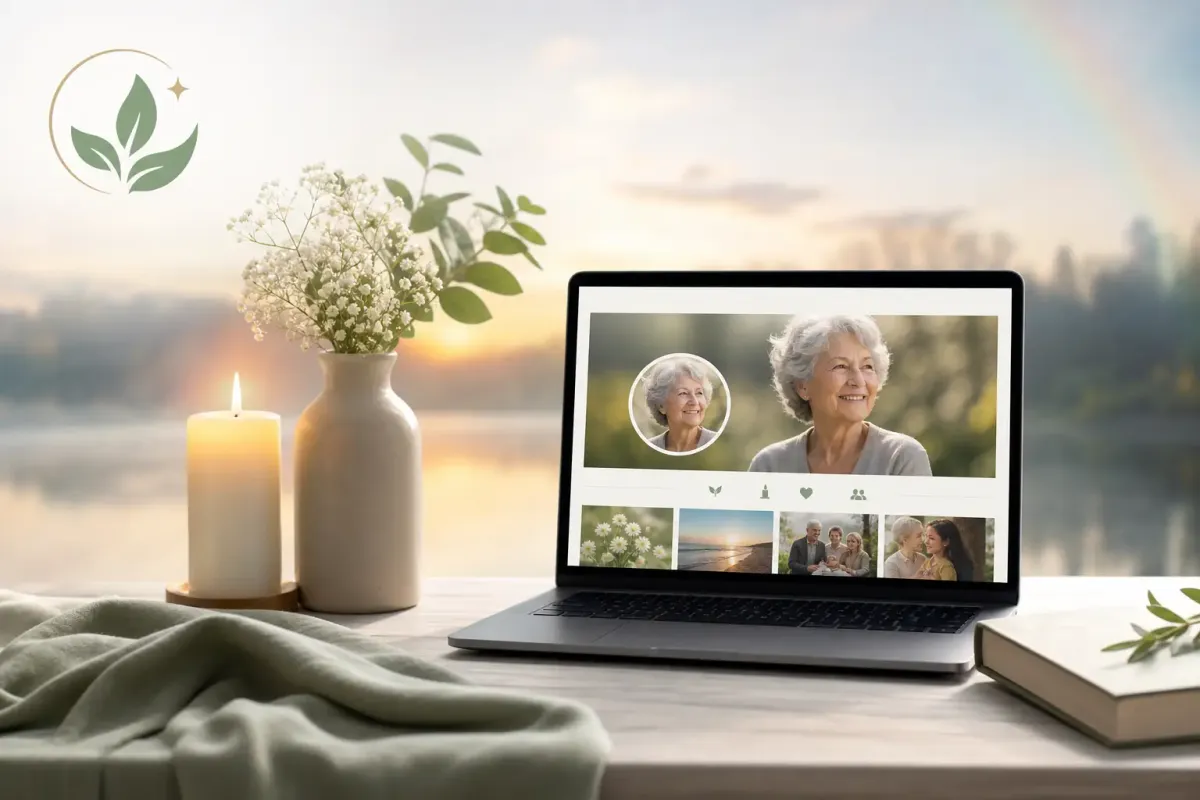
The best ad-free online memorial platforms are those that let families create a respectful tribute without advertising, keep privacy settings clear, support photos, stories and guest contributions, work well on mobile, and provide a simple way to update or share the memorial over time. In practice, the best ad free online memorial platforms are the ones that fit your family’s needs: some families want a public digital obituary, while others need a private remembrance space with trusted access only.
Direct answer: What are the best ad-free online memorial platforms?
A strong ad-free memorial platform should feel calm, secure and easy for relatives to use, rather than crowded with pop-ups, unrelated promotions or confusing account prompts. Look for a platform that gives you control over visibility, invitations, comments, photos, videos, guestbook entries, memorial information and future updates. It should also make practical tasks easier: collecting memories, preserving important details, sharing service information, and keeping a lasting record that family members can return to.
When comparing options, avoid choosing on appearance alone. A beautiful page matters, but so do ownership terms, privacy controls, export options, support, mobile experience and whether pricing is transparent. If your family wants a guided place to create, complete, store, update and share a tribute, you can explore Evaheld Memorials’ create memorial page, its online memorial features, and its online memorial plans before deciding what best suits you.
For digital preservation, it is also worth thinking beyond the memorial page itself. The U.S. Library of Congress offers practical guidance on personal digital archiving, and the U.S. National Archives explains how families can care for family archives. These resources are useful reminders that photos, voice notes, documents and memories need thoughtful organisation, not just uploading.
What best ad free online memorial platforms is for
Best ad free online memorial platforms are for creating a dignified digital place where family and friends can remember someone without commercial distractions. They can hold an obituary, life story, service details, photo galleries, video tributes, messages, guestbook entries, donation preferences, cultural or faith notes, and family-approved updates.
They are also useful when relatives live in different cities or countries. A mobile-friendly memorial allows people to contribute from wherever they are, including those who cannot attend a funeral, wake, memorial service or scattering ceremony in person. If mobile access is a priority, you may also find it helpful to read Evaheld Memorials’ guide to top mobile-friendly memorial sites.
Privacy is a central part of the decision. Public pages can be appropriate for a widely known person or a community tribute, while private or invitation-only spaces may be better for families who want to protect personal details. Australian readers can review the OAIC’s plain-language overview of privacy rights, while UK readers may find the ICO’s guide for the public useful. In the United States, the FTC’s advice on protecting your privacy online is a helpful starting point.
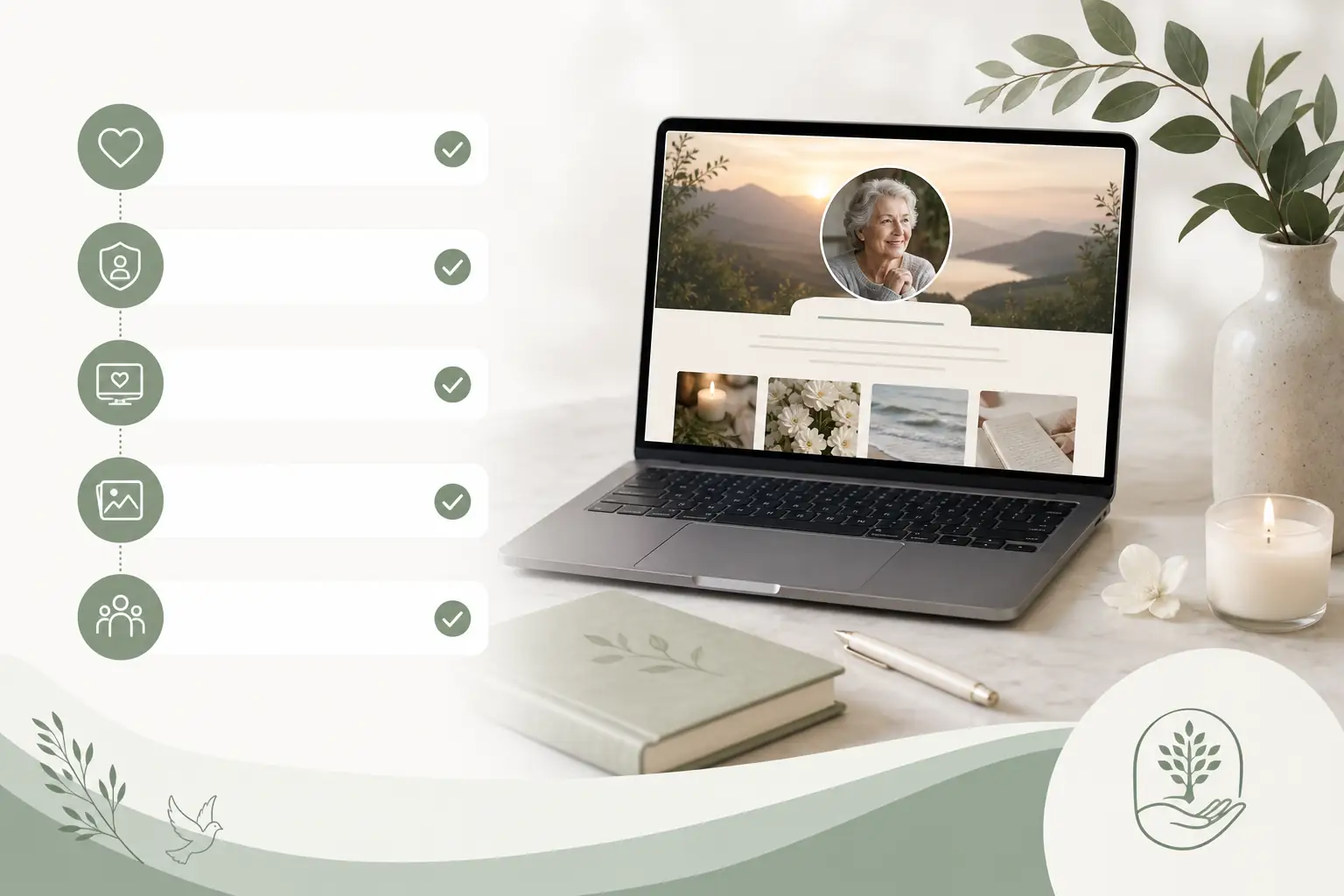
When to use best ad free online memorial platforms
You may want to use an ad-free memorial platform soon after a death, during funeral planning, after a service, on an anniversary, or as part of advance memorial planning. Some families create a page quickly to share service information, then return later to add stories, photos and reflections when they have more emotional space. Others prefer to gather content privately first, then publish once key relatives have reviewed it.
An online memorial can also help when a family is managing many separate channels: text messages, social media posts, email threads, cloud folders and printed orders of service. Bringing approved content into one organised place can reduce confusion and make it easier for people to find accurate details.
If privacy and controlled access are especially important, compare how different platforms handle invitations, passwords, guest contributions and comment moderation. Evaheld Memorials’ article on secure closed-loop family memorial pages may help you think through the difference between a public tribute and a more contained family remembrance space.
Legal requirements vary by country, state and territory, so formal documents should be checked against local rules or reviewed by a qualified professional where needed. A memorial page can help organise wishes, stories and information, but it should not be treated as a substitute for a will, probate process, funeral contract, cemetery approval or professional legal advice.
What to include in best ad free online memorial platforms
A useful memorial page usually includes both emotional and practical information. Start with the person’s full name, preferred name, dates, place information if appropriate, and a short life summary. Add a warmer life story that captures personality, relationships, values, humour, work, service, community involvement, traditions, hobbies and meaningful moments.
Then consider practical details. If the page is being used before a service, include the date, time, venue, livestream details if relevant, dress guidance, accessibility notes, flower preferences, donation wishes and contact information for the family or funeral director where appropriate. If the service has passed, you might include the order of service, readings, eulogies, photos from the day, recordings, and a note of thanks.
For digital material, be selective. Choose photos and videos that feel representative, respectful and family-approved. The Digital Preservation Coalition’s Digital Preservation Handbook is a useful reminder that digital files can become disorganised or inaccessible over time if they are not managed carefully. Keeping clear filenames, dates, captions and context can make a memorial more meaningful for future generations.
You might also include private notes that are not visible to everyone, such as who has permission to update the page, where original files are stored, which relatives have contributed, and whether any items need consent before publication. Evaheld Memorials’ digital legacy vault can help families keep related memories, wishes and instructions together rather than scattered across devices and message threads.
Step-by-step instructions for best ad free online memorial platforms
Use this simple process when comparing and setting up an ad-free memorial page:
- Decide the purpose. Is the page for service information, a long-term tribute, family storytelling, private remembrance, or all of these?
- Choose the privacy level. Decide whether the page should be public, private, invitation-only, password-protected or limited to selected contributors.
- Compare pricing clearly. Check whether there is a one-time fee, subscription, free plan, optional upgrades, storage limits, renewal terms or paid add-ons.
- Check the ad-free experience. Confirm that memorial pages do not display third-party advertising or unrelated promotional content.
- Prepare core details. Gather the obituary, service information, key dates, approved photos and a short introductory message.
- Invite trusted contributors. Ask close family or friends to share stories, captions, images or corrections before the page is widely shared.
- Review privacy and safety. Avoid publishing sensitive addresses, personal identity details or information that could make relatives vulnerable.
- Publish gently. Share the link with the right people, with a short note explaining how they can contribute or leave a message.
- Update over time. Add anniversary reflections, new photos, service recordings or family memories as they become available.
- Keep a backup plan. Save important photos, text and files separately so the memorial is part of a broader preservation approach.
For account security, encourage contributors to use strong passwords and multi-factor authentication where available. The Australian Cyber Security Centre explains password managers and multi-factor authentication in clear terms. CISA’s Secure Our World guidance is also a helpful general safety reference for families sharing information online.
Practical tips for families
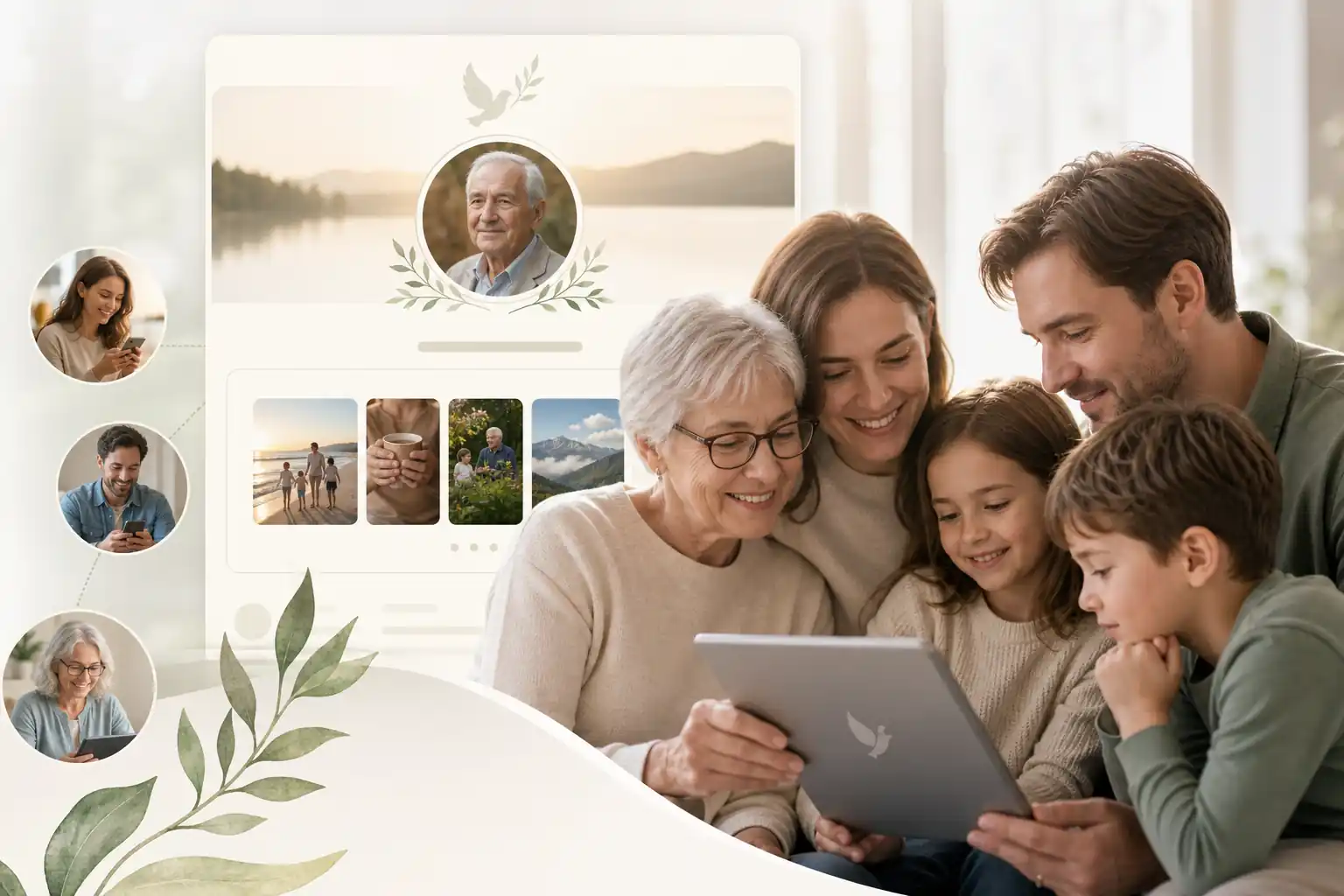
Begin with one calm family contact who can coordinate content. This does not need to be the person doing everything alone; it simply gives contributors a clear point of contact and helps avoid duplicate posts, conflicting details or accidental publication of private information.
Write in the person’s voice and community context. A memorial for a grandparent, a young adult, a veteran, a teacher, a neighbour or a private person may need a different tone. Keep the page honest, kind and specific. Small details often matter most: a favourite saying, a garden they loved, a weekly ritual, a song, a recipe, a place, or a way they made people feel welcome.
Before publishing, ask whether each item would feel respectful to the person and safe for the living. Australia’s eSafety Commissioner provides accessible guidance on privacy online, including the importance of thinking carefully about what is shared. The FTC’s advice on recognising and avoiding phishing scams is also relevant when families are receiving messages, donation requests or unfamiliar links after a bereavement.
If affordability is a major factor, compare whether you need ongoing payments or whether a one-time arrangement is available. Evaheld Memorials has a guide discussing subscription-free online memorials, which may help families compare long-term costs without assuming that the cheapest option is always the best fit.
Common mistakes
One common mistake is choosing the first attractive template without checking the privacy and pricing terms. Another is making a page public before close relatives have had a chance to review names, dates, photos or service details. Even small errors can feel distressing during a sensitive time.
Families can also overfill a memorial page. A thoughtful selection of images and stories is often more powerful than a large, uncurated archive. Keep the main page readable, then store extra materials in an organised way if the platform allows it.
Another mistake is relying only on social media. Social posts can be useful for reaching people quickly, but they may not offer the same sense of permanence, organisation, privacy or calm presentation as a dedicated memorial page. Social accounts can also change over time due to platform policies, access issues or account memorialisation settings. Apple’s information on Legacy Contact and Google’s guidance on Inactive Account Manager are useful reminders that digital access should be planned thoughtfully.
What not to do
Do not publish sensitive personal details such as home addresses, identity numbers, private financial information, medical information, passwords, security answers or unapproved documents. Do not assume every family member wants to be named, tagged or photographed publicly. Consent and context matter, especially when children, vulnerable people or complex family situations are involved.
Do not use a memorial page to make legal, financial or medical instructions that should be handled through formal channels. If a page refers to funeral wishes, estate documents, advance care planning, guardianship, donations or asset information, keep the language careful and confirm formal requirements locally. The Uniform Law Commission’s materials on fiduciary access to digital assets illustrate how digital asset access can be jurisdiction-sensitive, particularly in the United States.
Do not invite everyone to edit. A good memorial can welcome many voices while still keeping publishing controls with a small trusted group. Moderation is not about excluding people; it is about protecting the dignity, accuracy and emotional safety of the page.
How Evaheld Memorials helps create, complete, store, update and share best ad free online memorial platforms
Evaheld Memorials is designed to help families bring memorial content into one organised experience. Rather than keeping stories in one folder, photos in another, service notes in email and guest messages across social media, families can create a memorial page, complete it gradually, store related information, update it over time and share it with trusted people when appropriate.
This practical structure can be helpful when several relatives are involved. One person may have the best photos, another may know the service details, another may remember names and dates, and another may want to write a tribute. Evaheld Memorials helps turn these contributions into a clearer memorial experience without presenting the platform as a replacement for funeral directors, counsellors, lawyers, official records or family decision-making.
If you are ready to compare options or begin planning, you can create a secure Evaheld Memorials page for best ad free online memorial platforms, then update it over time and share it with trusted people when ready. If you have questions before starting, the Evaheld Memorials memorial support questions page can help you understand common features and next steps.

Final checklist
Before choosing or publishing an ad-free online memorial, use this checklist:
- The page is genuinely ad-free and free from unrelated promotional clutter.
- Pricing is clear, including any one-time fees, subscriptions, storage limits or upgrades.
- Privacy settings match the family’s wishes: public, private, invitation-only or restricted.
- Photos, videos and stories have been reviewed by a trusted family contact.
- Service details, dates, names and spellings are accurate.
- Sensitive personal information has been removed or kept private.
- Guestbook and contribution settings are clear and manageable.
- The page works well on mobile for relatives and friends in different locations.
- Important files are backed up or stored in a broader digital preservation plan.
- The family knows who can update the page in future.
The best choice is not always the platform with the most features. It is the one your family can use calmly, safely and respectfully, with enough flexibility to preserve memories now and continue adding meaning over time.
FAQs about best ad free online memorial platforms
What are the best ad-free online memorial platforms?
The best ad-free online memorial platforms are those that let families create a respectful tribute without advertising, keep privacy settings clear, support photos, stories and guest contributions, work well on mobile, and provide a simple way to update or share the memorial over time. In practice, the best ad free online memorial platforms are the ones that fit your family’s needs: some families want a public digital obituary, while others need a private remembrance space with trusted access only.
The best ad-free online memorial platforms are those that keep tribute pages clear of advertising, offer respectful design, privacy controls, easy photo and story sharing, and a simple way to update information over time. Evaheld Memorials supports organised memorial pages through its best ad free online memorial platforms options, while privacy guidance from the OAIC privacy rights guide can help families think carefully about personal information.
How can an online tribute feel personal and respectful?
Best ad free online memorial platforms are used to create a respectful digital place for memories, photos, life stories, service details, guestbook messages and family updates without distracting advertising. Evaheld Memorials explains available tools on its online memorial features page, and the Library of Congress personal archiving guidance is useful for preserving digital memories.
When should a family create or review the memorial?
A family may use an ad-free memorial platform soon after a death, before a service, on an anniversary, or when gathering scattered stories into one lasting place. You can begin with create a memorial page, while the U.S. National Archives family archives guidance offers practical context for caring for family records.
Who should manage the page and approve contributions?
Include the person’s name, dates, biography, photos, videos, service information, family-approved tributes, guestbook prompts and any sharing preferences. Evaheld Memorials’ digital legacy vault can help keep related memories and instructions together, and the Digital Preservation Coalition handbook explains why organised preservation matters.
What content belongs on the memorial page?
Start by choosing privacy settings, add core life details, upload selected media, invite trusted contributors, review sensitive information, then publish or share when ready. Evaheld Memorials provides practical support through its memorial support questions, and CISA’s Secure Our World guidance is helpful for basic account safety.
How can families control privacy and sharing?
Common mistakes include using platforms with unclear advertising, posting private details too quickly, forgetting permissions, uploading low-quality files and not saving access information. Compare options with Evaheld Memorials’ online memorial plans, and review the FTC guidance on protecting privacy online.
Which account details and backups should be retained?
Avoid sharing home addresses, financial details, private family disputes, unapproved images or anything that could distress close relatives. For a more secure family-focused approach, see secure closed-loop family memorial pages, and consider the eSafety privacy guidance.
How can relatives contribute safely?
Privacy and permissions usually control who can view, contribute, comment or receive updates, so families should decide these settings before inviting people. Evaheld Memorials discusses mobile and sharing considerations in top mobile-friendly memorial sites, and the ICO public privacy guidance is a useful general reference.
What common online memorial mistakes should families avoid?
Evaheld Memorials helps families create, complete, store, update and share memorial content in one organised place, rather than relying on scattered messages or folders. You can also compare payment approaches in subscription-free online memorials, while the Australian Cyber Security Centre guidance on multi-factor authentication supports safer account access.
How does Evaheld Memorials support long-term preservation?
Before sharing, check names, dates, spelling, photo permissions, privacy settings, contributor access, service details and whether sensitive information should be removed. Evaheld Memorials’ create memorial page option can help you review content in one place, and the FTC phishing guidance is useful before inviting others by email or message.
If your family is ready to begin, create a free Evaheld Memorials page and add memories, photos and tributes at your own pace.
Related Evaheld resources
Continue with these carefully selected Evaheld Memorials guides and answers.