How do I design a headstone? Wording, materials and care
A practical, compassionate guide to designing a headstone, including wording, materials, plaques, cemetery approval, QR memorials and care for Australia, the UK and the US.
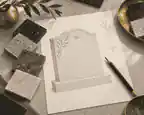
How do I design a headstone? Wording, materials and care should be planned together: first confirm the cemetery or churchyard rules, then choose a durable material and layout, write a short inscription that is accurate and personal, approve a proof carefully, and decide how the memorial will be cleaned and updated over time. The best way to design a headstone is to treat it as both a physical marker and a public record, because the name, dates, plaques, symbols, QR details and maintenance choices will be seen by family, visitors and future generations.
A headstone does not need to tell the whole story of a life. It needs to identify the person clearly, sit lawfully and safely in its cemetery setting, and carry a few words that still feel true after the first rush of grief has passed. Families often begin with headstone inscription ideas wording materials and care, but the wording is only one part of the decision. The shape, stone, finish, lettering, plaque position, faith symbol, portrait, QR code and cleaning routine all affect how the finished memorial will look and endure.
design a headstone: practical guidance
Before choosing colours, fonts or a favourite quote, ask the cemetery, churchyard, crematorium garden or memorial park for its written rules. Many burial places control the maximum size, stone type, foundation, fixing method, permitted finishes, approved symbols, vases, kerbs, QR plaques and wording. In the UK, government-backed guidance on burial ground memorial safety stresses proportionate risk management, communication with families and proper attention to unstable memorials. In Australia, rules usually sit with the cemetery trust, local council, cemetery operator or religious authority. In the United States, cemetery rules vary by cemetery and by plot section, while veteran memorials may follow federal specifications.
Ask for the memorial application form before paying a deposit. A careful application usually includes the grave or plot details, the deed or right-of-interment holder, the proposed dimensions, material, inscription, symbol, mason details, fixing method and a scaled drawing. If the cemetery requires an approved monumental mason, do not order from an online supplier until you know who is allowed to install it. Evaheld’s cemetery regulations for headstones wording materials and care can help families prepare the right approval questions before they commit to stone, plaques or installation.
For families comparing jurisdictional steps, the differences are practical rather than emotional. Australian families may need to check state or cemetery trust requirements and should be aware that ACCC funeral services guidance warns providers against misleading pricing, unfair terms and pressure selling. UK families should note that GOV.UK funeral guidance says a funeral usually follows death registration unless a coroner is involved, and local councils can advise on burial plots and crematorium services. US families should compare itemised prices and cemetery requirements because the FTC Funeral Rule requires funeral providers to give accurate price information and prohibits misrepresenting legal, crematory or cemetery requirements.
Choose The Headstone Type And Material
The main design choice is the form of the memorial. An upright headstone gives more room for names, dates, symbols and a short epitaph. A lawn marker or flat plaque is simpler, often lower in cost, and may be required in some cemeteries. A kerbed monument frames the grave more fully but is not allowed everywhere. A cremation plaque, niche marker or memorial garden plaque may need even tighter wording because space is limited.
Granite is the most common modern choice because it is hard, widely available and suitable for many finishes. Marble can be beautiful, but it weathers differently and may soften or stain more visibly in some environments. Sandstone and limestone can suit historic or local settings, though they may need more conservative care. Bronze is often used for plaques because it can carry crisp lettering and patinates over time. Stainless steel and ceramic are increasingly used for QR memorial plaques where contrast and readability matter; Evaheld’s own material notes on the best materials for QR memorial plaques explain why weather resistance, glare, corrosion and scan reliability should be considered before appearance alone.
For US veteran markers, the National Cemetery Administration’s page on types of headstones, markers and medallions lists standard upright granite or marble headstones, flat granite or marble markers, flat bronze markers and bronze niche markers. That page is useful even outside veteran contexts because it shows how material, size, weight and fixing method are connected. Families should also read the Department of Veterans Affairs overview of veterans headstones and markers when service eligibility may apply.
Do not choose material only by colour. Ask the mason how the stone performs in rain, frost, heat, coastal air, irrigation, shade and biological growth. Ask whether the lettering will be sandblasted, hand carved, laser etched, painted, gilded, lithichromed or raised in bronze. Ask how the stone will be cleaned without damaging the finish. If you are adding a bronze element, Evaheld’s care guidance on clean a bronze plaque wording materials and care is a useful reminder that gentle maintenance should be planned from the start, not improvised years later.
Write The Inscription In A Clear Order
Most headstone wording works best in a simple order: opening phrase, name, dates, relationship line and epitaph. The opening might be “In loving memory of”, “Remembering”, “In honour of”, “Sacred to the memory of” or no opening at all. The name should normally be the legal name or the name the person was known by, depending on cemetery rules and family agreement. Dates can be full dates, years only, or a culturally meaningful format such as “Sunrise” and “Sunset” if accepted locally.
Wording should be shorter than many families first expect. Stone is not a biography. A line such as “Beloved mother, teacher and friend” or “Kind, steady and deeply loved” can hold more dignity than a long paragraph. For families who want fuller storytelling, the headstone can stay concise while an online memorial holds photographs, service details, stories and messages. Evaheld’s what to include in a memorial page guidance helps separate what belongs on stone from what belongs in a living digital tribute.
When choosing a phrase, avoid words that sound impressive but do not sound like the person. A formal epitaph may suit someone who valued tradition; a plain line may suit someone who disliked ceremony. Consider writing three versions: one factual, one warm and one expressive. Leave them overnight, then read them aloud. The best version is often the one that feels calmest.
There are also legal and administrative reasons to slow down. In Victoria, Births, Deaths and Marriages explains that a Victorian death certificate provides a legal certificate for a death registered in the state, and the details families use for memorial wording should be checked against reliable records. UK families can also check the formal timing around death records through GOV.UK death registration guidance, while US families can confirm certificate ordering through USAGov death certificate information. Names, dates, accents, hyphens, middle names and maiden names should be proofread against official documents where possible.
Use Faith, Culture And Symbols Carefully
Religious and cultural wording can be deeply meaningful, but it should be accurate and approved by the people closest to the deceased. Christian families may choose a Bible phrase, cross or resurrection language. Jewish families may use “May their memory be a blessing” or Hebrew initials where appropriate. Muslim families may choose wording such as “Inna lillahi wa inna ilayhi raji’un” with guidance from family or faith leaders. Orthodox, Catholic, Hindu, Sikh, Buddhist, humanist, secular and Indigenous memorial traditions can each carry specific expectations.
If a symbol is being carved, check both meaning and permission. The VA’s emblems of belief list is a useful example of how formal memorial systems control symbols, even though private cemetery rules will differ. Do not assume every emblem, club badge, military crest, sports logo or cultural motif is allowed. Some may require proof of service, permission from an organisation or cemetery approval.
Language also matters. If you include wording in Greek, Italian, Arabic, Hebrew, Gaelic, Welsh, te reo Māori, an Aboriginal language, Spanish or another language, use a fluent speaker and proofread the final artwork. Lettering, diacritics and direction of script can change meaning. Ask the mason whether the chosen font supports every character and whether the cemetery accepts non-English inscriptions.
Public memorials show how memory is shaped by both words and visual identity. The Evaheld Memorials profiles for Frida Kahlo, William Shakespeare and Queen Elizabeth II illustrate very different lives, public legacies and symbolic associations; a private family headstone needs the same discipline on a smaller scale, choosing details that genuinely belong rather than decoration that merely looks impressive.
Plan Lettering, Fonts And Layout
Lettering must be readable at the distance people will actually stand. Serif lettering often suits traditional stones; sans serif lettering can look clean and modern; script lettering may feel personal but can be harder to read. Gothic or blackletter styles may suit specific traditions, yet they can make small dates and long names difficult. Ask to see the inscription at actual size, not only as a neat screen mock-up.
The longest line usually controls the visual balance. A long surname, double-barrelled name or bilingual inscription may need a wider stone, smaller lettering or a revised line break. Avoid filling every available space. Margins make the memorial easier to read and more dignified. If you include a portrait, ceramic photo, floral carving, cross, Star of David, crescent, military emblem or QR plaque, the remaining wording must breathe.
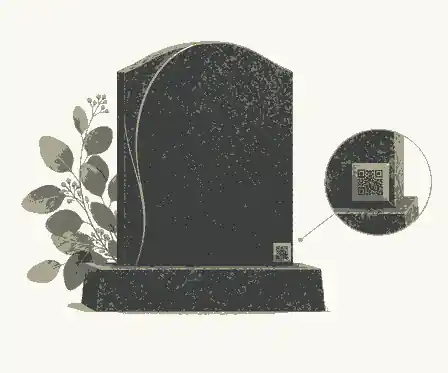
QR codes should be treated as design elements with a job to do. A discreet QR plaque can connect visitors to a richer memorial, but it should not interrupt the main inscription or sit where it is likely to be covered by flowers, mud, glare or water pooling. Evaheld’s practical advice on where a QR code can be placed on a headstone explains why scanning angle, contrast, quiet space and cemetery approval matter.
If you plan a QR-linked memorial, decide privacy before installation. A code on a grave is physically public, even if the linked content is controlled. Families can use choosing between private and public online memorials to think through search visibility, family access, moderation and whether the page should remain private until the wording and photographs have been reviewed.
Approve The Proof Like A Permanent Document
The proof is the most important safety check in the design process. Review it slowly, then ask at least two other people to review it separately. Check the full name, nickname, birth date, death date, age, relationship wording, punctuation, spelling, accents, line breaks, symbols and any QR destination. Do not approve a proof while tired or under pressure at the mason’s counter.
For US government-furnished veteran markers, the National Cemetery Administration explains specific headstone and marker inscriptions, including ordering and inscription controls. Private memorials are more flexible, but the lesson is the same: inscriptions are formal records, and small errors can be expensive or impossible to correct neatly.
Ask for written confirmation of what is included in the quote: stone, lettering, artwork, plaque, foundation, installation, cemetery permit, delivery, cleaning before installation, future lettering for a second inscription, and any additional charge for non-standard symbols or languages. In Australia, the ACCC’s advice to ask for itemised information is especially relevant where funeral or cemetery decisions are being made while grieving. In the US, the FTC’s Funeral Rule is a reminder to separate required costs from optional choices. In the UK, local cemetery or churchyard fees may sit outside the mason’s quote.
Design For Care, Ageing And Future Updates
A headstone will live outdoors. Rain, sun, frost, sprinkler minerals, moss, lichen, fallen leaves, pollution, salt air and mower damage can all affect appearance. Choose a finish that the family can maintain gently and the cemetery can work around. Highly polished black granite can look striking but may show water marks and glare. Pale stone may be softer visually but show biological staining. Bronze can darken naturally; some families value that patina, while others prefer scheduled cleaning.
Do not use household bleach, acidic cleaners, wire brushes, pressure washers or abrasive pads unless a qualified conservator or mason has advised it for that exact material. Gentle water, soft brushes and professional guidance are safer than aggressive cleaning. The National Institute on Aging’s guidance on care and comfort near the end of life is not a stone-care manual, but it is a useful reminder that practical decisions sit beside emotional care; families should not turn maintenance into another burden for one exhausted person.
Think about what may need to change later. A double headstone may need space for a second name and dates. A family may later add a plaque, vase, QR code or additional inscription. If the first design uses all available space, future changes become awkward. If relatives are contributing memories, photos or wording, inviting family and friends to help build the memorial can reduce the risk that one person has to make every decision alone.
What To Ask The Mason Or Cemetery
Ask practical questions before emotional details take over. What materials are allowed in this section? Who owns the grave rights or right of interment? Are kerbs, vases, photos, QR plaques or bronze plaques permitted? Does the cemetery require a specific foundation or fixing system? What is the expected approval time? Who installs the memorial? What happens if the ground has not settled? What cleaning is allowed? Who is responsible if the memorial becomes unstable?
Ask about timing as well. Some cemeteries require the ground to settle before an upright headstone is installed, and wet seasons, winter ground conditions or high demand can delay installation. A temporary marker may be used while the permanent memorial is prepared. If grief is making concentration difficult, the NHS notes in its grief after bereavement guidance that grief can affect people in many different ways and may make ordinary tasks harder; it is reasonable to slow the decision down.
Ask who should sign off. If several relatives have strong views, agree on one final approver before proofs begin. The person paying for the stone, the grave-right holder and the closest family member are not always the same person. Write down the decision path so the mason is not caught between conflicting instructions.
Headstone Wording Examples By Tone
Use examples as starting points, not finished copy. A traditional line might be “In loving memory of a devoted husband, father and grandfather.” A simple modern line might be “Loved deeply, remembered clearly.” A faith-based line might be “In God’s care” or a properly cited verse. A secular line might be “A life of kindness, courage and quiet humour.” A family-centred line might be “The heart of our family, still guiding us.” A service-centred line might be “Teacher, mentor and friend to many.”
For plaques, the wording often needs to be even tighter: “With love and gratitude”, “Always in our hearts”, “Remembered with joy”, or “A place to pause and remember”. If you need more options, Evaheld’s approved companion page on examples of memorial plaque wording for headstones plaques and care is designed for families who need shorter lines for plaques, benches, urns and small memorial spaces.
When wording feels impossible, begin with relationship and truth. Who were they to the people choosing the stone? What quality would most people recognise? What would feel wrong to leave out? If you need a fuller paragraph for an online tribute before reducing it to one headstone line, how to write a memorial tribute can help turn memories into language without forcing everything onto the stone.
A Practical Sequence For Families
First, confirm the burial place, grave rights and cemetery rules. Second, choose the memorial type and the material that fits both the cemetery and the local environment. Third, draft the name, dates and relationship line before choosing an epitaph. Fourth, decide whether any symbol, portrait, plaque or QR code belongs on the design. Fifth, get a scaled proof and review it against official records. Sixth, confirm the quote, approval, installation and care arrangements in writing. Seventh, keep a copy of the proof, receipt, cemetery approval and maintenance guidance with the family records.
If your family wants the stone to connect with a living tribute, decide what should be public, private or moderated before the QR code is shared. A headstone marks place; a digital memorial can hold voice, photographs, stories, service details and tributes. When you are ready, you can design a headstone plan alongside a memorial page so the physical marker and the fuller remembrance support each other.
FAQs
How do I design a headstone? Wording, materials and care
Start with the cemetery rules, then choose the headstone type, material, layout, inscription, symbols and maintenance plan together. Use headstone inscription ideas wording materials and care for wording support, and check official requirements such as GOV.UK funeral guidance where local process matters.
What words should go on a headstone?
Most headstones include a name, dates, relationship line and one short epitaph. Families can use examples of memorial plaque wording for headstones plaques and care for concise options, while the National Cemetery Administration inscription guidance shows why formal memorial wording needs careful review.
Which headstone material lasts best?
Granite is often chosen for durability, while bronze works well for plaques and marble has a softer traditional look. For QR-linked plaques, the best materials for QR memorial plaques explains weather and readability trade-offs, and the VA’s headstone and marker type information shows common official material formats.
Do cemeteries control headstone designs?
Yes. Cemeteries often control size, material, fixing, wording, symbols, photos, plaques and QR placement. Evaheld’s cemetery regulations for headstones wording materials and care helps families prepare approval questions, and the UK’s burial ground memorial safety guidance explains why safe installation and maintenance matter.
Can I put a QR code on a headstone?
Often yes, but only if the cemetery allows it and the code is placed where visitors can scan it respectfully. Evaheld explains where a QR code can be placed on a headstone, while VA headstone and marker guidance is a reminder that some memorial systems have strict approved formats.
How do I keep a headstone private if it is in a public cemetery?
The physical headstone is public to visitors, but QR-linked digital content can often be controlled through privacy settings. Evaheld’s choosing between private and public online memorials explains visibility choices, and NHS bereavement guidance is a useful reminder to pace public sharing while grief is active.
Who should approve the final headstone proof?
The grave-right holder or authorised decision-maker should approve the proof, but another trusted person should check names, dates and spelling. Families using inviting family and friends to help build the memorial can gather memories before final wording, while Victorian death certificate guidance shows why official records matter.
How should I clean a bronze plaque or headstone?
Use gentle care and follow the mason or cemetery’s material-specific instructions rather than harsh household products. Evaheld’s clean a bronze plaque wording materials and care gives practical maintenance context, and the VA marker material overview shows how bronze, marble and granite differ.
Can a headstone include religious or cultural symbols?
Usually, but the cemetery may require approval and some symbols may need cultural, faith or organisational permission. Evaheld’s how to write a memorial tribute can help keep wording respectful, and the VA’s emblems of belief page shows how formal memorial systems manage symbol choices.
What should I do if family members disagree about the headstone?
Pause the design, confirm who has legal authority, and separate factual wording from optional decoration. A fuller tribute can be developed through what to include in a memorial page, while the ACCC funeral services guidance encourages clear written information and careful decisions during bereavement.