What are funeral photo restoration services? Ethical tools, memories and safety
A practical, compassionate guide to funeral photo restoration services, AI ethics, consent, privacy, safety and memorial sharing for AU, UK and US families.
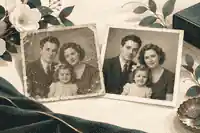
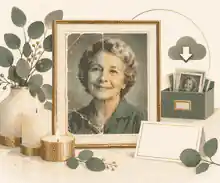
What are funeral photo restoration services? Ethical tools, memories and safety all come together when families repair, digitise, colour-correct or gently enhance photographs for a funeral, memorial service or lasting tribute. The best funeral photo restoration services protect the original image, respect consent and grief, disclose AI assistance where it is used, and help families share memories without turning a person’s likeness into something misleading.
For many families, the immediate need is practical: one damaged portrait must be clear enough for an order of service, a slideshow, a framed display or an online remembrance. For others, the work is part of a wider act of memory preservation: sorting albums, scanning prints, choosing captions, gathering voice memories and deciding what should be public, private or kept only within the family. The word restoration can mean simple dust removal, tonal correction, crease repair, careful cropping, black-and-white balancing, colour recovery, sharpening, or preparation for a tribute video. It can also include AI memorials, photo restoration and voice-related tools, but those tools need stricter boundaries because they can change how the person appears to speak, move or feel.
The safest starting point is the archival principle of doing no harm. The U.S. National Archives explains that family papers and photographs should be preserved by preventing damage first, which makes family archive preservation a better mindset than rushing straight into enhancement. Keep the original print, scan or negative untouched. Work on a copy. Record what changed. If a photo is torn, curled, mouldy or fragile, avoid flattening, rubbing, taping or trimming it. A service that cannot explain how it protects the original file, stores the restoration copy and returns usable exports is not ready for emotionally important memorial work.
What funeral photo restoration services usually include
Most professional and AI-assisted restoration workflows begin with source assessment. A restorer looks at resolution, focus, scratches, stains, fading, missing corners, silvering, water damage, colour shift, faces hidden in shadows, and whether the photograph is historically important in its damaged state. The goal is not to erase history. A funeral image should usually look respectful, recognisable and faithful, not artificially perfected. This is why families comparing AI photo animation for a memorial should separate restoration from animation: one repairs a still record, while the other adds motion that never existed.
Good services commonly provide a high-resolution restored still, a web-friendly copy for sharing, and sometimes crops for portrait frames, funeral booklets and memorial slides. They may remove cracks, balance exposure, reduce yellowing, clean backgrounds, repair small missing areas, and prepare files in JPEG, PNG, TIFF or PDF formats. More advanced work can include colouring a black-and-white image, combining a damaged print with a better duplicate, or creating a consistent set of portraits for a slideshow. When storage is involved, families should check file limits for digital tributes before assuming every high-resolution scan, video and audio file can be uploaded without compression or extra cost.
Handling matters before pixels. The National Archives guidance on preserving family photos warns against touching image surfaces, using glue or tape, forcing rolled photographs open, or exposing originals to damaging light. Its more technical photograph preservation guidance also highlights the value of gloves, edge handling, archival enclosures and avoiding PVC or poor-quality storage materials. In practical family terms: scan first, restore the copy, store the original calmly, and use the restored derivative for display.
Ethical tools: where AI helps and where it should stop
AI can be useful when it removes scratches, reduces noise, improves contrast, rescues faded detail or prepares a low-quality phone snapshot for a memorial page. It becomes ethically more serious when it invents missing facial detail, opens closed eyes, changes expression, adds a smile, colourises clothing, creates a new background, animates a face or simulates speech. The more a tool adds, the more the family needs consent, review and disclosure. A still restoration can be described as repaired or enhanced. A generated face, synthetic voice or animated expression needs clearer wording because viewers may otherwise mistake interpretation for documentary record.
A helpful rule is to ask whether the change makes the existing photograph easier to see, or whether it creates a new representation of the person. Brightening a dark portrait is usually modest. Replacing a mouth, inventing eye direction or making the person appear to speak is a different category. If a family knows the person disliked photo manipulation, publicity or being shown during illness, those wishes should carry real weight. The American Psychological Association’s definition of a continuing bond supports the idea that remembrance can stay active after death, but it does not mean every technological possibility is emotionally safe or respectful.
Grief responses can also change over time. The NHS guidance on grief, bereavement and loss recognises that people may feel many different reactions after a death, so a restored image that comforts one relative may unsettle another. This is why funeral photo restoration services should include a quiet review stage, not instant public posting. A private preview lets close family notice whether the image feels recognisable, whether the edit is too polished, whether the person’s expression has shifted, and whether the timing is too soon for wider sharing.
Families often find that a restored still beside written stories is enough. A memory table, slideshow or online tribute can feel complete without animation. If animation is considered, keep it subtle, optional and labelled. Use the original still beside the altered version so relatives can see what came from history and what came from editing. For richer remembrance, adding videos and music thoughtfully can be more meaningful than forcing movement into a photograph that should remain still.
Consent, privacy and public sharing
Consent is not simple after death, but families can still act carefully. Ask who supplied the photograph, who appears in it, who owns the print, who may own copyright, who is closest to the person being remembered, and whether living people in the image need to be consulted. A photo taken at a private hospital bedside, family argument, school event or intimate moment may be inappropriate for restoration and public sharing even if it can be technically improved. When relatives disagree, preserve the image privately rather than publishing it widely.
The UK Information Commissioner’s Office notes that UK GDPR protects living individuals and that information about deceased people is not personal data under UK GDPR, but the personal data guidance still matters where living people appear in photographs or captions. Australian families should treat privacy carefully as well: the Office of the Australian Information Commissioner recommends caution with personal information in commercial AI tools, and its commercial AI products guidance is a useful checklist for asking what happens to uploaded images, training data, deletion requests and subcontractors. In the United States, privacy, publicity rights, estate rights and consumer protection issues vary by state and context, so disputed or commercial use needs legal advice.
Public visibility changes the risk. A restored portrait in a private family album is different from a searchable page, a viral social post or a QR-linked memorial at a grave. Families deciding between private and public online memorials should decide before upload which images belong in each setting. A good memorial workflow lets relatives review contributions, hold back sensitive images, and keep some restored files only in the family archive.
Safety risks: deepfakes, intimate images and voice cloning
Funeral photo restoration services should never be used to fabricate intimate, humiliating, political, commercial or misleading content. Australia’s eSafety Commissioner describes deepfakes as AI-created or edited media that can falsely depict a real person doing or saying something, and its deepfake position statement explains risks including identity theft, extortion, reputational damage and harassment. The same office explains that image-based abuse can include digitally altered or faked images, making image-based abuse guidance relevant whenever a tool could be misused.
Voice is an even sharper boundary. A restored photograph does not speak. A synthetic voice can imply endorsement, forgiveness, blessing, permission or a new message that the person never gave. The U.S. Federal Trade Commission has warned about AI-enabled voice cloning harms, including impersonation and fraud. For most funerals, it is safer to use authentic recordings, written captions, eulogies or family narration than to generate a voice for someone who cannot approve the words. If a genuine old recording is restored for audibility, label it as restored audio and keep the unedited copy.
Copyright, provenance and honest labelling
Owning a print does not always mean owning the copyright. A studio portrait, school photograph, newspaper image or professional performance shot may have rights held by the photographer, employer, estate or publisher. The U.S. Copyright Office’s copyright and artificial intelligence materials are a useful reminder that AI raises separate questions about outputs, replicas and human authorship. In Australia, the United Kingdom and the United States, copyright rules differ, but a practical family habit works everywhere: identify the source, avoid commercial reuse without permission, keep receipts or licences, and use original family images where possible.
Disclosure protects trust. A caption can say, for example, ‘Restored from a faded family photograph; scratches and colour balance adjusted’ or ‘AI-assisted restoration of a 1974 portrait; original retained by the family’. Where a generated element is present, be more direct. Content provenance standards can help: the C2PA Content Credentials specification describes technical ways to record origins and edits, although families should still keep a simple written production note because social platforms and export tools may strip metadata.
Memorial profiles show why careful labelling matters. A restored image connected with Stephen Hawking should not blur the distinction between a photograph, his authentic communication technology and any synthetic voice. Public remembrance of Robin Williams should avoid turning grief into endless reaction content. A portrait of Princess Diana demonstrates how public images carry family, cultural and media sensitivities far beyond technical quality.
A practical workflow for families
Start by gathering all available versions of the photograph. Sometimes a cousin has a cleaner print, an album has an uncropped original, or a funeral director has a higher-resolution portrait from a previous service. Choose the least damaged source. Scan or photograph it carefully in even light. Keep one untouched master file and make a separate working copy. Before any restoration, write down the purpose: framed portrait, service booklet, slideshow, memorial page, family archive or tribute video.
Next, decide the acceptable level of intervention. Dust removal, scratch repair and exposure correction are usually low risk. Colourisation, face reconstruction, background replacement and animation require family review. If the image includes living relatives, ask whether they are comfortable with restoration and publication. If the photograph shows children, illness, military service, cultural ceremony or religious practice, slow down and seek context from someone who understands the moment.
Then test the provider. Ask whether uploads are private by default, whether images train models, how deletion works, what file formats are returned, whether the provider keeps a copy, whether human reviewers see the photo, and whether outputs can be used in printed funeral materials. Families preserving wider archives can use digital memory preservation steps to keep originals, restored files and notes together rather than scattering them across phones, email threads and cloud folders.
Review the result on a phone, tablet and printed proof. Look for invented teeth, plastic skin, mismatched eyes, odd hands, inaccurate clothing colour, over-sharpened hair, halo edges and loss of background context. If a result makes the person less recognisable to close family, reject it. A technically clean image that feels unlike them is not a good funeral image. Ask at least one person who knew the subject well to review the file privately before it appears in a service or memorial.
Finally, preserve and share with care. Store the original scan, restored master, sharing copy, caption, service proof and permissions in one labelled folder. If the image appears online, make sure the caption travels with it. If relatives contribute additional restored photographs, moderating online memorial comments and contributions helps prevent duplicates, distressing surprises and accidental publication of private material. When the tribute is complete, downloading online memorial content gives the family a backup beyond any single platform.
Australia, United Kingdom and United States differences
The practical ethics are similar across Australia, the United Kingdom and the United States: protect originals, obtain family agreement, avoid misleading outputs, disclose AI assistance and keep sensitive images private. The legal details are not identical. In Australia, privacy and online safety regulators provide strong guidance on generative AI, image-based abuse and platform safety. In the United Kingdom, UK GDPR does not apply to deceased people as personal data, but living people in images, copyright, misuse of private information and emerging AI or intimate-image laws may still matter. In the United States, copyright is federal, but rights of publicity, post-mortem likeness protection and privacy claims often depend on state law.
That means families should avoid treating a restoration provider’s generic terms as the full answer. Ask where the company is based, where processing occurs, which law governs disputes, and whether support is available if a relative objects. For high-profile people, commercial reuse, disputed estates, images of minors, intimate material, synthetic voice or public advertising, get legal advice before publishing.
Choosing a service without being pressured
A trustworthy funeral restoration provider should be willing to say no. It should not pressure grieving families into subscriptions, public galleries, dramatic animations, facial reinvention or voice recreation. It should explain limits in plain language, give a private preview, allow rejection, protect uploads, and return files in usable formats. Pricing should distinguish scanning, restoration, colour work, animation, captions, print preparation, rush delivery and long-term storage. A low-cost tool can be useful for simple correction, but it is poor value if it keeps unclear rights over the image, hides training terms or produces a result the family cannot comfortably use.
Evaheld Memorials can sit alongside restoration by giving families a place for the restored image, original context, captions, stories, tributes and service details. A restored portrait is strongest when it is not isolated. It belongs with dates, relationships, memories, voices, written tributes and family decisions about privacy. For a practical memorial structure, meaningful online memorial inclusions help families choose supporting details, while what Evaheld Memorials creates from one AI prompt explains how a first draft can support, not replace, family judgement. Relatives can also use how family and friends can help build the memorial when several people hold different photographs and memories.
If your family is ready to gather restored photographs, captions and shared memories in one respectful place, Evaheld Memorials can help you begin funeral photo restoration services as part of a wider memorial record.

FAQs
What are funeral photo restoration services? Ethical tools, memories and safety
They are services that repair, digitise or enhance photographs for funeral and memorial use while protecting the original image, family consent and truthful presentation. Before choosing a provider, compare AI photo animation for a memorial with archival advice from family archive preservation.
Should we use AI to restore a funeral photo?
AI can be appropriate for dust removal, contrast, scratch repair and gentle clarity, but it should not invent a new expression or identity without family agreement. Check digital memory preservation steps and the National Archives advice on preserving family photos before altering originals.
How should we scan an old funeral portrait?
Use the cleanest source, avoid flattening fragile prints, create an untouched master file and restore only a copy. Families planning uploads should also check file limits for digital tributes, while the National Archives offers practical photograph preservation guidance.
Is it ethical to animate a photo of someone who has died?
It can be ethical only when the purpose is respectful, family consent is considered, the movement is restrained and the result is labelled as AI-assisted. Keep the discussion grounded in adding videos and music thoughtfully and the APA idea of a continuing bond.
Can restored photos make grief harder?
Yes, some relatives may find a restored or animated image comforting while others find it intrusive, especially soon after the death. A private review process fits private and public online memorials, and the NHS guidance on grief, bereavement and loss reminds families that reactions vary.
How do we label an AI-restored memorial image?
Use direct wording such as ‘AI-assisted restoration from a 1962 family photograph; original retained by the family’. Keep the caption with the image and connect it to meaningful online memorial inclusions, while technical provenance can be supported by the Content Credentials specification.
Do privacy laws apply to funeral photo restoration?
They can, especially when living people appear in the image or a company processes uploads. Families using what Evaheld Memorials creates from one AI prompt should still understand the ICO’s personal data guidance.
Should we upload old family photos to a free AI tool?
Only if the tool clearly explains privacy, retention, deletion, model training and export rights in terms your family understands. It is safer to combine how family and friends can help build the memorial with the OAIC’s commercial AI products guidance.
What restoration uses should families avoid?
Avoid fake speech, humiliating edits, intimate transformations, political endorsements, commercial promotion and any output that close family recognises as unlike the person. Moderating online memorial comments supports safer sharing, and eSafety’s deepfake position statement explains why realistic false depictions can cause harm.
How do we keep restored funeral photos safe long term?
Keep the original scan, restored file, sharing copy, caption, permissions and export notes in one labelled archive with more than one backup. The workflow should include downloading online memorial content and awareness of eSafety’s image-based abuse guidance when sensitive images are involved.