What are plaque wording examples for parents? Wording, materials and care
A practical, compassionate guide to plaque wording examples for parents, including mother and father wording, materials, care, QR options and AU/UK/US approval differences.
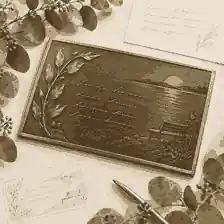
What are plaque wording examples for parents? Wording, materials and care begins with a simple truth: the best wording for a parent plaque usually combines their name, dates, relationship, one restrained line of love or character, and a material choice that will remain legible in the place where the plaque will live. For most families, plaque wording examples for parents work best when they are short enough for stone, bronze, stainless steel or ceramic, specific enough to sound like the parent being remembered, and checked against cemetery or crematorium rules before anything is made permanent.
A parent plaque carries a particular weight because it is often written by the people who were shaped by the person being remembered. A mother or father may have been practical, funny, quiet, devout, sceptical, protective, difficult, generous, private or known by a name that only family used. Good wording does not try to summarise every part of that life. It chooses one truthful angle and lets the larger story continue elsewhere through photographs, spoken memories and family contributions.
This article is written for families in Australia, the United Kingdom and the United States. The wording principles are similar across all three markets, but approval, consumer protection, veteran commemoration and cemetery rules differ. In Australia, cemetery trusts and state or territory laws matter, and the Victorian rights of interment guidance is a useful example of how memorial decisions are tied to local cemetery trust policies. The ACCC funeral services guidance also reminds Australian families to ask for clear, itemised information when buying funeral or memorial services.
In the United Kingdom, many local councils require approval before a new memorial is erected or an inscription is added. The Bury Council cemetery regulations state that a headstone design and inscription must be approved before work is carried out, while the Newark Town Council cemetery regulations show how councils may require memorial permits and qualified masons. In the United States, consumer rights around funeral goods and services are shaped by the FTC Funeral Rule, and veteran markers are governed separately through the National Cemetery Administration headstones, markers and medallions guidance.
How to choose plaque wording examples for parents without rushing the decision
Start with the fixed details: full name, known name, birth date, death date, and relationship wording. Then decide whether the plaque needs a formal phrase, a family phrase or no phrase at all. A traditional layout might read: In loving memory of Margaret Anne Lewis, beloved mother and grandmother, 1942-2026, forever held in our hearts. A plainer layout might read: Margaret Lewis, Mum, teacher, gardener, friend, 1942-2026. A more specific layout might read: Our Dad, who made the table bigger for everyone.
The best test is whether the wording would still feel right ten years from now. Highly emotional wording may be exactly right for some families, but permanent memorials usually benefit from restraint. A plaque can say love without using every possible word for grief. It can say parent without listing every family role. It can honour faith without forcing religious language if the parent did not live that way.
If your family is choosing between a headstone inscription, a smaller grave plaque, a wall plaque, a memorial bench plate or a QR-linked plaque, read Evaheld Memorials guidance on headstone inscription ideas wording materials and care. It helps separate the short wording that belongs on a physical marker from the richer story that can sit beside it digitally.
Parent plaque wording formats that usually work
A useful formula is name plus relationship plus one truth. That might be: Beloved Mum, our first home and our lasting guide. Or: Loved Dad, steady hands, generous heart. Or: Our parents, who made ordinary days feel safe. The line should be clear at normal reading distance and should not depend on private context that future visitors cannot understand.
Here are practical wording patterns families can adapt.
- Formal and traditional: In loving memory of our dear mother, remembered with gratitude and love.
- Simple and modern: Mum, loved deeply, missed quietly, remembered daily.
- For a father: Dad, your kindness still guides us.
- For both parents: Together in rest, together in our hearts.
- For a step-parent: Loved as family, remembered with respect and gratitude.
- For an adoptive parent: Chosen love, lifelong care, lasting memory.
- For a parent and grandparent: Parent, grandparent, friend; the centre of many lives.
- For a private person: A quiet life, a lasting influence.
- For a parent with faith: Held in God’s care and in our love.
- For a secular memorial: Their love remains in the lives they shaped.
When families want a broader bank of short plaque lines, Evaheld Memorials has examples of memorial plaque wording for headstones plaques and care. Use examples as prompts, not as a script. The line should sound like your parent, not like a catalogue.
Mother plaque wording examples
For a mother, many families are tempted to write the entire emotional centre of the family on the plaque. That is understandable, but a concise line often carries more dignity. Consider wording such as: Beloved Mum, the heart of our family. Or: Her care shaped us, her love stays with us. Or: A gentle mother, a practical friend, a life remembered with gratitude.
If your mother was known for action rather than sentiment, use that. Mum, she showed love by doing. If she was witty, a subtle line may fit better than a solemn one. Mum, still keeping us in order. Humour can work only when it is unmistakably true to the person and unlikely to hurt future visitors. If there is any doubt, choose warmth over cleverness.
For a mother who was also a grandmother, keep the relationship list short. Beloved mother and grandmother is often enough. If there are many grandchildren or blended family relationships, avoid trying to include every name on a small plaque. Use the physical plaque for the stable memorial line and preserve fuller family detail through a shared memorial record.
Father plaque wording examples
For a father, families often lean towards strength, guidance, humour, work, faith or steadiness. Good examples include: Dad, your steady love still guides us. Or: A patient father, a loyal friend, a life well lived. Or: He worked hard, loved quietly and gave generously.
Do not force a heroic tone if it does not fit. A father may be remembered more honestly through small, ordinary details: Dad, maker of Sunday breakfasts and safe journeys. Or: Our father, who listened before he spoke. Or: His hands built more than we can name. Wording like this can feel personal without becoming too long for a plaque.
If the relationship was complicated, a respectful line can still be true. In memory of our father, may he rest in peace. Or: Remembered by his family. Not every plaque must carry emotional intensity. Sometimes the kindest wording is factual, calm and dignified.
Wording for both parents on one plaque
When one plaque remembers both parents, balance matters. Avoid making one parent’s line much warmer or longer than the other’s unless there is a deliberate reason. A symmetrical format is usually safest: Names, dates, relationship line, shared phrase. For example: Margaret and Thomas Lewis, beloved parents and grandparents, together in memory, always in our hearts.
If one parent died years before the other, confirm whether the existing grave, niche or plaque can accept an added inscription. Some cemeteries require a new permit, and the visual result may depend on the original font, layout and available space. Families should also ask whether a memorial mason can match the earlier lettering or whether a fresh plaque is more respectful.
For parents with very different personalities, use a shared line that does not erase either person. Their love took different forms; their family remembers both. Or: Two lives, one family, lasting love. Keep the wording calm, especially if many relatives will have strong views.
Dates, names, spelling and family roles
Dates can be written as full dates, years only, or culturally familiar phrases such as born and died. In Australia and the United Kingdom, day-month-year order is natural. In the United States, month-day-year order is common. If the plaque will be read mostly in one country, use that country’s normal date style. If the family is international, writing the month as a word avoids confusion: 5 March 1942 is clearer than 05/03/1942.
Use the name visitors will recognise. A legal name may matter for cemetery records, but a plaque can often include the known name as well: Elizabeth Mary Carter, known to all as Betty. Check the cemetery or crematorium before assuming quotation marks, nicknames, non-Latin scripts, accents, religious symbols or images are permitted. For culturally specific wording, ask someone fluent and trusted to check spelling, diacritics and meaning before approval.
Proofreading is not a courtesy step; it is a memorial safety step. Read the wording aloud. Check every date against documents. Ask one person outside the immediate decision group to check spelling. Then check the proof from the stonemason or plaque maker as if you were seeing it for the first time. Errors in stone, bronze or ceramic can be difficult and expensive to correct.
For families preparing a wider tribute around the plaque, Evaheld Memorials explains memorial tribute writing so the long-form tribute can hold stories that the plaque should not try to carry. If grief is making even a short inscription feel impossible, the Healthdirect Griefline listing points Australian readers towards support options that can sit alongside practical memorial decisions.
Religious, secular and cultural wording
Religious wording should reflect the person and their family, not simply the most familiar phrase. Christian wording might include Resting in God’s peace or Held in the love of Christ. Jewish wording often uses may their memory be a blessing, but families should confirm wording with their community and ensure the phrase is used respectfully. Muslim wording may include an English rendering of returning to God’s mercy, but cemetery rules, family preference and transliteration should be checked carefully.
Secular wording can be just as meaningful. A life of quiet kindness. Loved by many, remembered by all. Their care continues in us. For families who prefer nature imagery, restrained lines work better than ornate claims: Returned to the earth they loved. Or: Remembered where the trees and light remain.
The Australian Office of Australian War Graves commemoration principles show how official commemoration often uses a consistent structure while allowing limited personal elements. That principle is useful for private families too: keep the essential details clear, then add one human line.
Materials: bronze, stainless steel, aluminium, ceramic, stone and acrylic
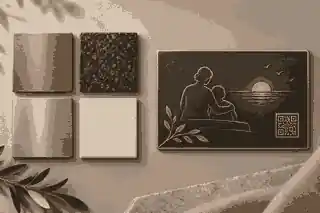
Material should be chosen for location first and appearance second. A sheltered indoor memorial wall is different from a coastal cemetery, a lawn grave, a garden bench or a grave exposed to irrigation. Bronze has a long memorial tradition and develops patina. Granite is durable and familiar. Stainless steel can be excellent for modern plaques and QR details when glare is controlled. Ceramic can look refined and support crisp imagery, but it may be vulnerable to impact. Aluminium can work in some settings but depends heavily on coating quality. Acrylic is usually better for protected or shorter-term displays than permanent outdoor memorials.
Evaheld Memorials covers plaque materials for QR memorials, including the practical balance between corrosion resistance, contrast and scan readability. If a QR code is included, the physical material must preserve both the wording and the code. The GS1 quiet zone and contrast guidance is not written for memorials, but its core lesson applies: a code needs clear contrast and enough blank space around it to scan reliably.
For families considering QR access, wording should still stand on its own. The plaque should make sense if a phone is not used. A QR code can open photographs, a life story, tributes, service details and updates, but the physical memorial should remain dignified if the visitor simply reads the inscription.
Cemetery approval and jurisdiction differences
Do not order a plaque before checking the rules of the exact cemetery, crematorium, churchyard, memorial garden or council area. Rules may cover size, material, colour, symbols, vases, installation method, approved masons, insurance, fees, additional inscriptions and who has authority to apply. A right to arrange a memorial is not always the same as ownership of the land or unrestricted freedom to install anything.
Australian families should check the cemetery trust or local authority and the person who holds the right of interment. United Kingdom families often deal with a council cemetery, churchyard authority or private cemetery, and written permission is commonly required before inscription work. United States families should ask the cemetery for written monument rules and, where relevant, check veteran marker eligibility separately. The VA notes that the style chosen for a government-furnished headstone or marker must be permitted by the officials in charge of the private cemetery where it will be placed.
Evaheld Memorials guidance on cemetery regulations for headstones wording materials and care can help families prepare the right questions before approving wording, material or installation. For UK readers, the GOV.UK after a death guidance is also a useful reminder that memorial decisions often sit beside registration, estate and notification tasks rather than happening in isolation.
Care and cleaning after the plaque is installed
Care should be gentle, permission-based and material-specific. The VA headstone cleaning guidance warns that the goal is not to make a marker look new and that improper cleaning can accelerate deterioration. It also warns against power washing government-furnished markers. The National Park Service headstone cleaning recommendations are aimed at government-issued headstones, but they reinforce the same conservative approach: avoid harsh mechanical methods and match cleaning to material and condition.
For bronze plaques, accept that patina is not automatically dirt. Many families damage plaques by trying to remove the natural surface that gives bronze its aged character. Evaheld Memorials has practical detail on clean a bronze plaque wording materials and care, including why soft cloths, water and caution are usually better than strong chemicals.
If a QR plaque is included, care also protects accessibility. Dirt, scratches, glare and biological growth can reduce scan reliability. Plan a gentle inspection routine rather than cleaning aggressively after years of neglect. If the plaque is in a cemetery, ask what families may clean themselves and what must be handled by staff or an approved contractor.
How a QR-linked memorial can support a short parent plaque
A plaque has limited space. A parent’s story does not. A QR-linked memorial can let visitors move from a short physical inscription into photographs, tributes, voice memories, funeral details, stories and family updates. Evaheld Memorials explains what size should a QR code be on a memorial plaque, which is useful when families are balancing inscription, code size, quiet space and visual restraint.
Privacy matters. A public plaque may sit in a public place, but the linked content can still be handled thoughtfully. Families can decide whether sensitive details, addresses, family conflict, children’s names or private photographs belong on the public memorial. Evaheld Memorials guidance on private versus public QR memorials helps separate what appears physically from what is shared online.
For families who want relatives to contribute memories before the wording is final, Evaheld Memorials explains how to invite family and friends to help build the memorial. That can be especially helpful when siblings remember different parts of a parent’s life. A practical starting list, including names, dates, photographs and relationship details, is covered in Evaheld Memorials guidance on what information helps you start a memorial.
A parent plaque can also sit beside a fuller life story. Profiles such as Gene Wilder, Lucille Ball and Judy Garland show why public memory often needs more than a name and date: people are remembered through roles, relationships, work, character and the way others continue to speak about them.
Proofing checklist before approving the plaque
Use this checklist before you sign off. Confirm the exact destination, cemetery authority and permit. Confirm who has legal authority to approve the memorial. Confirm the inscription, dates, spelling, punctuation, accents, symbols and line breaks. Confirm material, finish, size, mounting method and care instructions. Confirm whether the quote includes installation, permit fees, delivery, GST or sales tax, artwork, QR setup, proofs, future changes and replacement terms.
Ask for a scaled proof, not just text in an email. Words look different when centred, curved, engraved, raised, etched or placed beside dates. Long words can force awkward line breaks. A phrase that feels gentle on paper can look crowded on a small bronze plate. If the plaque includes a QR code, scan the proof and ask how the final code will be produced.
For United States families, the FTC consumer guidance is useful because it confirms that consumers have rights to choose only the goods and services they want or need. For Australian families, the ACCC’s emphasis on itemised quotes and clear pricing is especially relevant. For United Kingdom families, local cemetery rules and permit language often decide the practical path.
Common mistakes to avoid
The first mistake is trying to say everything. A plaque is not a biography. The second is approving wording while emotions are at their sharpest and no one has checked the proof carefully. The third is choosing a material for colour alone without considering weather, cleaning, installation or cemetery rules. The fourth is copying a phrase that sounds beautiful but does not fit the parent. The fifth is adding a QR code without thinking about privacy, contrast, size or long-term access.
Another mistake is letting one relative decide everything in isolation when the memorial affects several close family members. This does not mean every cousin needs veto power. It means the people most directly affected should have a reasonable chance to catch errors and raise serious concerns. Where there is disagreement, a calmer, shorter inscription is usually better than a dramatic line that some family members will resent.
Finally, do not confuse expensive with meaningful. A modest plaque with accurate wording, suitable material and gentle care can be more respectful than an elaborate design that is hard to read, hard to maintain or out of step with the person remembered.
A practical wording process for families
Write three versions. Version one: a plain factual plaque with name, dates and relationship. Version two: the same plaque with one warm line. Version three: a more personal version with a detail only family would recognise. Leave them overnight. Ask which one still feels calm in the morning.
Then ask three questions. Would this wording comfort the people closest to the parent? Would it still feel respectful to a visitor who never knew them? Would the parent have recognised the tone as honest? If the answer is yes, the wording is probably close. If the wording feels like a performance, simplify it.
When you are ready to pair a short physical inscription with a living digital tribute, Evaheld Memorials can help families begin with plaque wording examples for parents in mind while preserving the fuller story, photographs and messages beyond the plaque itself.
FAQs
What are plaque wording examples for parents? Wording, materials and care
Plaque wording examples for parents are short inscription ideas that usually include a parent’s name, dates, relationship and one truthful line of remembrance. The best approach is to keep the plaque concise, choose material that suits the location, and confirm local cemetery approval before ordering; Evaheld Memorials’ examples of memorial plaque wording for headstones plaques and care can support wording choices, while the ACCC funeral services guidance explains why clear quotes and fair dealing matter during bereavement.
What should I write on a plaque for my mother?
For a mother, choose wording that feels specific but restrained, such as Beloved Mum, the heart of our family, or Her care shaped us and her love stays with us. If you want a fuller tribute alongside the short plaque, Evaheld Memorials’ memorial tribute writing guidance helps separate long memories from plaque wording, and the Healthdirect Griefline listing points Australian readers towards bereavement support when wording decisions feel heavy.
What should I write on a plaque for my father?
For a father, wording often works well when it names one real quality: Dad, your steady love still guides us, or A patient father, a loyal friend, a life well lived. Evaheld Memorials’ headstone inscription ideas wording materials and care can help compare short lines, while the FTC Funeral Rule is useful for US families checking funeral and memorial purchasing rights.
Can one plaque remember both parents?
Yes, one plaque can remember both parents if the cemetery or memorial site allows it and the layout gives both names and dates enough space. A balanced line such as Together in memory, always in our hearts can work well; Evaheld Memorials’ cemetery regulations for headstones wording materials and care helps families prepare approval questions, and the Bury Council cemetery regulations show why written approval can matter before inscription work.
Which material is best for an outdoor parent memorial plaque?
For many outdoor settings, bronze, granite and stainless steel are common durable choices, while ceramic can suit protected sites and acrylic is usually better for sheltered or temporary displays. Evaheld Memorials’ plaque materials for QR memorials explains outdoor material trade-offs, and the National Park Service headstone cleaning recommendations show why gentle, material-aware care is important.
Do I need cemetery approval before ordering a plaque?
Usually, yes: many cemeteries, crematoria, churchyards and memorial gardens require approval for size, wording, material, symbols and installation. Evaheld Memorials’ cemetery regulations for headstones wording materials and care can help you list the right questions, and the Newark Town Council cemetery regulations provide a UK example of permit-based approval for memorials and inscriptions.
How do I clean a parent’s bronze or stone plaque safely?
Clean only when you have permission and know the material, then use the gentlest method first rather than harsh chemicals or pressure washing. Evaheld Memorials’ clean a bronze plaque wording materials and care gives practical plaque-specific guidance, while the VA headstone cleaning guidance warns that cleaning should not aim to make a marker look new.
Should a parent plaque include a QR code?
A QR code can be helpful when the physical plaque needs to stay short but the family wants to share photographs, tributes and a fuller life story. Evaheld Memorials’ what size should a QR code be on a memorial plaque explains sizing and layout, while the GS1 quiet zone and contrast guidance reinforces why contrast and blank space matter for scanning.
Can family members help choose the final plaque wording?
Yes, and it is often wise to let close family members check spelling, dates, tone and family roles before approval, while still keeping the decision group manageable. Evaheld Memorials’ how to invite family and friends to help build the memorial explains collaborative contribution, and the GOV.UK after a death guidance reminds UK families that practical tasks after a death often need careful coordination.
How can a plaque and online memorial work together?
The plaque can hold the permanent essentials while the online memorial carries photographs, stories, condolences, service details and updates over time. Evaheld Memorials’ private versus public QR memorials helps families think through access and privacy, while the Australian Office of Australian War Graves commemoration principles show the value of clear, dignified physical commemoration.